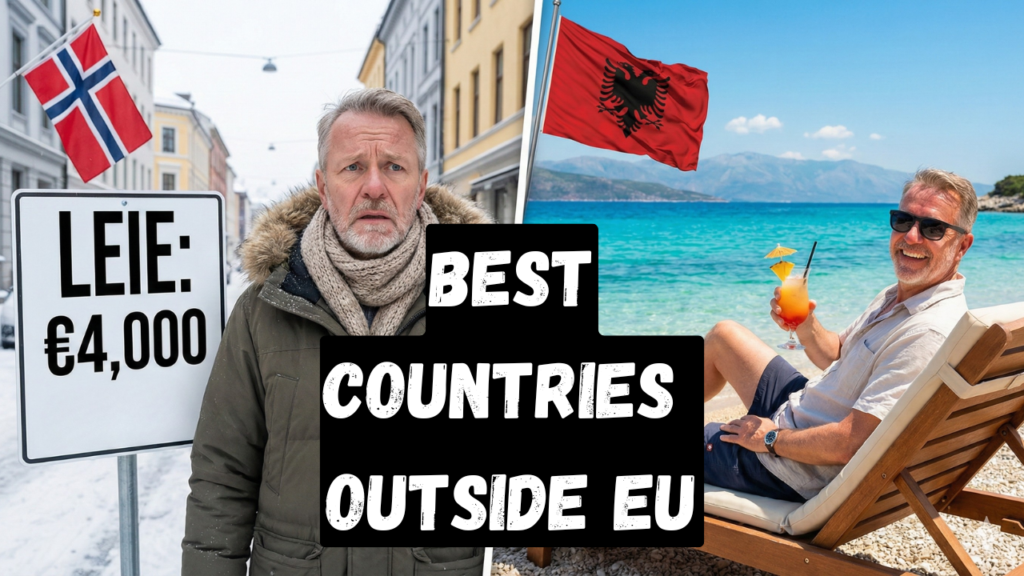
The 2 countries with the highest ‘Quality of Life’ in Europe are actually among the worst places for you to retire in as an expat.
But… Why?
Well, because a simple coffee costs almost $8, and good luck getting a visa.
He I will reveal the countries that break this rule—the places where a high quality of life meets low costs. You might be surprised to see that your ‘dream’ country is actually a bureaucratic nightmare, while the winner is a place you probably never considered.
This list is my answer to your requests, and we start with…
The Criteria to Define the Best European Countries Outside the EU
To determine the winners and losers, we analyze five specific factors:
- Cost of Living,
- Quality of Life,
- Private Healthcare,
- Residency Access, and
- Language Barriers.
I only considered countries that are located physically and entirely inside the geographic borders of Europe. That means Russia and Turkey are out.
I also excluded micro-states with fewer than 70,000 residents, so micro-states like Monaco are out, too.
By analyzing 5 factors at the same time, we found the specific sweet spot where a high quality of life meets a low cost of living.
I’ve already ranked multiple cities in 15 different EU countries in a separate article – but for those who want to be outside the EU, we begin with the country that you should avoid.
The Ranking of The Best European Countries Outside The EU
### 15. Belarus
On a spreadsheet, this country looks like a financial winner. A budget that barely pays the bills in Western Europe, in Belarus grants you luxury.
But there is a massive catch that makes those savings irrelevant. The geopolitical situation and sanctions complicate every single transaction you attempt.
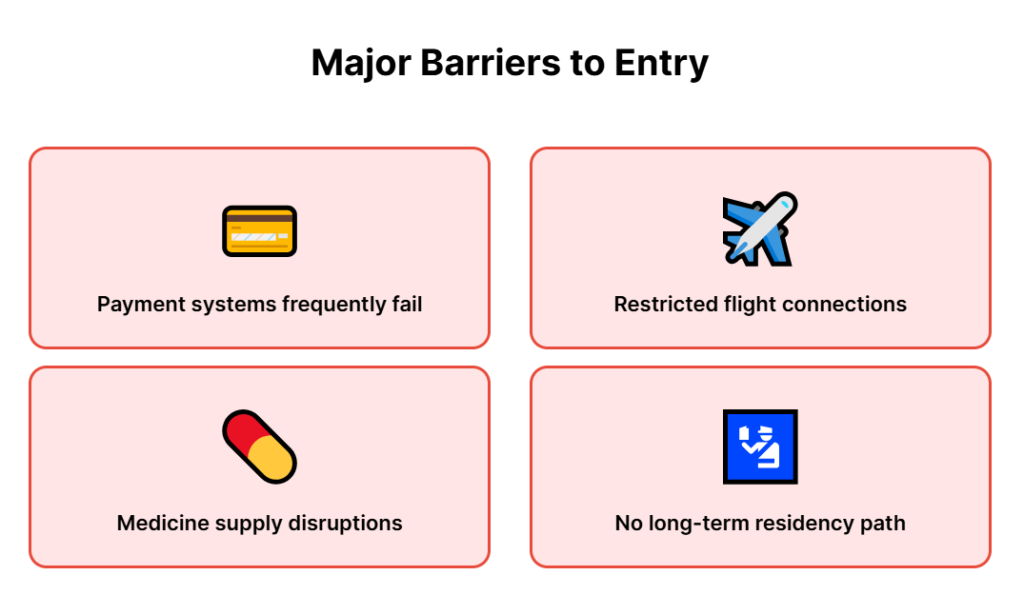
Major Western credit cards often do not function in Belarus, for example. If you try to wire transfer your pension funds, strict compliance checks frequently block or seize the money.
The Quality of Life score plummets and the HDI is among the worst in Europe. Airspace closures ban EU carriers, forcing you into long, convoluted travel routes just to visit family or access emergency services.
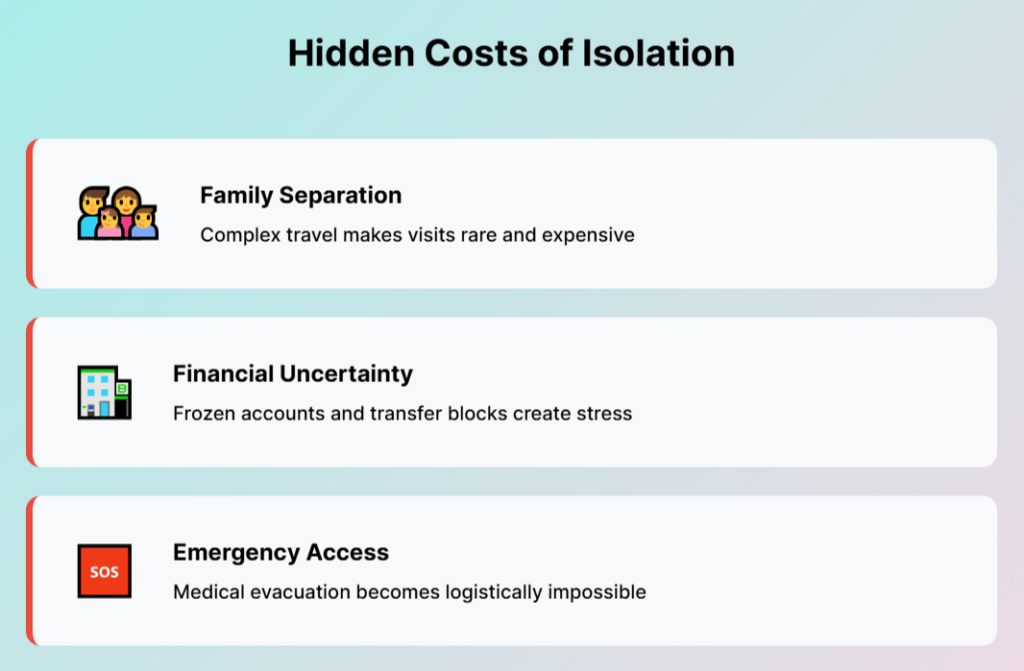
Healthcare faces the same blockade. While private clinics exist, sanctions disrupt the supply chains for imported pharmaceuticals and technology.
Residency is the final wall. While a 30-day visa-free regime once existed, that door is effectively closed for long-term settlers.,
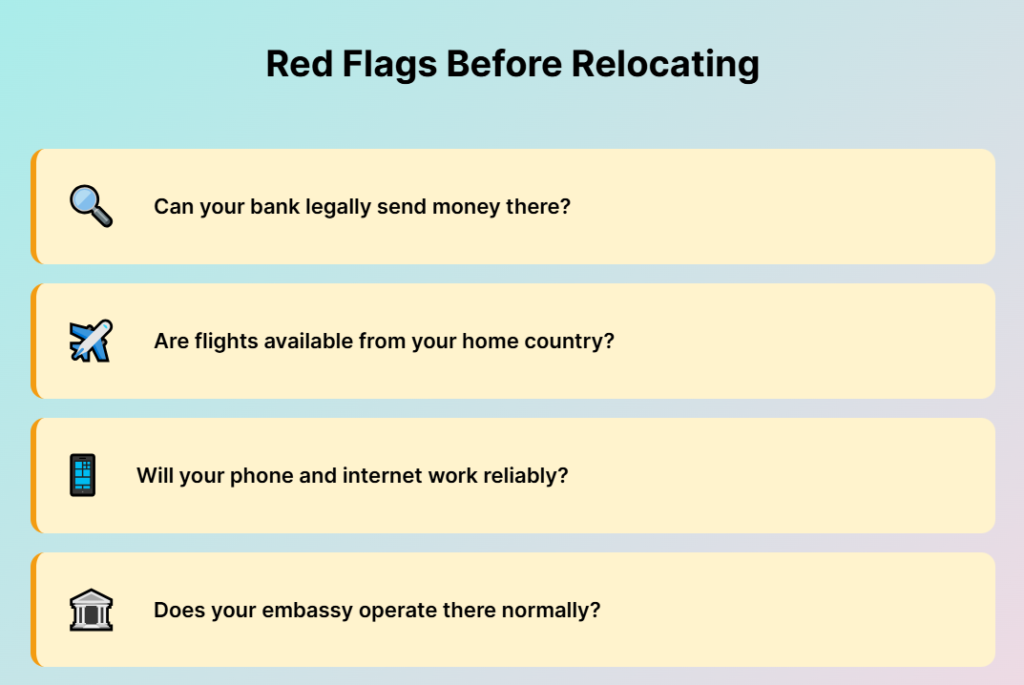
There is no retirement visa pathway for citizens of “unfriendly” nations like the US or UK. English proficiency is notably low.
Without speaking Russian or Belarusian, you face profound social isolation. Belarus receives a final average score of just 3.2 out of 10.
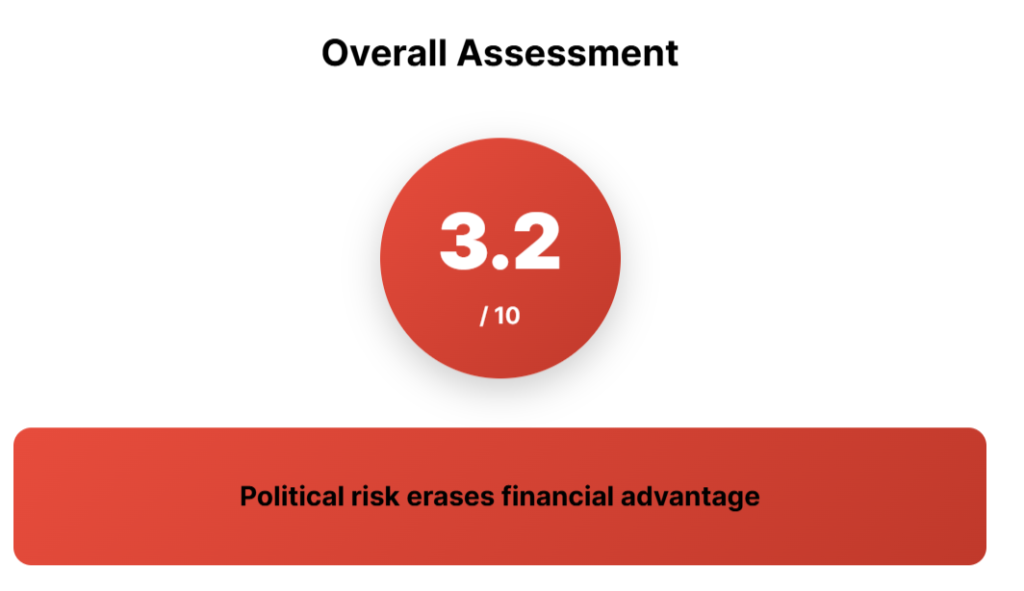
Low costs cannot offset the risk of living in a geopolitical pariah. The next country shares these low costs but faces a much more violent problem.
### 14. Ukraine
Ukraine was once a rising hub for digital nomads and retirees seeking value. Today, active conflict drastically decreases the economic dynamics and the quality of life an expat could expect there, regardless of the price.
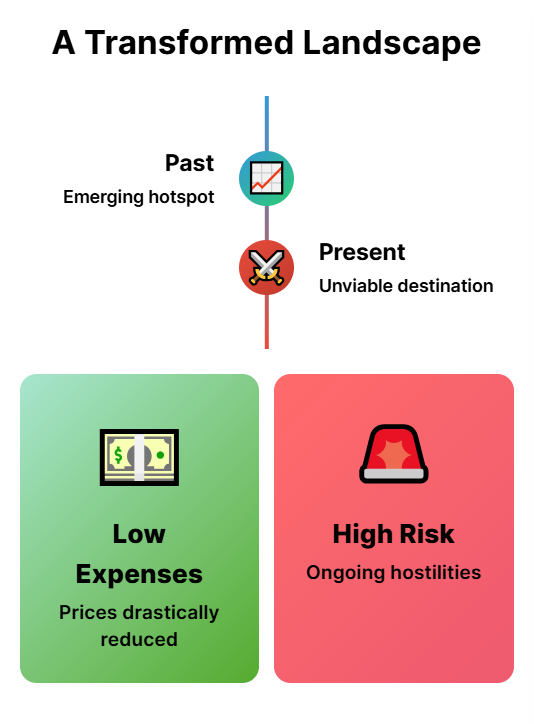
Compared to the rest of Europe, the cost of living looks very low. But martial law and drone risks override these economic benefits in more occasions than one could imagine.
The Quality of Life score suffers a notable decline due to the war. Daily life is characterized by the pervasive threat of air raid sirens and unpredictable power outages.
Freedom of movement is severely restricted. Healthcare presents a massive financial hole and standard international insurance policies exclude coverage for war zones.
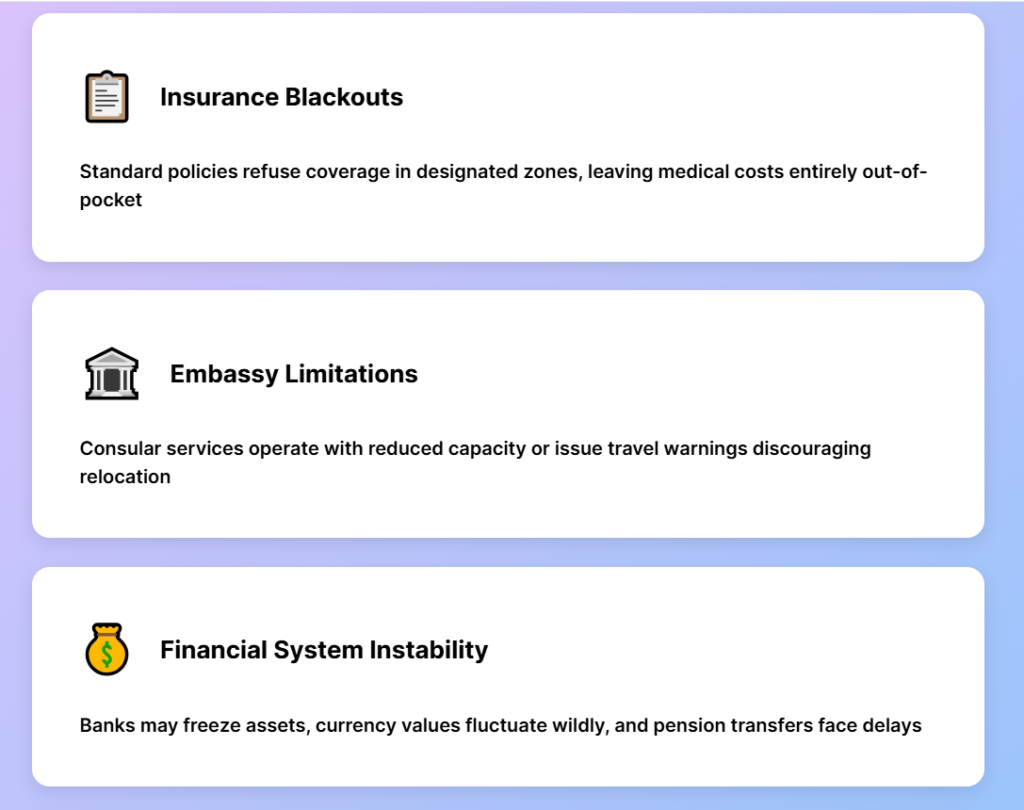
The private sector in Kyiv was once robust, and Ukraine once had a thriving Medical tourism industry, which has now largely collapsed. Airspace closures force you to undertake arduous overland travel just to reach a border.
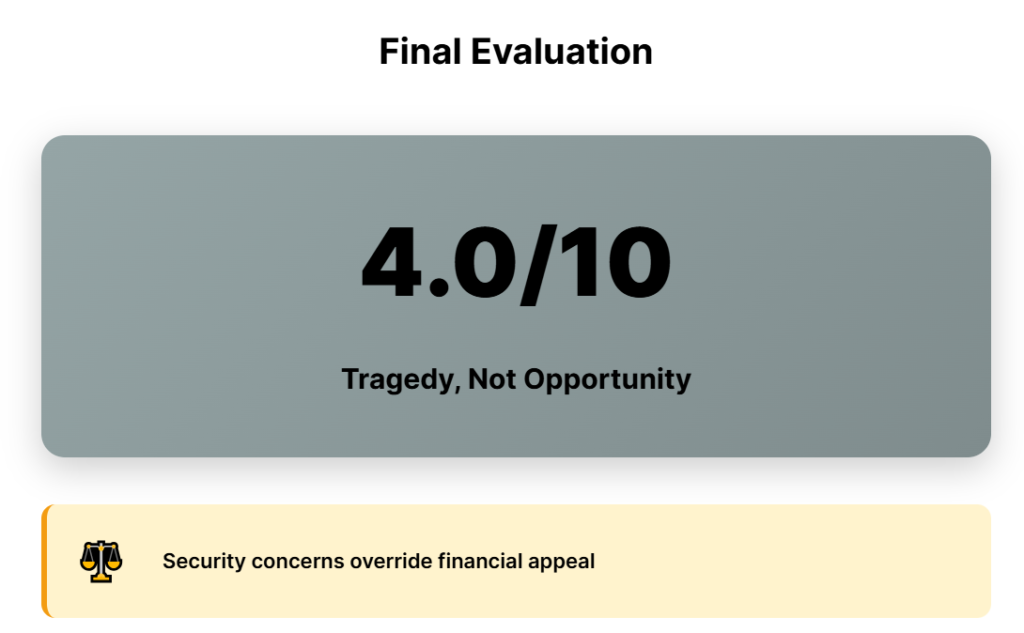
Intense security vetting makes it exceptionally complicated for many official procedures. Ukraine receives a final average score of just 4 out of 10. It is a tragedy, not an opportunity.
### 13. Kosovo
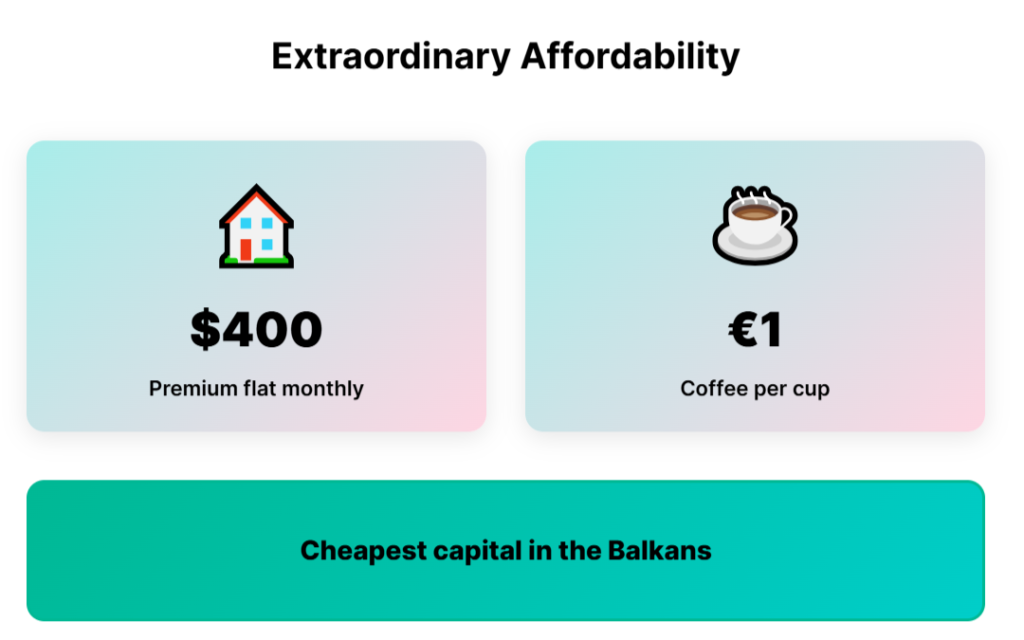
Kosovo is the youngest nation in Europe, and one of the most pro-American places on the map. The population is hospitable and Pristina is one of the cheapest capitals in the Balkans.
You can rent a luxury apartment for $400 a month. A coffee costs you one Euro.
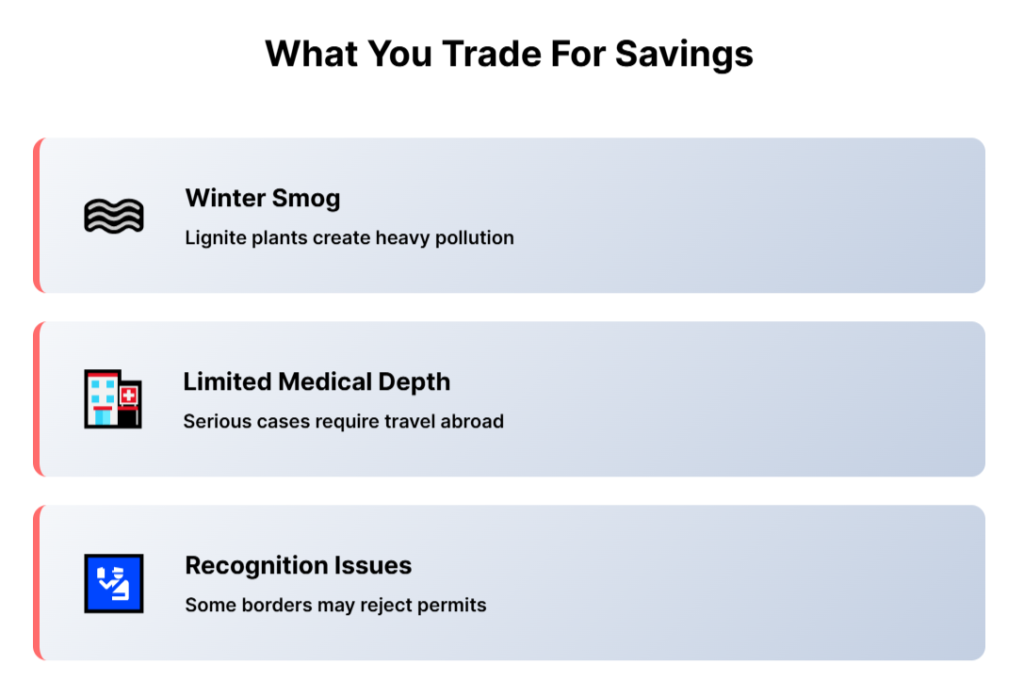
The Quality of Life score takes a major hit because of winter air pollution from nearby lignite power plants. The Human Development Index is 0.757, showing progress, but smog remains a daily reality in winter.
Healthcare represents another gap. Private clinics like the American Hospital provide decent care, but they lack depth.
For serious conditions, an expat might need to travel to Skopje in North Macedonia, or Istanbul. Then we have the residency issue.
Getting in is simple; the financial threshold for proof of means is low, so we gave it a score of 5.0 for Ease to Obtain Residency. But holding that residence permit places you in a gray zone.
The lack of full international recognition by some states makes using your permit for travel complicated. English proficiency scores a 6.0, as the strong post-war international presence makes communication easier.
But English skills do not fix the problem of the high pollution or the limited recognition issues. Kosovo receives a final average score of 5.7 out of 10.
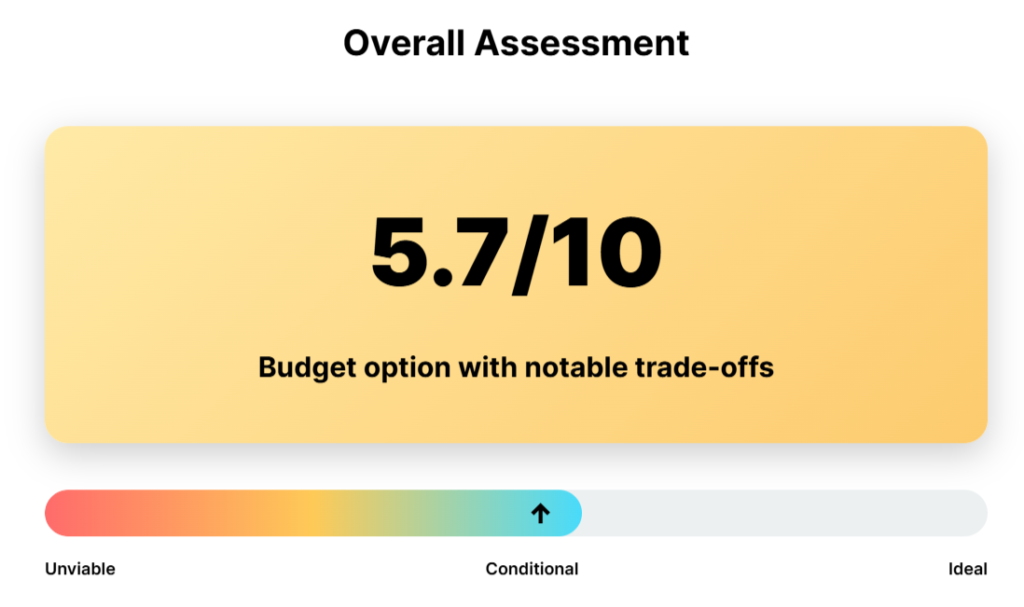
It is a budget destination, but only if you can handle the smog and the diplomatic gray zones.

### 12. Moldova
In Moldova, even a low budget can buy a lifestyle that sounds too good for Europe, with real savings left over. In Chisinau, you can easily find a 2-room apartment for less than 420 Euros (less than 500 Dollars).
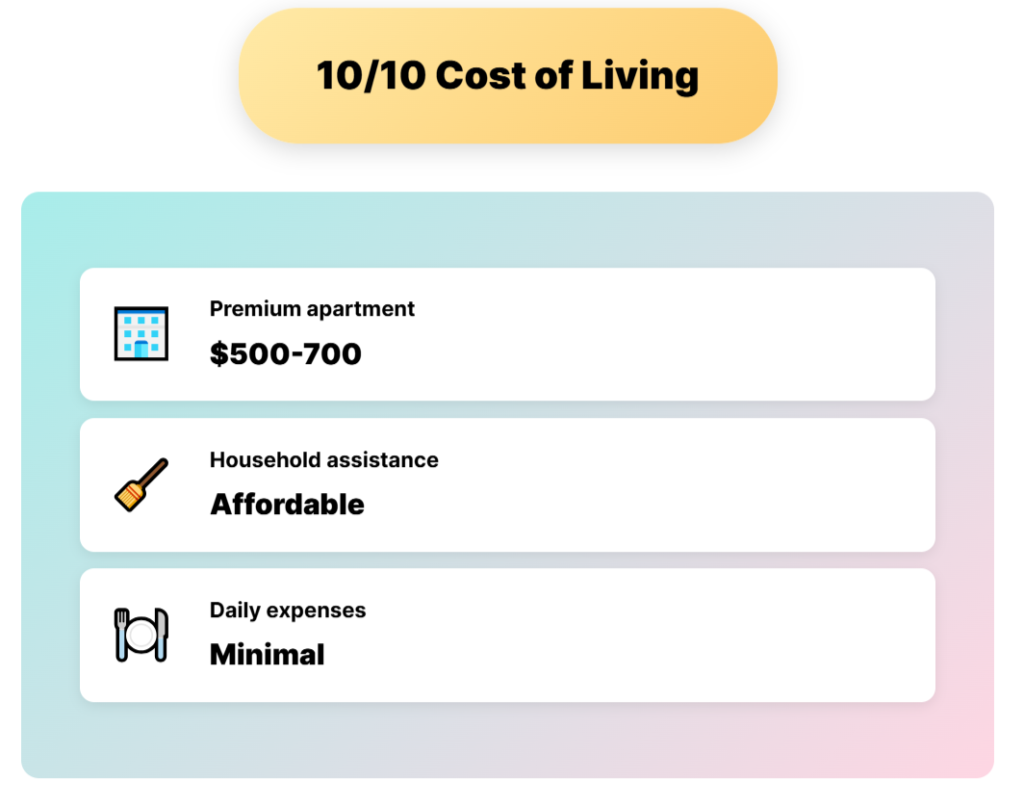
With such low daily costs, even if you live just on social security pension alone, you could still save money. So on Cost of Living, Moldova scores 10 out of 10.
The trade-off starts the moment you leave the capital. Roads outside Chisinau are often in poor condition, which changes how you plan basic things like weekend trips, airport runs, or even routine errands.
Public transport is dated, and that hits day-to-day comfort – despite the very low prices. On Quality of Life, the numbers also stay low.
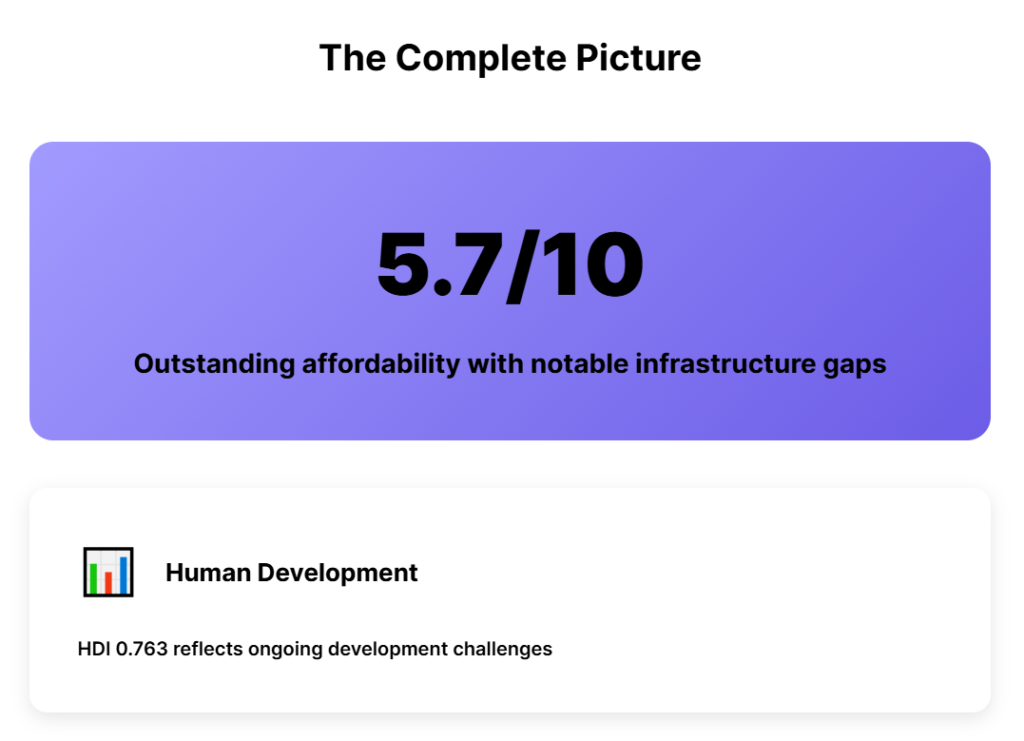
Moldova’s HDI is 0.785, just above Ukraine and Kosovo. Healthcare is where retirees need to be careful.
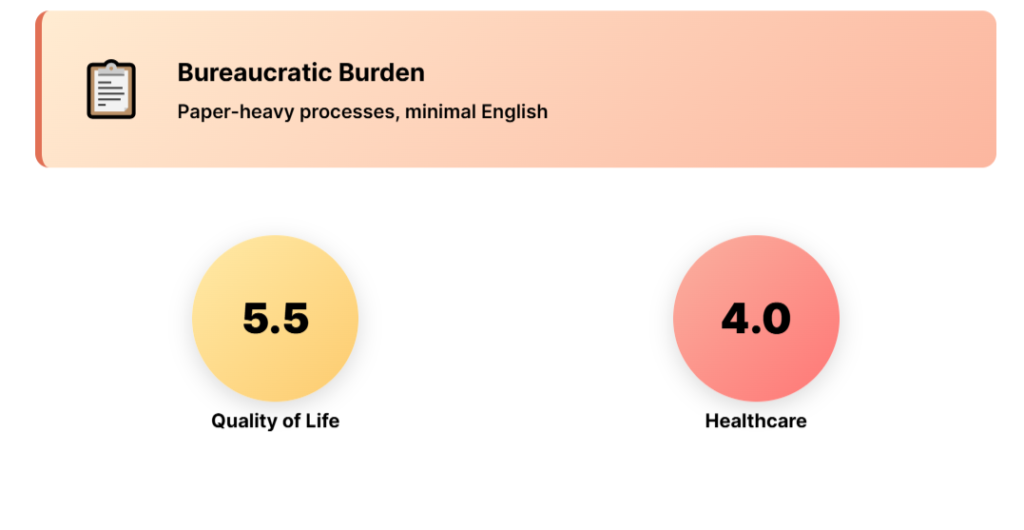
Private options exist, including Medpark International in Chisinau, but the number of options available is quite restricted. So in Quality of Life, Moldova gets a 5.5, while Healthcare has a 4.
Residency is possible, but the process costs time. You can qualify with proof of income or a bank balance of around €500 per month, so the financial threshold is low.
But bureaucracy stays paper-heavy, and English is rarely spoken by officials. Moldova’s final average score is 5.7 out of 10, which shows how cheap can still come with real limits.
### 11. Iceland
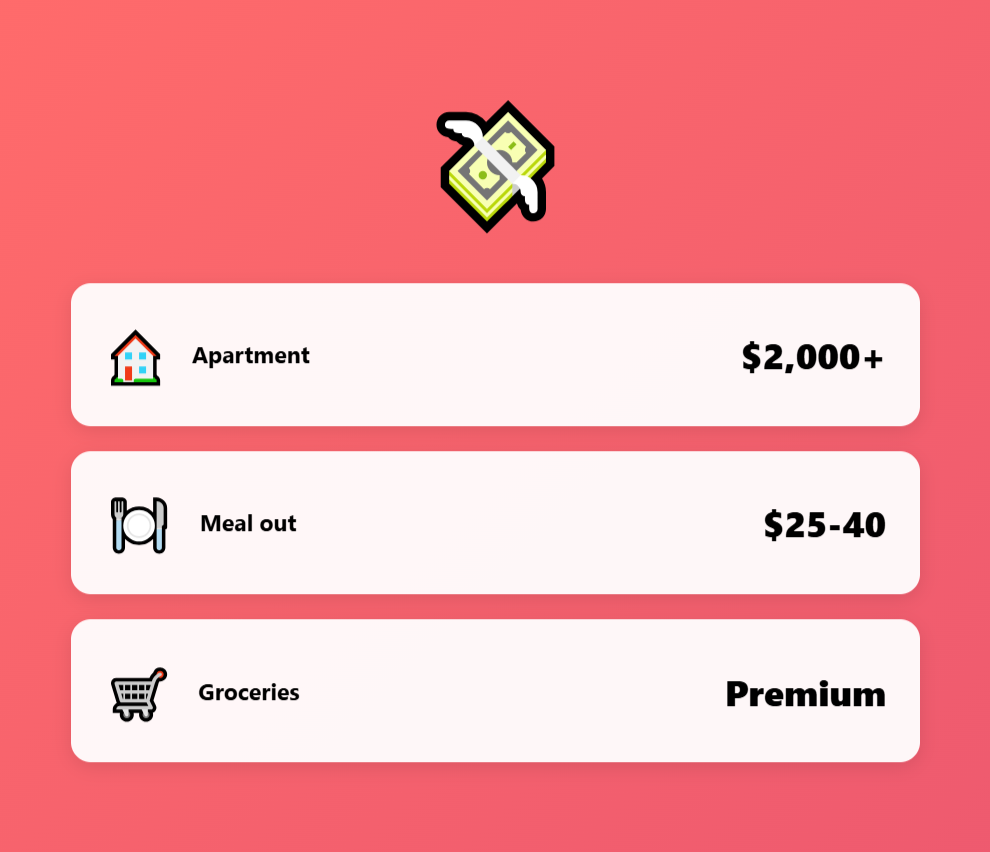
Let’s start with cost – Iceland ranks 3rd most expensive in the world on the Numbeo Cost of Living Index, and Reykjavik is the pressure point. A one-bedroom apartment can exceed $2,000 per month.
For short-term stays, Airbnb prices there are the highest in Europe. Then food finishes the job.
A basic restaurant meal costs $40, and that’s before you even talk about groceries at home. We score Iceland a 1.0 for Cost of Living.
The country also posts one of the strongest Quality of Life profiles in Europe. Iceland’s HDI is 0.959 – the 3rd highest in the entire world.
In the Quality of Life Factor, Iceland gets a 9.7. Language is the one category Iceland wins without effort.
English proficiency is estimated at about 98%, so daily life would feel easy on this aspect. So you get world-class quality and development, for a very high price – but there are some additional barriers…
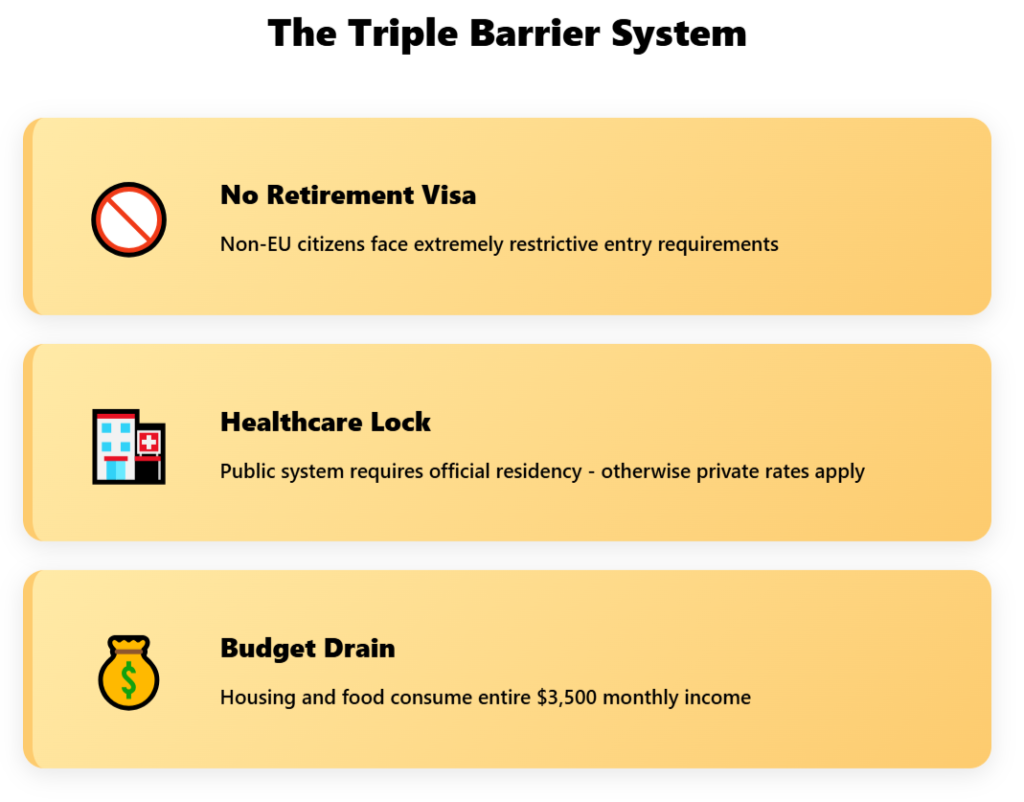
Iceland’s Healthcare system is excellent, but it is public and tax-funded, with a small private sector. And at first, you do not get access to the public system.
The biggest barrier, however, is to obtain residency. Iceland does not offer a retirement visa for non-EU citizens.
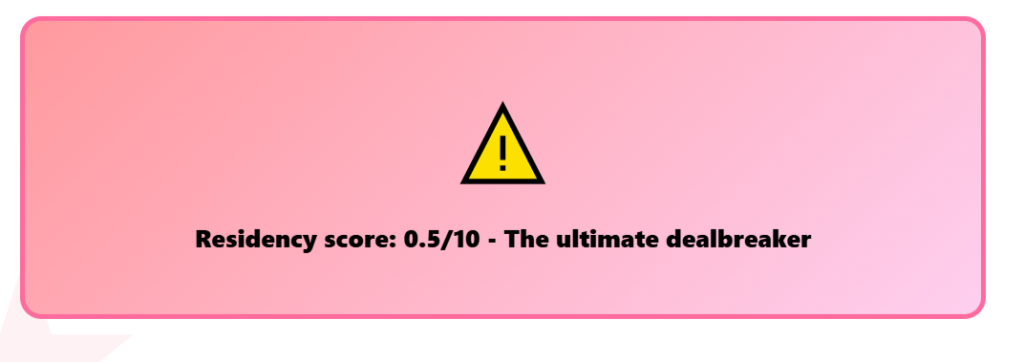
The “independent means” path is extremely restrictive, and residency options focus on EEA nationals, skilled workers, or close family ties. The Ease of residency gets just a 0.5.
Iceland’s final average score is 5.75 out of 10, and that number is generous once visas and high cost of living hit you at the same time.

### 10. Norway
People talk about safety, clean cities, and services that work – and all of this can be exemplified by Norway. But that same system is built for people who pay into it for years.
If you arrive on a fixed retirement income, you step into some of the most expensive costs in Europe with no access lane. Oslo is one of the world’s most expensive cities – it is above London or Boston.
This is why Norway scores low on Cost of Living. The amazing quality of life, the safety, and the healthcare all come at a price.
There are more obstacles – Norway offers no easy residency visa path for non‑EU nationals. Private healthcare exists, but Norway’s strength is its tax-funded public system, not a private market built for foreigners paying cash.
Language looks like the easy part. English is spoken almost everywhere, so daily tasks feel simple.
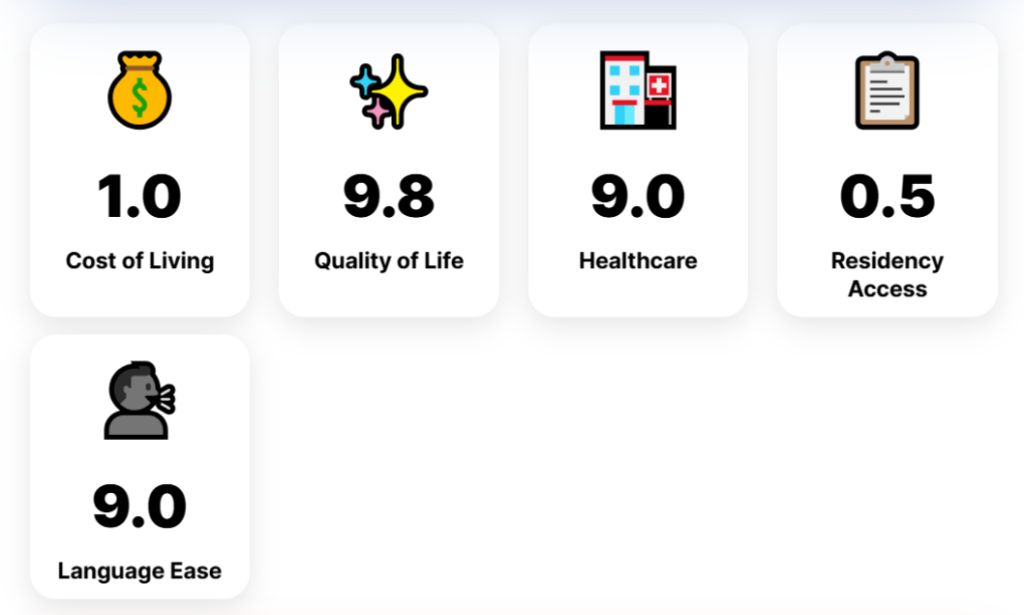
Norway’s final average score is 5.86 out of 10, which fits the reality: amazing place to visit, not a workable retirement plan.
### 9. Switzerland
Switzerland ranks as the dream on paper because it nails three things retirees care about: healthcare, safety, and infrastructure. Trains run on time, cities feel calm, and hospitals work at a level that makes most countries look unprepared.
If we scored only those pieces, Switzerland would land near the top. But… Switzerland is VERY expensive.
The second you start paying rent and insurance, your budget starts feeling small, even before food, transport, and basic bills. Health insurance is not optional.
You must buy it, and you must keep paying it. That single rule makes a huge difference, because it adds a fixed cost every month that you cannot avoid by just being healthy.
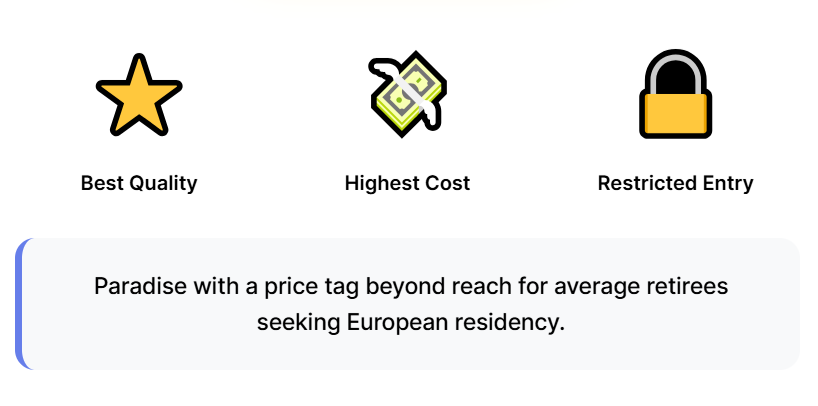
Then we hit residency, and Switzerland becomes a paywall. Retiree residency ties to “lump-sum taxation.”
That means the state does not care what your monthly pension is. It cares what tax deal you can afford.
And the way the system works, the required amount exceeds what most people earn in a full year. So you do not fail because you fill out the wrong form.
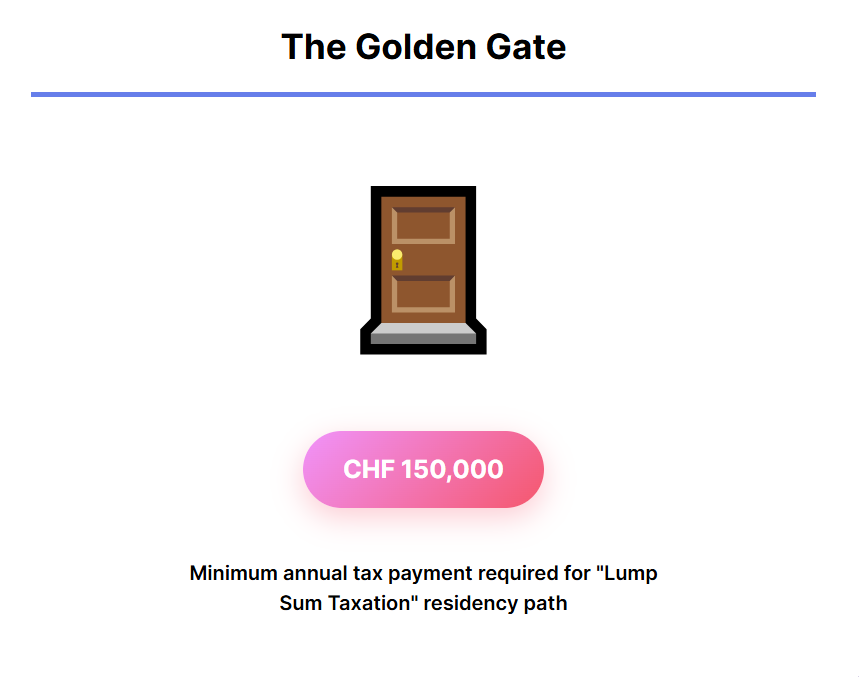
You fail because your net worth does not meet the entry price. Switzerland’s lump-sum taxation is a beast of its own, and almost every country on this list has a tax code that can spare you or bankrupt you.
I am considering writing a dedicated article strictly on the investment opportunities and tax traps of these countries – if you want that deep dive, type ‘TAXES‘ in the comments.
The language barrier is low in Switzerland, and many people, especially in big cities, speak English. But the real language you need to speak is high income and high assets.
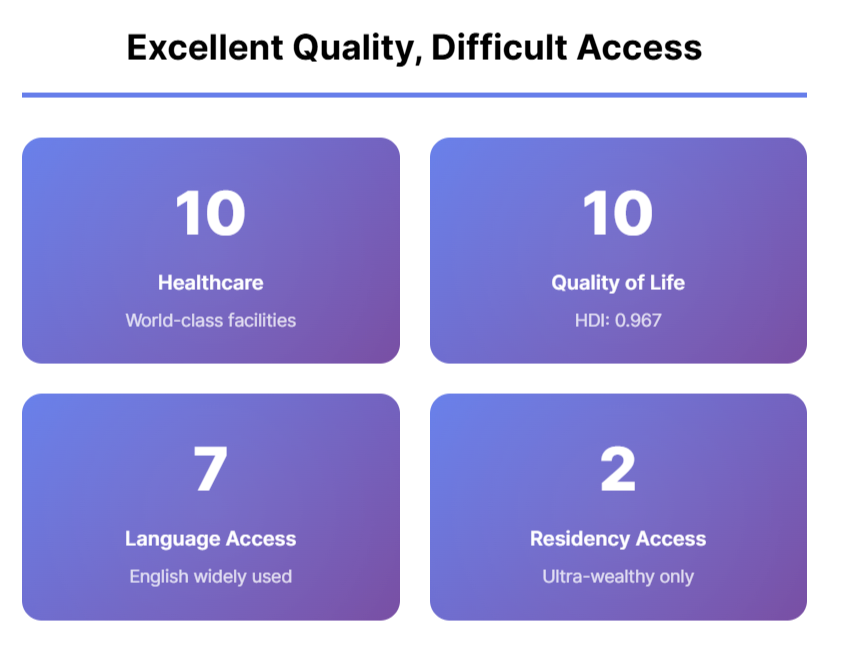
Switzerland ends with a final average score of 6.2 out of 10, and that number tells the story: awesome place to live, if you are a billionaire.
### 8. United Kingdom
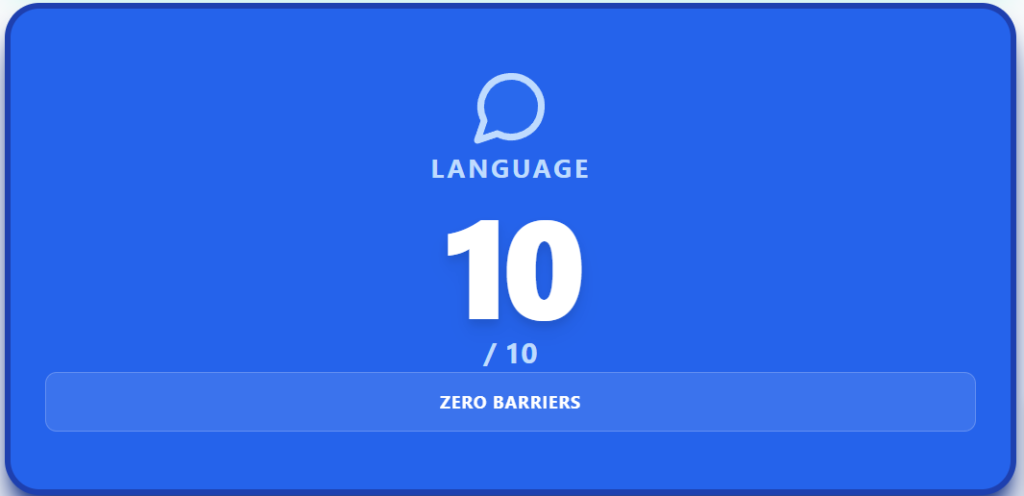
The United Kingdom is the easiest place on this list to “feel at home” if you are American, Canadian, or Australian. Culture, media, humor, and daily life all translate with zero effort.
In terms of costs, the UK’s capital pushes the budget to the edge fast, and high rent is only the first problem. Fixed costs burn money quickly, even if you try to live simple.
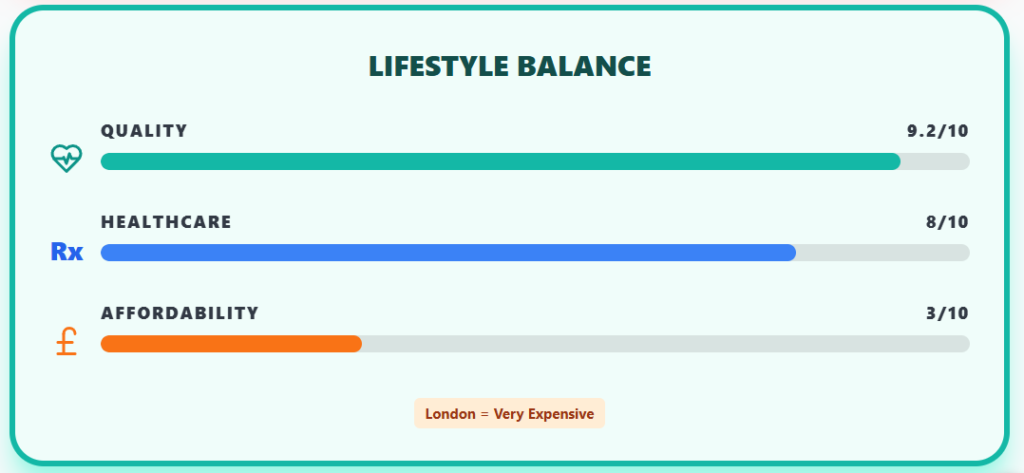
You can get better value in Northern England or Scotland, which is why the UK avoids the very bottom for cost, but it still scores 3.0 for Cost of Living. Quality of Life is something that might raise some polemics here…
The UK lately is becoming a very unequal place: either you have high quality and astronomical prices, or low quality for low prices. Healthcare is also strong, but with the downfall of the NHS, private systems pumped their prices.
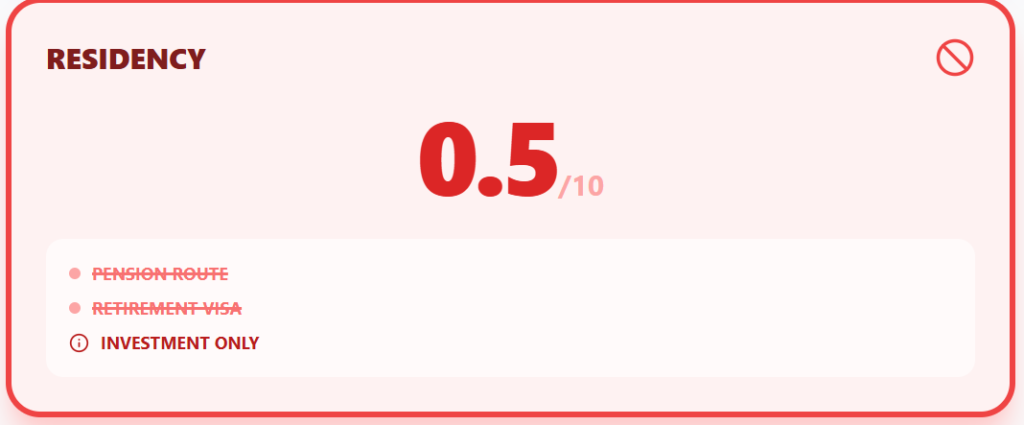
Even if you aim for the public system, non‑EU residents face the Immigration Health Surcharge, assuming you can secure a visa in the first place. But… The UK removed the old “Retired Person of Independent Means” visa.
Today, there is no path where you show pension income and get long‑term residence. The UK’s final average score is 6.14 out of 10 – and that because I was generous with the “Quality of Life” factor.
### 7. Bosnia and Herzegovina
Bosnia and Herzegovina is where your budget starts acting like a cheat code, but there are also some unknown downsides. In Sarajevo, you can find a good city-center apartment that rents for $400 to $500 per month.
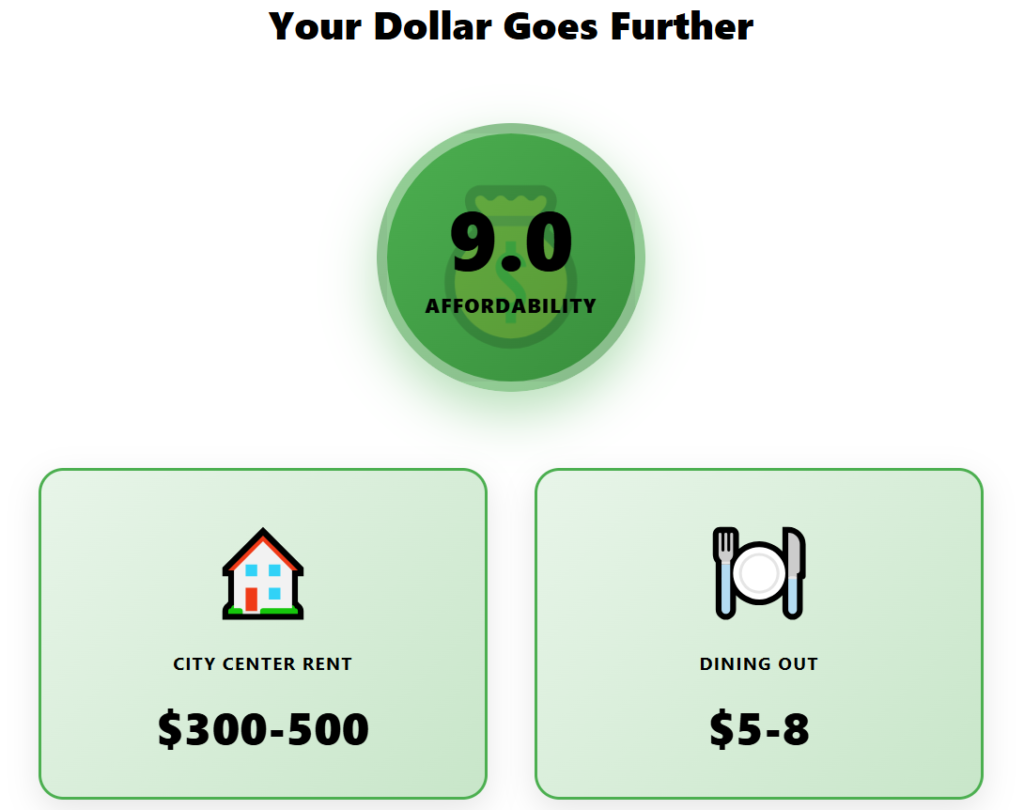
Eating out stays low too, with many meals landing in the $5 to $8 range. That’s why Bosnia scores a 9.0 for Cost of Living.
Quality of life lands in the middle. The HDI is 0.804, which puts it below Western Europe but ahead of the weakest countries on this list.
Just like Kosovo, Bosnia also has an issue with bad air quality. Sarajevo gets severe bad air quality during winter.
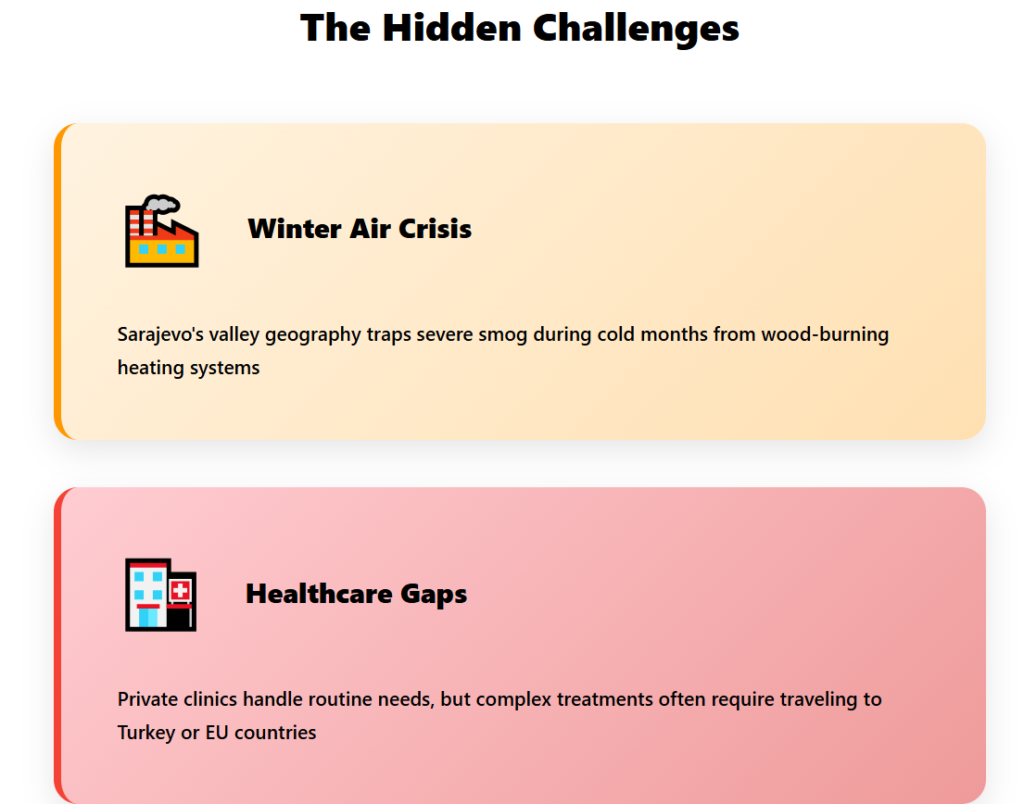
That single seasonal problem drags the Quality of Life score to 6.5, while Healthcare gets a 5.5 due to some gaps for complex treatments. English helps in tourist areas and with younger people, but for official tasks you hit a wall without Bosnian, Croatian, or Serbian.
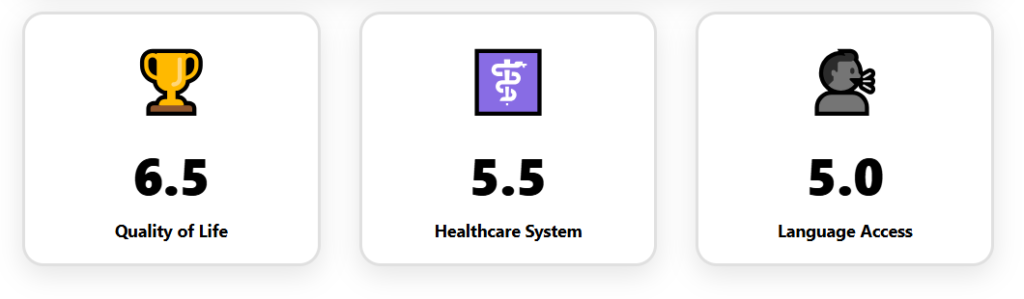
Bosnia and Herzegovina finishes with an average score of 6.3 out of 10, which fits a country that is cheap to live in but has some lingering issues.
### 6. Andorra
Andorra is a microstate with some tax-haven characteristics and a strong tourism economy. Many people compare Andorra against two other Mountainous Low-Taxes countries: Switzerland and Liechtenstein.
Andorra is cheaper than both, but it is not a bargain. In Andorra la Vella, rents for decent housing often exceed €1,200 – or US$1,400.
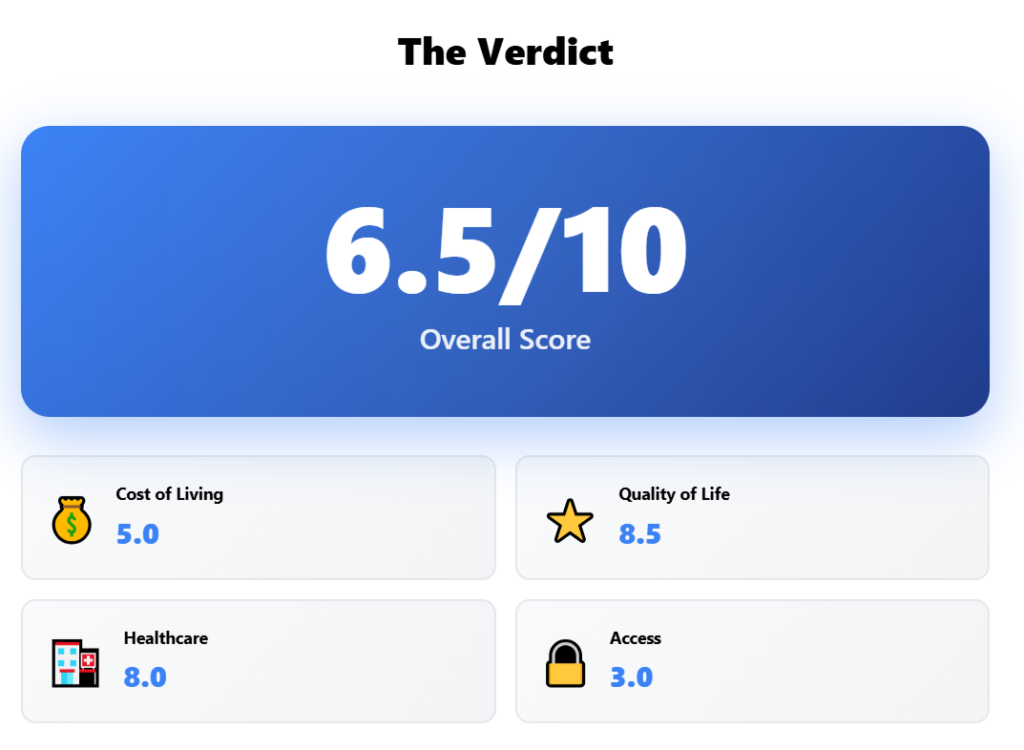
The Cost of Living score is just a 5.0. On the other hand, Quality of life is where Andorra shines.
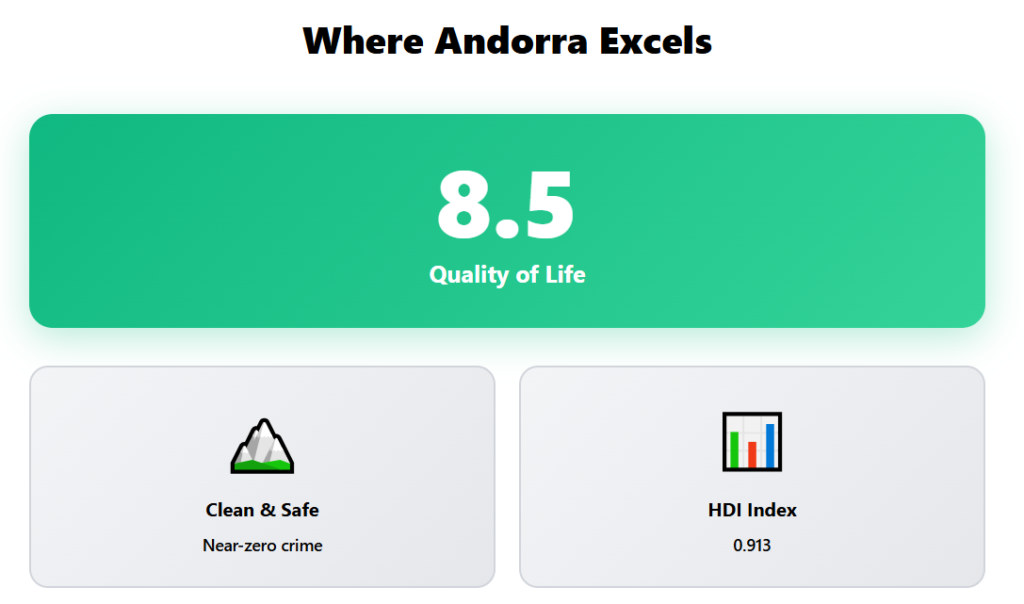
The HDI is high (0.913), and crime is close to zero. You get clean streets, stable public order, and a climate that many retirees find easier to live with.
On our scale, Quality of Life scores 8.5. Andorra’s Passive Residence Visa requires a minimum investment of €600,000.
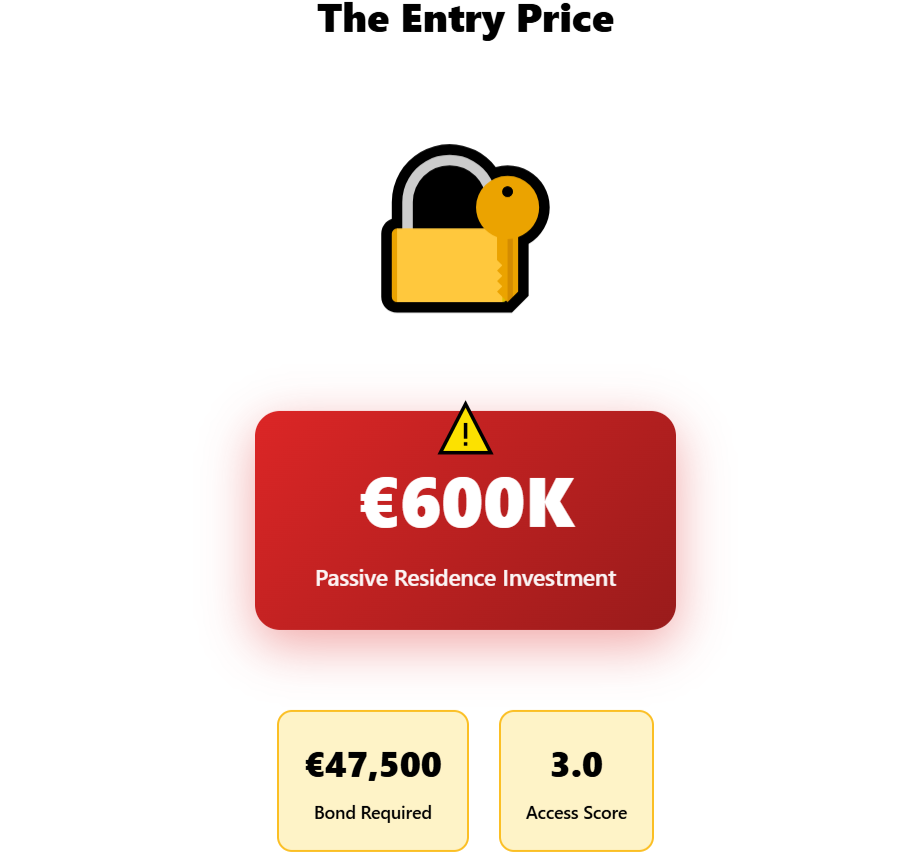
It is a relatively big requirement, so Residency Access scores 3.0. Language is manageable.
Catalan is official, Spanish and French are common, and English is decent. Andorra’s final average score is 6.50 out of 10, which is solid, but the investment rule decides who gets to play.
### 5. Montenegro
Many countries talk about “residency by investment,” but the rule in Montenegro is simpler. You own real estate, you apply for residency, and there is no minimum purchase value tied to the permit.
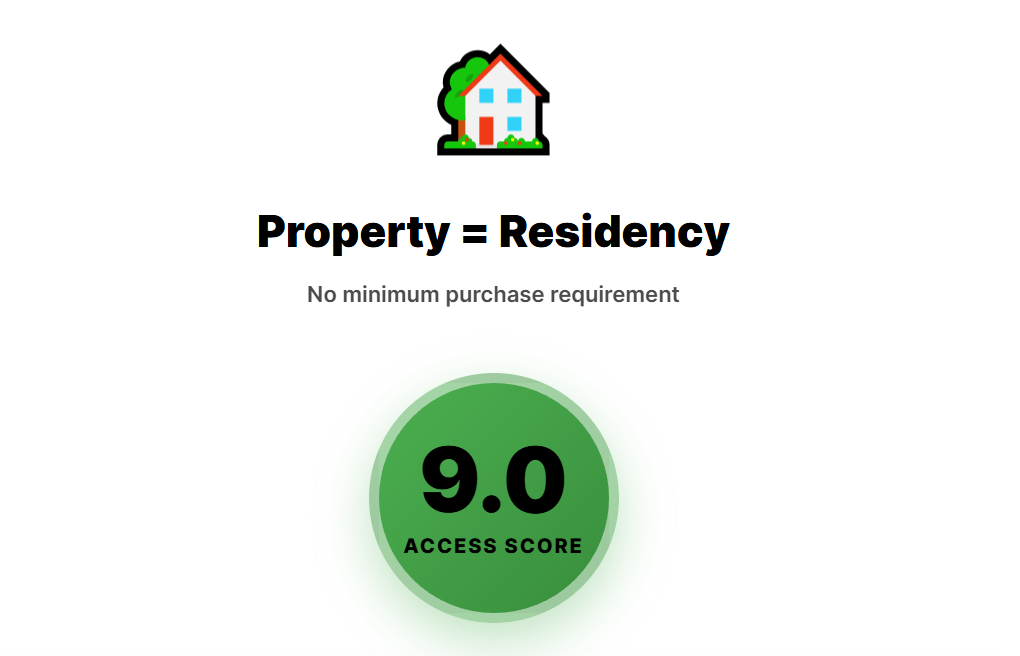
The Residency Access score is a 9.0. In terms of cost of living, Summer pricing in coastal towns like Budva and Kotor can spike, but the overall level stays well below Western Europe.
We score Cost of Living at 7.5 because you can live comfortably without watching every expense, even if you choose a popular area. Quality of life comes from safety and lifestyle basics that work.
The country posts high safety scores. Add the mix of coast and mountains, and you get variety without needing to cross borders.
Healthcare is good, but not complete. Private clinics in Podgorica cover many common needs.
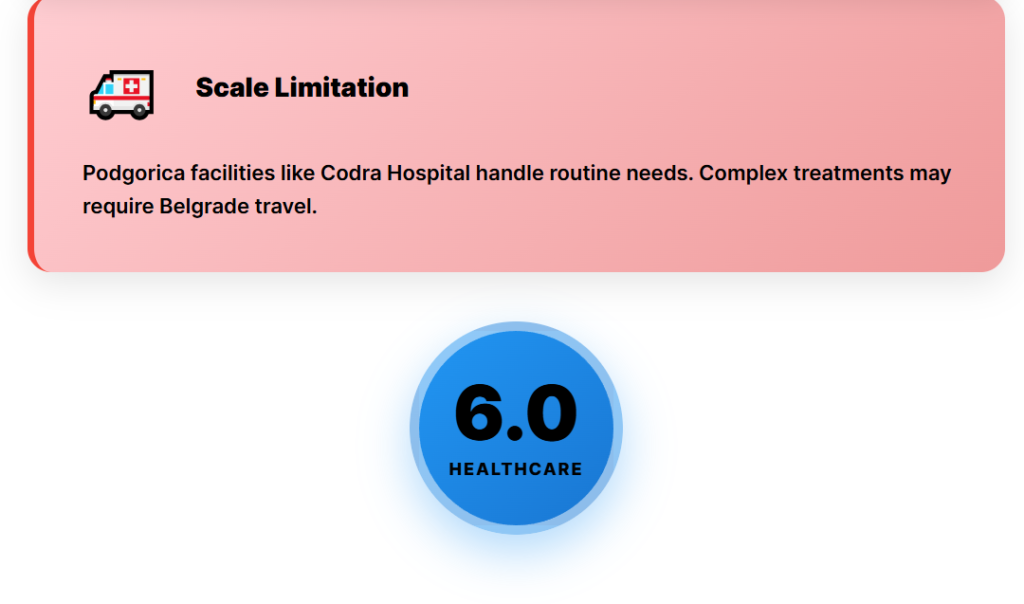
But Montenegro is small, so ultra-specialized care can mean a trip to Belgrade. That keeps Private Healthcare score at 6.0.
Language can feel easy in the areas where expats cluster. English gets you through restaurants, rentals, and basic services along the coast.
Go inland, and you might need help for paperwork. English might get you a beer, but it won’t get you a lower rent price.
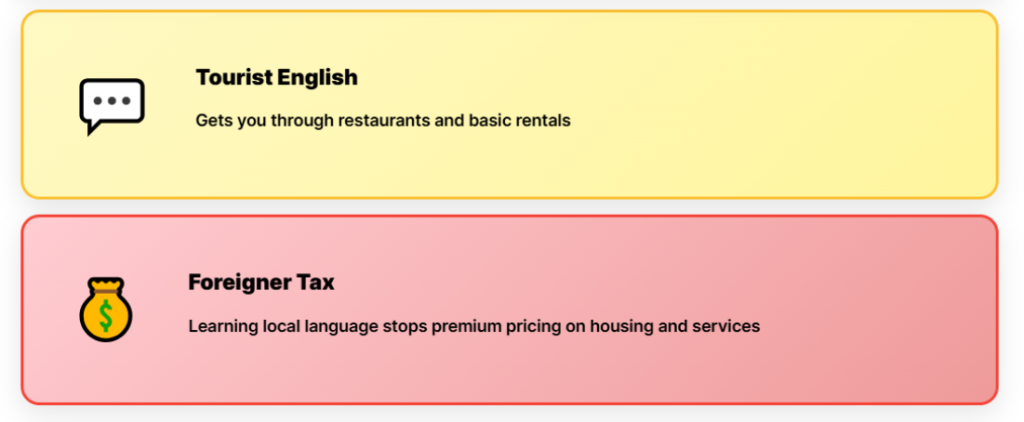
To stop paying the ‘foreigner tax,’ you need the local language. I personally use LingQ to learn languages because it focuses on input, which is exactly how you learned your first language as a child.
Montenegro’s final average score is 7.26 out of 10, and it fits a country that rewards retirees who want residency backed by a real asset.
### 4. North Macedonia
Now we enter the top 4, and If you want good private healthcare without paying Western Europe prices, this country might be a smart move. It keeps costs low, keeps daily life stable, and it gives you medical options that many people do not expect.
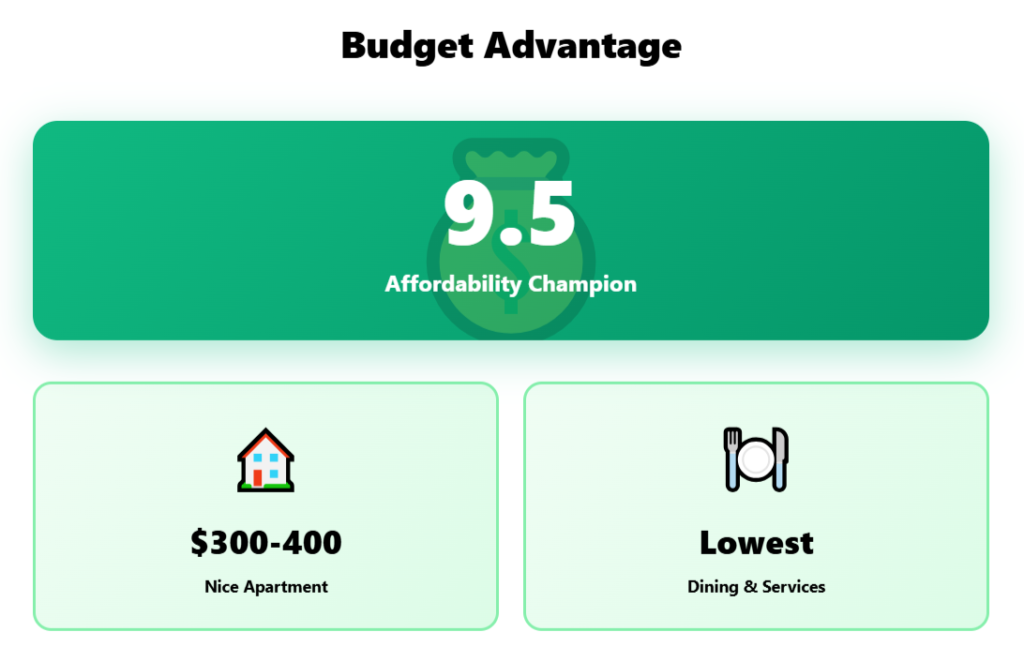
In North Macedonia, you can rent a nice apartment for $400 a month, and dining and services stay among the lowest in Europe. That’s why in the Cost of Living factor, North Macedonia scores a 9.5.
Quality of life lands at 7.0 – it is a country that is improving quite fast in many aspects. It is a very safe country, and that matters when you plan your daily routine around walking and using public places.
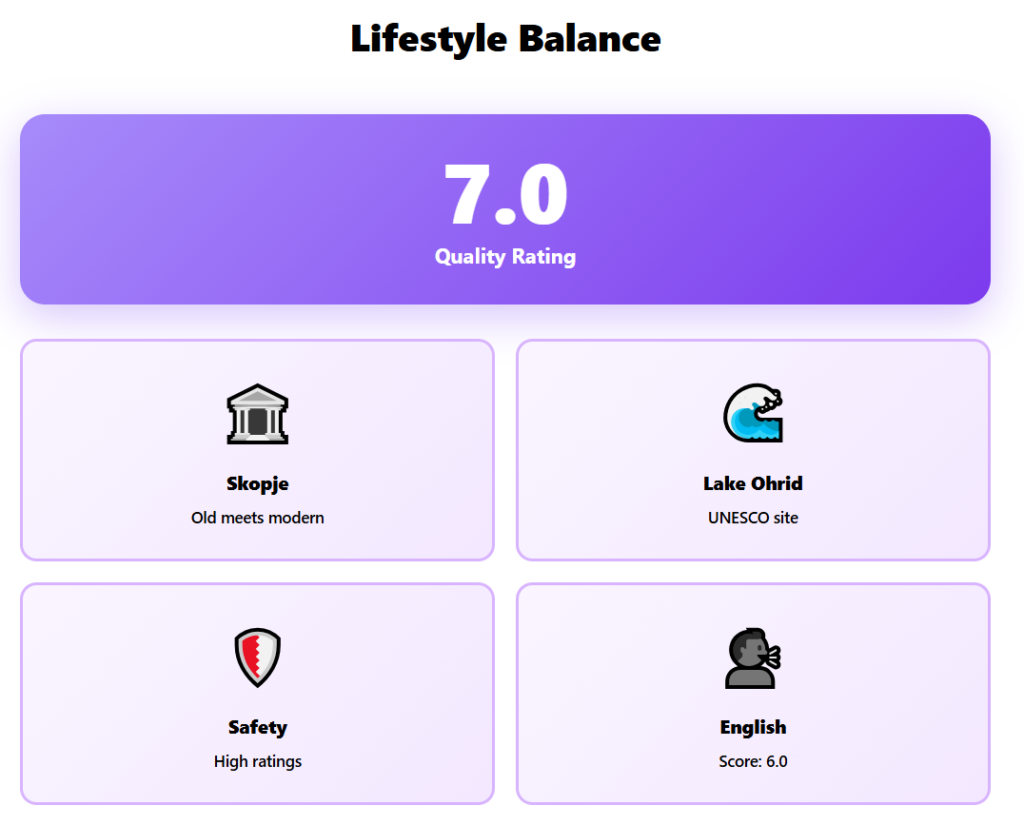
This is one of the reasons North Macedonia is attracting wealthy expats. Private healthcare is the key category here.
Acibadem Sistina in Skopje holds JCI accreditation and ranks among the best hospitals in the Balkans. It pulls in patients from nearby areas, which tells you it does more than basic checkups.
It also has remarkably good reviews. For residency, you can qualify by owning real estate, with about €40,000 as the practical minimum, or by proving solvent income.
The process stays clear, so the Residency Ease factor gets an 8.0 out of 10. Language barriers score 6.0, since younger people speak good English and help tends to show up when you need it.
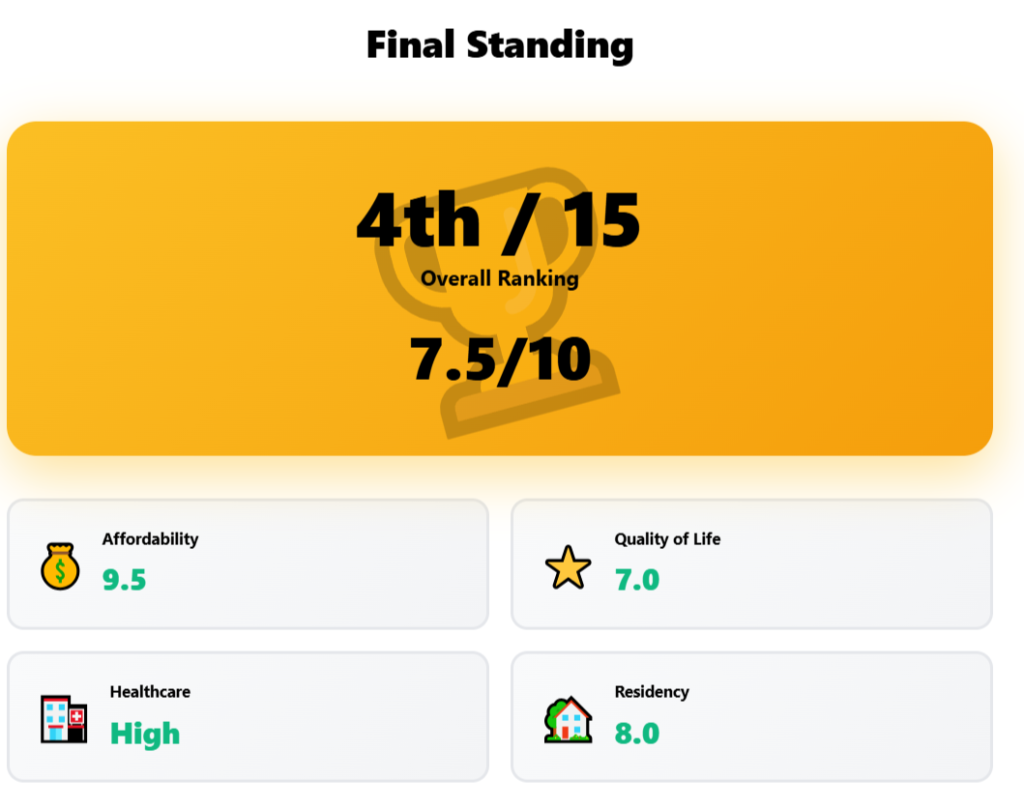
North Macedonia ends with an average score of 7.50 out of 10, and the 4th place among the 15 Non-EU countries in our ranking.
### 3. Albania
Now we enter into the top 3 best European countries to retire to outside the European Union. Albania ranks third because it combines low daily costs with one of the easiest legal stays in Europe for certain nationalities.
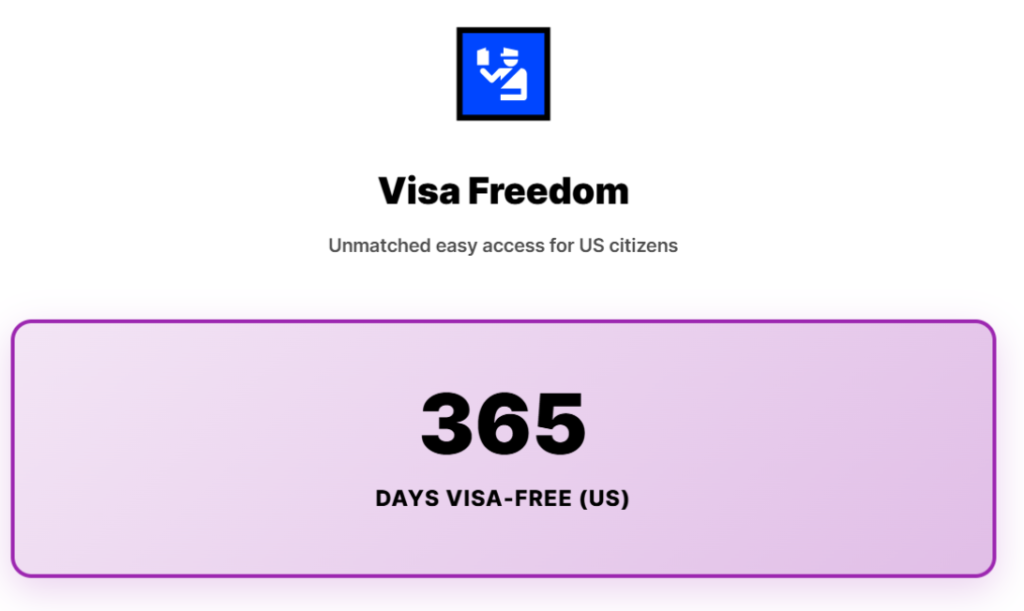
If you are a US citizen, you can enter and stay for 1 full year visa-free – and you will be very well received. That single rule removes most of the red tape that pushes people out of other countries.
On cost, Albania keeps the math in your favor even as prices rise in Tirana and in the southern coast. You can find seaside apartment renting for 300 euros ($360) per month, so housing does not eat your entire budget.
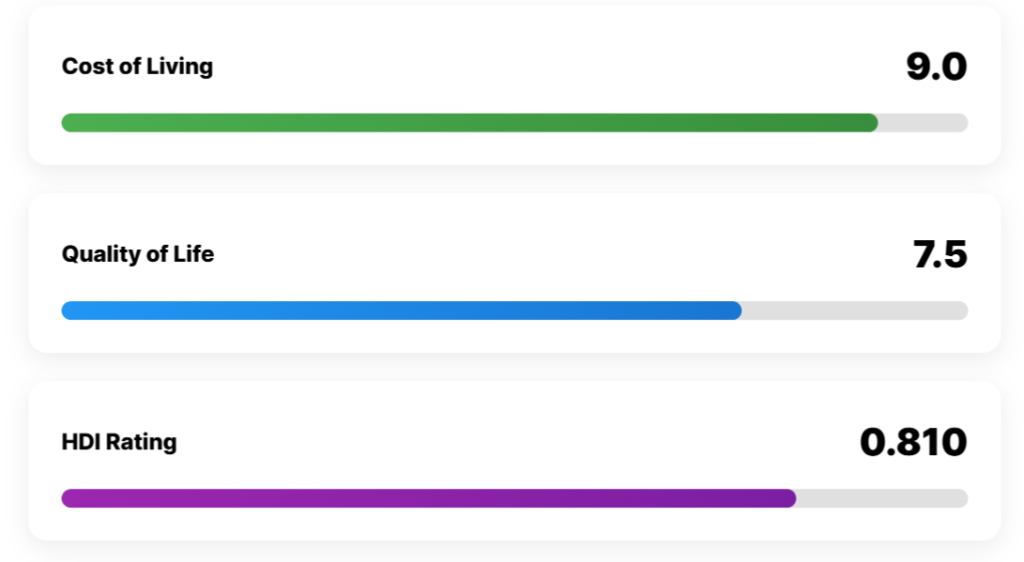
Food is another win. Locals can eat well without paying premium prices. We score Cost of Living at 9.0.
Quality of life comes in at 7.5, driven by an HDI of 0.810 and a Mediterranean climate that many retirees find comfortable. Healthcare is the weak link.
In Tirana, private options offer good care and many common procedures, so you are not stuck waiting in a public system. But once you leave the capital, the healthcare infrastructure is much worse.
Language barriers are manageable, not zero. Italian is common due to historical ties, and English is the main foreign language for younger people and tourism.
Albania’s final average score is 7.60 out of 10 – and it is a country worth paying attention to.

### 2. Georgia
If you want to live in Europe without the visa stress, Georgia might be a good path. And that is not the only advantage: The low Cost of Living is also very attractive.
Luxury rent runs $600 to $1,000, which leaves you room for private care, travel, and savings. Daily transport also stays cheap, with taxi rides at $2 to $3, so you don’t need a car to move around.
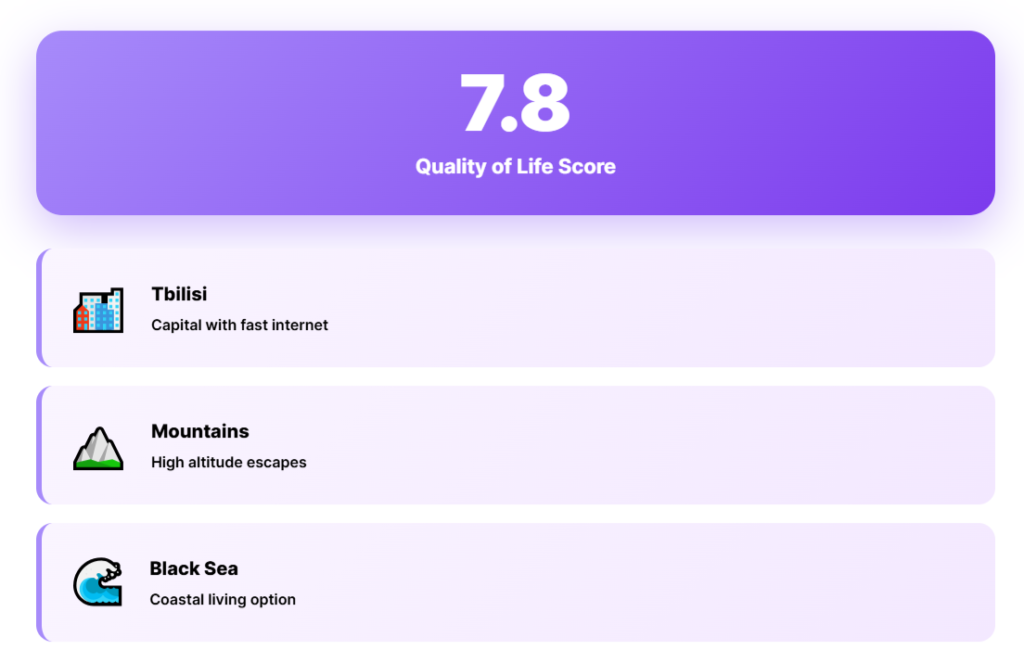
Quality of life scores 7.8. The country is safe, and the lifestyle range is wide.
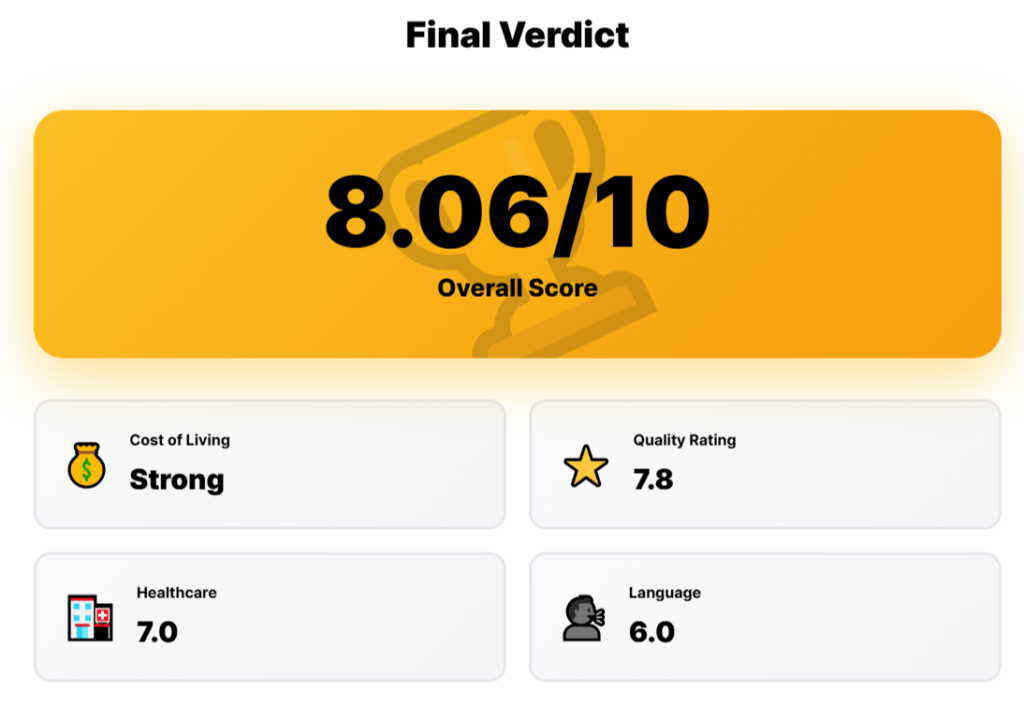
You can base yourself in the capital Tbilisi, then switch seasons between Kutaisi and the Ski resorts, or the Black Sea in Batumi. Private healthcare in Tbilisi is better than most people expect at this price level, so we score healthcare at 7.0.
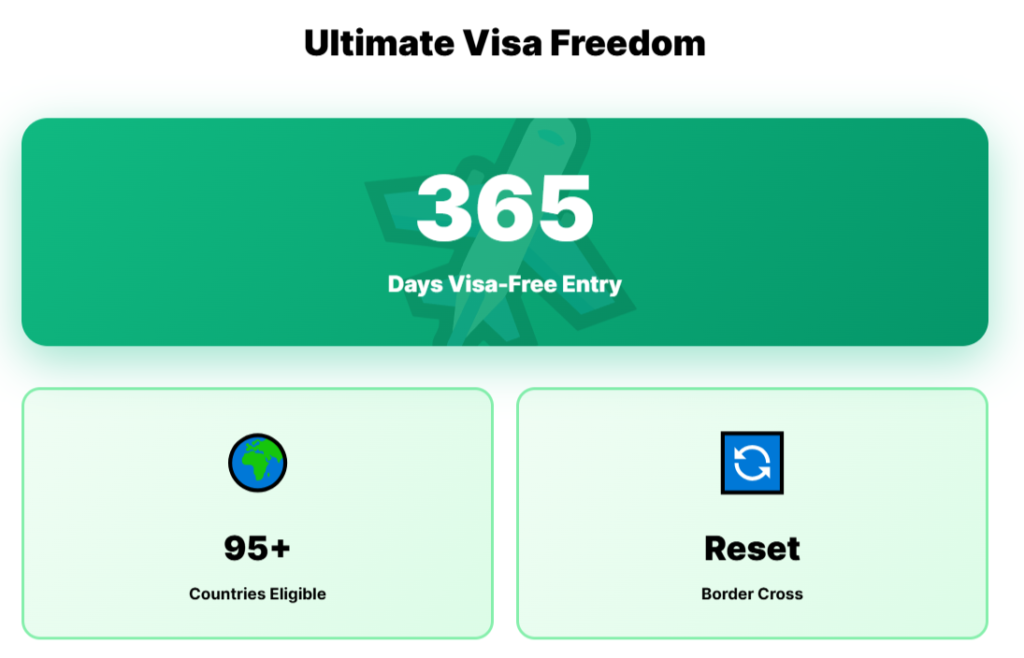
Residency is where Georgia separates itself from almost everyone else. Citizens of 95+ countries, including the US and UK, get one year visa-free.
Crossing the border (to Turkey or Armenia, for example) and re-entering often resets this clock for another year. Remember that border officials have discretion to deny entry.
If you want a formal permit, property at $100,000 or business turnover can get you there. Language barriers score 6.0.
Younger Georgians speak English, while older people speak Russian. Georgia’s final average score is 8.06 out of 10, and that’s what happens when visas stop being the bottleneck.
Georgia is a very interesting country, but the details matter. If you are serious about moving to any of the countries I mentioned, you need more than an article. On The Expat Patreon, I upload deeper reports that might save you time and money on your future. Join the community for $5 a month and get the full picture.
### 1. Serbia
Georgia wins on visa rules, but Serbia wins on the overall. If you want a big city that runs like a real hub, with hospitals, flights, and daily services that don’t feel improvised, Serbia has it.
Belgrade is pricier than Tbilisi or Tirana, but it still considered a budget destination. A central apartment rents from $600 to $900, which leaves you enough room for private healthcare, eating out, and travel.
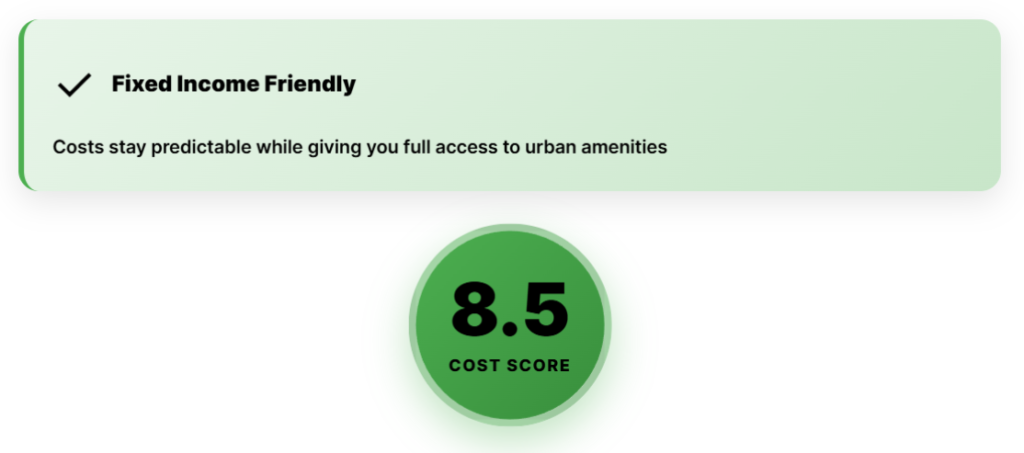
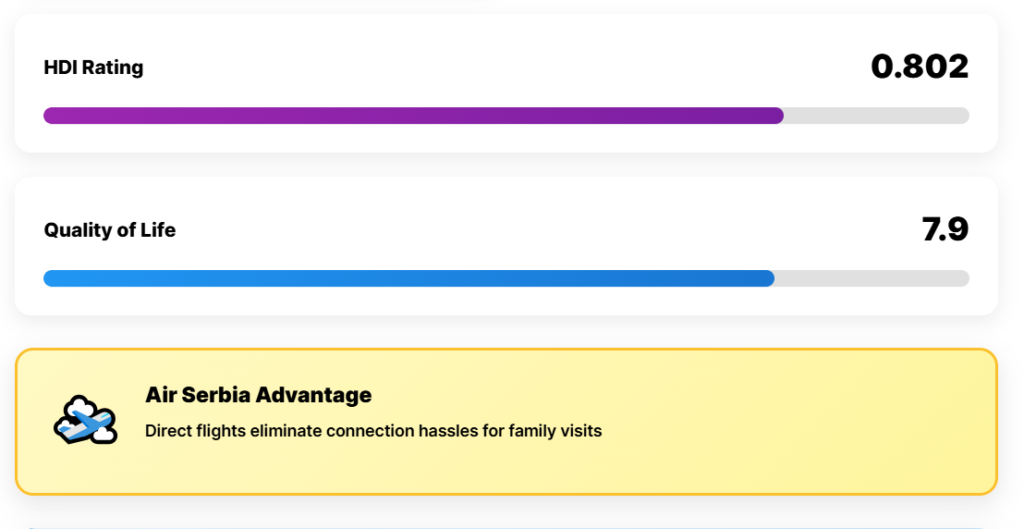
Predictable and reasonable costs – that’s why Serbia earns an 8.5 on Cost of Living. Serbia’s HDI is high, at 0.802, and Belgrade offers quality of life comparable to major cities in Western Europe.
The travel piece is big too. Belgrade works as a regional air hub through Air Serbia, so you don’t need a connecting flight every time you visit family or handle paperwork abroad.
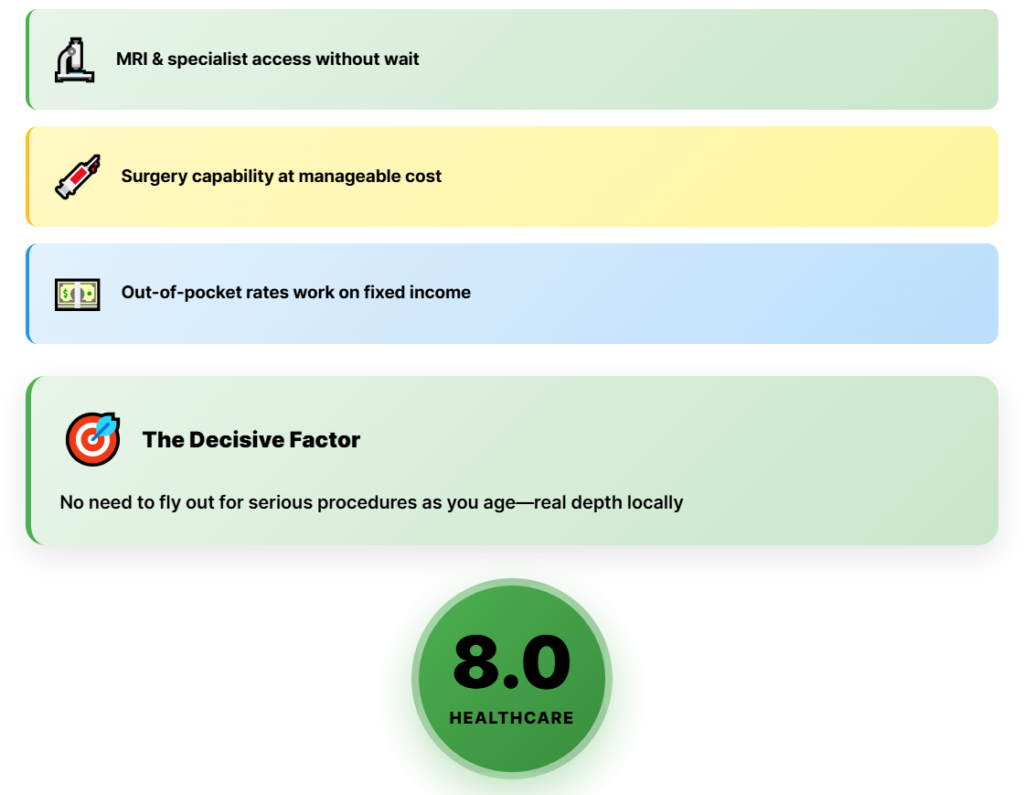
Healthcare is the decisive category – Belgrade acts as the medical hub for the Balkans, and that changes your risk math as you get older. You can pay prices that fit a pensioner on a fixed income, instead of waiting in a public system or flying out for every serious test.
Private Healthcare scores 8.0.
Residency is also practical – you can qualify through property ownership with no minimum value, or through company formation. Think of it like buying a small apartment and turning it into a legal anchor.
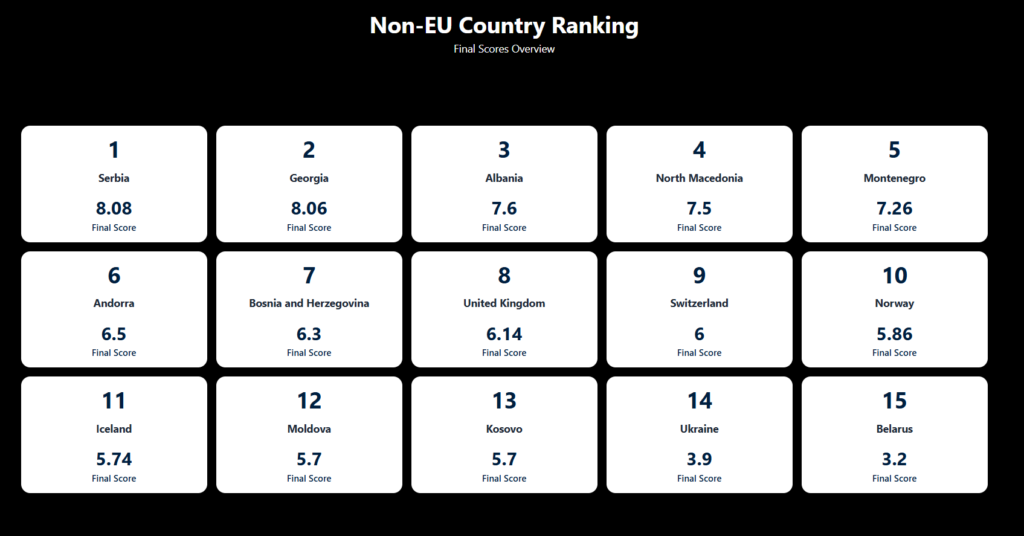
Serbia’s final average score is 8.08 out of 10, and it wins by being the best all-rounder.
The difference in the final score of Georgia and Serbia was very small – almost a tie – so please tell me in the comments which one deserve the 1st place in your opinion.
In another article, I ranked all the Balkan countries, so you can see how Serbia compares to EU countries like Croatia, Bulgaria, and Romania.
Levi Borba is the founder of expatriateconsultancy.com, creator of the channel The Expat, and best-selling author. You can find him on X here. Some of the links above might be affiliated links, meaning the author earns a small commission if you make a purchase.