What if you could live in a beautiful European city without ever needing to own a car?
A city where the transport is so efficient you can cross it in minutes, and so safe you can walk home at night without a second thought… And what if a monthly pass for this entire network cost you less than a single tank of gas?
I analyzed hundreds of mid-sized cities on mobility, safety, and affordability, and the results are not what you’d expect.
- In one of Europe’s best cities for quality of life, a transit ride costs just 0.90 – less than a cup of coffee.
- Another city has such high safety that nearly 70% of people feel secure walking alone at night.
- And one has a public transport network running with clockwork precision, even in the middle of the night.
You’ll see why the cities that made our list are not just convenient or affordable, but also offer the peace of mind you need to truly enjoy your new life.
The Criteria To Rank The Best Cities for Car-Free Living in Europe
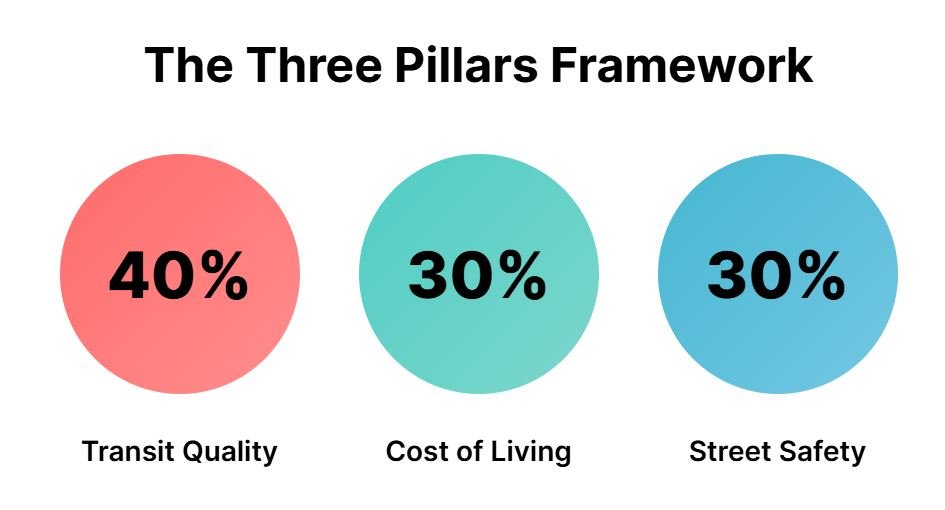
I used a weighted model with three pillars: Public Transport Quality at 40%, Affordability at 30%, and Safety at 30%. This keeps the focus on places where you can live well without a car.
I also narrowed the field to cities that have at least a tram system or a metro system; all the cities listed have one of them, or both. If a city from our sample has just buses alone, it is excluded from our ranking, because buses share lanes, get stuck in traffic, and might be late if there is a road accident.
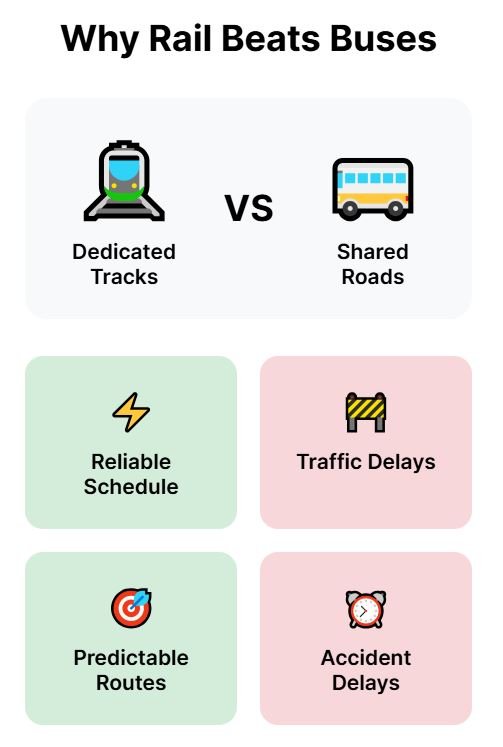
Vilnius, for example, was out despite having the cheapest single-ticket price of all cities from our sample, because it has no tram system or metro lines.
Affordability contributes 30% of the score. Fare levels are combined with overall cost of living, because a low-priced monthly pass means little if rent blows up your budget.

Safety and walkability make up the final 30%. We use two hard indicators: how many people say they feel safe walking alone at night, and national road fatality rates. Road deaths signal how serious a country is about protecting people outside cars. Perceived safety tells you if you’ll actually walk from the tram stop after dark without any major threat.

This model filters hype and rewards cities with proven rail, realistic costs, and streets where you can walk without much worry. And it overturns the myth that only high-priced Western capitals deliver safe, pedestrian-first living – so let’s jump to the ranking.
7th Place: Sofia, Bulgaria
Kicking off our list at number seven is Sofia, the capital of Bulgaria. This city earns its spot almost entirely on the pillar of affordability. It represents the absolute floor for costs on our list, making a car-free life accessible on even the tightest budget.
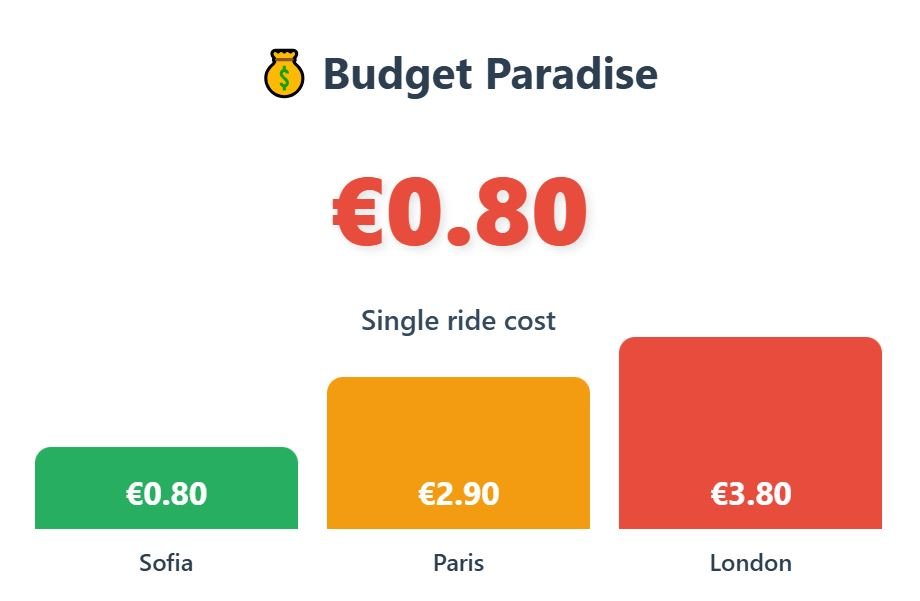
A single ticket for the metro or tram costs just 1.60 Bulgarian Lev, which is the equivalent of about 80 euro cents. If you plan to use the system every day, an annual pass costs only 365 Lev, or 186. That’s 50 cents of Euro per day for unlimited access to the entire city network.
This financial advantage extends beyond transit.
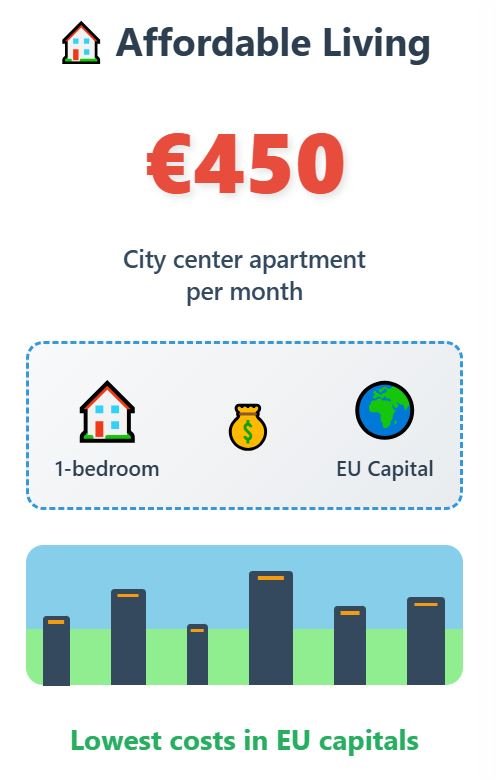
The cost of living is one of the lowest in any capital in the European Union. A one-bedroom apartment in the city center can be rented for as little as 450 per month, a figure that is unthinkable in Western Europe. The low costs mean your money goes significantly further, freeing up resources that would otherwise be spent on car payments, insurance, and fuel.
When we analyze the mobility network, we see a system of two distinct halves.
The modern part is the Sofia Metro, the backbone of its public transport. Its four lines cover 52 kilometers, creating a crucial axis that connects sprawling residential districts, the central railway station, and, most importantly, Sofia Airport (via a rail line). This means you can get from your plane to the city center without ever needing a taxi. The metro is clean, fast, and efficient.

Beyond this modern core, the rest of the network consists of trams, trolleybuses, and buses. While this surface network is extensive, the vehicles are often older and subject to the city’s traffic.
The system is functional and it qualifies Sofia for this list, but the inconsistency between the new metro and the old tram network prevents it from ranking higher. It offers a solid foundation for car-free living, but lacks the seamless integration of our top contenders.
This is what a local told us about public transport in Sofia: “The public transport is great, especially the metro. They did a great job making most of the city accessible through it, especially the train station and the airport. Don’t take any taxis. They will overcharge you, and when you’re stuck in traffic, which you will be, they will charge you even more. Never ever take a taxi in Sofia.”
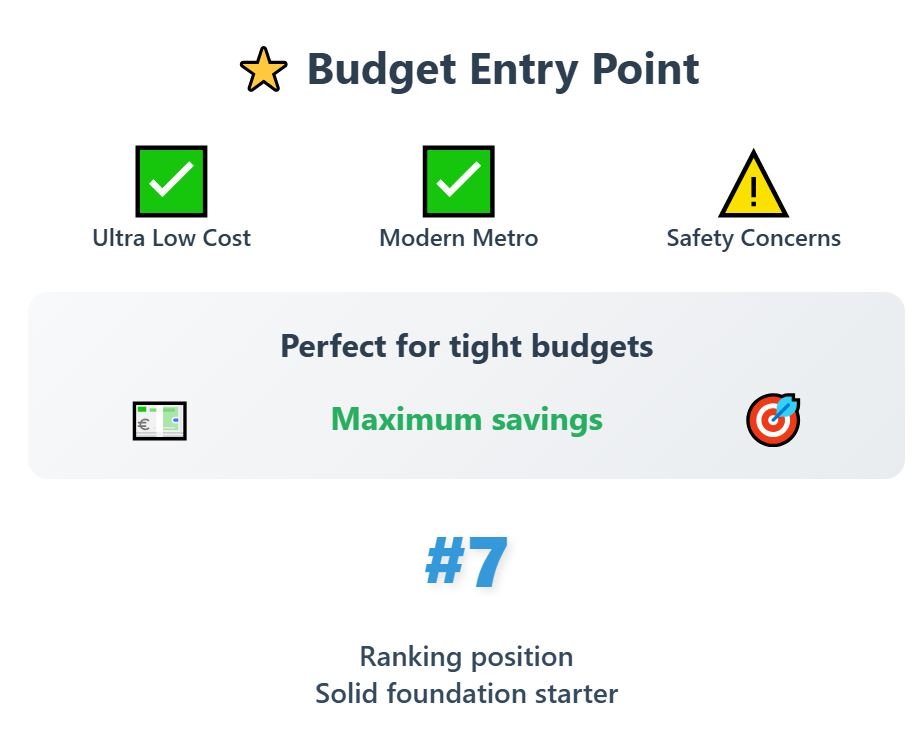
The primary factor holding Sofia at the number seven position is our third pillar: safety and walkability. While the city center around Vitosha Boulevard is a lively and walkable pedestrian zone, the data reveals significant concerns. According to Eurostat, only 48% of residents in Bulgaria report feeling safe when walking alone at night. Road safety also does not help. Bulgaria’s national road fatality rate is 81 deaths per million inhabitants. To put that in perspective, the EU average is 46.
Still, Sofia offers a budget-friendly entry into a car-free life, anchored by a useful metro system.
6th Place: Tallinn, Estonia
At number six, we examine a city that implemented a truly radical experiment in urban mobility.
As the first European capital to make its entire public transport network fare-free for registered residents, Tallinn effectively eliminated the financial friction of getting around the city. Taking a tram or bus becomes nearly as effortless as the decision to go for a walk. This approach undermines the financial logic of car ownership for many residents.
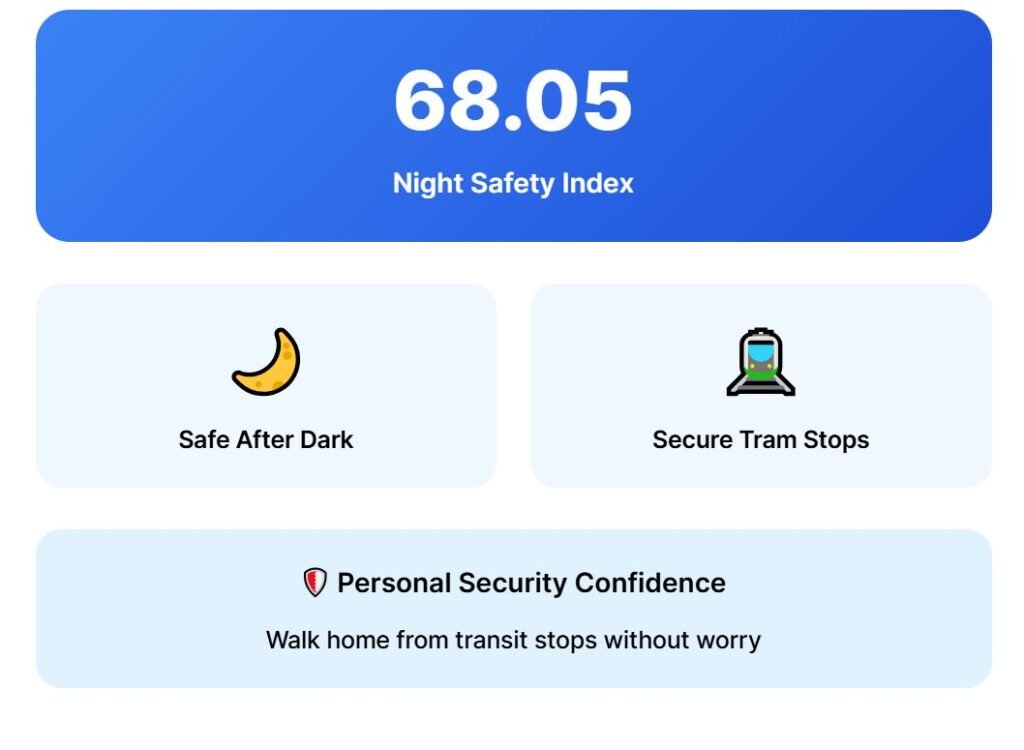
Estonia scores decently in terms of safety: 68.05 on the perceived night safety index, so you can feel fine walking home from a tram stop after dark. The city’s physical layout further enhances this experience. Tallinn’s medieval Old Town is not just a tourist attraction; it’s a UNESCO-recognized historical site that is almost entirely pedestrianized. This creates a large, walkable core where daily life can unfold entirely on foot, perfectly complementing the city-wide transit system by solving the ‘last mile’ problem in a pleasant way.
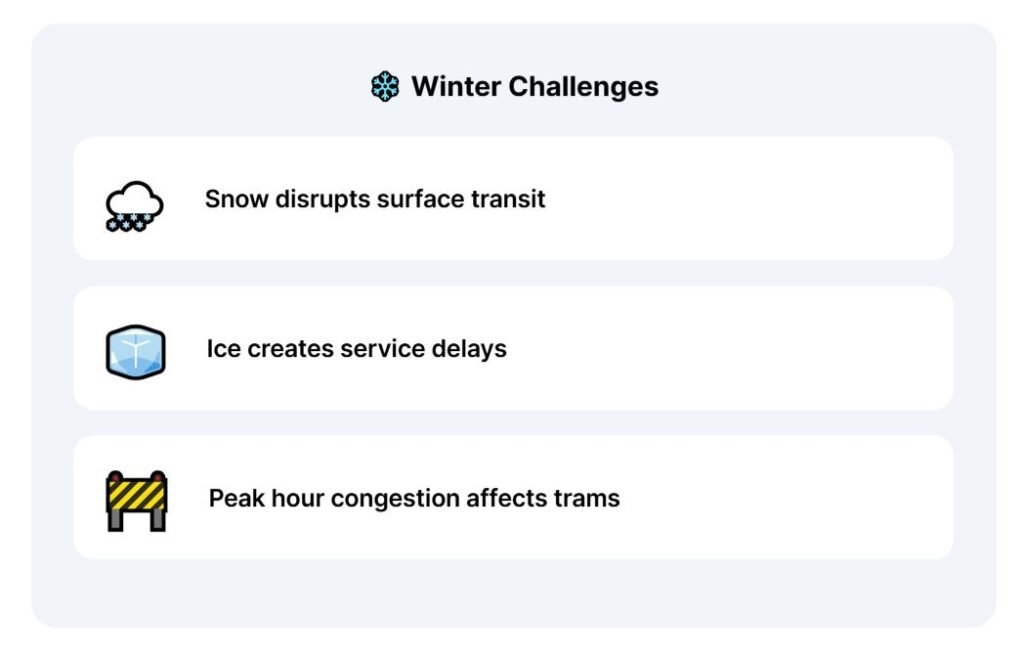
However, there’s a distinct infrastructural catch that keeps Tallinn from breaking into our top five.
While the city operates a well-maintained and effective network of buses and modern trams providing good coverage, it lacks a high-capacity, grade-separated metro system. This is a critical factor for all-weather reliability. Surface-level public transport is exposed to the same conditions that affect car drivers. During peak traffic hours, trams and buses can face delays. More importantly, in a city known for its harsh winters, snow and ice can significantly disrupt service, creating unpredictability that an underground system would entirely avoid.
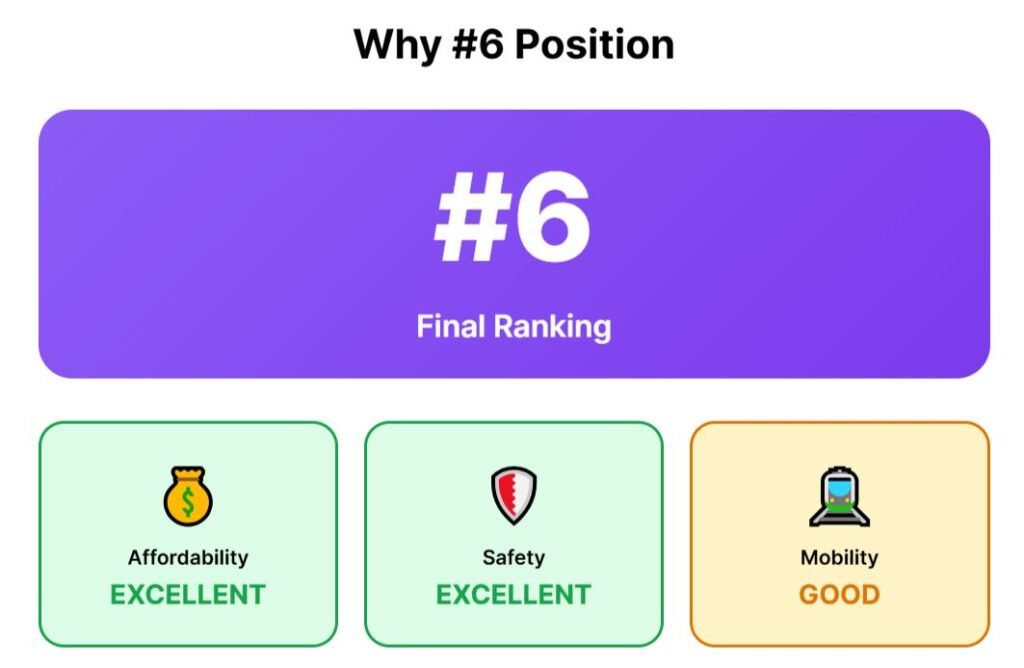
The mobility network is good, and locals are satisfied with it, but it does not have the sheer passenger-carrying capacity or the operational resilience of a subway. Still, Tallinn has an efficient and affordable system in a walkable and safe city, so it gets a 6th place.
PS: I have some really good news: FREE FOR A LIMITED TIME: Grab your Expat Wealth & Lifestyle Compass ($108 value) today! Includes our 74-page guide of Affordable European Cities, our Zero-Tax countries report, and our expat checklist. http://patreon.com/The_ExpatJoin us here before this offer ends.
5th Place: Lisbon, Portugal
Climbing to number five, we arrive in Lisbon, Portugal.
Its transport system is a blend of a modern Metro with its world-famous historic tram lines. This combination is practical for residents as well as tourists; it is a good solution to the city’s notoriously hilly terrain. The Metro provides fast, efficient travel over longer distances. Then, the iconic trams take over, navigating the dense, narrow, hilly streets of older areas where a metro line would be difficult.
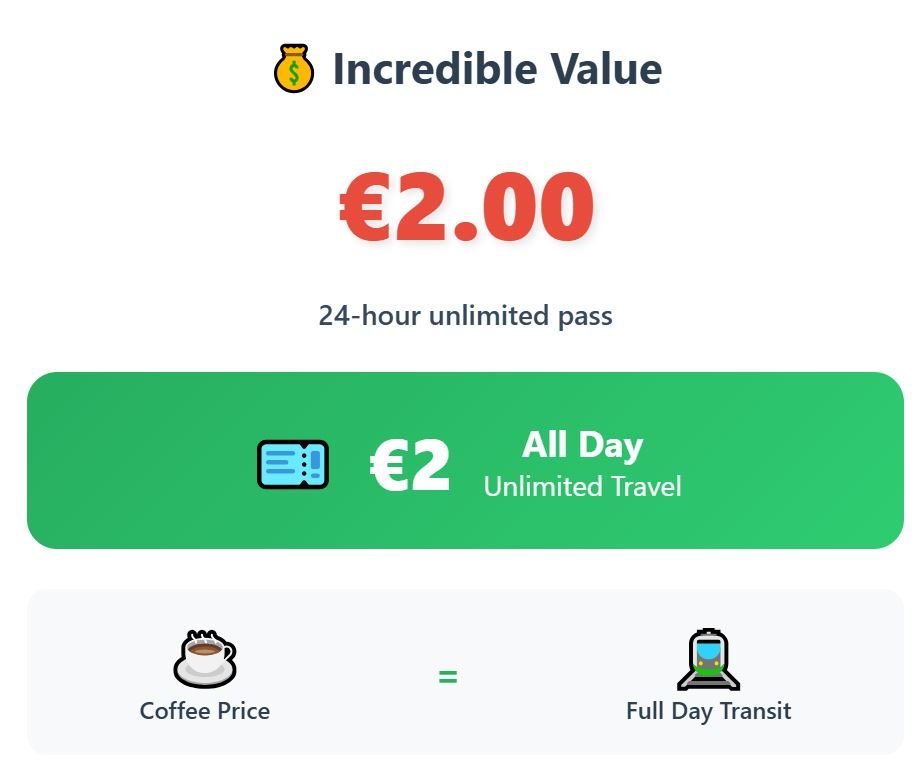
Affordability is a strong point for Lisbon. The cost of using its public transport is exceptionally low – A 24-hour pass averages just 2.00. When a full day of unlimited travel is this inexpensive, public transport becomes a default choice.
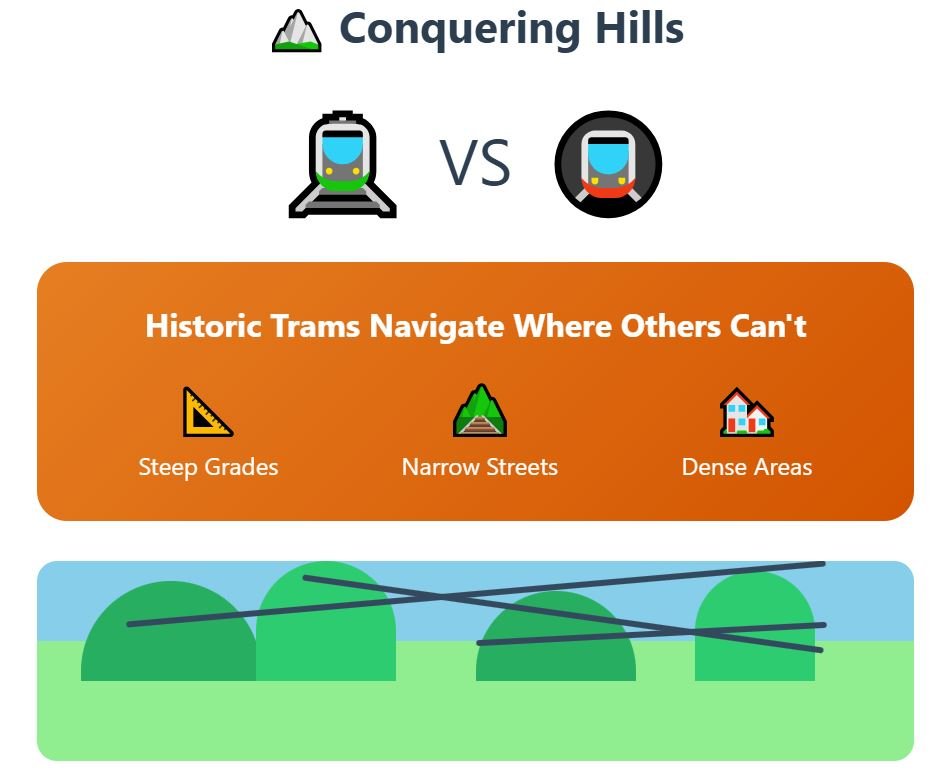
This transit network is layered onto a city with an incredibly walkable historic core. Neighborhoods like Baixa and Alfama are characterized by dense, narrow streets where walking is easy (and a good exercise for calves).
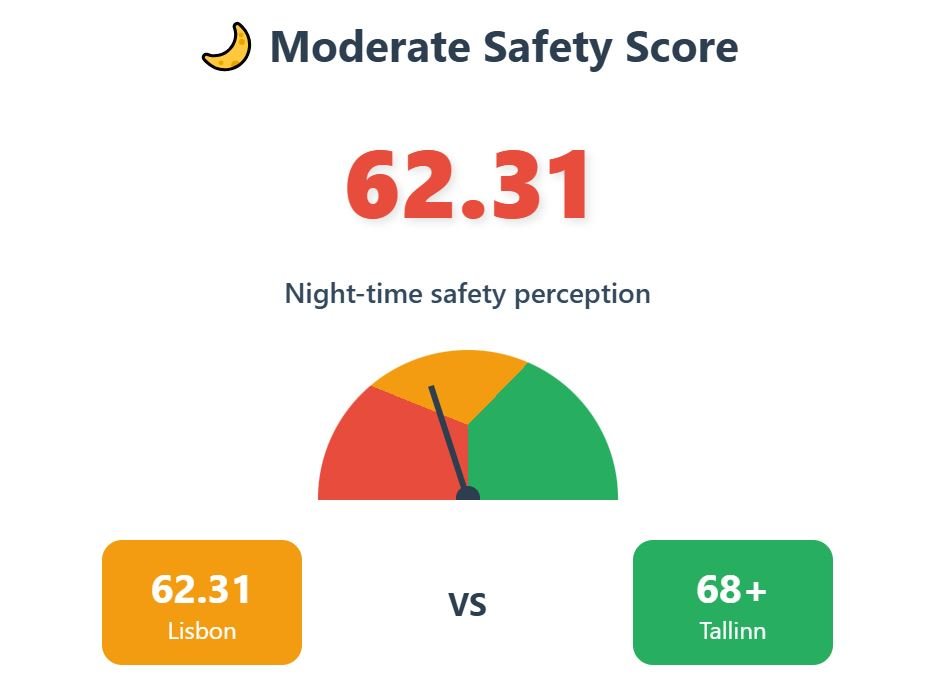
But… a key factor holds Lisbon back in our third pillar: perceived safety. Lisbon’s perceived night-time safety score is 62.31, which is classified as moderate. For comparison, Tallinn’s score is over 68. Lisbon offers a compelling package, but this compromise on perceived safety is what firmly places it in the middle of our list. The next city, however, is one of the safest European capitals.
4th Place: Warsaw, Poland
Warsaw is a city whose transport network is a direct result of its 20th-century history.
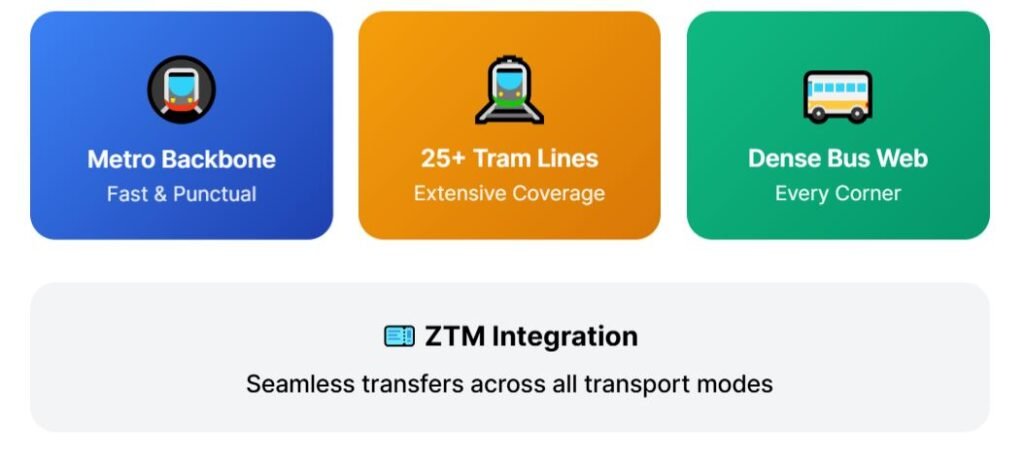
Rebuilt with a modern urban plan, Warsaw was able to integrate a public transport system that avoids the constraints of an ancient city core. The city has a modern metro system, with the M1 line running north-south and the M2 line running east-west. These two lines form a crucial cross that connects the dense central districts with the sprawling residential areas on the outskirts.

The metro is known for being fast, clean, and punctual, providing a reliable foundation for any commute.
This underground network is then supplemented by one of Europe’s most extensive tram systems, with over 25 lines crisscrossing the city, along with a dense web of buses that reach almost every corner. This multi-layered system is fully integrated under a single ticketing authority, the ZTM, making transfers between the metro, trams, and buses seamless.
Affordability is also built into the system. A 90-day ticket valid across all forms of transport costs 280 Polish Zloty, which is the equivalent of about 65 euros – less than 22 euros per month.

Warsaw also performs well in the critical pillar of safety, directly challenging outdated perceptions of the region. According to Eurostat data, 66% of residents in Poland report feeling safe when walking alone at night. Poland’s road fatality rate is 52 deaths per million inhabitants – not as low as Germany or Spain, but in line with neighbors like the Czech Republic or Slovakia.
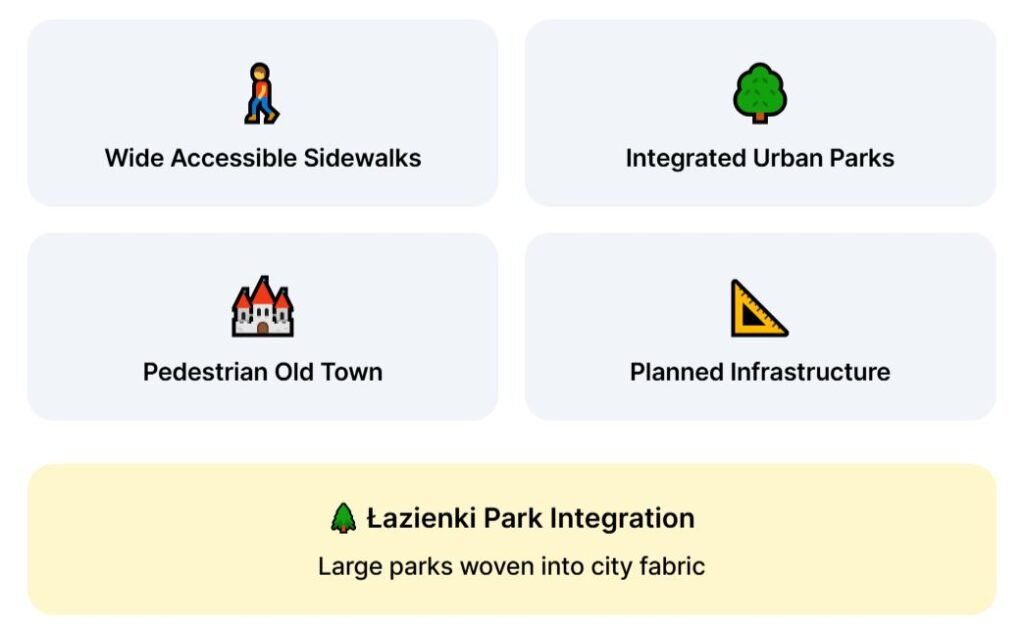
The city’s walkability is a product of its reconstruction. The destruction of the old city allowed planners to implement wide, accessible sidewalks and a network of large urban parks, such as Łazienki Park, which are woven into the city fabric. They also recreated a large pedestrian-only zone in the Old Town, creating a pleasant and safe environment for walking. The next city is very similar to Warsaw, but cheaper!
3rd Place: Kraków, Poland
Entering our top three, we have Kraków, a city that emphasizes walkability and pairs it with an exceptional transit network. What defines Kraków and earns it the bronze medal is its integration of a historic, human-scale city core with modern, efficient public transport.

The city’s crown jewel is its Old Town, the Rynek Główny, which is one of the largest medieval squares in Europe and is entirely free of car traffic. This massive pedestrian zone is encircled by the Planty Krakowskie Park, a lush greenbelt that traces the path of the old city walls. You can conduct your entire daily life within this core on foot, surrounded by historically significant architecture. It is this physical layout that forms the foundation of its strong car-free credentials.

Kraków is also a very safe city – for many, even safer than Warsaw (unless there is a football derby happening). This sense of personal safety supports walkability at all hours. Kraków’s mobility pillar is built on a single, powerful system: its trams. Instead of a metro, the city has invested in creating one of the most efficient tram networks in Europe.
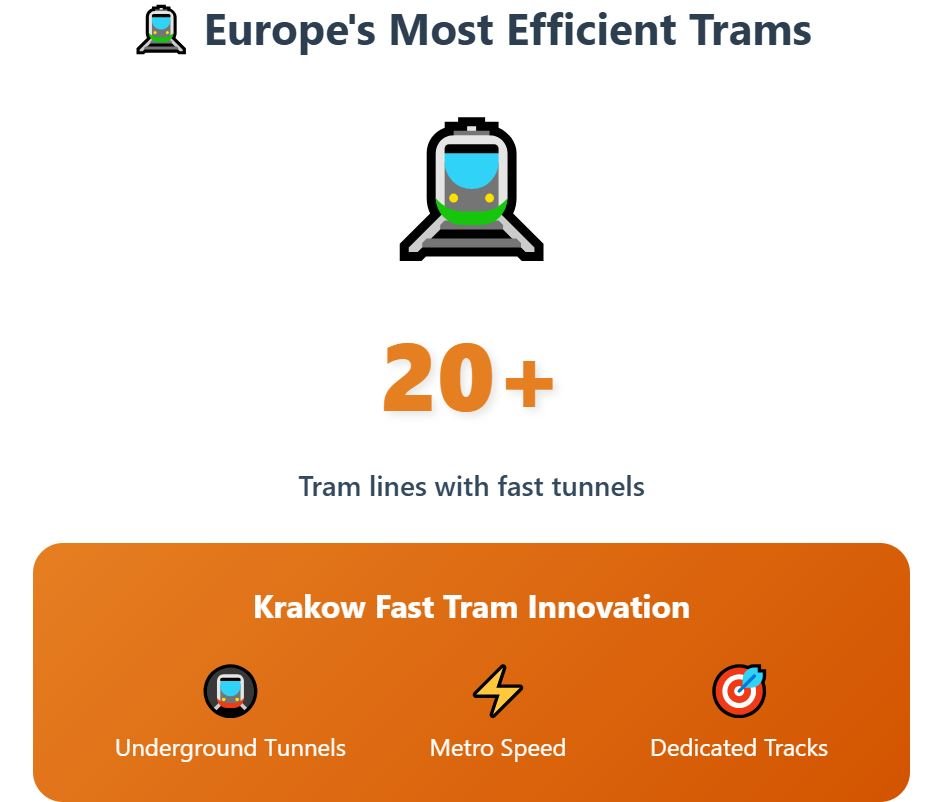
The system includes the Kraków Fast Tram (Krakowski Szybki Tramwaj), a modernized line that runs on dedicated tracks and through tunnels, giving it excellent speed and reliability. With more than 20 tram lines and a dense network of supporting buses, the system provides comprehensive coverage. An apartment is rarely more than a 500-meter walk from a stop, providing broad transit access.
A resident from Kraków told us that:
“We have a really good public transport system in Kraków. Almost every tram stop has an electronic board that shows in how many minutes the tram is arriving. You can go pretty much everywhere with trams. Sadly, with buses it’s Russian Roulette. Will line 503 arrive on time? No one knows.”
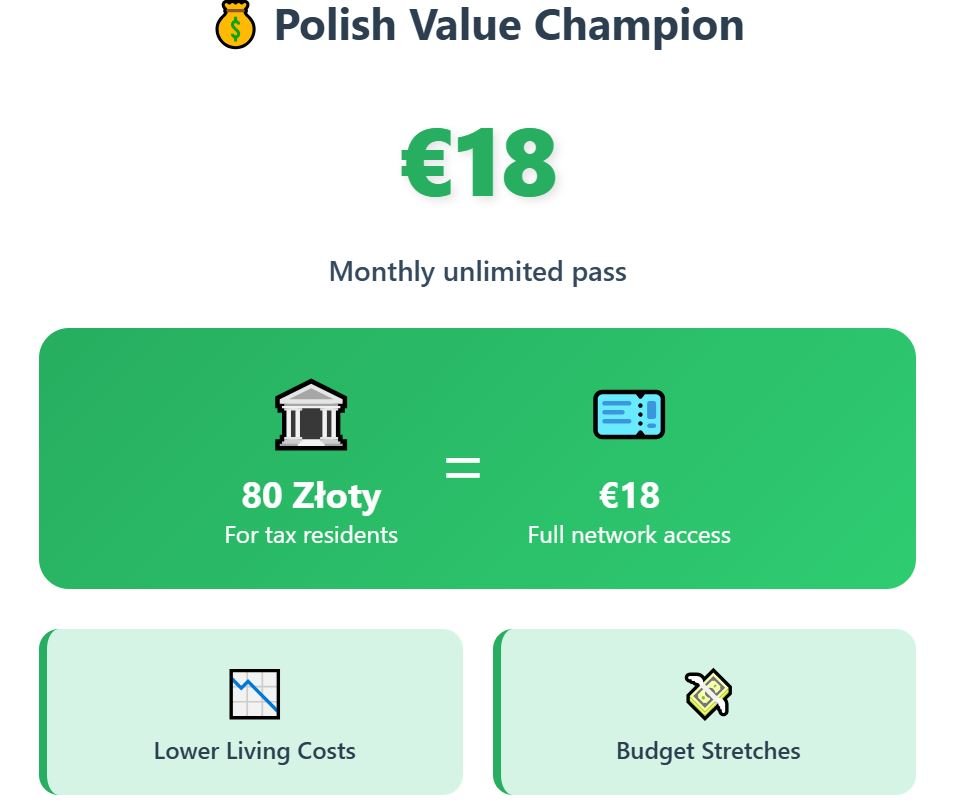
This impressive system comes at an impressively low cost, considering its quality. A monthly pass for the entire network costs just 80 Zloty for residents who pay taxes in the city, which equals about 18 euros. Kraków gets its top-three position through its balance. It combines excellent walkability and high levels of safety with a very capable and affordable public transport network.
2nd Place: Budapest, Hungary
Our silver medalist is a city with public transport history built into its fabric, home to the second-oldest underground railway in the world. Budapest is a legacy strength. Its system was purpose-built for high-capacity public use over a century ago.
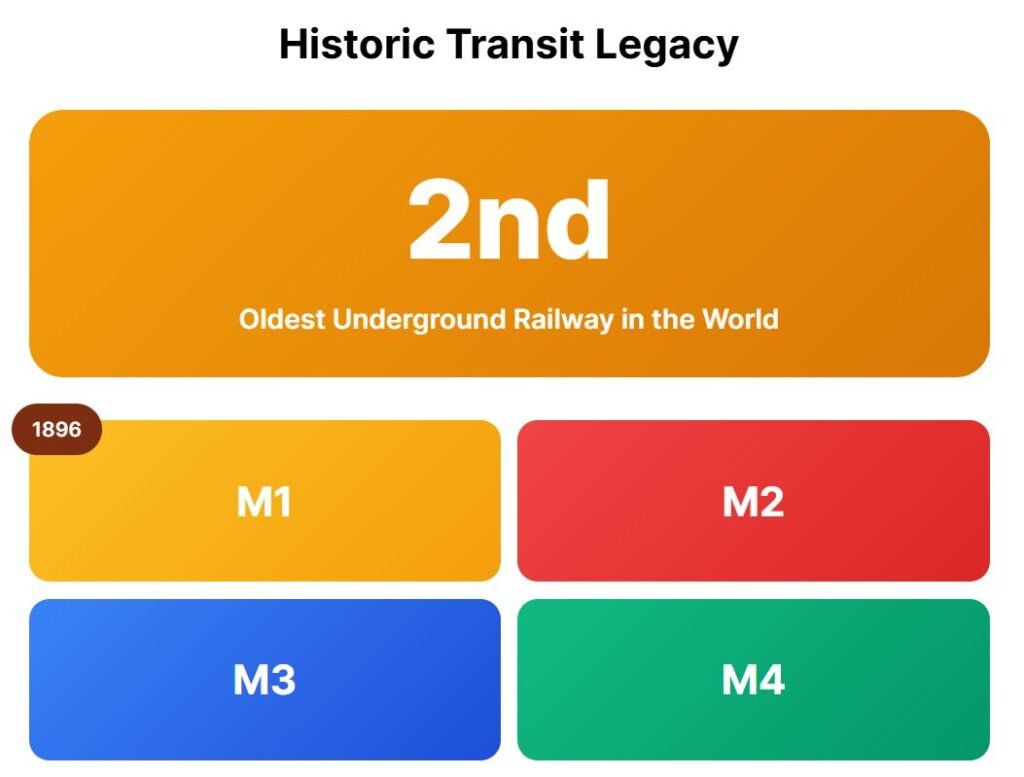
The city has one of the highest public transport ridership rates on the entire continent. For many residents, using the system is typically the most logical, efficient, and direct way to live.
The network itself is highly integrated operationally. Four lines form the Metro system, with the historic M1 line linking the city center to the City Park, and the modern M2, M3, and M4 lines connecting virtually every major district. Around this strong core, a dense web of trams and buses fills most gaps.
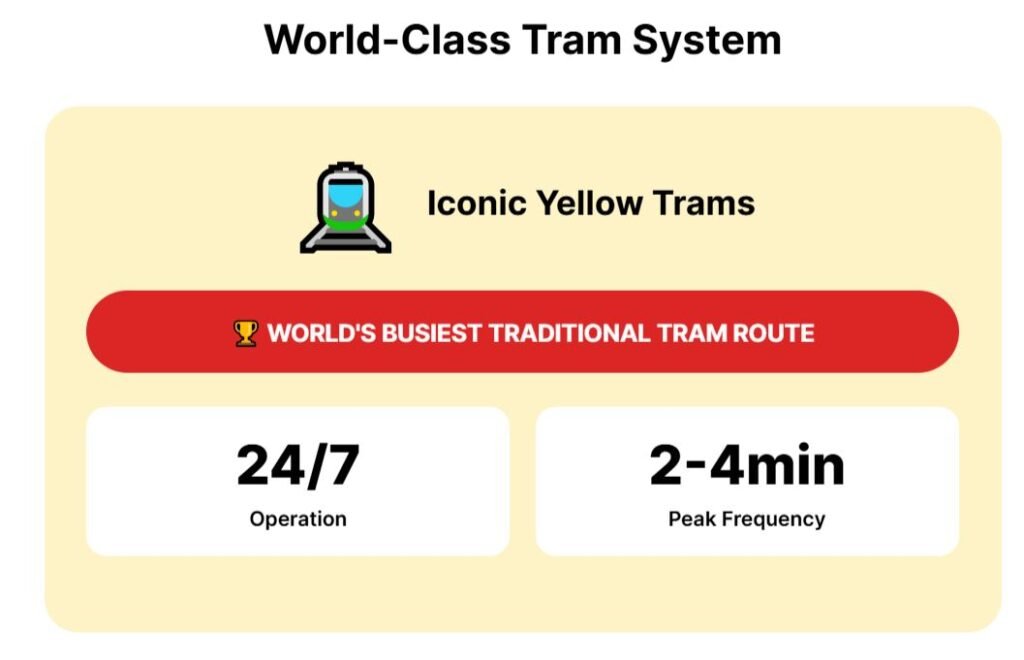
The iconic yellow trams that run along the Danube are not just a charming feature for tourists; they are a fundamental part of a system that moves millions of people. Tram lines 4 and 6, for instance, form the busiest traditional tram route in the world, with vehicles arriving every two to four minutes during peak hours.
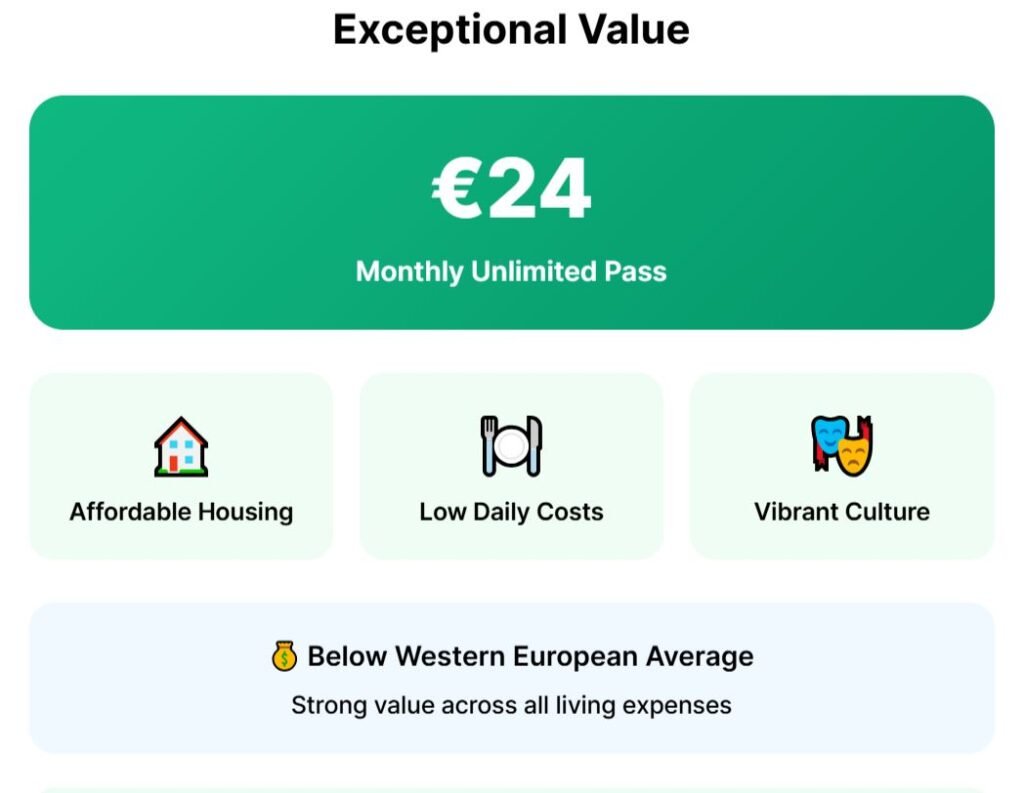
This mobility package is then combined with costs well below the Western European average. A monthly pass costs 9,500 Hungarian Forint, or about 24 euros, granting unlimited access to this vast network. When you pair this with affordable housing and daily expenses, Budapest presents a strong value.
The only factor holding it back from taking the number one spot on our list is a minor legacy issue. Some of the older tram and metro stock, while reliable, can present accessibility challenges. The high floors on certain vehicles can be difficult for those with strollers or mobility impairments, a problem that is being addressed but still exists on parts of the network.
Other than that, Budapest has an extensive transit system, so complete and efficiently connected that owning a car, for many residents, is not necessary.
1st Place: Prague — The Best City in Europe for Car-Free Living
This is the city that balances all three pillars of our analysis: mobility, affordability, and safety.
Prague excels across the board, creating a cohesive urban experience without a car. A fast, clean, and easy-to-navigate three-line metro forms the foundational structure, moving large numbers of people efficiently across long distances. This metro is integrated with one of the world’s largest tram networks, with over 140 kilometers of track.
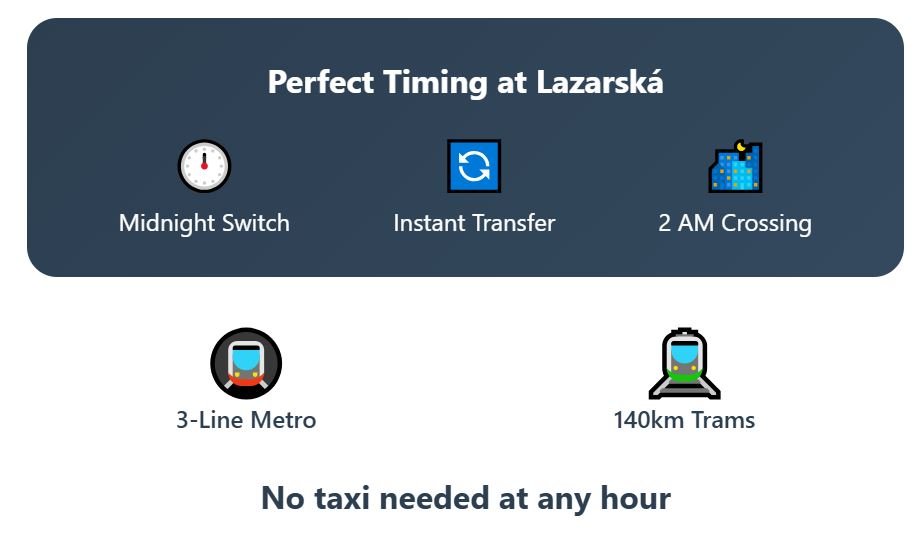
But here is the detail that truly sets it apart from every other city: the night service. After the metro closes around midnight, a perfectly synchronized system of night trams takes over. These trams are timed to arrive at central transfer points, like Lazarsk, at the exact same moment. This allows you to step off one tram and onto another with a guaranteed connection, enabling you to cross the entire city at two in the morning.
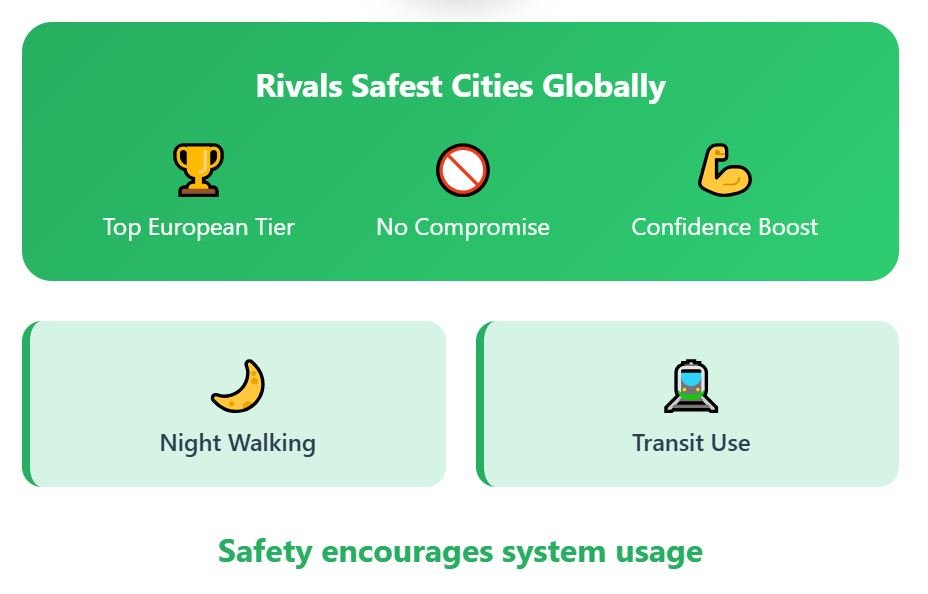
This system is then layered on top of a city with very good safety indicators. Data shows that nearly 70% of residents report feeling safe walking alone at night. This is a figure that rivals some of the safest cities on the planet and firmly places the Czech Republic in the top tier of European safety. The feeling of safety encourages you to use the system at any time.
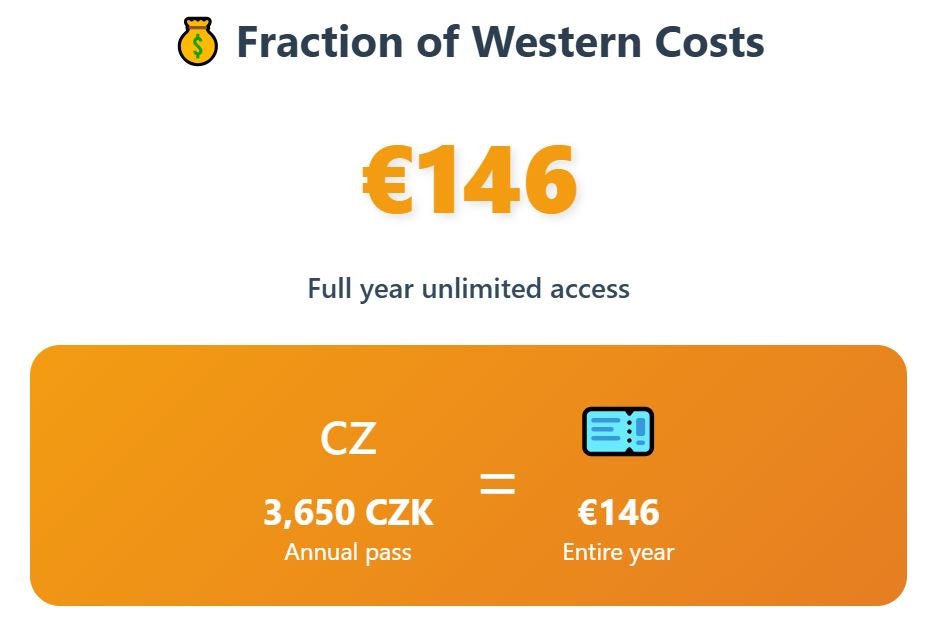
And Prague delivers all of this at a fraction of the cost of living you would find in a major Western capital. An annual transit pass costs just 3,650 Czech Koruna, which is about 146 euros.
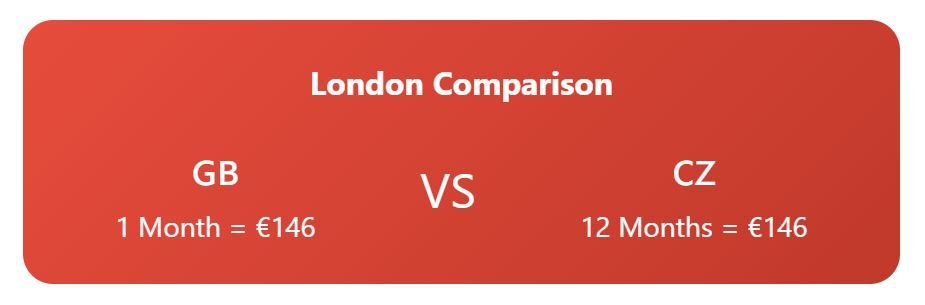
That is a full year of unlimited transport for the price of a single month’s pass in a city like London.
Prague demonstrates a positive cycle: extensive transit makes the city more walkable, and a safe, walkable environment makes that same transit more effective and desirable. For its compelling combination of mobility, affordability, and safety, Prague is the best city in Europe for a car-free life.
But what if all the cities we mentioned today – from Sofia to Prague – are just too big for you? What if you would prefer to live in a smaller place where you can walk everywhere, and it is much cheaper? I selected for you the 10 best small cities in Europe.
Levi Borba is the founder of expatriateconsultancy.com, creator of the channel The Expat, and best-selling author. You can find him on X here. Some of the links above might be affiliated links, meaning the author earns a small commission if you make a purchase.