In recent years, Greece and Cyprus have become two of the biggest magnets for expats for some impressive reasons.
I have spent a lot of time in both countries since moving to Europe, and I have seen these great cities personally. But who are they truly great for?
This is something most YouTubers never tell you about.
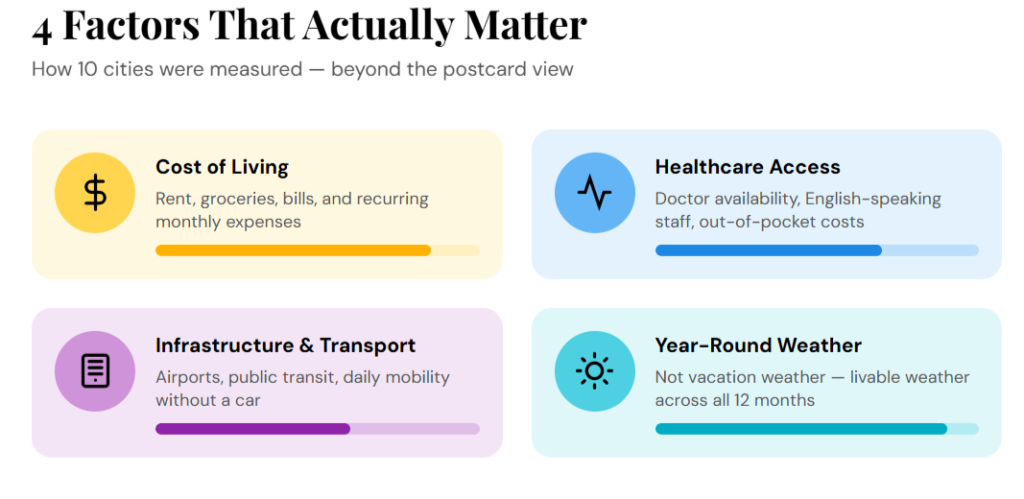
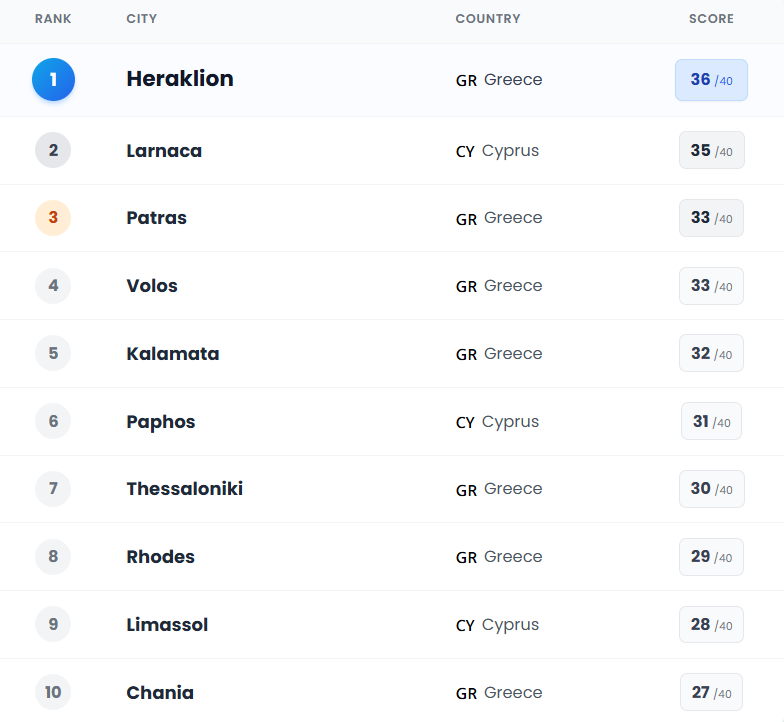
So, we cut through the noise and ranked ten cities using four factors: the cost of living, healthcare quality, infrastructure and transport, and of course, the weather.
We also considered the opinions of hundreds of expats who know what daily life is really like. Numbers matter, but so does what life feels like once you are actually there.
Every city in this ranking is attractive, and there are no bad picks here. However, each one wins in a different way.
- Some have an incredibly low cost of living.
- Others offer really good tax incentives.
- Some of them might even help you live longer!
The Criteria To Define The Best Greek and Cypriot Cities to Retire to
How do you compare ten strong cities without falling for postcard nonsense?
You strip out the holiday fantasy and look at daily life, which is how you avoid making a bad mistake.
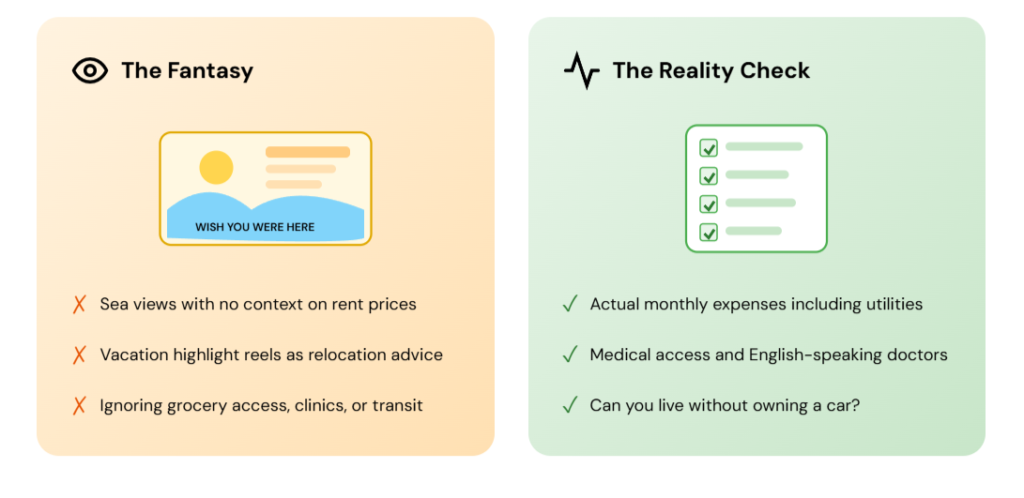
A sea view means very little if your rent costs too much, your doctor is far away, and you need a car just to buy tomatoes.
- First, we consider the cost of living, which includes housing, groceries, bills, and the small services that drain your budget every month.
- Second, we look at healthcare to see how fast you can see a doctor and what costs come out of your own pocket.
- Third, we evaluate infrastructure to determine if you can move around easily and live well without being trapped in traffic.
- Fourth, we analyze the weather—not postcard weather, but the real conditions that decide if you actually go outside in January or hide indoors.
Additionally, both Greece and Cyprus offer tremendous tax incentives for expats.
For example, in Greece, expats pay much lower income taxes on foreign income, while both Cyprus and Greece exempt expats from foreign capital gains taxes. If you want to know more about the tax incentives in these two countries, just type “Greece” or “Cyprus” in the comments, and I will do an exclusive video on the most voted one!
So, let’s start our top ten at the bottom and work our way up.
10th Place: Chania
Chania is located on the northwest coast of Crete and has a population of about 108,000 people. I understand why people look at it; it is a real city with a long coastline and year-round life, rather than just a summer postcard.
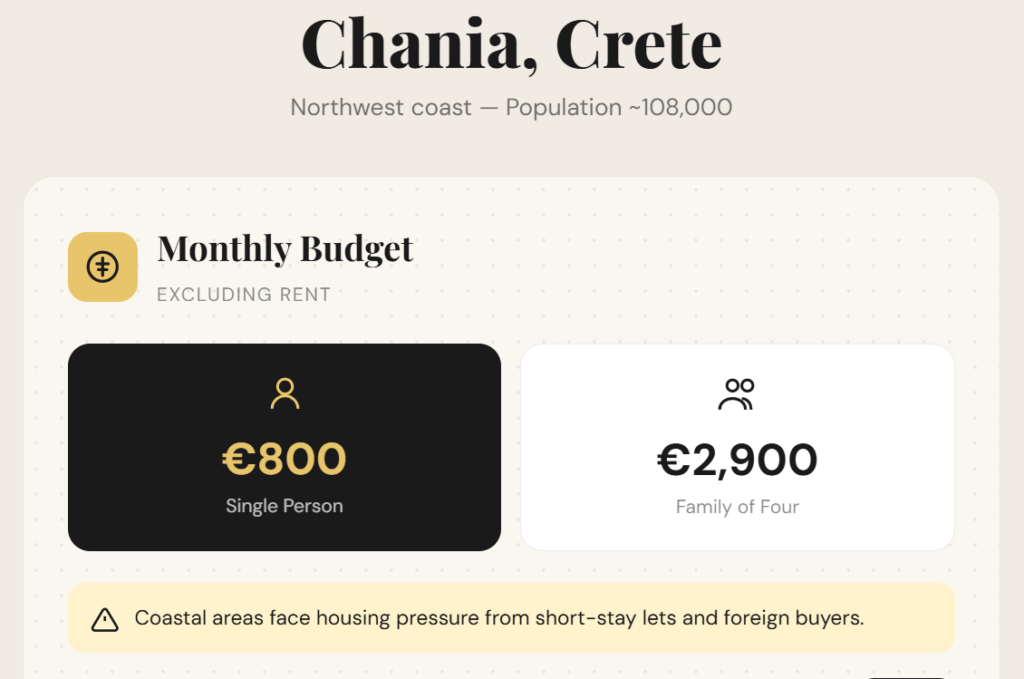
Expect to budget at least €800 monthly for one person, while a family of four will need around €2,900, plus rent. This represents a moderate range for Crete, meaning it is not overly expensive, but it is not among the cheapest options either. The weak point is housing costs in popular coastal areas, where short-stay lets can push your monthly budget considerably higher.
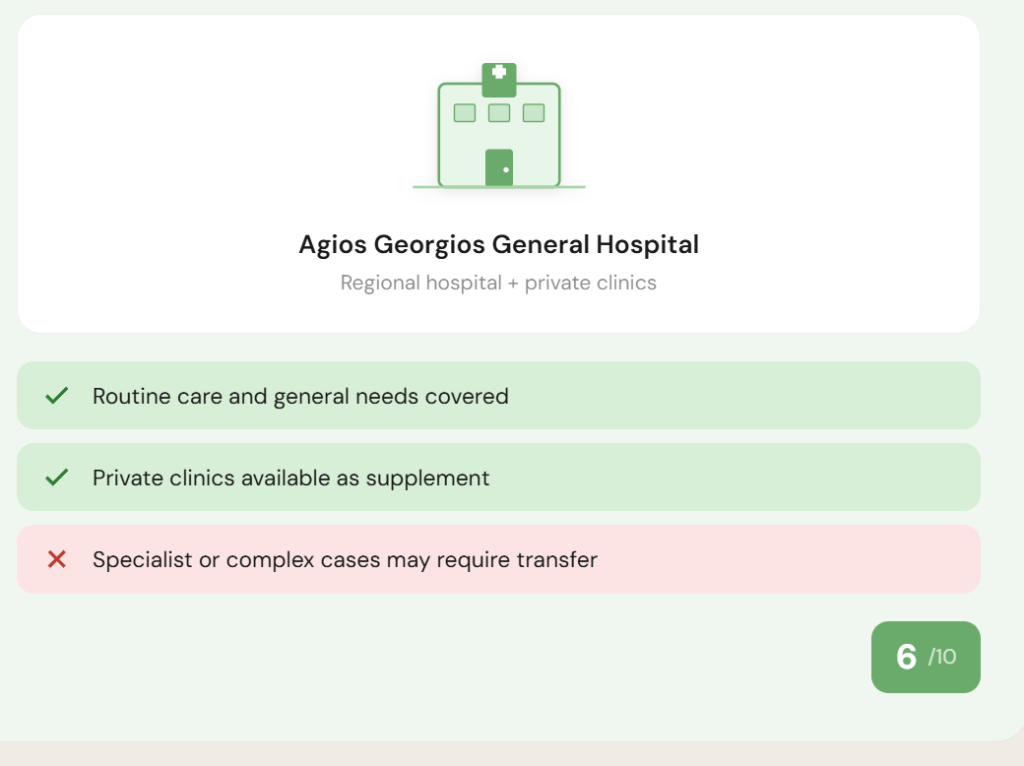
Agios Georgios General Hospital covers normal medical needs well, and private clinics add another reliable layer for routine care. However, if you have a serious condition or need deeper specialist access, you may still need to travel elsewhere on Crete. Because of this limitation, healthcare comes in at a moderate 6 out of 10.
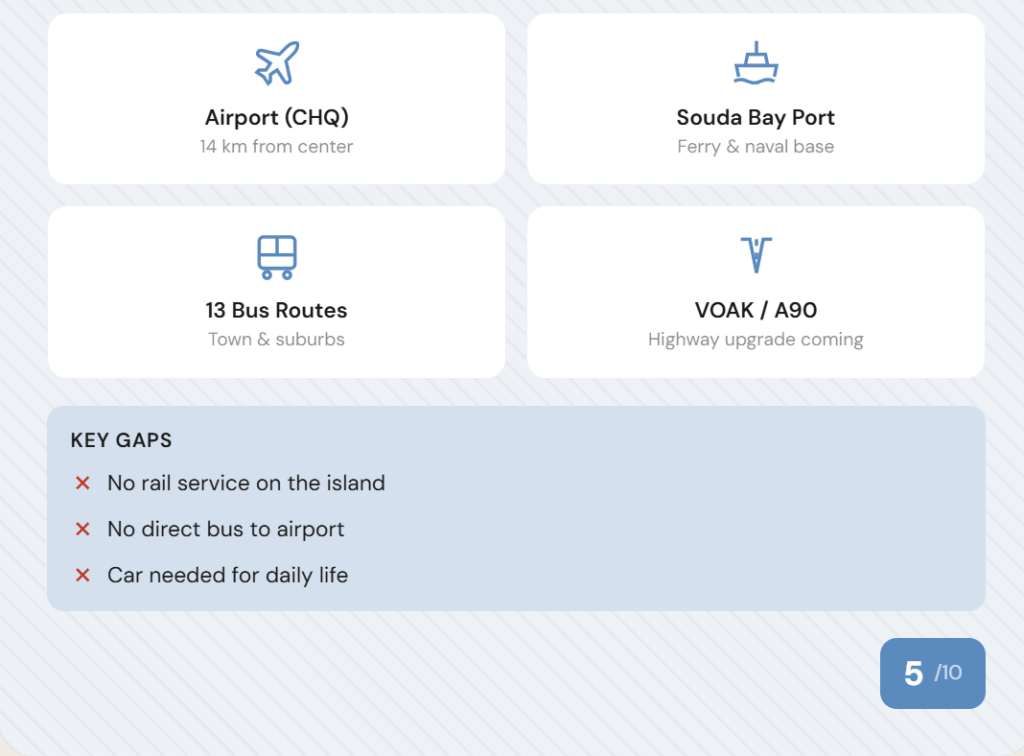
Chania features an international airport that offers plenty of international destinations. Unfortunately, there is no rail system at all, public transport is limited, and airport access relies heavily on intercity buses instead of a direct urban link. The upcoming VOAK highway upgrade will eventually make driving around the island much faster and safer, but for now, you will likely need a car, leaving infrastructure at 5 out of 10.
The summers here are hot and dry, winters remain very mild, and the city enjoys about 2,760 hours of sun each year. Thanks to these excellent conditions, the weather earns a strong 9 out of 10.

A person with family living there shared some interesting insights:
“Tourists can absolutely swamp the place in the summerish time, African dust occasionally, earthquake rumbles every so often. The best bougatsa and dakos I’ve ever had was there, the old port is very cute, and they hate when you say the name of the city like it’s China.”
Off-season, Chania gets quieter fast, and some services feel noticeably less active. If you want to experience Crete with steady sunshine and a calmer pace, this trade-off can still work very well.

9th Place: Limassol
Limassol is situated on the south coast of Cyprus and boasts a population of roughly 240,000 people.
As the island’s second-biggest city, its main port, and one of its strongest business centers, it features more international companies, corporate jobs, and day-to-day services than most places in Cyprus. Recently, areas like Zakaki have seen a surge in new business and development, making the city even more commercially attractive.
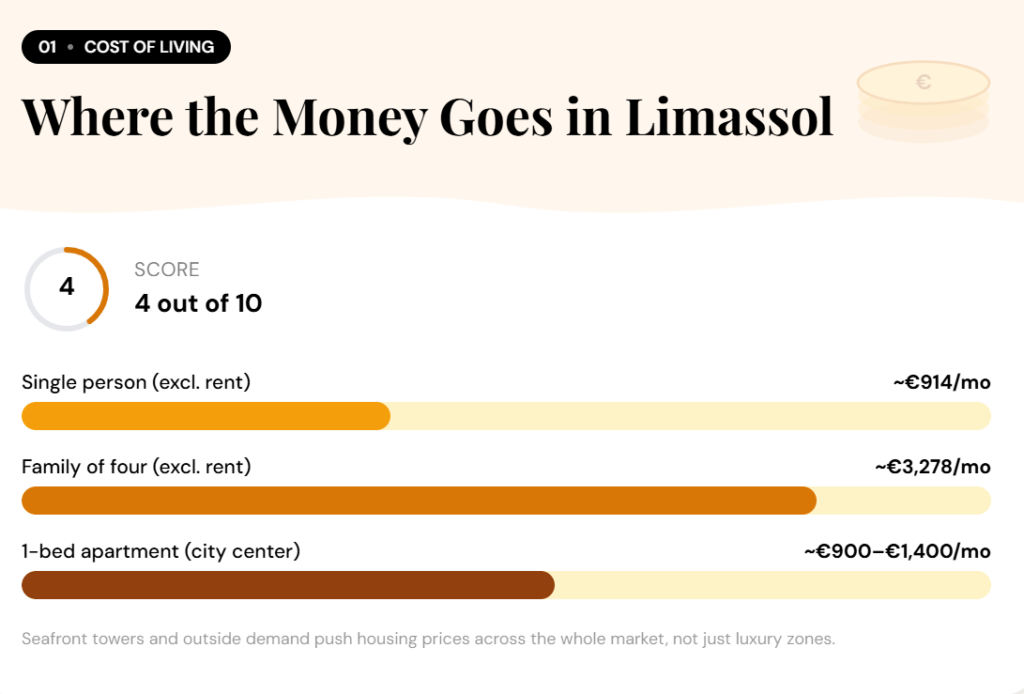
Before factoring in rent, monthly expenses usually hover around €900 for single expats and €3,300 for a family of four. Housing is noticeably more expensive here than in most other cities on our list, as strong external demand and high-end seafront towers push prices up across the entire market. This heavy property premium drops the city’s cost of living score to a 4 out of 10.
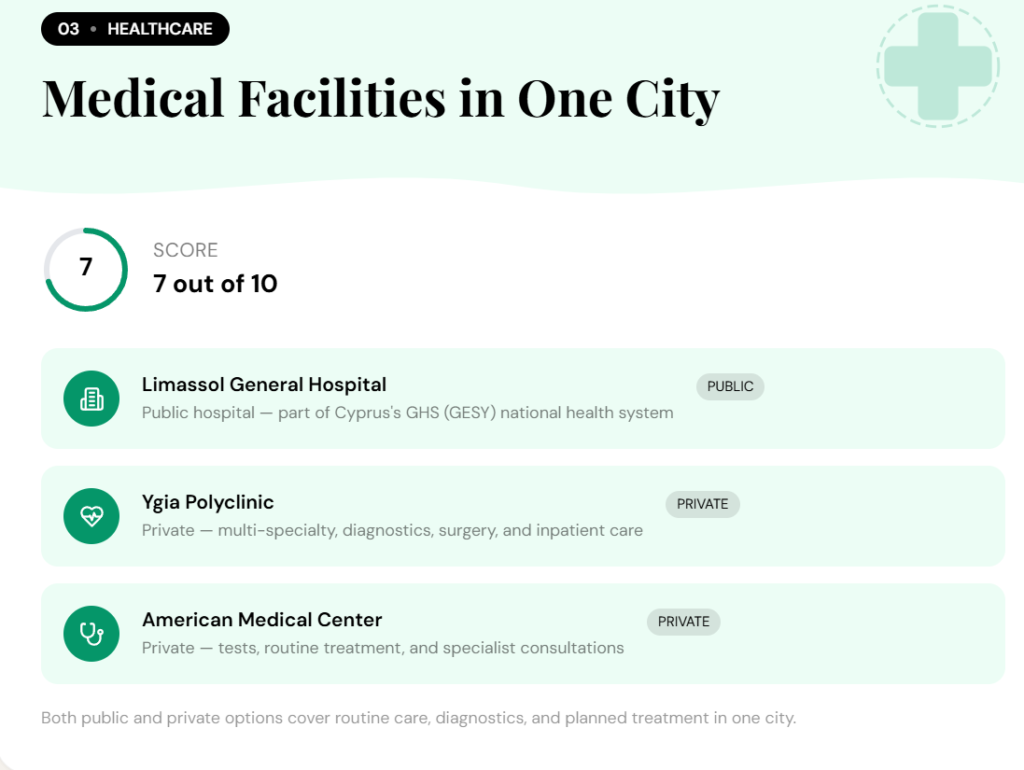
When it comes to healthcare, residents have access to Limassol Hospital, Ygia Polyclinic, and the American Medical Center. This comprehensive medical network provides strong private and public options all within the city limits.
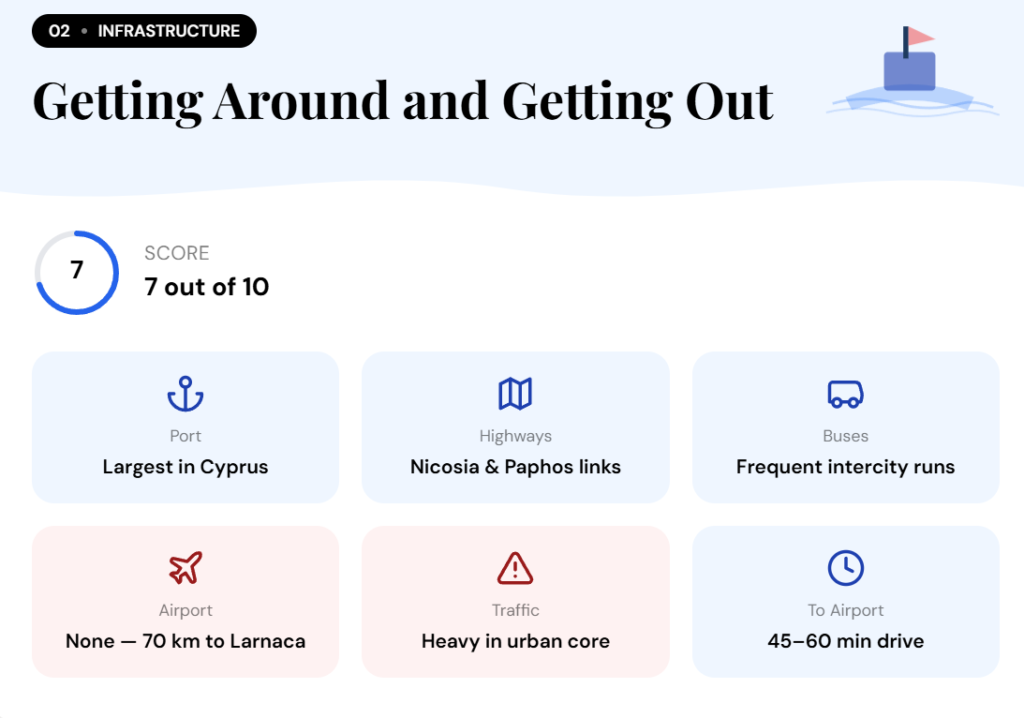
The local highway network provides excellent links to Nicosia, Larnaca, and Paphos. A notable downside is that since Limassol lacks its own airport, you will need to drive 45 to 60 minutes to catch a flight in Larnaca or Paphos. Traffic inside the city is another growing issue; rapid expansion has led to congestion that eats into the daily convenience you pay a premium for, but infrastructure still manages a solid 7 out of 10.
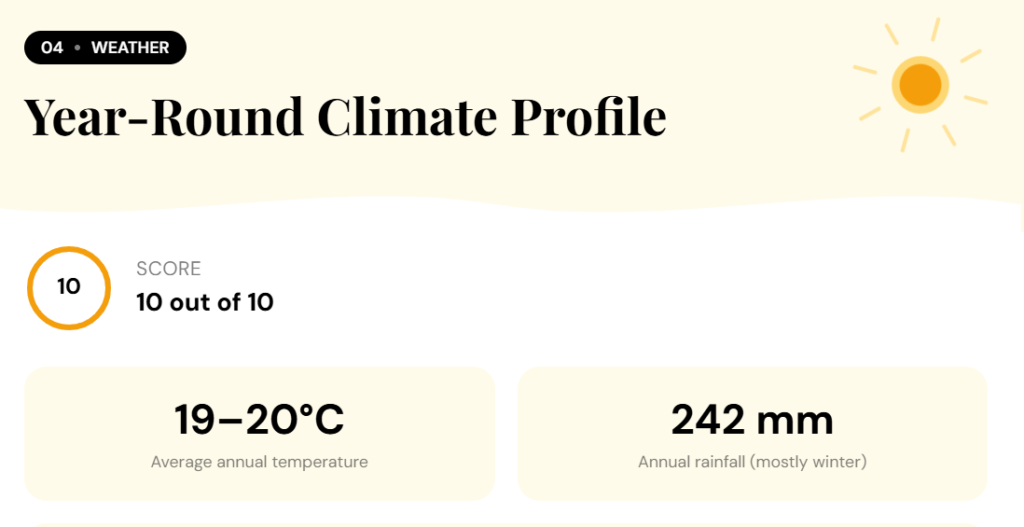
The average yearly temperature stays near a pleasant 19 to 20 degrees Celsius, and rainfall is remarkably low at only 242 millimeters a year, mostly occurring in winter. Because of these near-perfect conditions, the weather easily gets a 10 out of 10.
Limassol works perfectly if you want a cosmopolitan Cyprus base and can afford the premium lifestyle without stressing over your budget every month.

Speaking of Cyprus, I share the full data charts and infographics for all the cities we cover on my Patreon. You can join now to instantly receive $108 worth of welcome gifts, even if you sign up for the free tier! If you join any paid tier, you will also receive all my best-selling eBooks on living abroad, plus specialized monthly reports with everything you need to know, all for the price of a coffee.
8th Place: Rhodes City
In eighth place, we find Rhodes City in the southeast Aegean, located on Rhodes Island near the Turkish coast with 57,000 people. As the island’s main urban center, it offers much more than a simple holiday strip. The Medieval Old Town brings a rich history alongside a heavy tourist flow during the peak travel seasons.
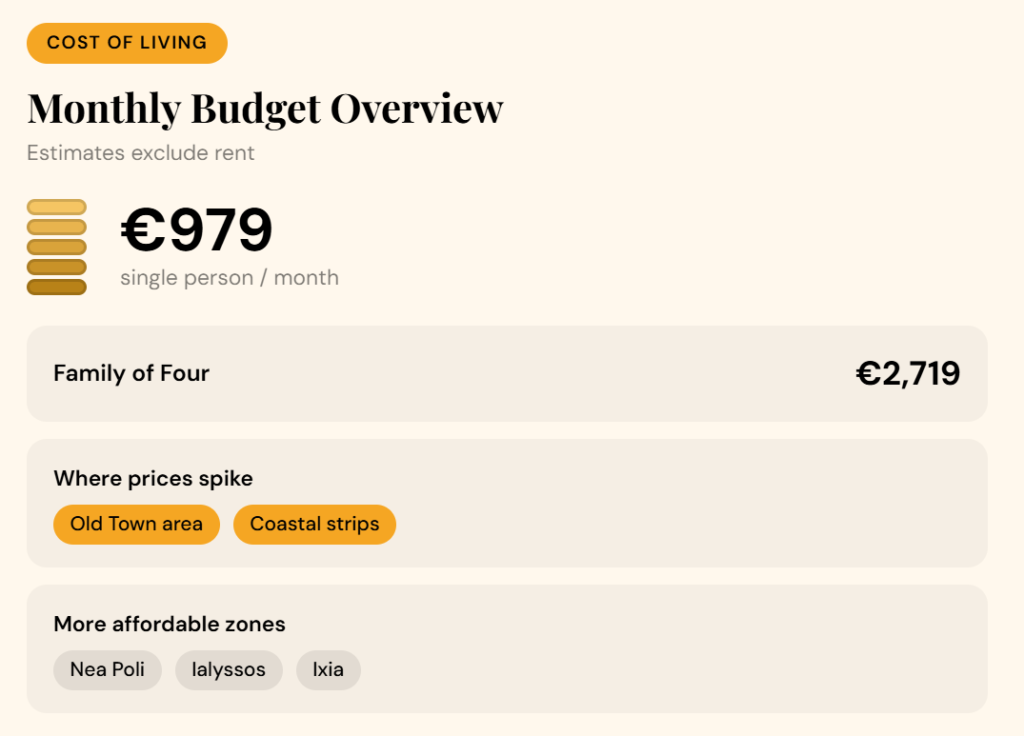
Living costs typically run close to €1,000 for an individual or €2,700 for a family, completely excluding housing expenses. The local port and roads are currently being upgraded, and the port’s inclusion in Greece’s Green Maritime Initiative helps it handle visitors much more efficiently.
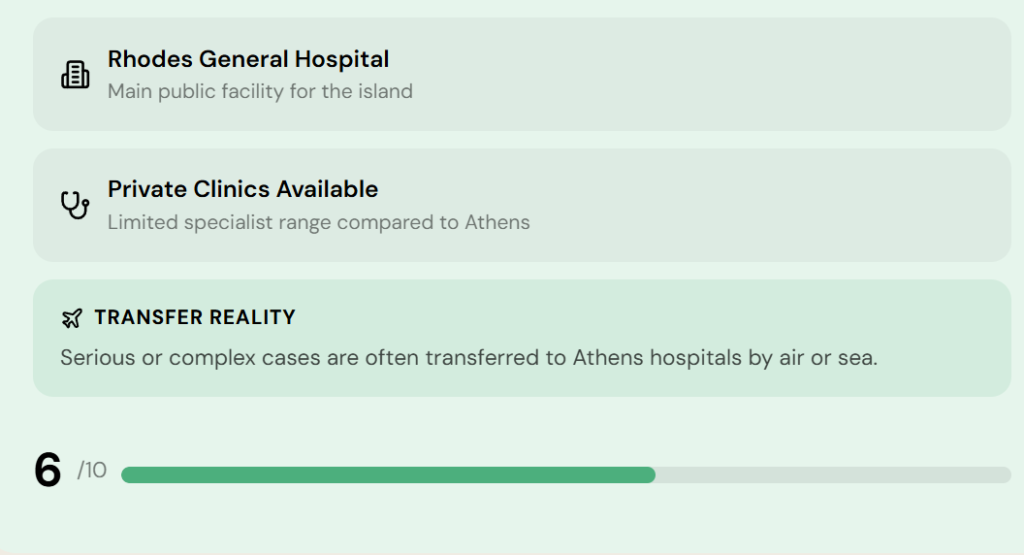
The city is equipped with a large general hospital and multiple private clinics, though it does suffer from a limited range of medical specialists. Because of this gap in advanced care, the healthcare system earns a 6 out of 10.
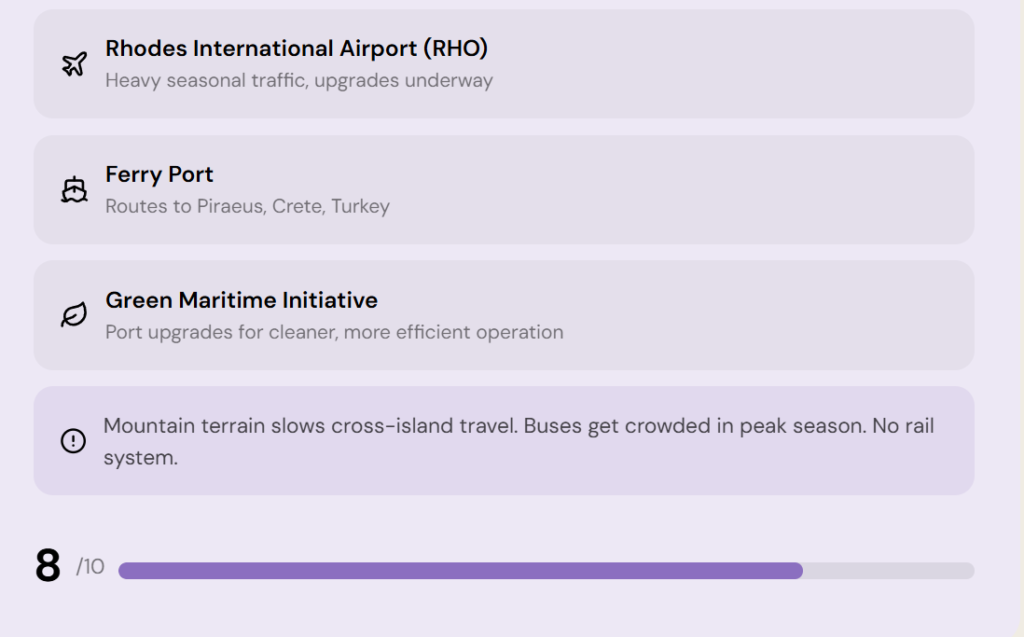
Infrastructure scores significantly better because Rhodes International Airport provides multiple international destinations. Additionally, the local port links connect you effortlessly to Athens, Crete, and neighboring Turkey.
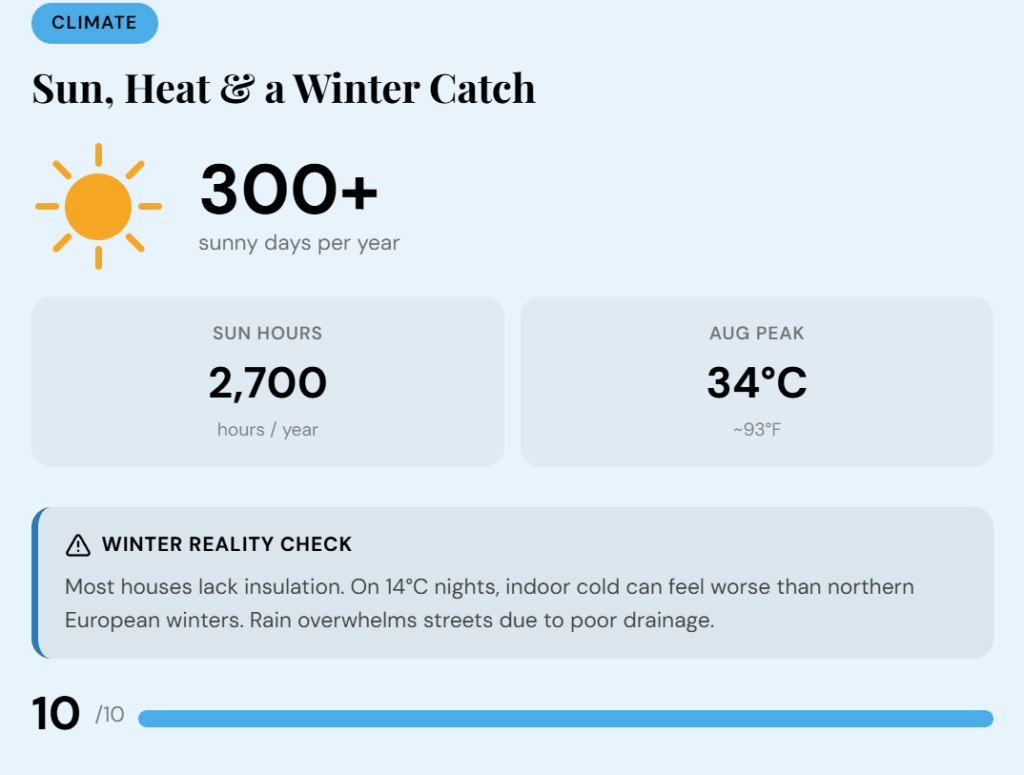
When it comes to the weather, residents enjoy more than 300 sunny days a year, with August highs averaging near 34 degrees Celsius and frost being incredibly rare. If a warm climate and easy access are your top filters, Rhodes makes sense very quickly.
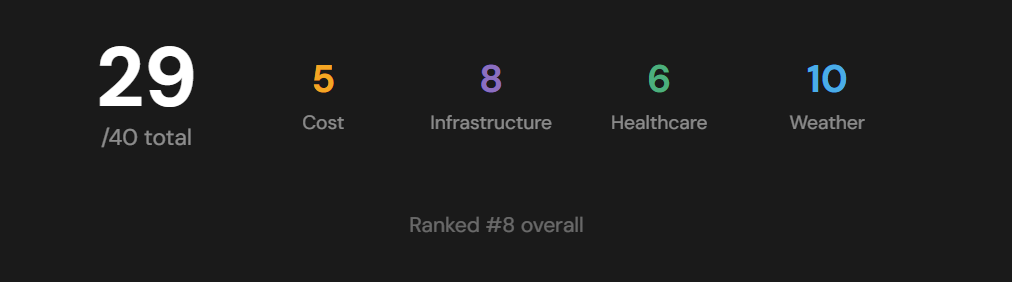
However, one expat living there alerted us to an issue that most people completely ignore, explaining:
“Houses have no insulation so it’s soooo cold in the winter. So cold that at 14C nights I would be missing my home back in Poland where it was -20C. And if even a little bit of rain falls, streets become rivers, as there is no drainage like in mainland Europe.”
Now we move higher in this ranking to explore a much larger city.

7th Place: Thessaloniki
Thessaloniki is situated in northern Greece on the Thermaic Gulf and hosts around 810,000 people in its metropolitan area. If you want a genuine urban base without paying for Athens-level stress, this is one of the strongest cases in the entire country.
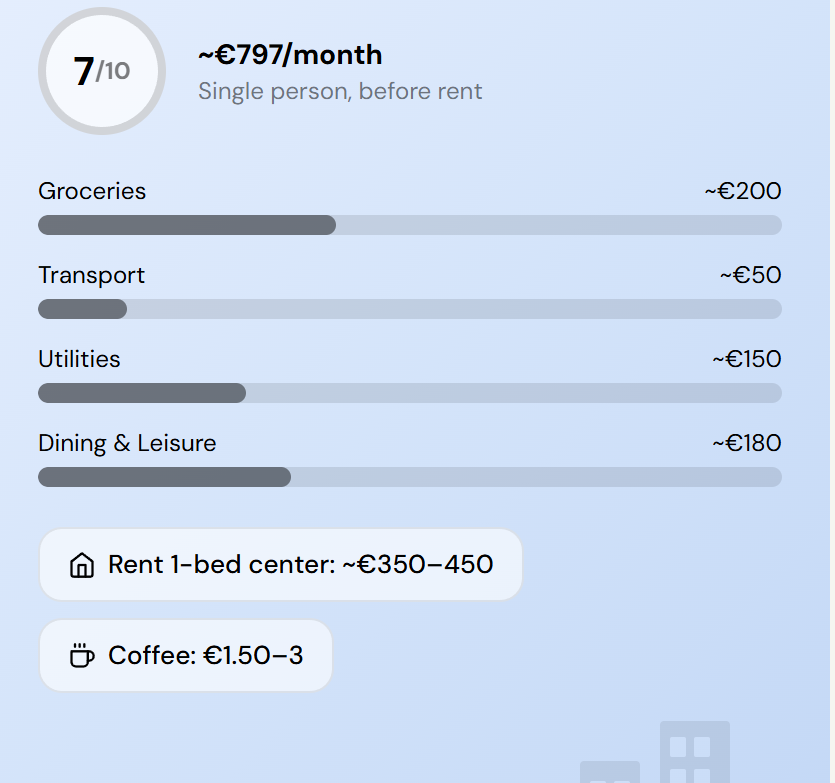
You can comfortably get by on roughly €800 a month before rent, which is a remarkably affordable baseline for a city of this massive size. Rent is equally affordable, allowing you to easily find a two-room apartment for less than €500, earning the cost of living a solid 7 out of 10.
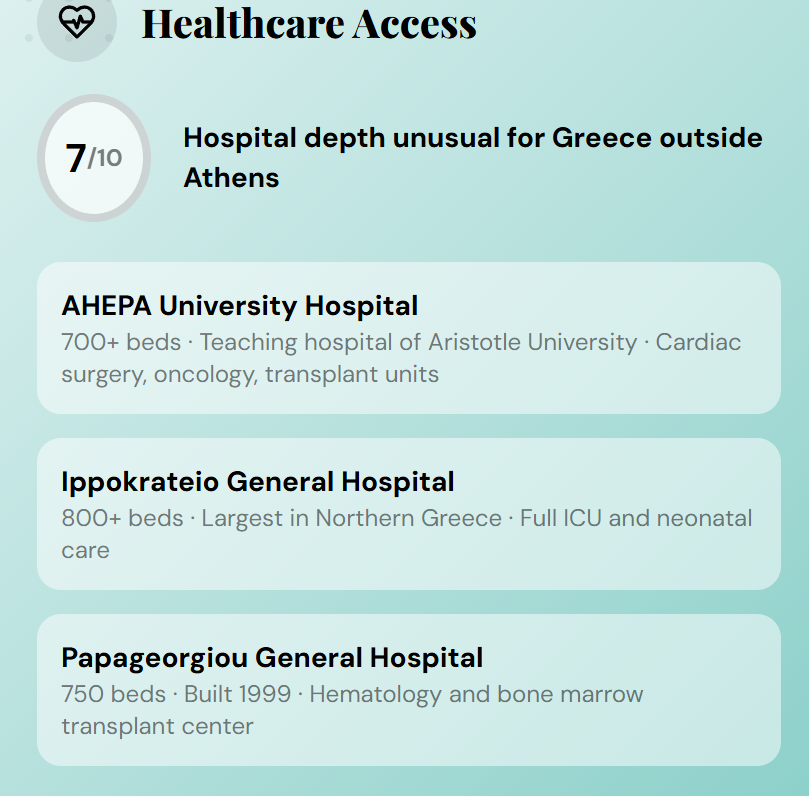
AHEPA University Hospital stands as the city’s biggest medical institution, providing the kind of clinical depth that smaller Greek cities and islands usually lack. The city also boasts many private hospitals and clinics that handle routine care and a wide variety of specialist needs. This medical infrastructure provides great peace of mind, allowing healthcare to earn a respectable 7 out of 10.
In terms of transport, one major weak point is the city’s heavy traffic. Congestion can be intense in central parts of the city, and air quality often dips when the roads clog up.
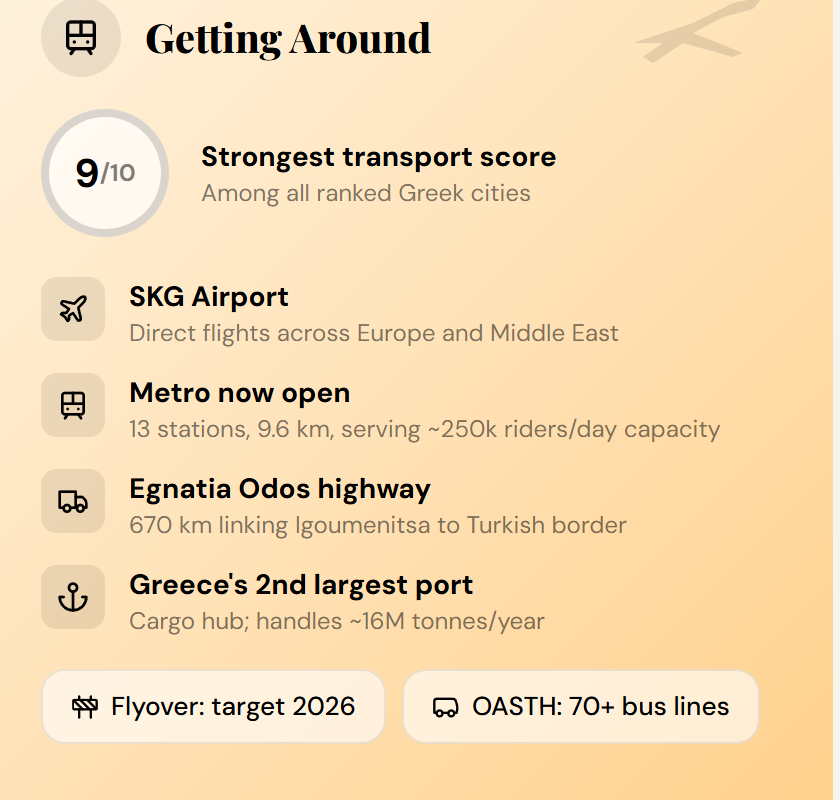
On the positive side, Macedonia International Airport gives you broad flight access, and rail links efficiently connect the city directly with Athens. Internally, Thessaloniki benefits from a modern, driverless metro system and remains a highly walkable environment, keeping the infrastructure score at an impressive 9 out of 10.
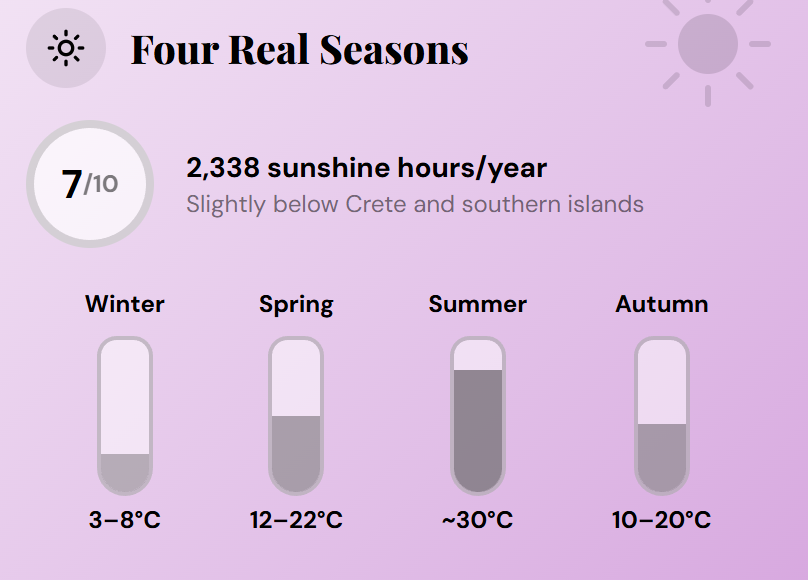
Summers are hot, averaging around 30 degrees Celsius, but winters can drop to between 3 and 8 degrees Celsius with some occasional frost. Sunshine is present for most of the year, and rainfall is moderate, with November typically acting as the wettest month. Because you get four real seasons here, the weather offers a diverse but manageable climate.
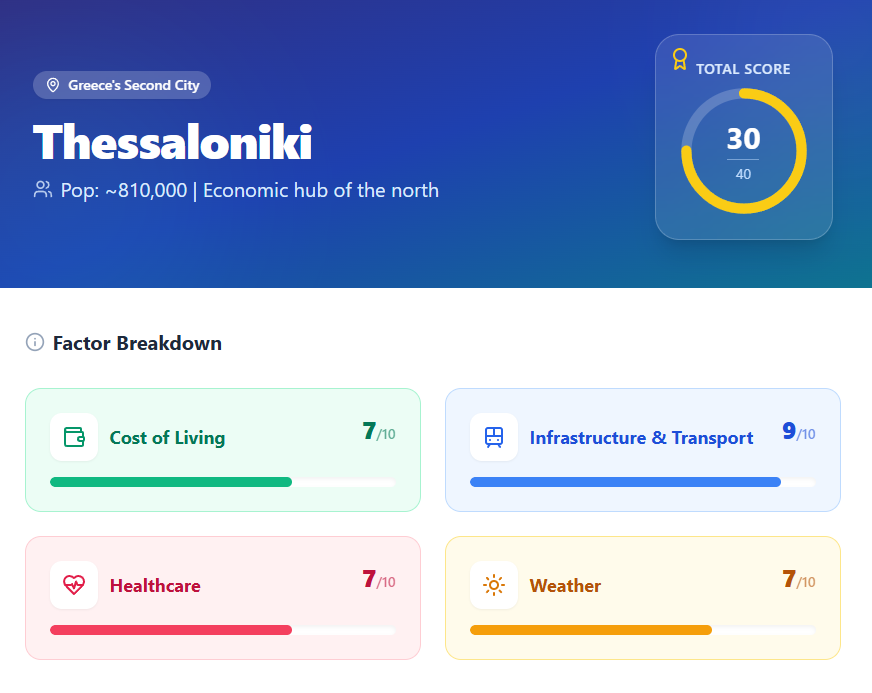
If you want a big city with good infrastructure, ample healthcare options, pleasant weather, and an affordable cost of living, Thessaloniki is a great choice.
6th Place: Paphos
Now we head to Paphos on the southwest coast of Cyprus, which has 38,000 residents in the city limits and a larger surrounding urban area. It provides a calmer daily rhythm, lower population density, and enough modern services to make a retirement plan work without feeling completely cut off.
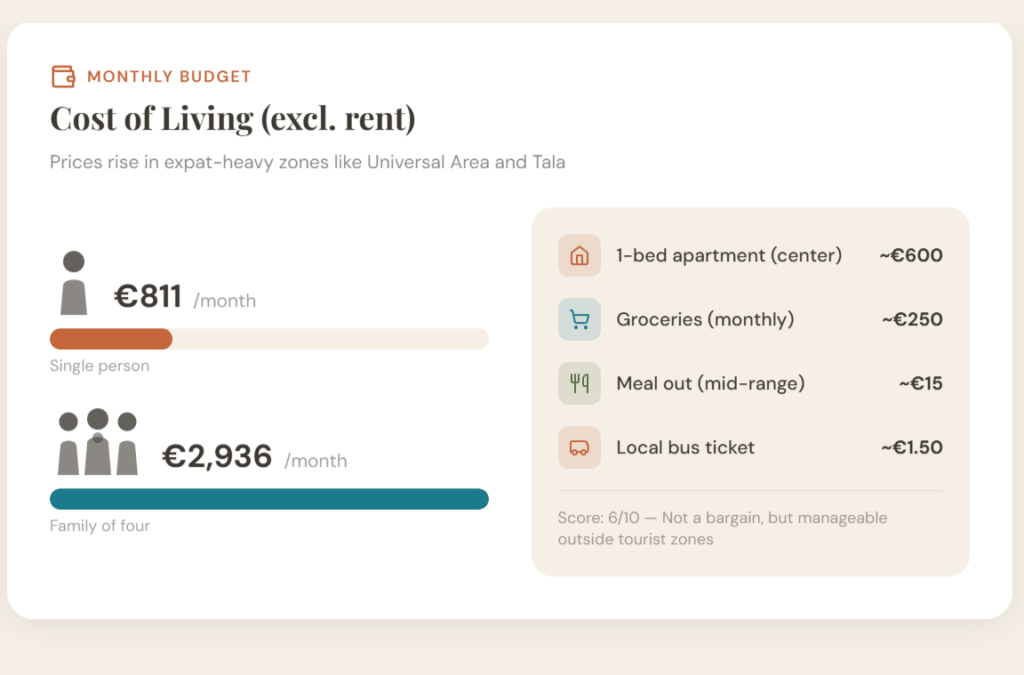
The cost of living for a single person averages around €800, while a family of four will spend about €2,900, not including housing costs. Rent for a single person sits at roughly €600, but you can also find larger accommodations, such as a three-bedroom apartment spanning 1,400 square feet, for less than €1,000.
While Paphos is generally peaceful, you should research prices and locations carefully, as some specific neighborhoods, like Chloraka, have faced minor local issues.
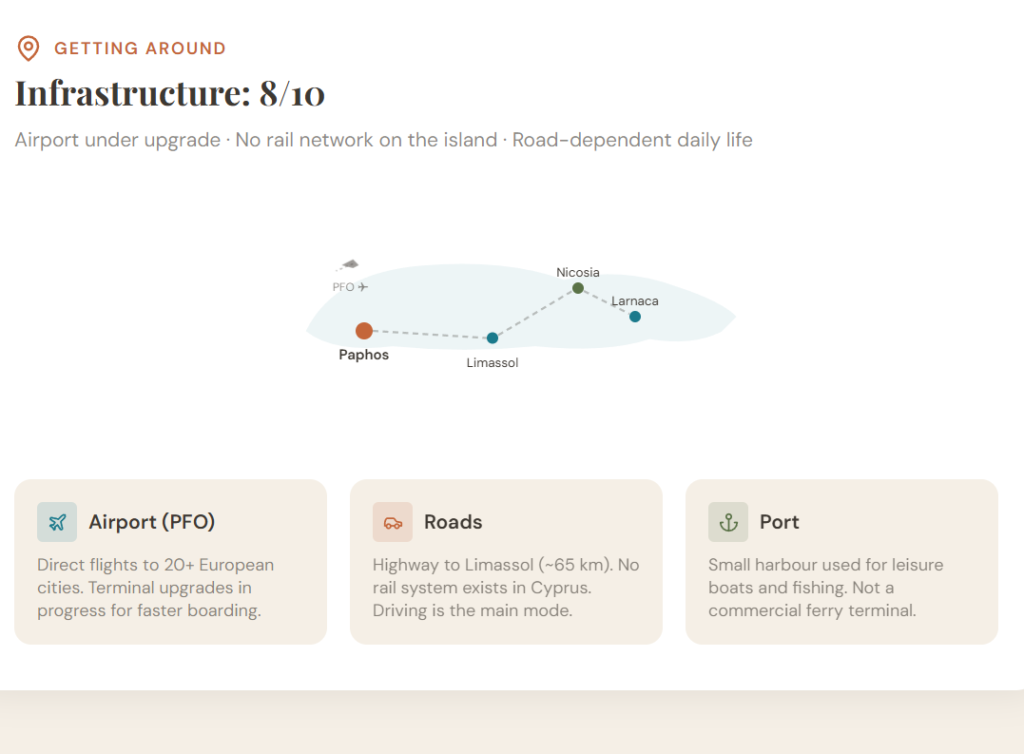
Paphos International Airport provides direct flight links to many European cities, and it is currently receiving an upgrade that will increase its capacity by almost 30%. Furthermore, highway access connecting Paphos to Limassol and other parts of Cyprus is very strong.
However, Cyprus has no rail network at all, and Paphos remains somewhat isolated compared to the island’s larger metropolitan hubs. This isolation means your daily life will depend heavily on roads, buses, and your personal willingness to drive frequently.
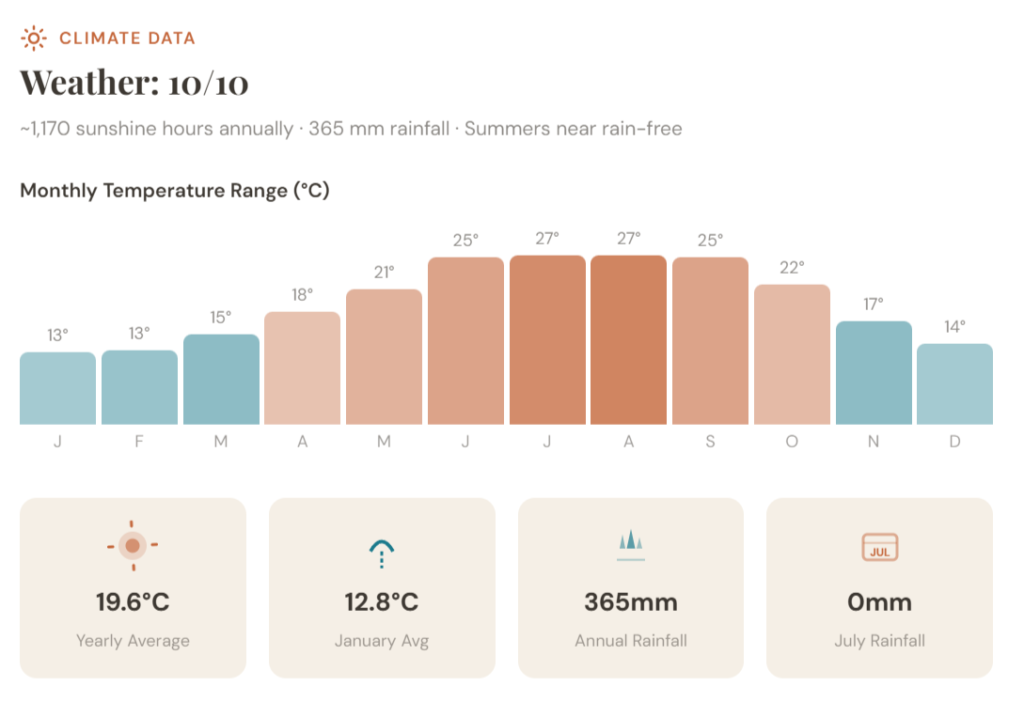
January temperatures average around 13 degrees Celsius, total rainfall is only about 365 millimeters a year, and the bright summers are almost completely rain-free. If you are looking to leave long, gray winters behind forever, these stellar conditions easily earn the weather a perfect 10 out of 10.
Paphos works beautifully if you want abundant sunshine, general silence, and highly decent connections by air.
One peculiar criticism we heard from a local resident highlighted a unique drawback when they told us:
“Paphos is a great place to live, but there are however some downsides. It still has a bit of the village mentality; I don’t mind it so much because I was raised here, but it can be a little jarring.”
Remember that Cyprus is an island, and beyond the attractive low taxes, there are very specific upsides and downsides to living there.
5th Place: Kalamata
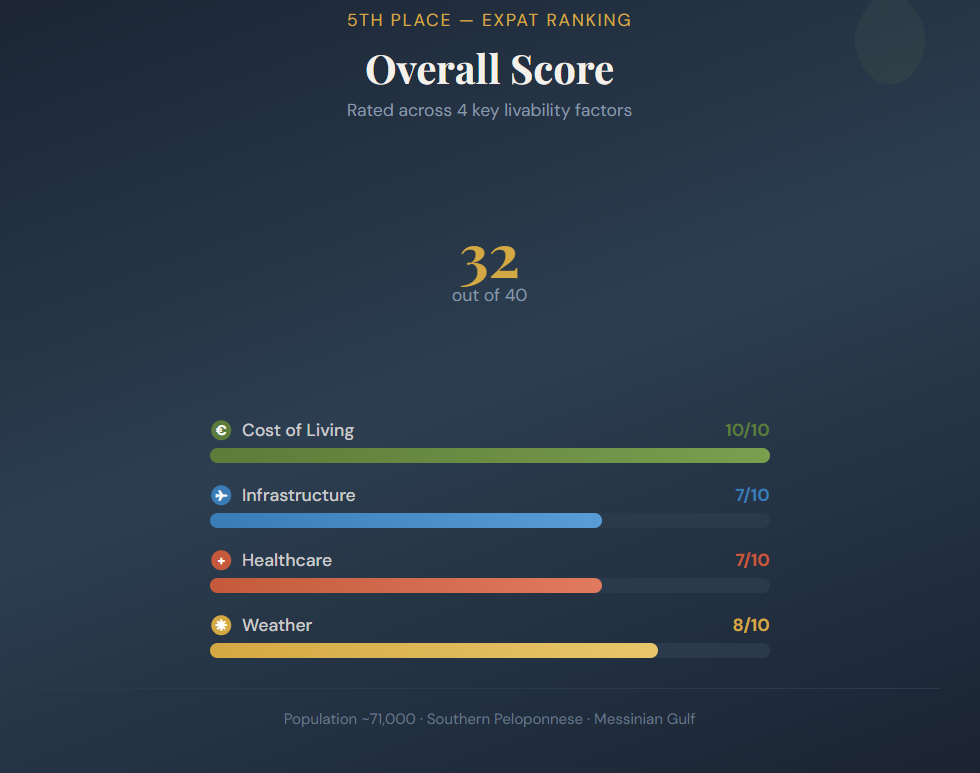
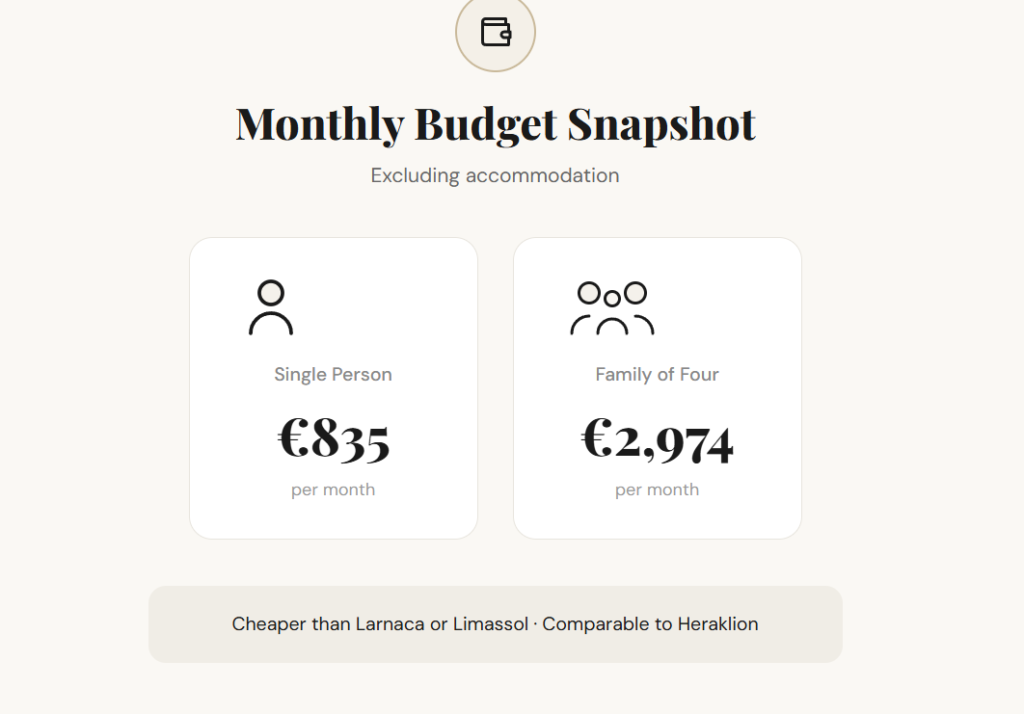
Kalamata is located in the southern Peloponnese on the Messinian Gulf and is home to just over 70,000 residents. If pure affordability is your main priority, this coastal city is an absolutely top choice. It provides a proper urban base, a highly walkable center, a beautiful usable waterfront, and far better day-to-day services than many other budget-friendly locations.
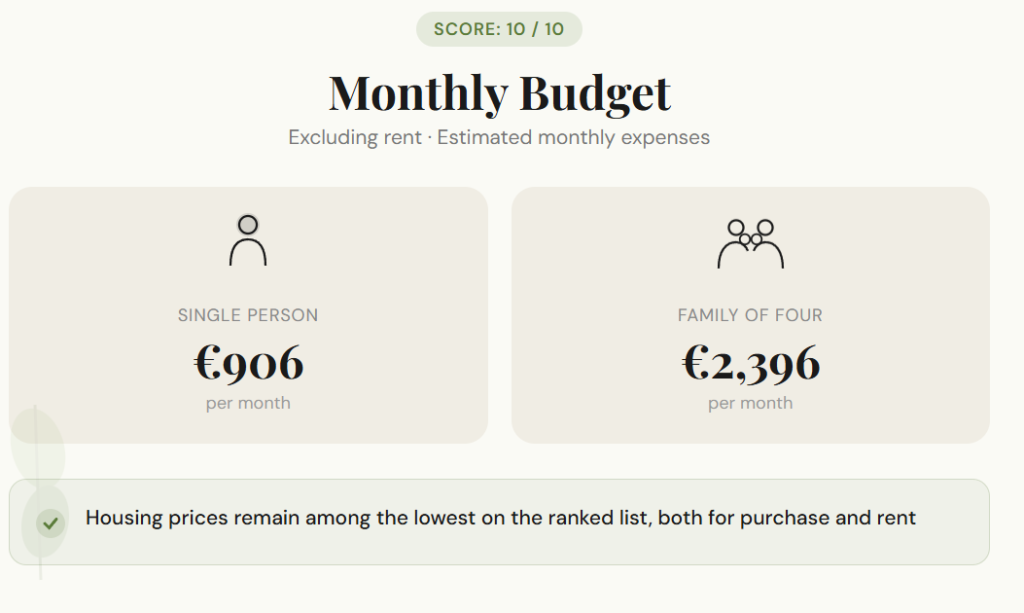
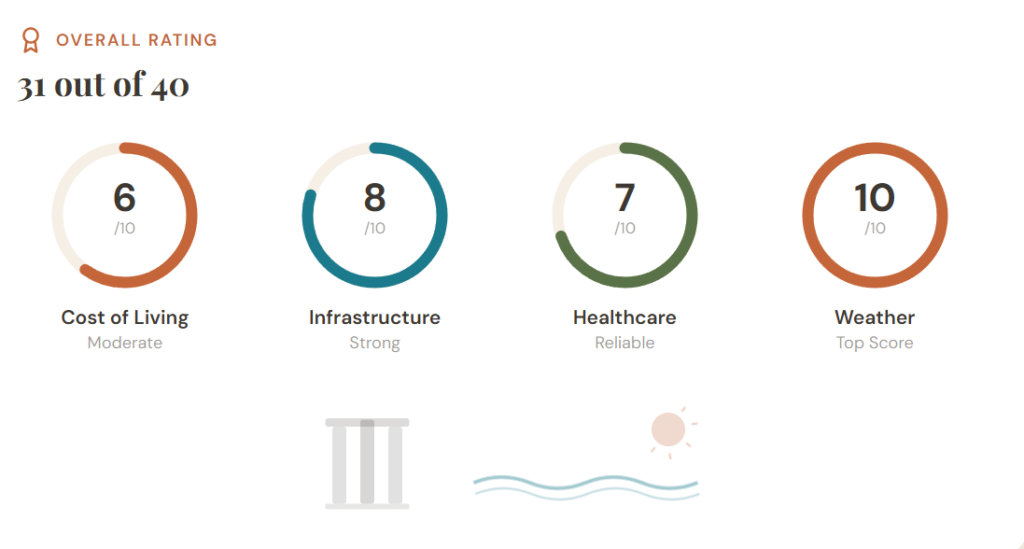
Without factoring in rent, a single expat might spend around €900 monthly, while a four-person household requires roughly €2,400. Once housing prices are added to the bill, the financial picture gets even better, as you can still find low rents here without sacrificing your quality of life. Because of these incredible savings, Kalamata scores a perfect 10 out of 10 for the cost of living.
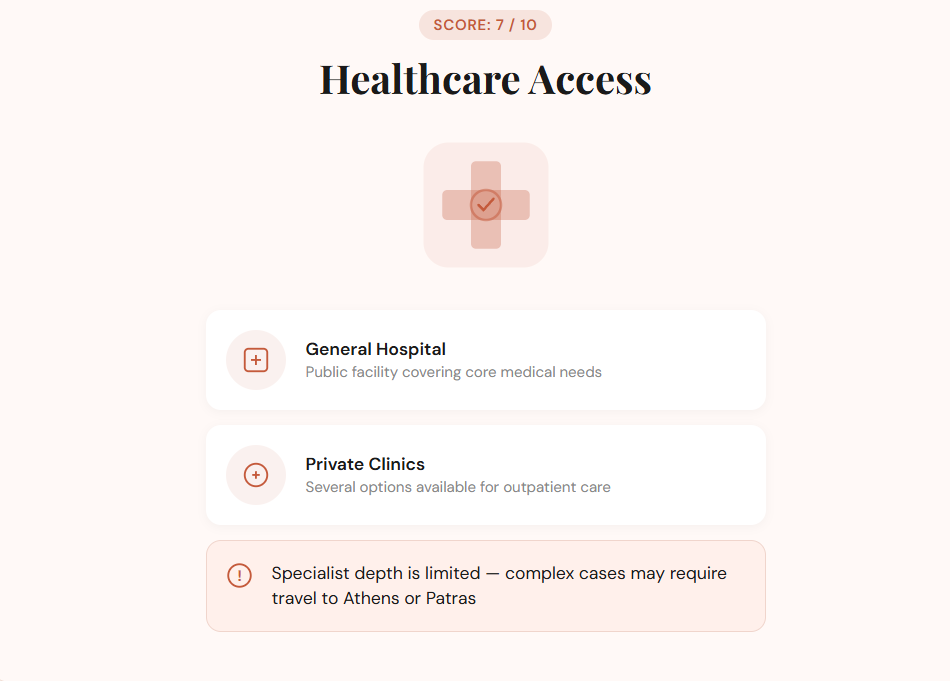
The city is equipped with a solid General Hospital alongside several high-quality private clinics. The primary limitation here is a lack of deep medical specialist availability. However, for most expat retirees, this healthcare setup is highly dependable, earning the sector a respectable 7 out of 10.
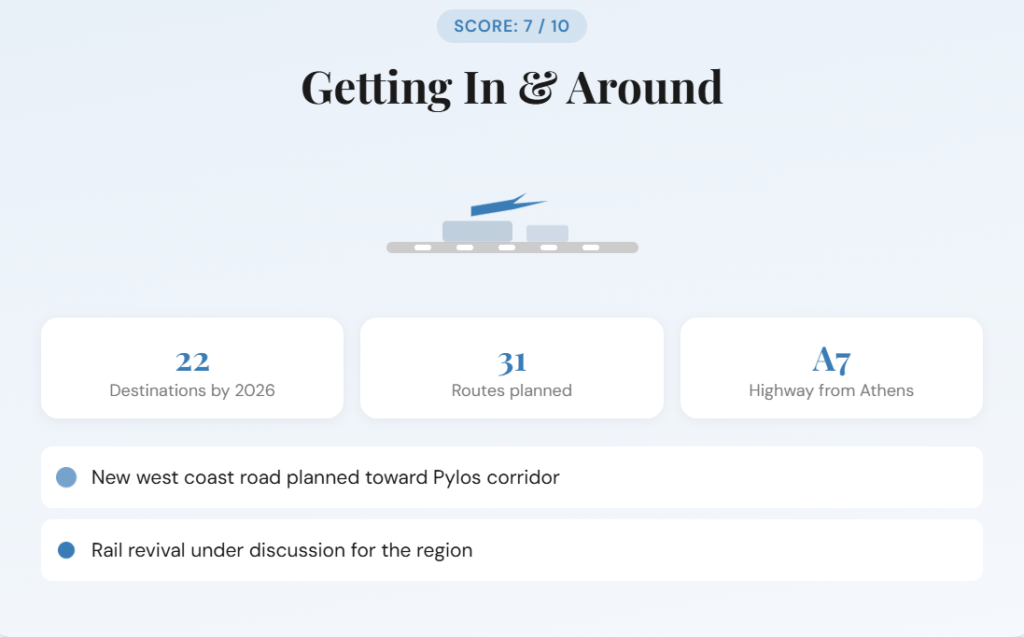
Getting around the region is becoming significantly easier as the road corridor toward Pylos and Methoni continues to improve regional access. Kalamata International Airport is steadily growing by adding more destinations, and the A7 highway link from Athens drastically strengthens road connectivity. While public transport is still playing catch-up, the city becomes easier to navigate every year, bringing the infrastructure score to a 7 out of 10.
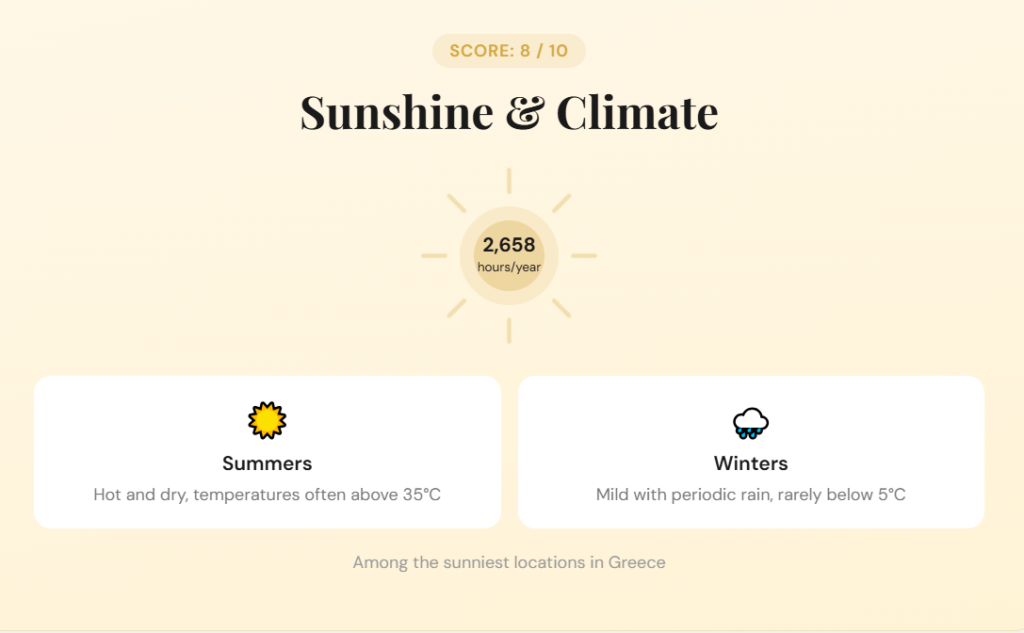
Kalamata enjoys almost 2,700 hours of sunshine annually, featuring hot, dry summers and mild winters with occasional rain.
Kalamata is a fantastic option if you want affordable housing without feeling completely stranded, but our next city achieves an even higher total score.
4th Place: Volos
Volos sits beautifully on the Pagasetic Gulf in central Greece, and the wider municipality is home to almost 140,000 people. Volos constantly flies under the radar and goes unnoticed by expats, but it remains a phenomenal option for several practical reasons.
Since it is located on the mainland rather than an island, you gain direct road access to the rest of the European continent. It is positioned closely to several major tourist destinations, yet the city itself completely avoids those frustrating tourist-premium price tags. Furthermore, recent investments in transport and resilience across the Thessaly region are making the area much better prepared following past weather damages.
Basic expenses average out to just €800 for one person and nearly €3,000 for a family before you even pay for your accommodation. The housing market is fantastic, allowing you to easily find well-located apartments over 1,000 square feet for less than €500.
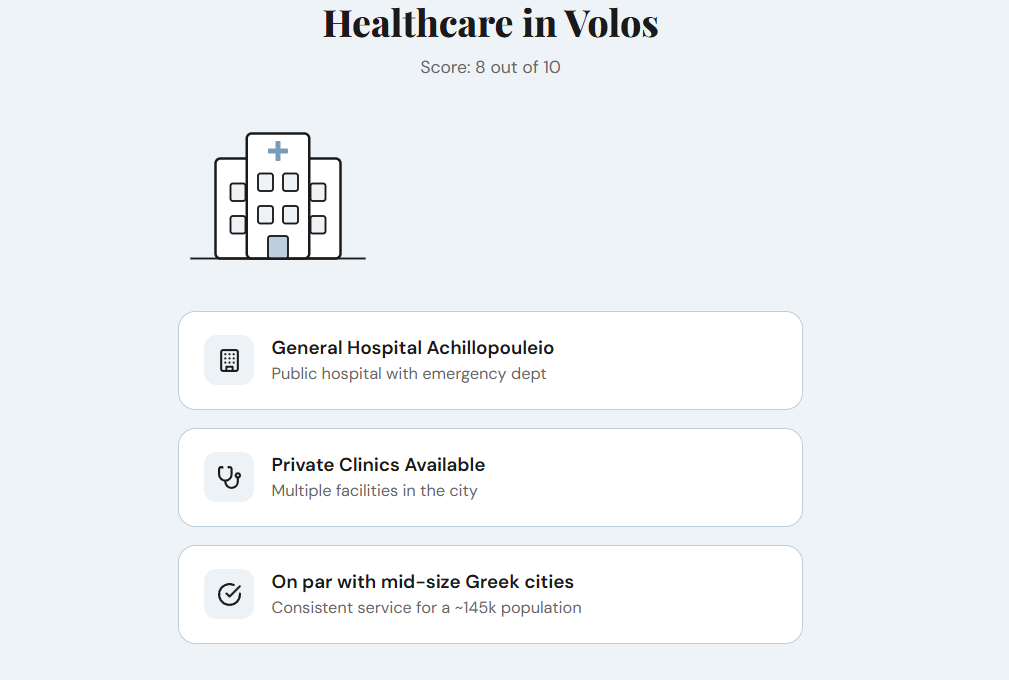
For your medical needs, the General Hospital Apostolos Pavlos operates alongside several well-equipped private clinics. For a mid-sized city, Volos provides a surprisingly robust offering of medical services, helping healthcare secure a strong 8 out of 10.
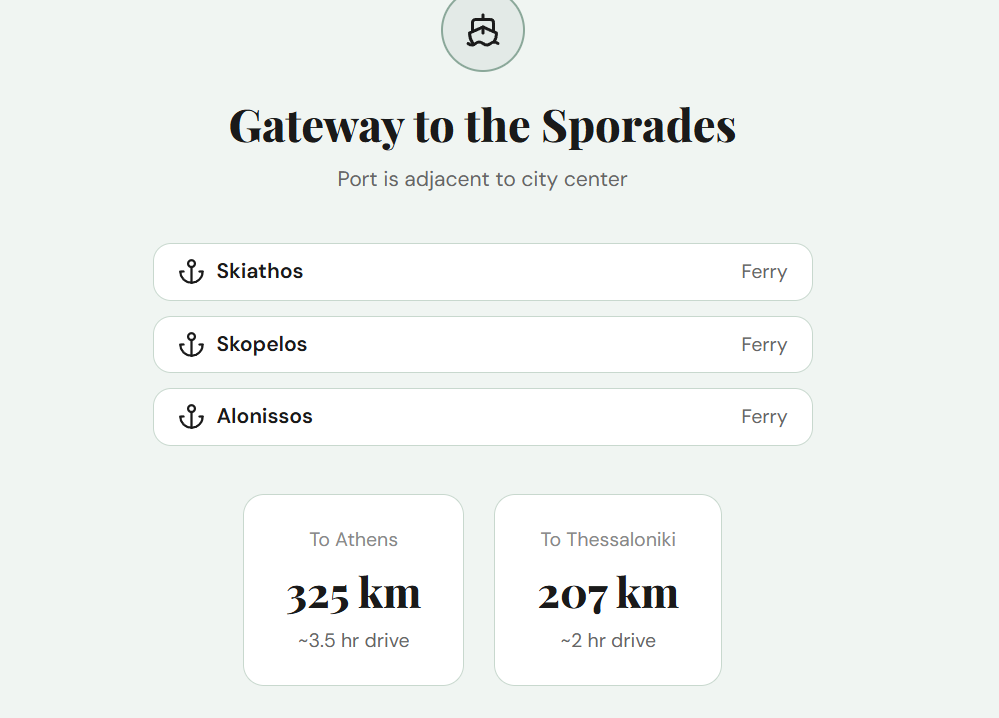
By road, Athens is roughly three and a half hours away, while Thessaloniki sits about 207 kilometers north, translating to a quick two-hour drive via the E75 highway. The main weak point here is the lack of a direct railway line connecting you to either major city. Despite this rail gap, Volos maintains very decent transport options overall, allowing infrastructure to earn an 8 out of 10.
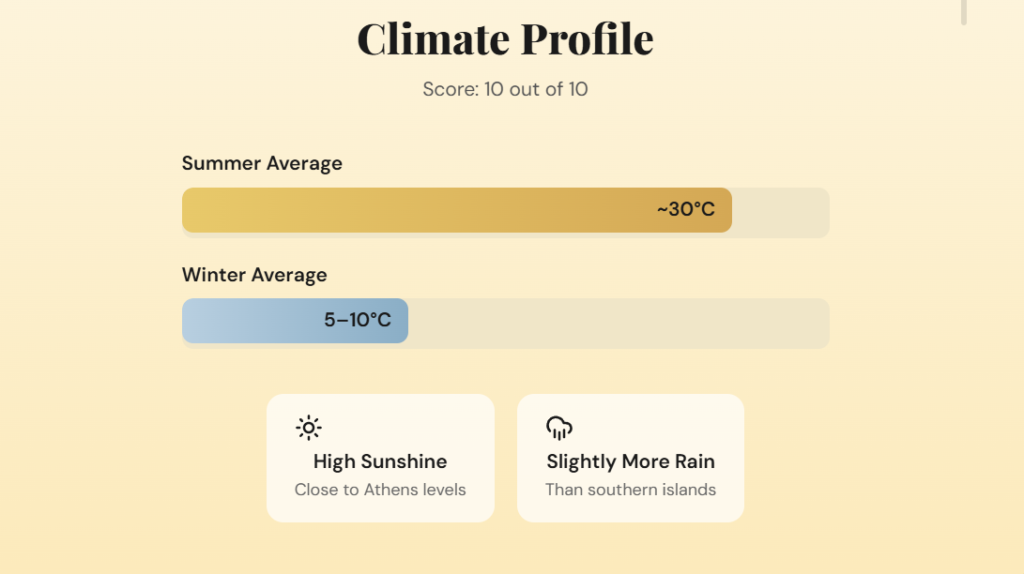
It does rain more frequently in Volos compared to the more southern Greek islands. Summer temperatures average near 30 degrees Celsius, while winter usually hovers between 5 and 10 degrees Celsius with sunshine levels closely matching those of Athens.
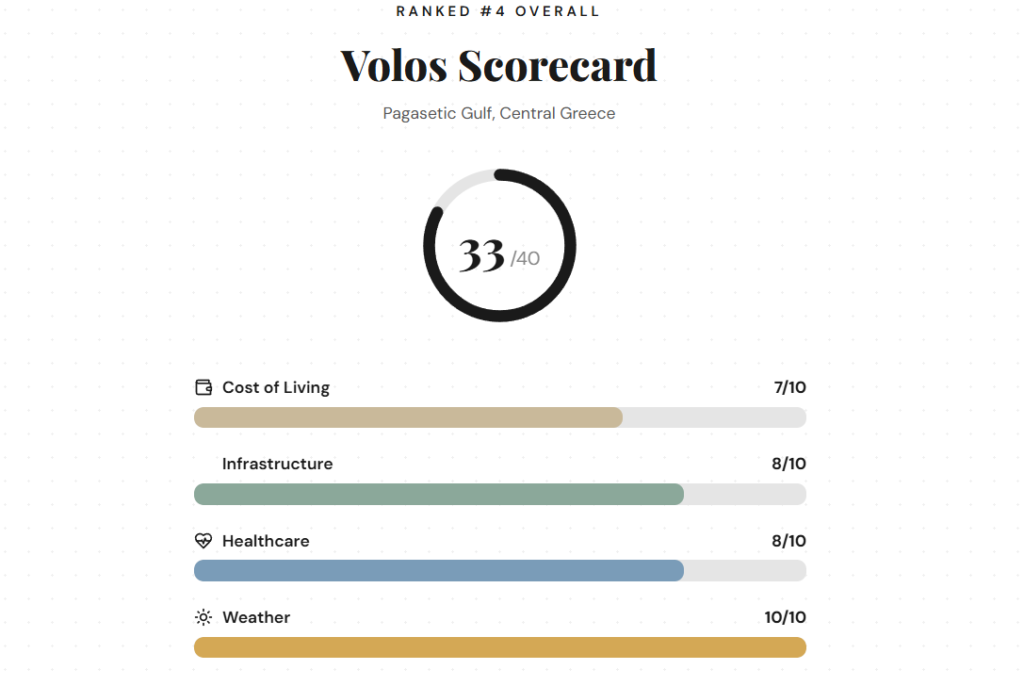
Volos comfortably takes fourth place by offering the distinct advantage of being a sunny mainland city with incredibly affordable prices.
3rd Place: Patras
Patras just might be the most practical and well-connected city on our entire ranking. Situated on the north coast of the Peloponnese in western Greece, it is a bustling hub containing around 170,000 people.
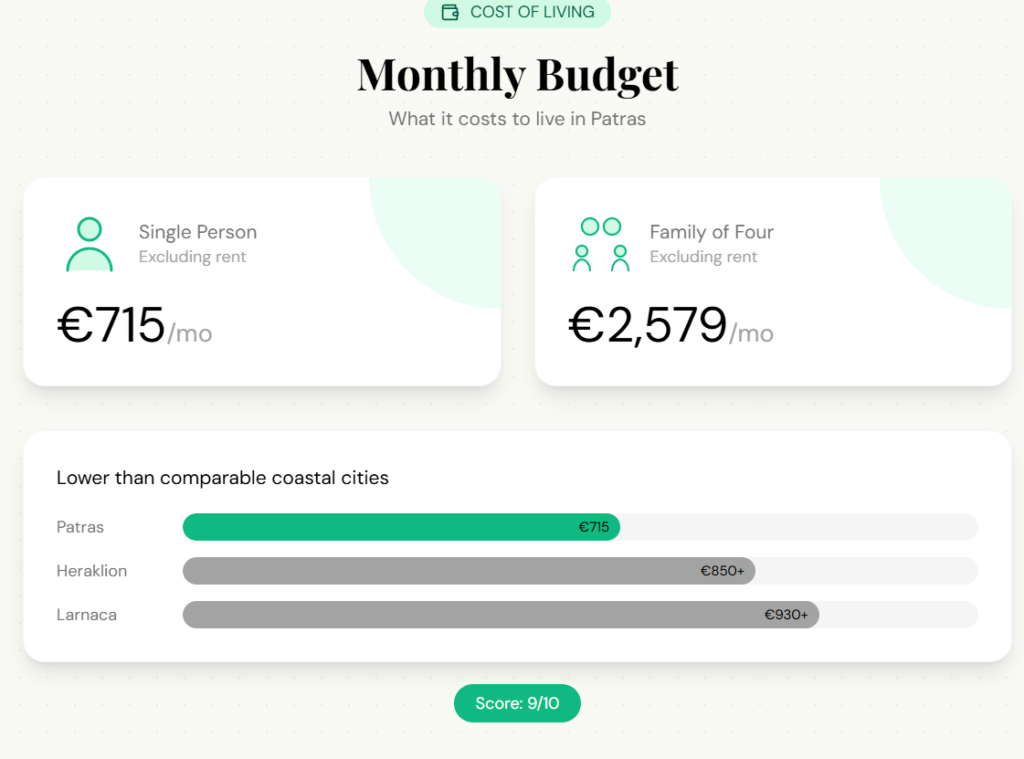
A single person can comfortably manage on just over €700 a month, while a family of four will spend about €2,600, completely excluding rent. These numbers are remarkably low for a city that provides such high levels of access and deep commercial services. Housing is also significantly cheaper than in more famous coastal towns, making the cost of living an impressive 9 out of 10.

The General University Hospital of Patras stands out as one of the largest medical facilities in all of Greece, boasting over 800 beds. Although it is technically located in the neighboring area of Rio, it is only seven kilometers from the Patras city center, allowing healthcare to easily earn an 8 out of 10.

When looking at infrastructure, the new Patras–Pyrgos motorway is a massive, recently completed addition that drastically cuts travel times and improves driving safety across western Greece. Athens is only about two and a half hours away via the Olympia Odos motorway, and the famous Rio-Antirrio Bridge gives you a direct, seamless connection to the rest of mainland Greece. Additionally, the port of Patras remains one of Greece’s busiest maritime hubs, offering regular passenger ferries to Ancona, Bari, Venice, and the Ionian islands.
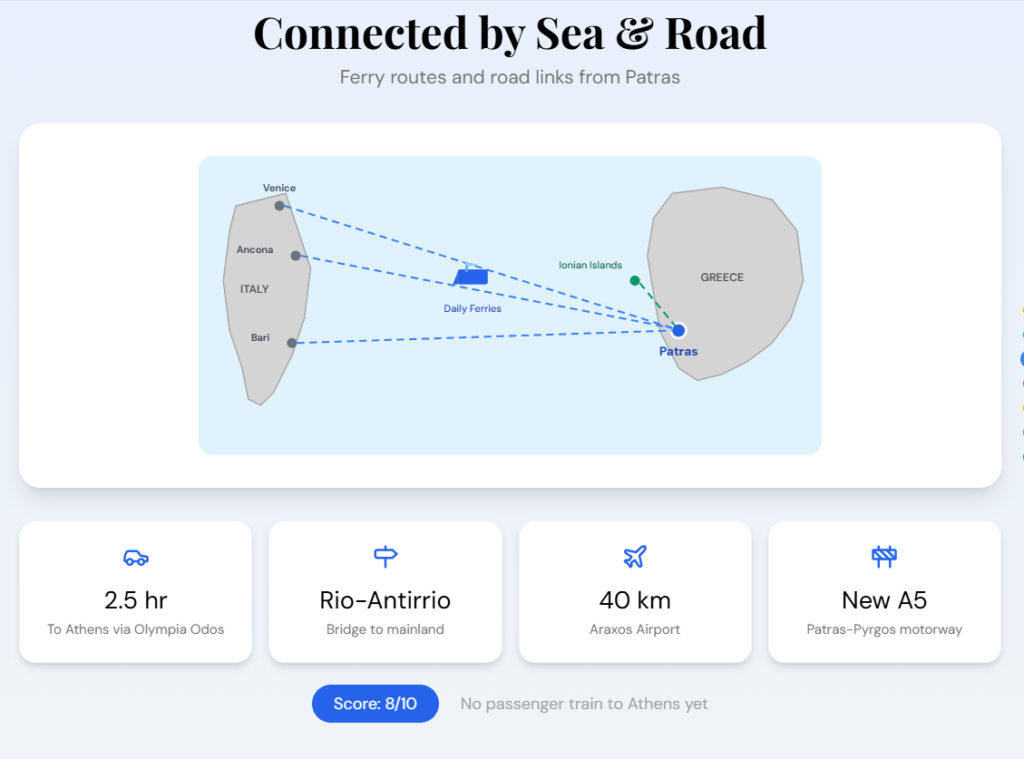
The primary transport weak points are the lack of a functional railway connection to Athens and the fact that Araxos Airport is located 40 kilometers away. Because of these slight inconveniences, the infrastructure score settles at an 8 out of 10.
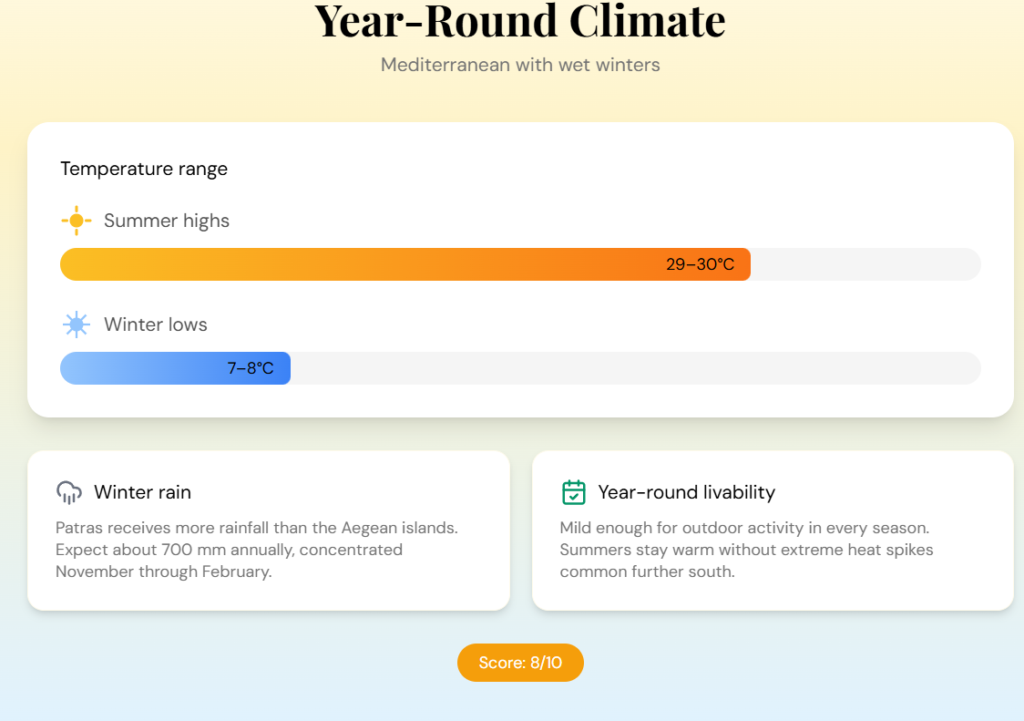
Summers usually reach between 29 and 30 degrees Celsius, while winters drop to a crisp 7 to 8 degrees Celsius. This creates a balanced, mild climate that perfectly supports year-round outdoor activities.
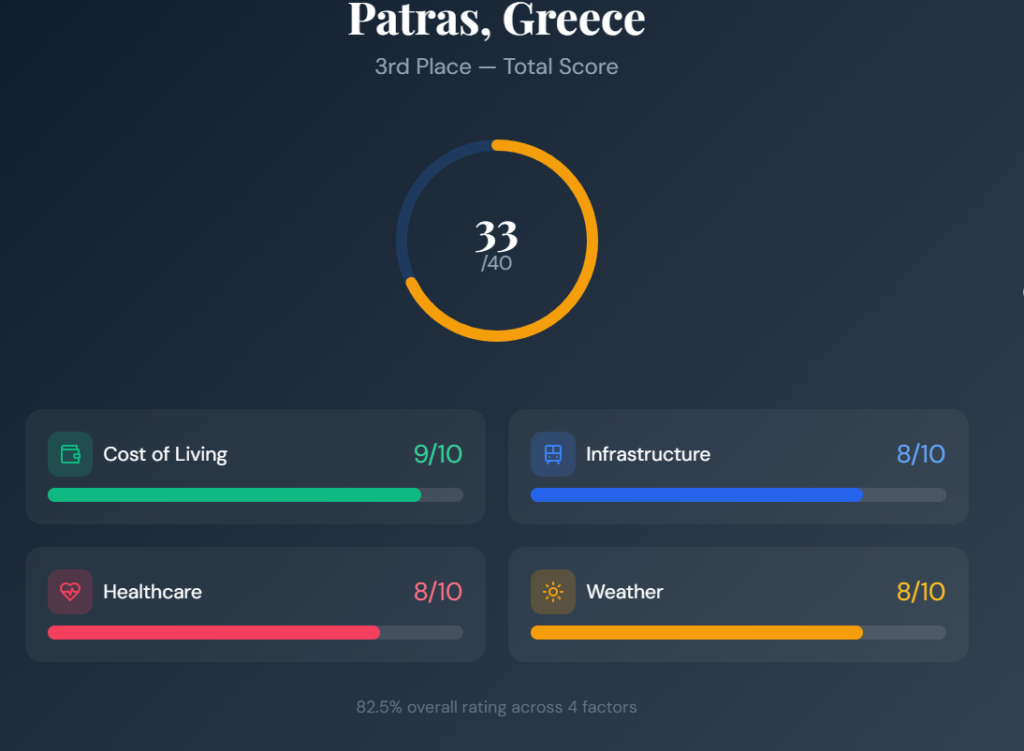
Patras does not score a single perfect ten in any of the four factors, but it performs incredibly well across the board, securing its solid third-place finish.
2nd Place: Larnaca (The Best City in Cyprus for 2026)
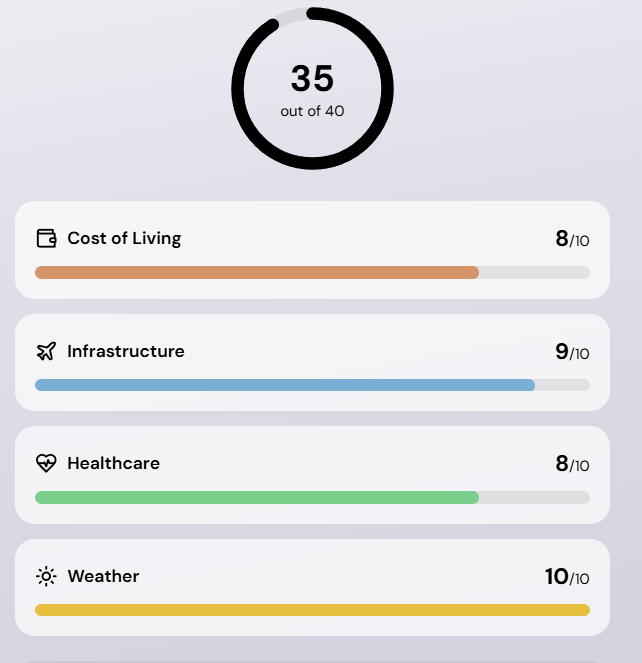
Larnaca is located on the southeast coast of Cyprus and features a population of about 85,000 people. This coastal city climbs incredibly high on our list because it simply gets a lot of the daily-life basics right. The vibrant waterfront and marina are currently undergoing major revamps, further elevating a destination that was already fundamentally beautiful.
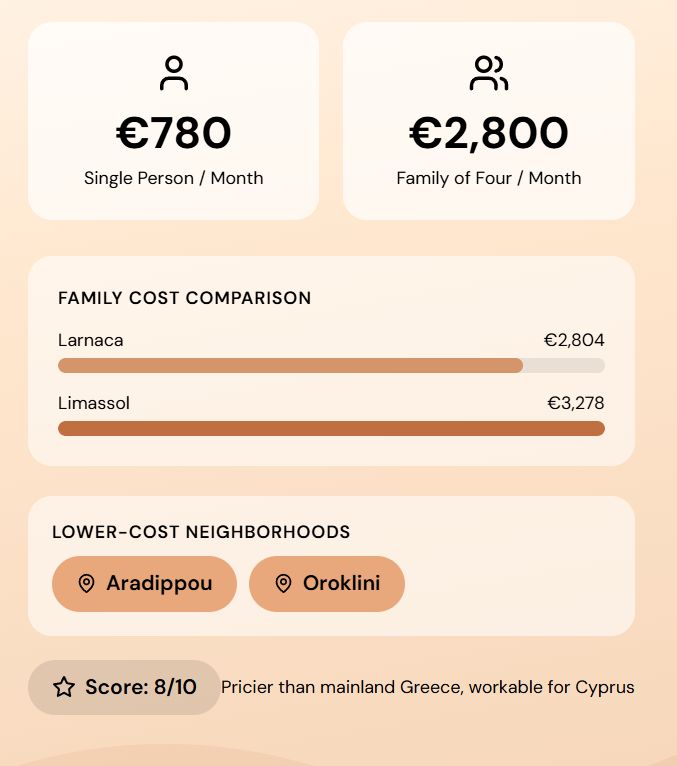
Monthly costs sit at €780 for a single person and €2,800 for a family before housing, which stays in a highly workable range for Cyprus when factoring in the high-quality amenities. While housing near popular spots like Finikoudes costs more, surrounding areas like Aradippou and Oroklini remain much more affordable. Considering that Larnaca is a highly developed city with remarkable appeal, its overall cost of living secures an 8 out of 10.
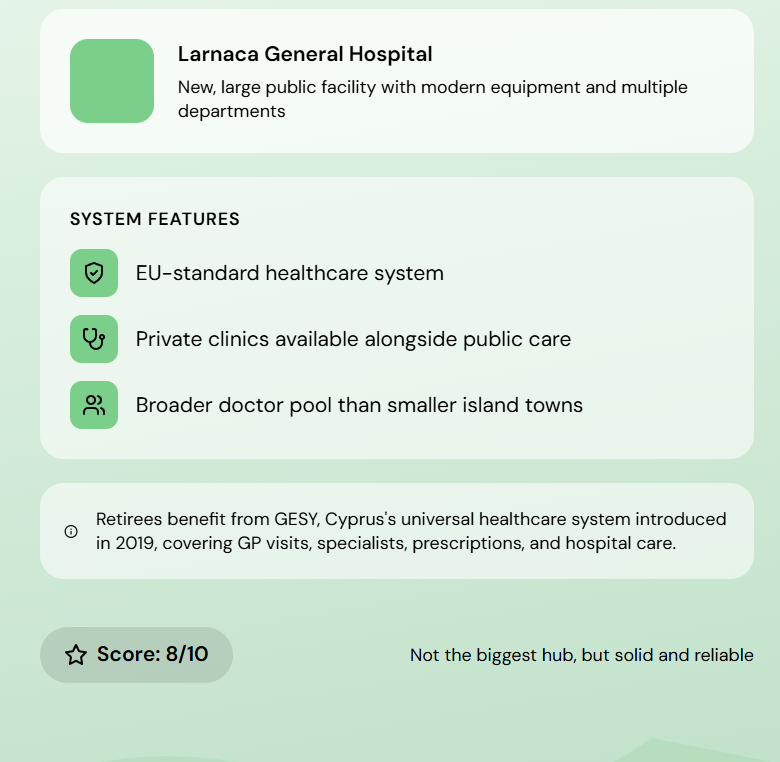
Larnaca features a large General Hospital that recently expanded by adding entirely new medical departments. Furthermore, the wider GESY national health system provides expats with a service that boasts considerably higher satisfaction rates compared to many other European nations. Thanks to these strong medical pillars, healthcare earns a solid 8 out of 10.
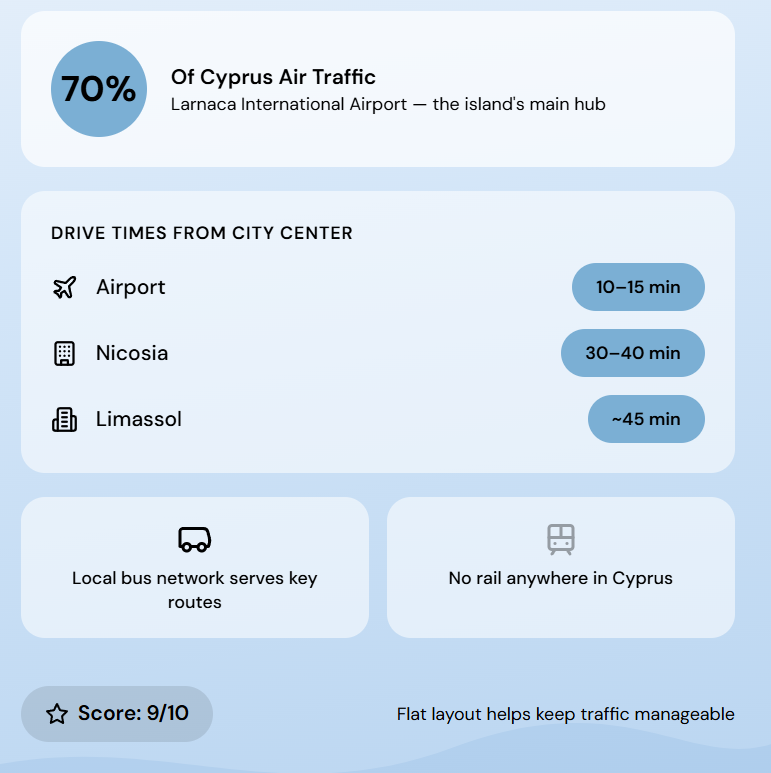
Larnaca International Airport is the absolute busiest aviation hub on the island, effortlessly handling about 70% of all Cyprus air traffic. The drive from the city center to the airport takes an incredibly brief 10 to 15 minutes. It is positioned so closely to the city that if you stand on Mackenzie Beach, you can practically wave to the passengers inside the descending airplanes!
By road, the capital city of Nicosia is roughly 40 minutes away, and Limassol is about a 50-minute drive. The city also operates an extensive network of local buses, and while they are not always perfectly punctual, they still provide a reliable service that even includes free Wi-Fi for passengers. This excellent connectivity pushes the infrastructure score to a 9 out of 10.
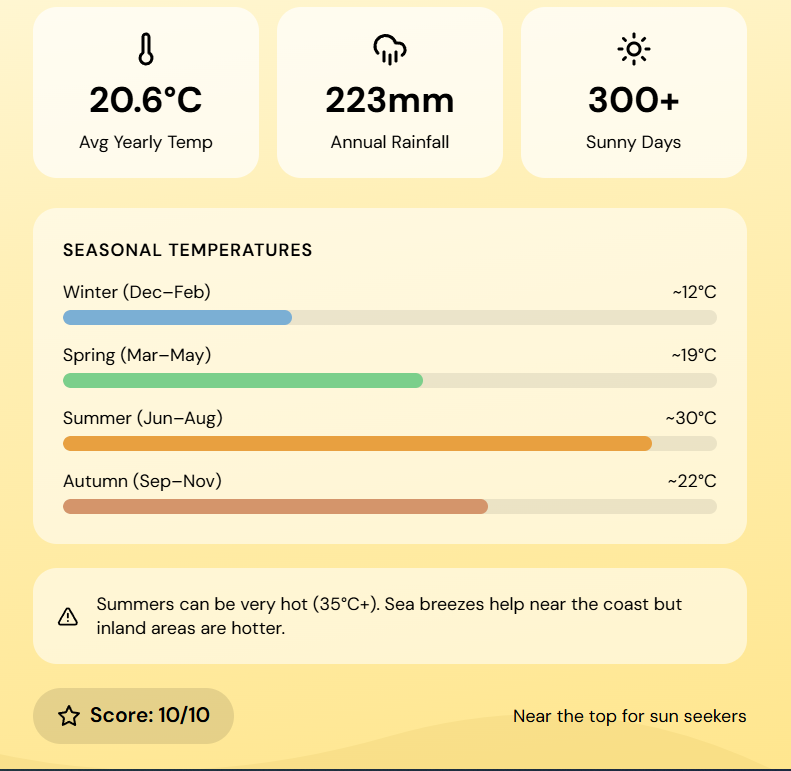
The average yearly temperature sits at a beautiful 20.6 degrees Celsius, total rainfall is only about 223 millimeters a year, and residents enjoy more than 300 clear-sky days. The intense summer heat serves as the city’s only minor weak point, but if endless sun is high on your checklist, the weather easily earns a 10 out of 10.
Larnaca ranks near the top because it is a true first-world city with amazing beaches that has not yet become super expensive.
A local provided an interesting comparison for us, explaining:
“Paphos would be ideal for an older British couple while Larnaca might be better for a young couple. Larnaca is more lively all year around, with easier access to other cities, etc.”
1st Place: Heraklion (The Best City in Greece for 2026)
Heraklion sits prominently on the north coast of Crete and is home to roughly 180,000 people. Heraklion takes the ultimate crown simply because it possesses the fewest weak spots across the board. When we compare cost, healthcare, transport, and weather side by side, this unique city remains highly competitive in absolutely every single category.
As Crete’s main economic and transport hub, Heraklion features a fully functioning economy that thrives well beyond seasonal tourism. The robust presence of corporate companies and universities ensures the city maintains a vibrant, active lifestyle all year round.
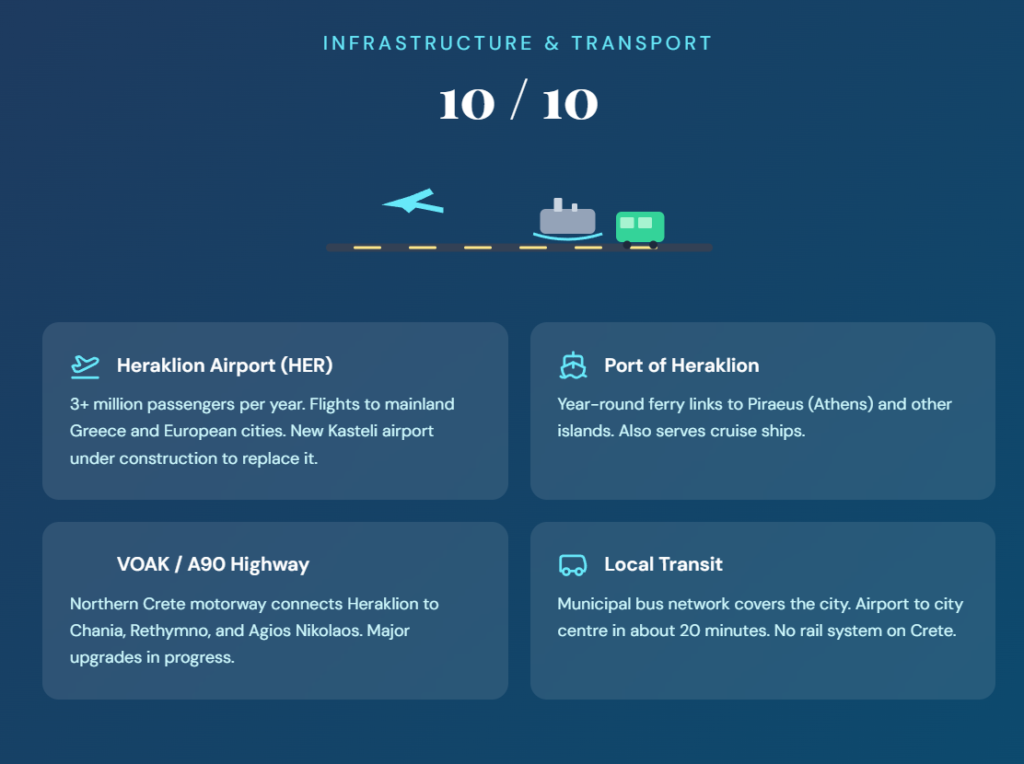
Currently, Heraklion International Airport is already one of the busiest in Greece, while the critical VOAK road axis efficiently connects the city across the wider island. Furthermore, a massive new international airport at Kasteli is currently under construction to the southeast, which remains on track to open in 2028. Thanks to this new mega-airport and the ongoing VOAK highway upgrades, getting in and out of the city is about to become flawless, earning infrastructure a perfect 10 out of 10.
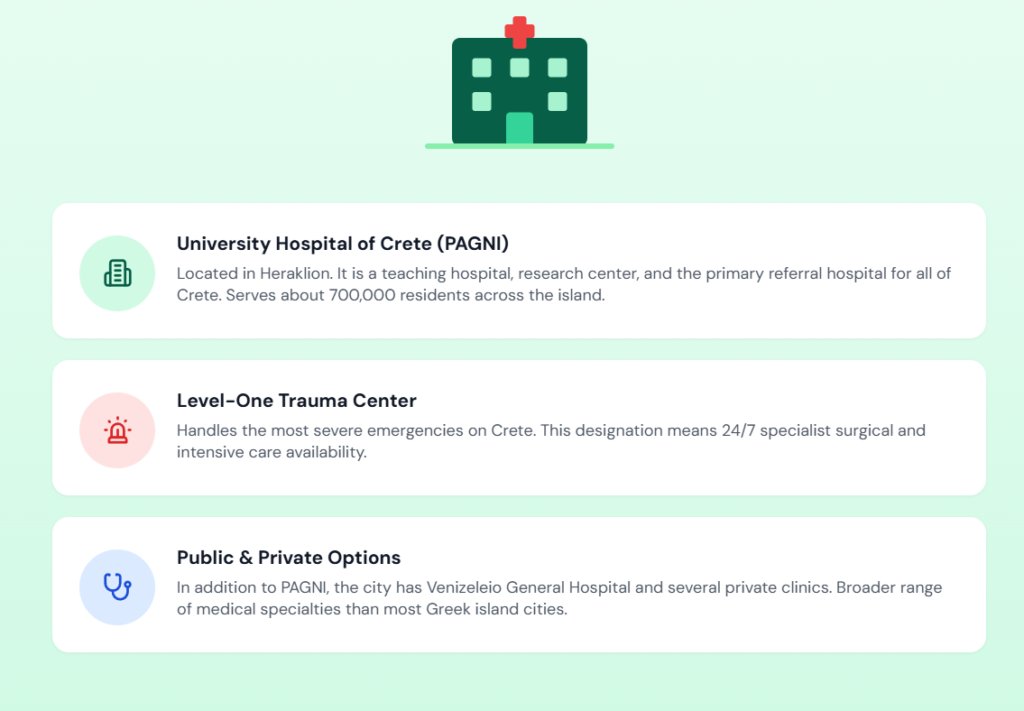
Healthcare is the other dominant reason Heraklion securely takes first place on our list. The University Hospital of Crete acts as a level-one trauma center and provides the city with the absolute strongest public medical base in this ranking. This top-tier medical safety net is a massive advantage if you are planning to stay long-term, easily earning the city a 10 out of 10 for healthcare.
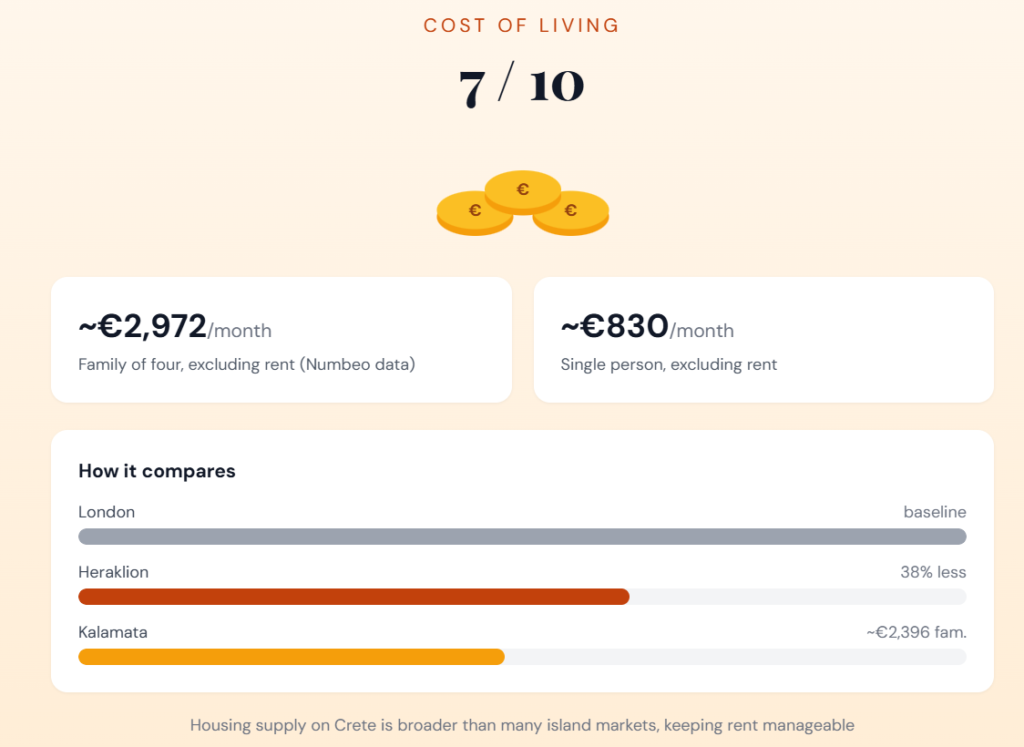
While Heraklion is definitely not the cheapest city in this top ten, it offers excellent value for the amenities provided. A family of four will typically spend around €3,000 a month before rent, but the remarkably affordable housing market allows you to easily find a spacious 1,000-square-foot apartment for less than €700. Because this pricing prevents you from feeling like you are overpaying for basic everyday necessities, the cost of living earns a solid 7 out of 10.
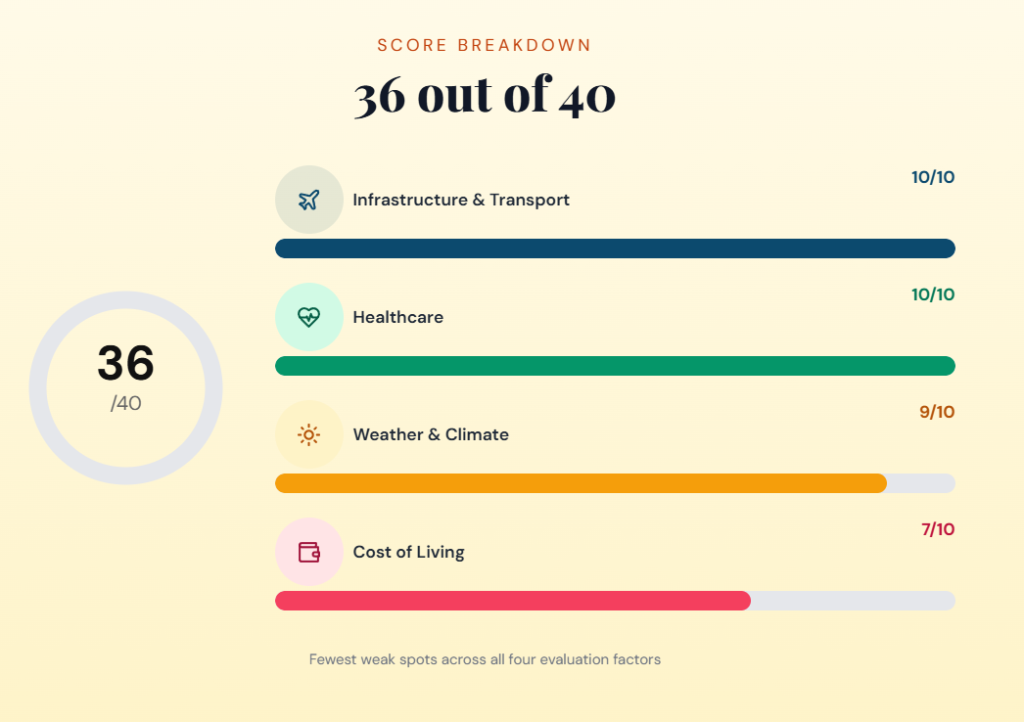
Heraklion enjoys hot, dry summers and wonderfully mild winters with remarkably strong year-round sunshine. This beautiful climatic balance is incredibly hard to beat anywhere in Europe, allowing the weather to score a 9 out of 10.
Heraklion takes the number one spot because it perfectly balances affordability, international access, premier medical care, and a beautiful climate. With massive airport and energy projects moving rapidly ahead, the city is positioned to look even stronger ten years from now.
Now that you have learned more about the fantastic options in Greece and Cyprus, but maybe you will enjoy discovering how Greece compares to Italy for a retirement abroad.
Also, be sure to join my Patreon for all our data sources, deeper insights, and comprehensive eBooks on living and retiring abroad.
Levi Borba is the founder of expatriateconsultancy.com, creator of the channel The Expat, and best-selling author. You can find him on X here. Some of the links above might be affiliated links, meaning the author earns a small commission if you make a purchase.