What if you could live in a city with 300 days of sun a year, prices that are 53% cheaper than Florida, and a lifestyle so healthy you might actually live longer?
Yes, I am talking about Italy, but I guarantee it is not Rome, Milan, or Florence. I have realized that the absolute best spots are the ones almost nobody is talking about.
Since I live close to this stunning country, I visit Italy more frequently than my doctor, allowing me to see exactly how certain regions are terribly underestimated.
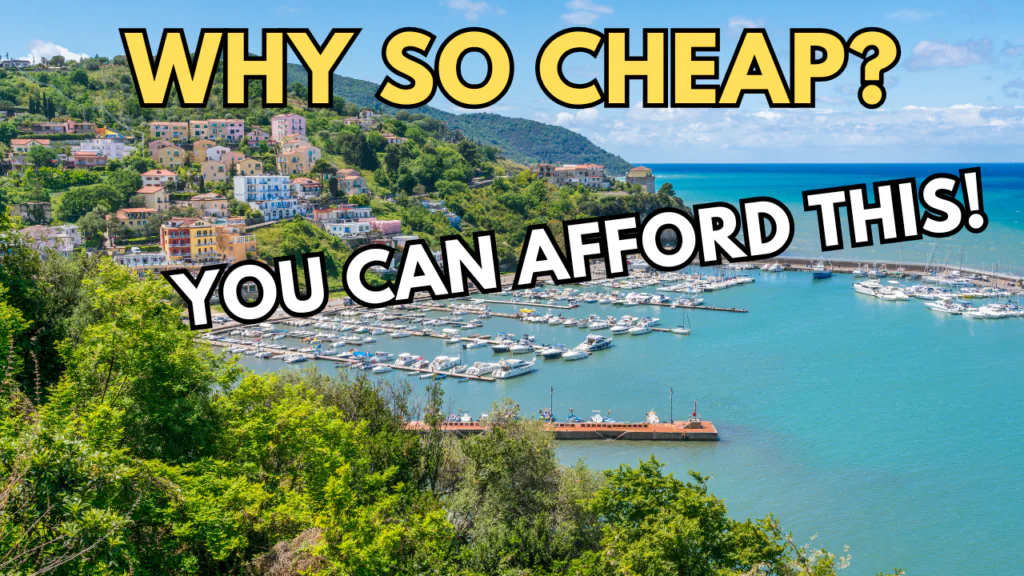
For example, there is a city where you can access world-class private healthcare and live right near the beach, yet housing remains 50% cheaper than in the north.
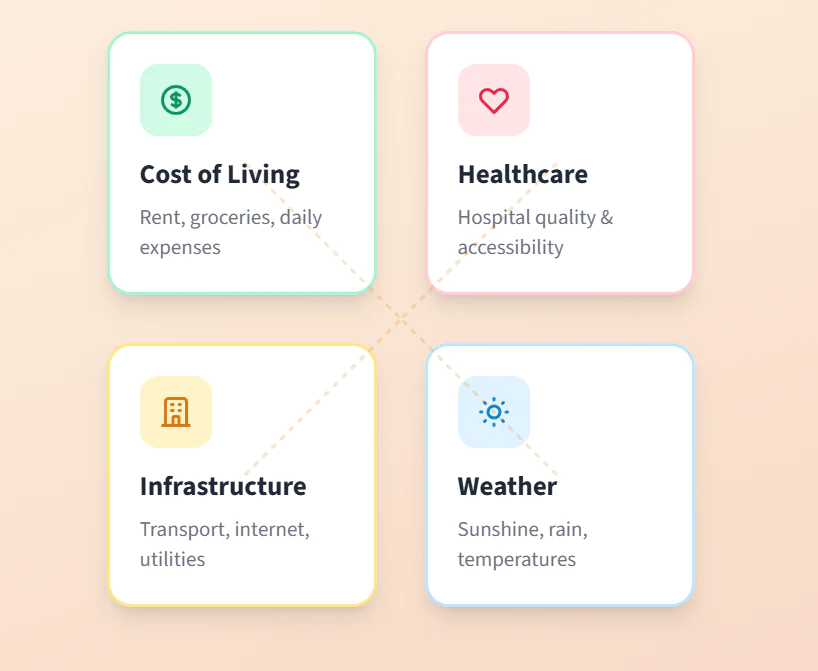
I have ranked ten cities using the exact same criteria: cost of living, healthcare, infrastructure, and year-round climate. The results are definitely not what most YouTubers are telling you, especially since many of them have never even been to these locations.
One of these destinations is on an island most Americans have never even considered, but before we reveal it, let us look at the methodology.
The Criteria
We built this ranking on four hard data pillars: cost of living, healthcare quality, infrastructure, and weather. When we filter Italian cities through these four criteria—the factors that truly matter for the hundreds of expats I have helped in Europe—we arrive at our Top 10 list.
In the coming weeks, I will use this same methodology to rank the top ten cities of another European country I know well, but I am torn between two giants: Portugal and Greece. Which one do you want to see analyzed next? Type ‘Portugal’ or ‘Greece’ in the comments right now, because I am going to let your votes decide the next article.
10. Trento
I know you probably came here expecting beaches, Amalfi Coast vibes, and picture-perfect postcard sunsets. Instead, I am presenting you with a mountain city deep in the Alps. There is a very good reason for this, as Trento is part of an Italian region where things actually work the way they are supposed to.
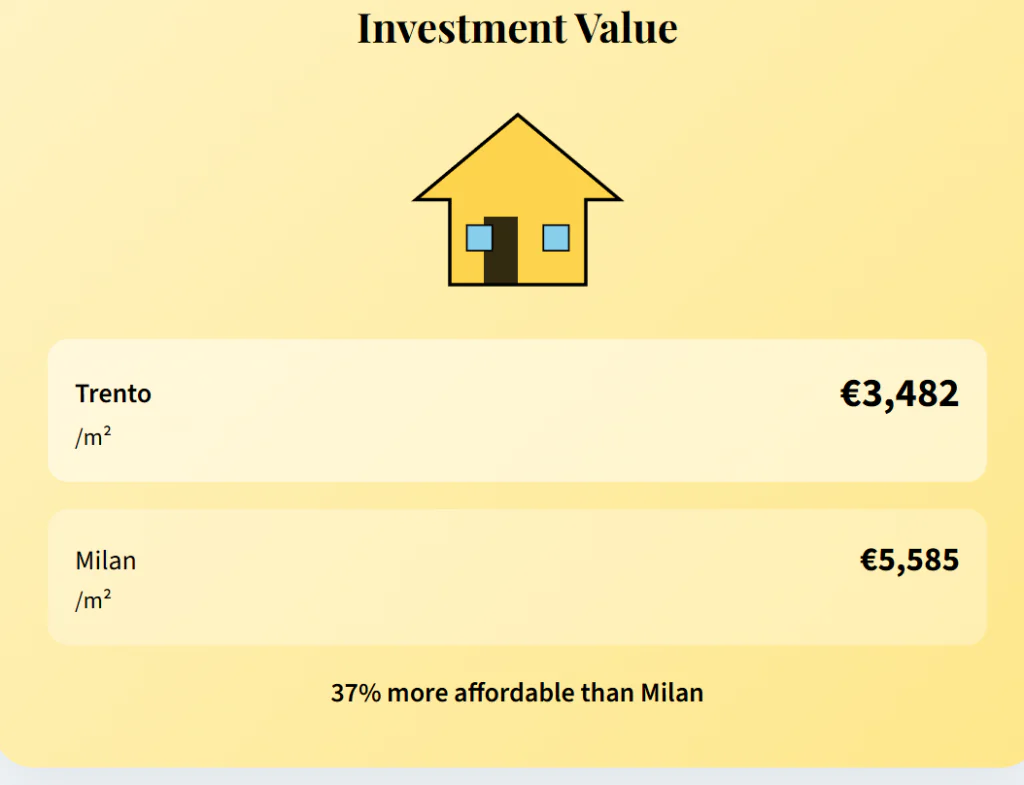
Real estate in Trento costs an average of close to €3,500 per square meter. That is the highest price tag of any city on this list, but considering everything this beautiful city has to offer, the cost is entirely justified. If you desire efficiency, reliability, trains that depart on time, and superior public services, you must head north in Italy.
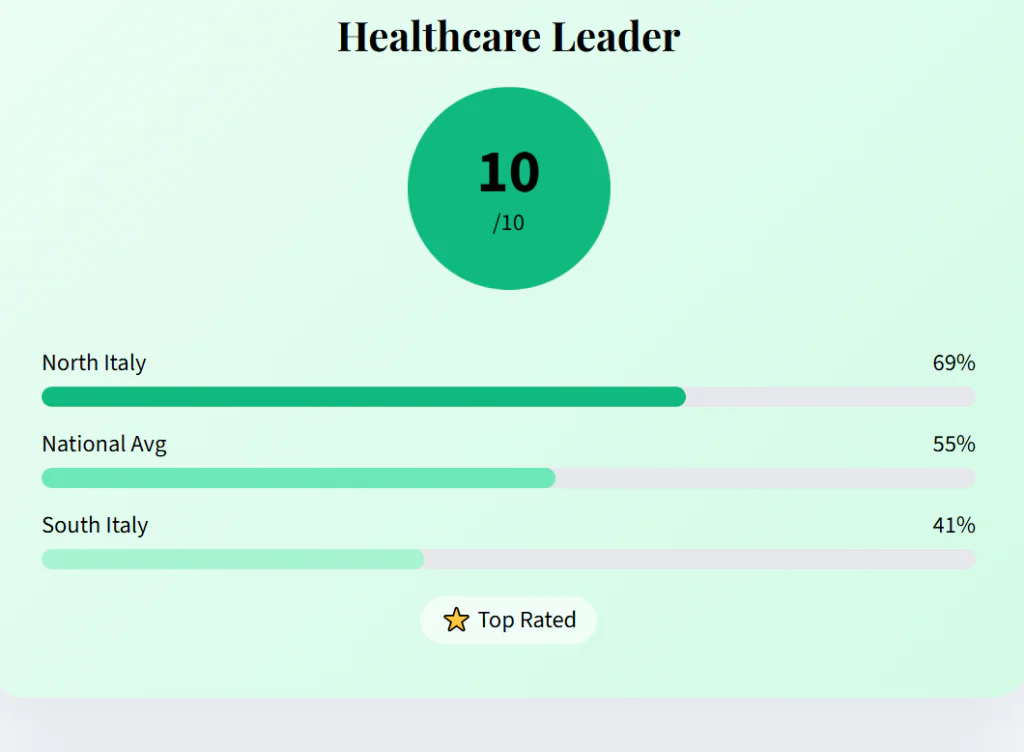
The healthcare system at Ospedale Santa Chiara is consistently ranked among the best in Europe. We are talking about experiencing almost zero wait times for medical care. The healthcare satisfaction rates in this region peak at an impressive 69 percent, which is nearly 30 points higher than in southern Italy.
Getting in and out of Trento is incredibly easy, as the city is linked directly to the Brenner railway corridor. This major infrastructure artery connects you seamlessly to both Austria and Germany. As a result, major cultural hubs like Munich and Vienna are just a few hours away by train.

You must remember that Trento is a true Alpine city, which means you will experience real winters. There is heavy snow in the surrounding mountains, making it a paradise for winter sports enthusiasts. However, if you genuinely hate cold weather, Trento during the winter months will simply not be the right fit for you.
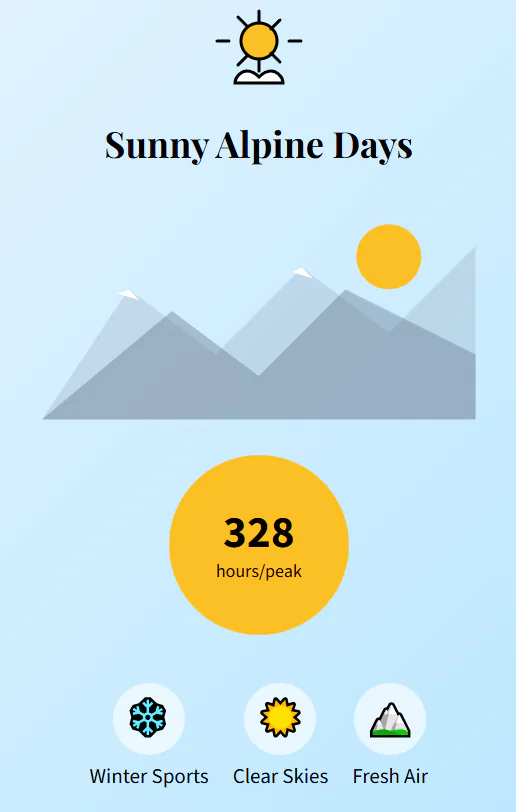
You do get 328 hours of sunshine per month during peak summer, which is quite decent for a northern location. It is definitely a city tailored for those who prefer a quieter environment, as one local perfectly described it to us. They noted:
“Nice city, nice nature (perfect if you like mountains and trekking), but overall a bit boring, with not much to do in the evening or night.”
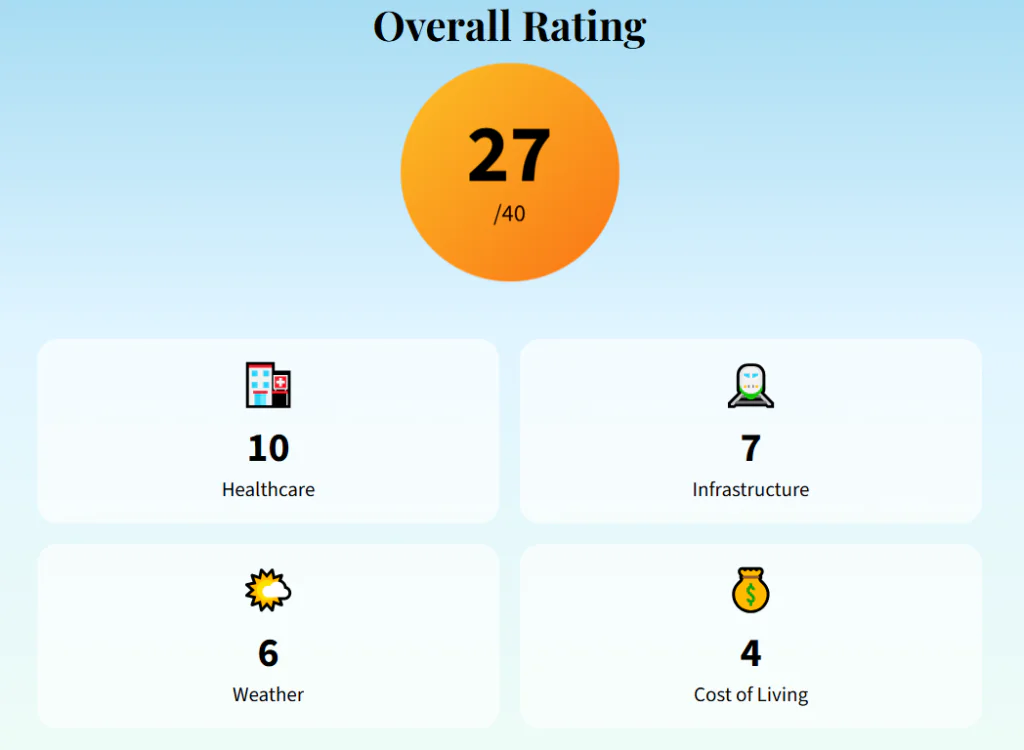
What you are actually paying for in Trento is unparalleled stability, as almost all public services work exceptionally well. It is not the sunny, romanticized version of Italy you often see in the movies; rather, it represents the highly efficient side of the country. For people who prioritize their health and systemic reliability over palm trees, Trento is absolutely worth the premium price.
9. Lucca
For our number nine spot, we travel down into the heart of Tuscany to the stunning city of Lucca. Here, you get those world-famous medieval walls and a highly refined lifestyle. Best of all, you experience absolutely none of the exhausting chaos you would typically find in Florence or Rome.
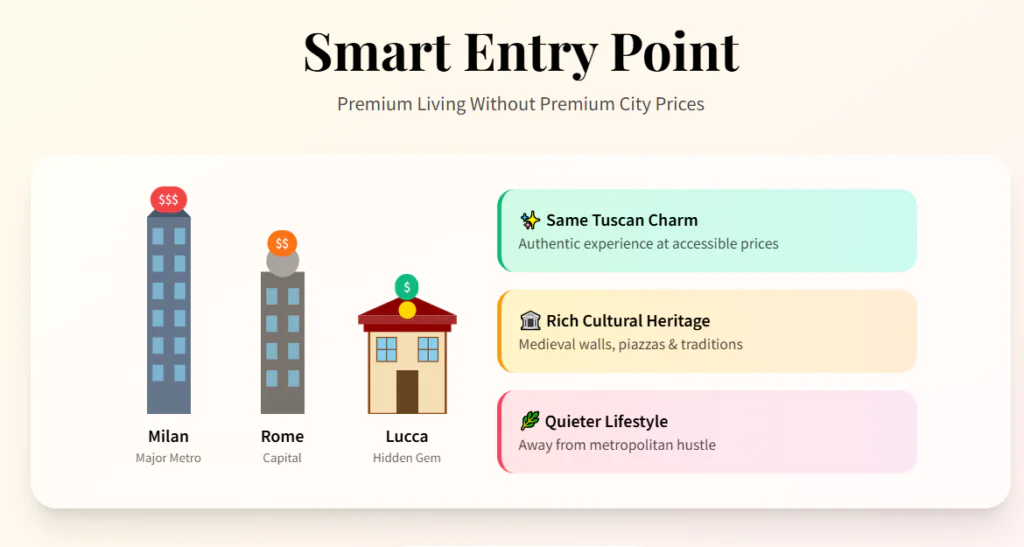
Real estate in Lucca currently averages around €2,302 per square meter. If you want to live in the absolute best areas, you are looking at roughly €3,617 per square meter, which remains much cheaper than Italy’s larger metropolitan centers. Still, I would not classify Lucca as a strict budget option, especially since several upcoming cities in our ranking are significantly cheaper.
Consequently, the cost of living score for this Tuscan gem sits at just 5 out of 10. However, Lucca possesses some incredibly strong positive points that easily justify its inclusion on this list. Specifically, infrastructure is the exact category where Lucca truly shines.
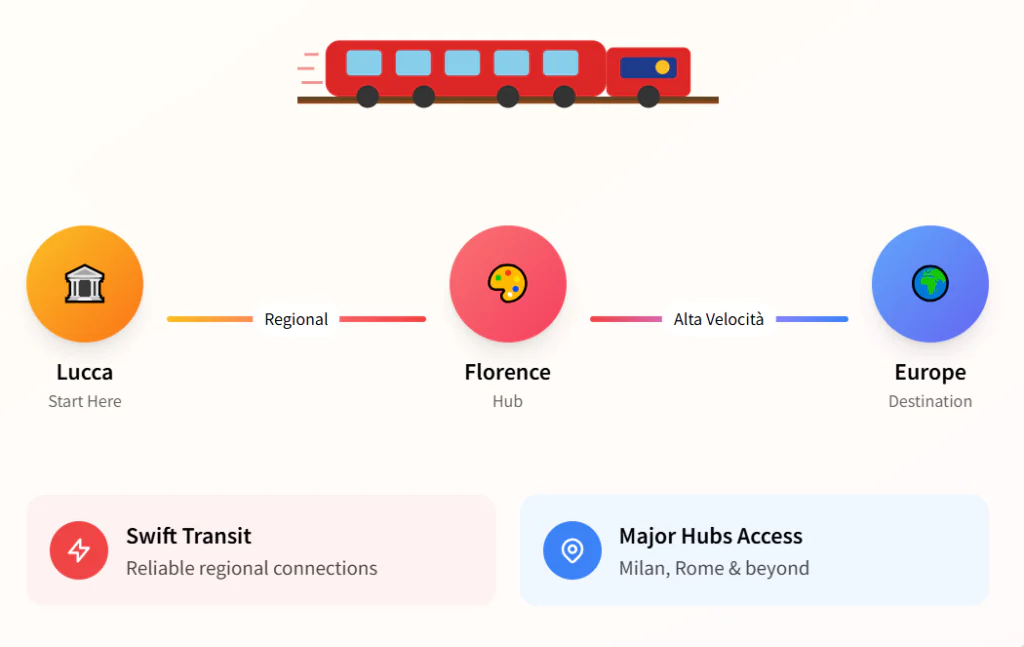
You are located just minutes away from Pisa International Airport, which effectively connects you to the rest of the world. Direct flights to London, Paris, and Berlin ensure that all major European hubs are easily accessible. Furthermore, the regional rail network ties you straight into Florence, where you can easily jump onto Italy’s high-speed lines heading north to Milan or south to Rome.
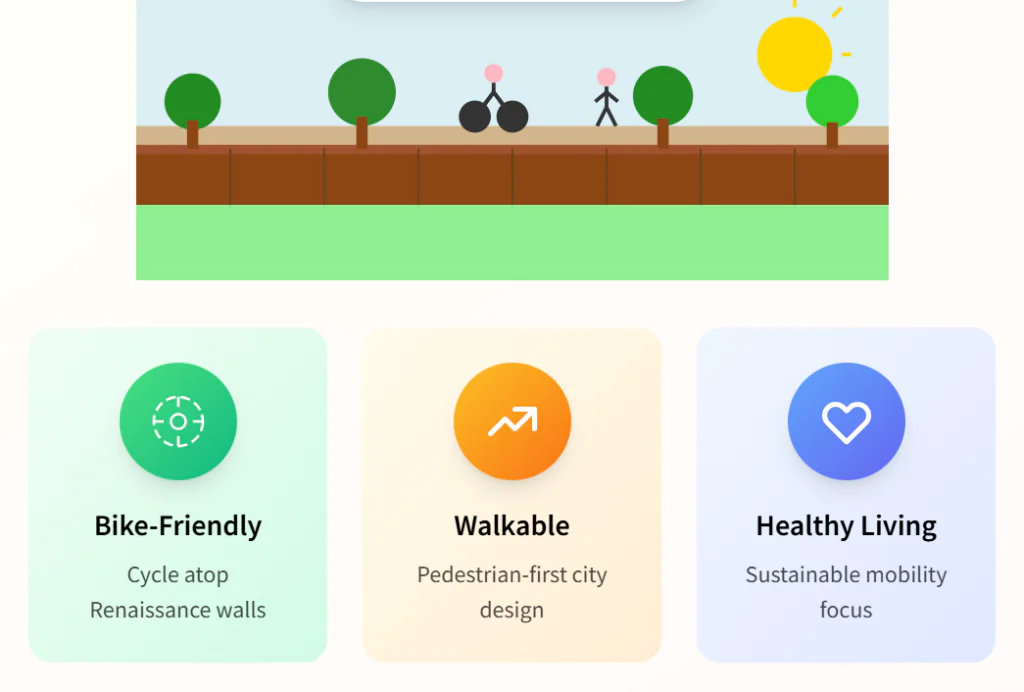
This exceptional connectivity earns Lucca a solid infrastructure score of 7 out of 10. Furthermore, the city’s flat layout makes it absolutely ideal for walking and daily biking. The entire Renaissance wall system has been converted into a gorgeous pedestrian path, ensuring that getting around locally is both easy and completely car-free.

In terms of medical care, Lucca boasts an outstanding healthcare score of 9 out of 10. Both the public institutions and the private clinics consistently deliver excellent, highly reliable service to residents. The medical facilities are thoroughly modern, and the local doctors are highly experienced in dealing with international patients.
Regarding the climate, Lucca is situated in Tuscany, meaning it can be quite humid, occasionally foggy, and you will definitely see more rain than in the south. However, if you desire a refined Tuscan lifestyle paired with excellent healthcare and strong international connections, Lucca absolutely delivers. You are simply paying a slightly premium price for that exceptional quality of life.
8. Gaeta
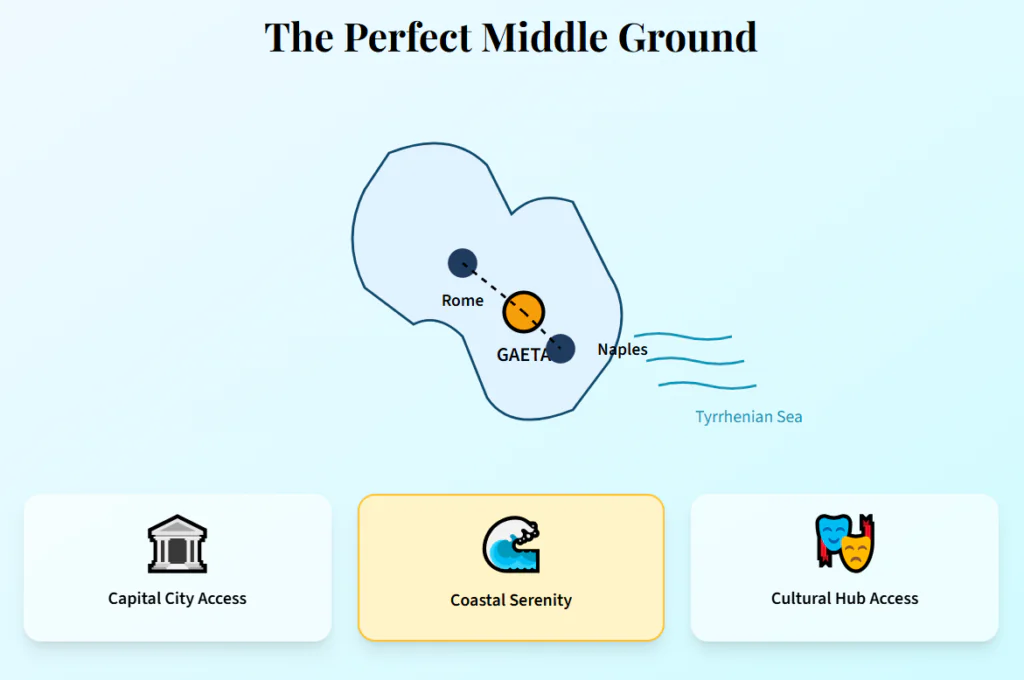
Gaeta is an absolutely idyllic destination that most Americans have never even heard about. It is a charming coastal town of roughly 19,000 people located directly on the beautiful Tyrrhenian Sea, sitting perfectly between Rome and Naples. It is small enough to feel incredibly peaceful, yet it remains strategically positioned between two major metropolitan powerhouses.
The main drawback with smaller coastal towns is that you do not usually get a massive hospital right next door. On the other hand, the immediately adjacent city of Formia features excellent private clinics like Casa del Sole that expertly handle multi-specialty care. On top of that local access, you are still only a quick one-hour journey away from Rome’s world-class medical facilities.
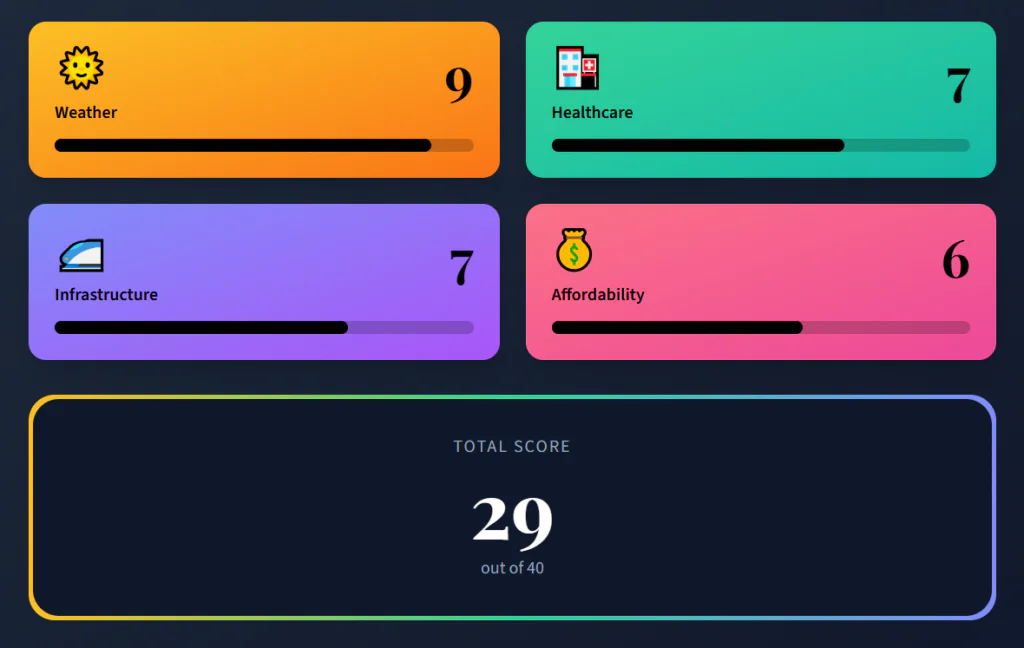
Due to this quick access to nearby urban centers and their respective medical institutions, Gaeta earns a respectable healthcare score of 7 out of 10. Surprisingly, transportation infrastructure is actually one of the biggest upsides of choosing this small town. The local Formia-Gaeta railway station operates approximately 46 trains daily heading straight into Rome Termini.
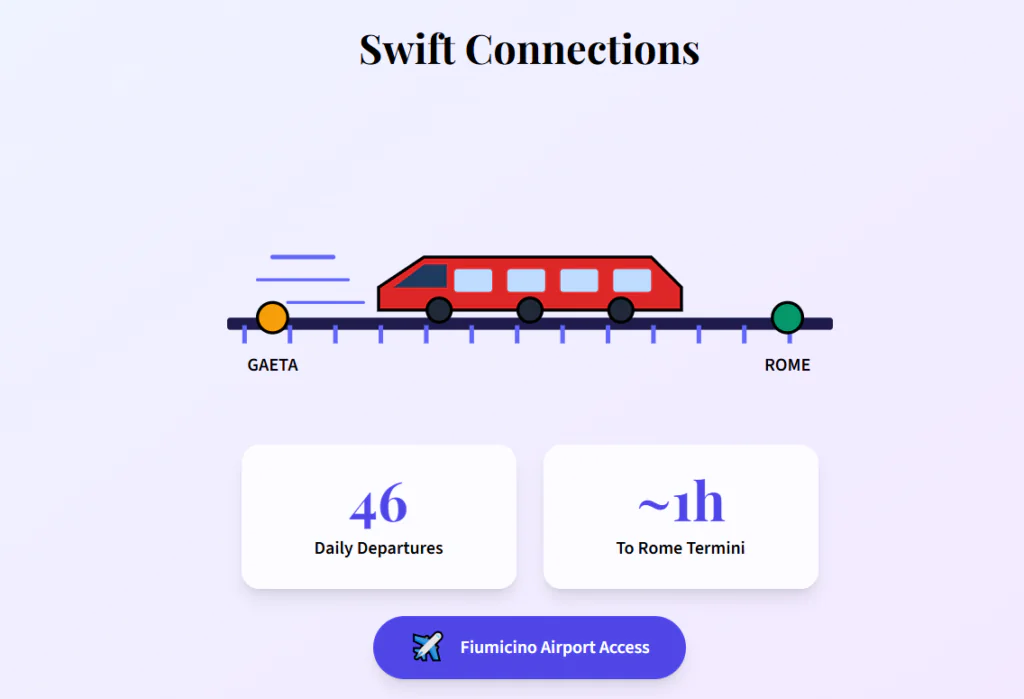
The fastest express trains cover the 118-kilometer distance in just over an hour, with a standard ticket costing only around $15. This means you can literally wake up on a tranquil beach, ride a train for an hour, and find yourself standing in Rome’s bustling city center. Because of this incredible convenience, Gaeta secures an infrastructure score of 7 out of 10.
The overall cost of living is where Gaeta secures a massive win. Because you are located right on the coast, there is naturally a slight financial premium for living near the water. However, you are still paying significantly less than you ever would in Rome or Naples proper.

You get to enjoy the luxurious beach lifestyle entirely without the punishing big-city price tag. This financial balance earns Gaeta a cost of living score of 6 out of 10. While you are definitely spending more than you would in remote inland towns, you are saving serious money compared to Italy’s major metros.
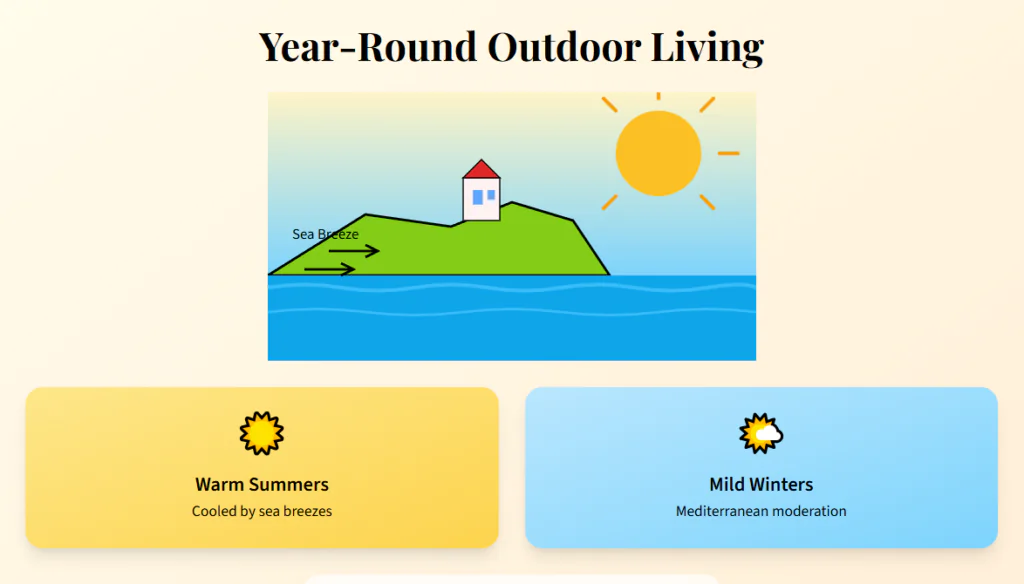
The local weather is fantastic, easily securing a brilliant 9 out of 10 rating. The surrounding sea effectively keeps the town’s temperatures pleasantly moderate on a year-round basis. The summers are delightfully warm and dry, and while it does rain slightly during the mild winters, the volume is very manageable.
To illustrate this, the typically wet month of February only sees about 107 millimeters of rain. Ultimately, choosing Gaeta is the ultimate value-king move for any prospective expat. It provides incredibly easy access to Rome without subjecting you to punishing Roman prices, all while offering a highly pleasant coastline.
Speaking of Italy, I actually share the full data charts and detailed infographics for every city we cover over on my Patreon page. You can join right now to instantly receive $108 worth of welcome gifts, and that applies even if you only sign up for the completely free tier. If you upgrade to any paid tier, you will also receive all my best-selling eBooks on living abroad alongside specialized monthly reports, all for the price of a single cup of coffee!
7. Ancona
Most international house hunters completely ignore Italy’s beautiful Adriatic coast. They mistakenly assume that Italy only means Tuscany, the Tyrrhenian Sea, and the famous Amalfi Coast. Because this entire eastern side of the country is so frequently overlooked, it naturally translates into substantially better real estate prices.
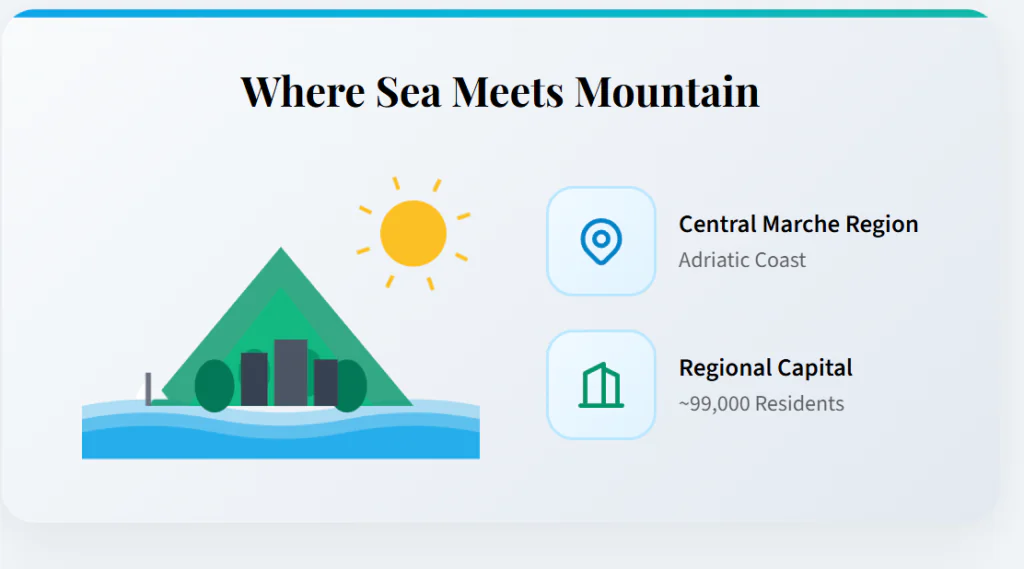
Ancona is a major, thriving port city on the Adriatic Sea, currently home to roughly 99,000 people. Right now, the city is receiving massive government investment through the PNRR, which is basically Italy’s national recovery fund pouring money into local infrastructure. The vital Rome-Ancona high-speed rail line is being heavily upgraded as we speak, and once completed, travel time from the capital will drop by a massive 40 minutes.
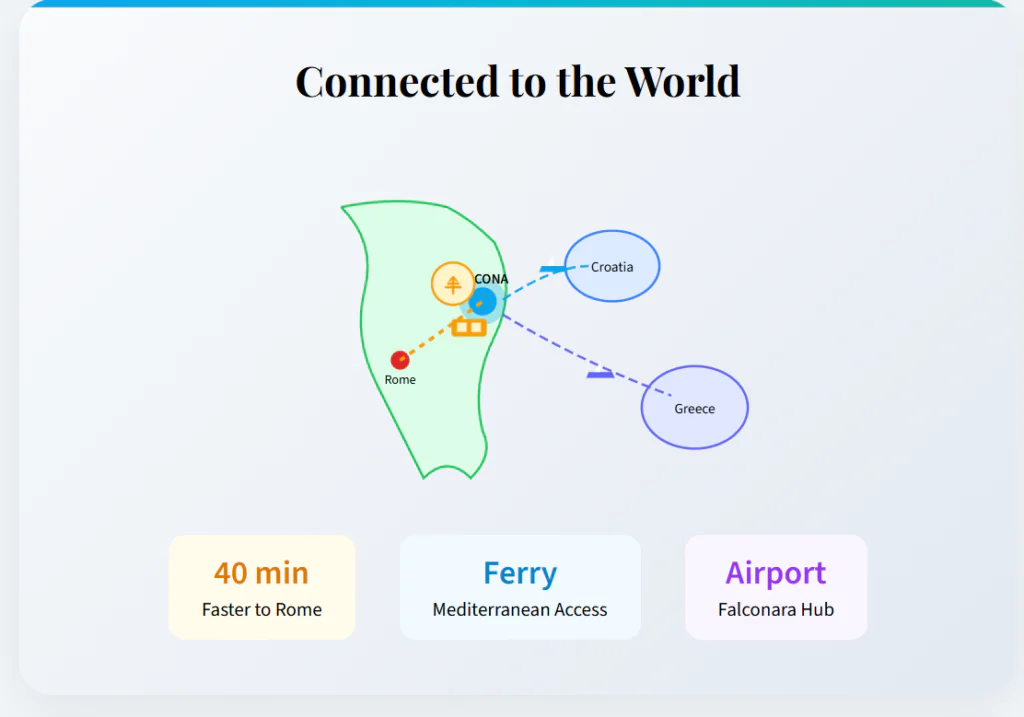
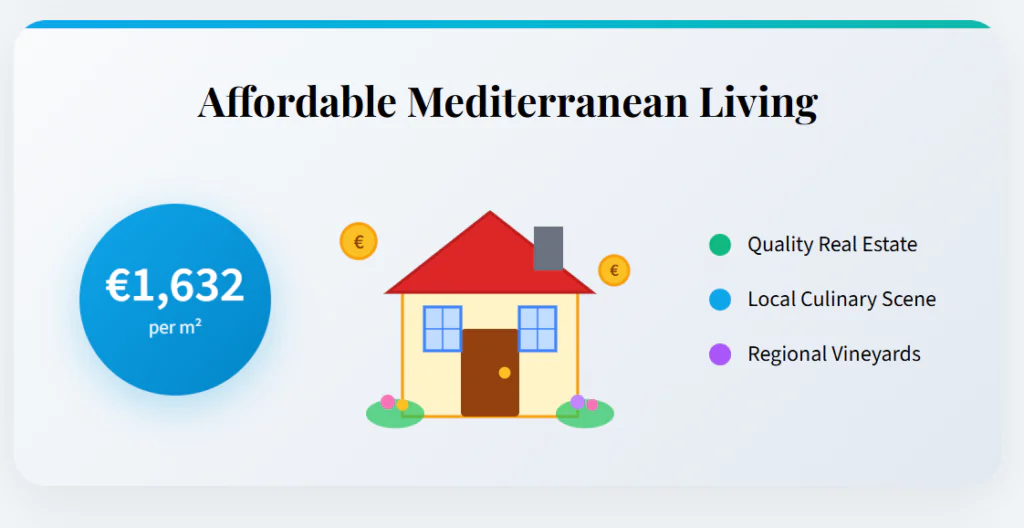
Real estate in Ancona currently costs an average of just a bit above €1,600 per square meter. When you compare that incredible rate to Lucca at €2,300 or Trento at €3,500, the contrast is stark. You are looking at a very serious cost advantage in this market, which earns Ancona an impressive 8 out of 10 for cost of living.
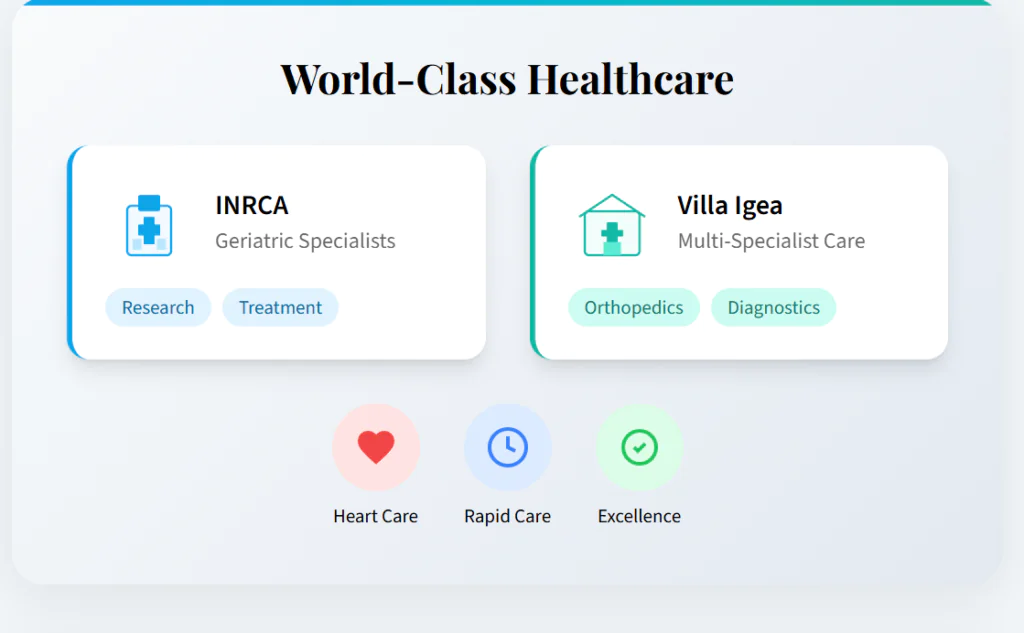
Healthcare is an absolute standout feature for anyone considering this Adriatic hub. The city features a highly specialized hospital called INRCA, which focuses specifically on aging and advanced geriatric care. Additionally, top-tier private clinics like Casa di Cura Villa Igea expertly handle everything from complex orthopedics to advanced diagnostics, securing a healthcare score of 8 out of 10.
The local infrastructure earns a solid 7 out of 10 strictly because of the ongoing transit developments. The major railway upgrades are still actively in progress rather than fully finished. However, beyond the trains, Ancona boasts a unique major port that directly connects residents to multiple international destinations via ferry.
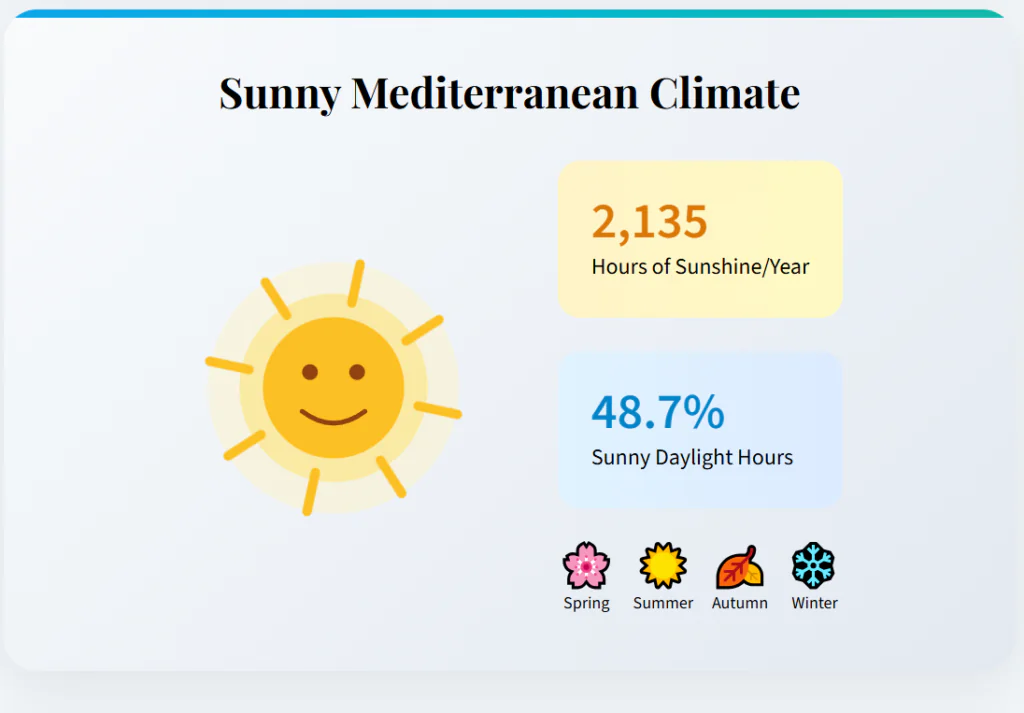
If you ever want to visit Split for a quick weekend getaway or explore a remote Greek island, you can simply walk onto a departing ferry. The weather is consistently pleasant, offering residents an impressive average of 2,135 hours of sun annually. While the winters are certainly cooler and slightly wetter than the deep south, the climate still secures a respectable 7 out of 10.
The dramatic, mountainous coast of the Marche region creates several hidden beaches that are absolute natural gems.
There is, however, one negative point highlighted by local expats, who noted that the residents tend to be slightly less friendly than in most of Italy. As one expat directly told us:
“People from Ancona are pretty closed off, they do not warm up to outsiders easily, and the nightlife is almost non-existent because everyone retreats to nearby seaside towns during the summer.”
6. Cagliari
The stunning island of Sardinia is globally famous for attracting billionaires with massive yachts and exclusive private beaches. However, you really need to look at the island’s vibrant capital city of Cagliari. It remains surprisingly affordable, especially when you consider Sardinia’s intimidating reputation as an exclusive playground for the ultra-wealthy.
Here, you gain access to all the modern amenities of a real, functional city, as approximately 154,000 people call it home. It is absolutely not some tiny, forgotten village where you are completely cut off from the rest of the modern world. While living on an island usually implies geographic isolation, Cagliari’s highly efficient Elmas Airport changes that equation completely.
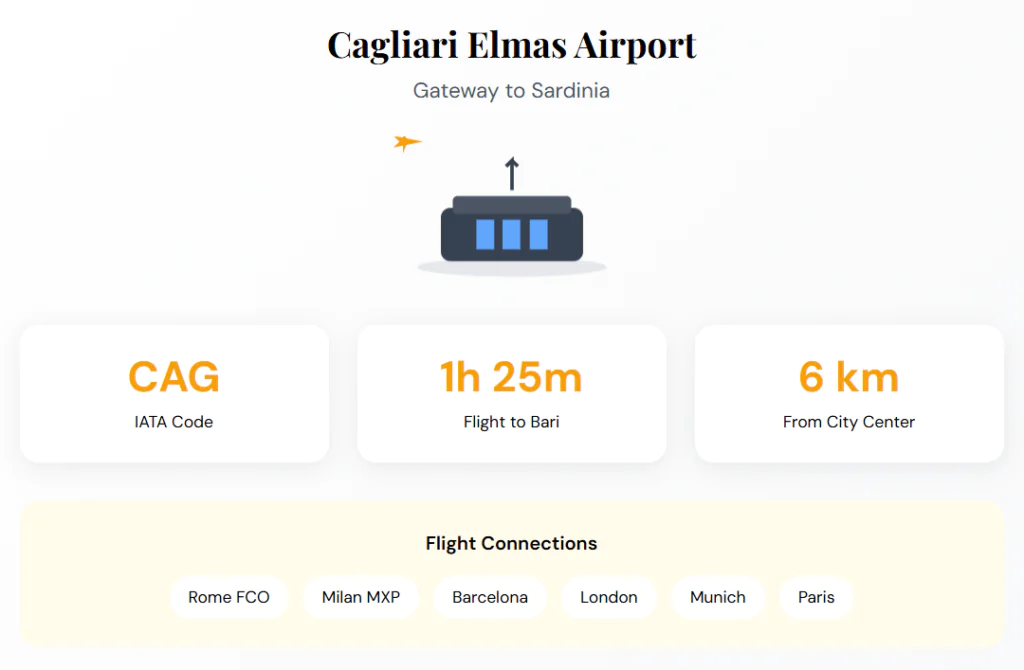
A direct flight to Rome takes just an hour and fifty minutes, while a flight to the northern hub of Milan takes two hours and forty-five minutes. You can even catch a direct flight to London, which takes only about three hours in total. Because you are never truly trapped on the island, the city’s infrastructure confidently scores a 7 out of 10.
If you want to visit family on the mainland using a quick one-hour flight, that option is always readily available. When it comes to daily expenses, the cost of living in Cagliari comes in at a very reasonable 7 out of 10. High-quality food is surprisingly cheap because the Sardinian economy focuses heavily on local agriculture and abundant fresh seafood.
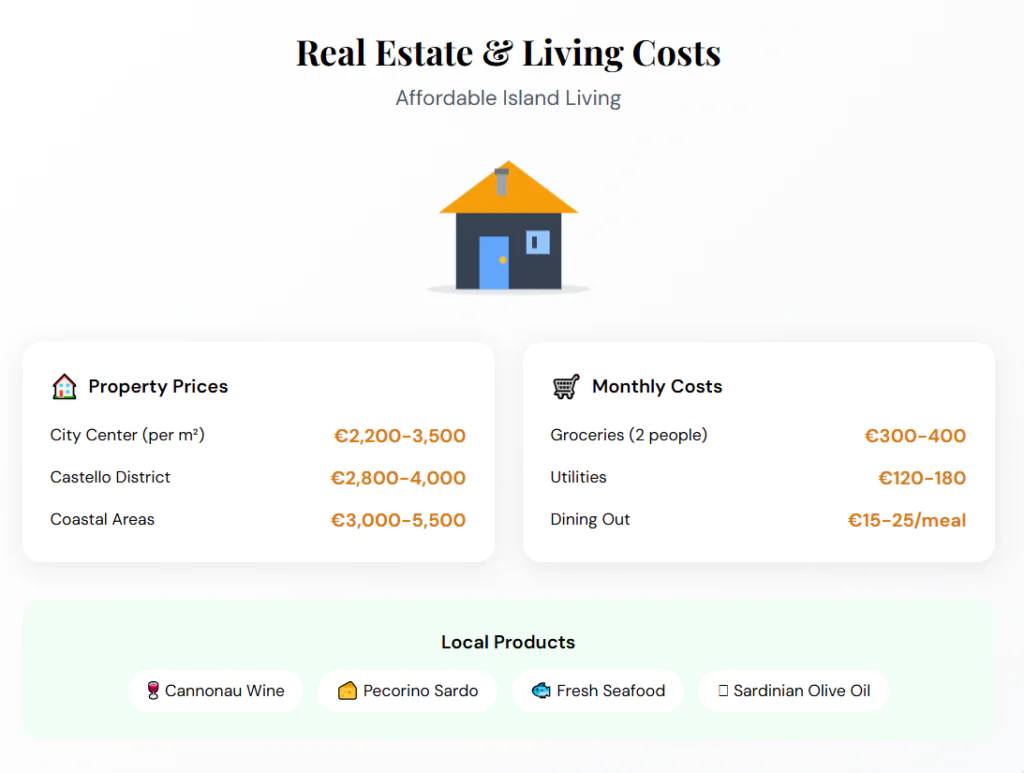
Real estate prices currently average between €1,100 and €1,500 per square meter, depending entirely on your chosen neighborhood. Even in highly desirable, well-located districts, it is perfectly possible to find a comfortable two-room apartment for less than €800 per month. This makes the capital an incredibly accessible entry point into the famed Sardinian lifestyle.
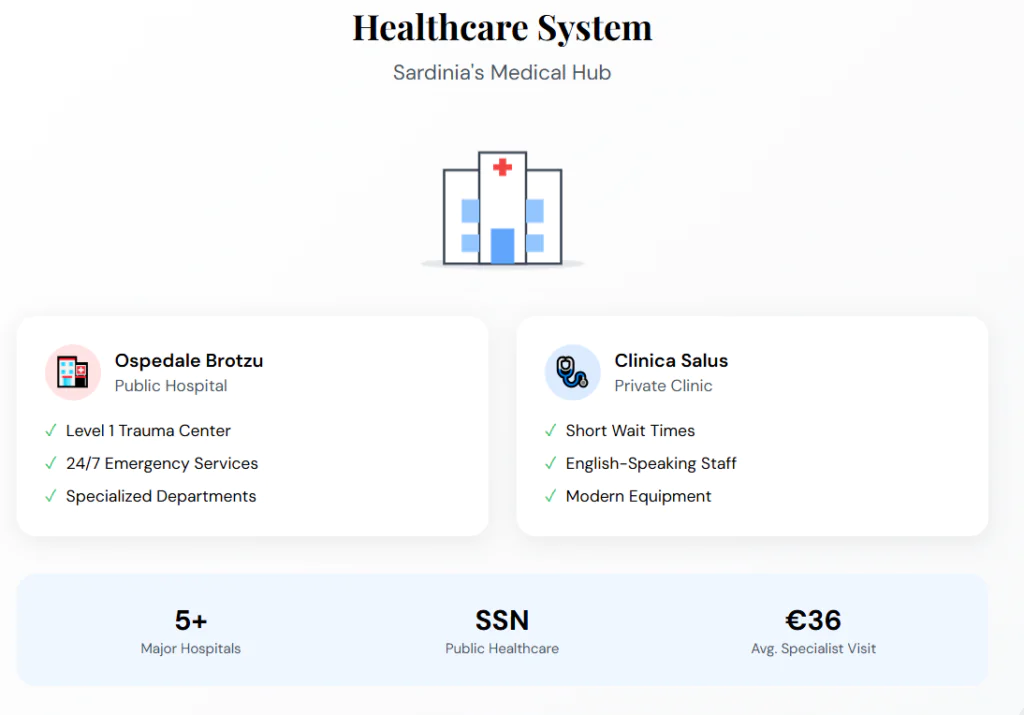
Regarding medical infrastructure, the public Ospedale Brotzu expertly handles complex trauma cases and highly specialized surgical procedures. There are also multiple top-tier private clinics available for expats who prefer faster scheduling of specific elective treatments. Most routine care is handled locally, and even if you require something incredibly specialized, you are always just a quick flight away from Rome’s world-class facilities.
Thanks to this robust combination of local capability and mainland access, Cagliari earns a solid healthcare score of 8 out of 10. In terms of the local weather, if you are moving specifically to enjoy the legendary Mediterranean climate, you will be thrilled to know that Cagliari rarely sees any significant rain. In fact, Cagliari consistently ranks among the very top Italian cities for total annual sunshine hours.
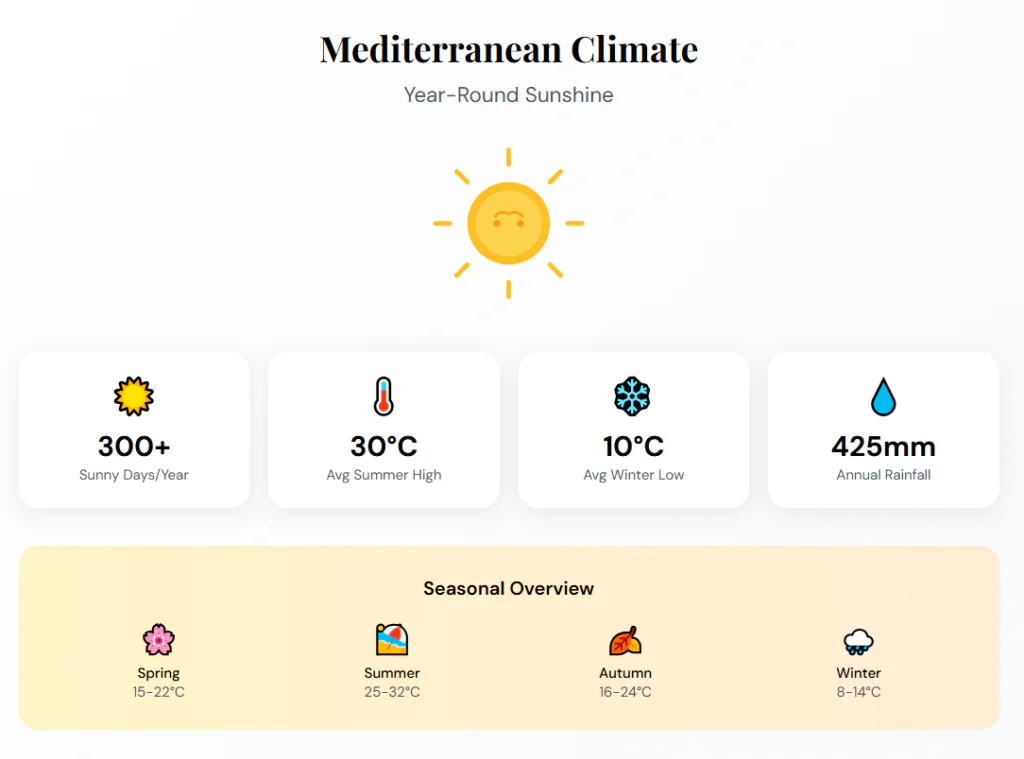
Featuring gorgeously warm summers and wonderfully mild winters, the city easily commands a spectacular 9 out of 10 for weather. This is exactly the type of flawless Mediterranean climate that prospective expats spend years dreaming about. A fascinating bonus is that Sardinia sits squarely in a designated Blue Zone, which is a rare global region where the local lifestyle, pristine food, and ideal climate help residents live exceptionally long lives.
Ultimately, Cagliari scores a 7 for cost of living, an 8 for healthcare, a 7 for infrastructure, and a 9 for weather.
5. Pescara
In the beautiful Abruzzo region, your retirement pension stretches further than it would almost anywhere else in Western Europe. The vibrant coastal hub of Pescara is exactly where that incredible affordability becomes a daily reality. It is a highly modern beach city situated directly on the Adriatic Sea, boasting roughly 123,000 residents while maintaining a wonderfully authentic, lived-in atmosphere.
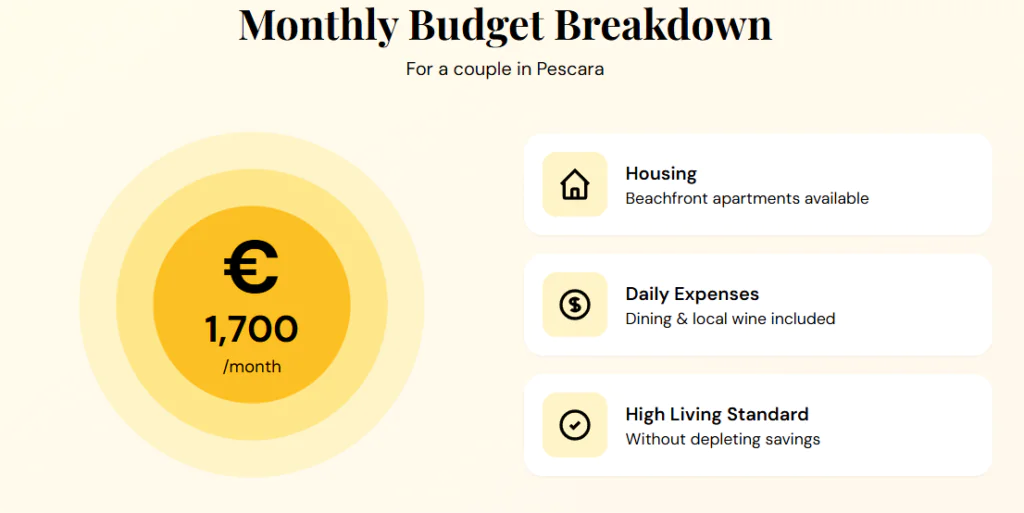
There are no massive hordes of tourists crowding the local streets or artificially inflating local prices just for Instagram photos. You will just find actual, welcoming Italian people living perfectly normal, authentic lives by the sea. Consequently, a couple can easily live a highly comfortable lifestyle in Pescara on just €1,700 a month, which easily covers rent, fresh food, utilities, and entertainment.
A typical monthly grocery budget for high-quality food usually hovers around just €300. Meanwhile, a spacious two-room apartment situated in a very good, safe location generally costs around €500 per month. Because of this extreme affordability, Pescara achieves a near-perfect cost of living score of 9 out of 10.
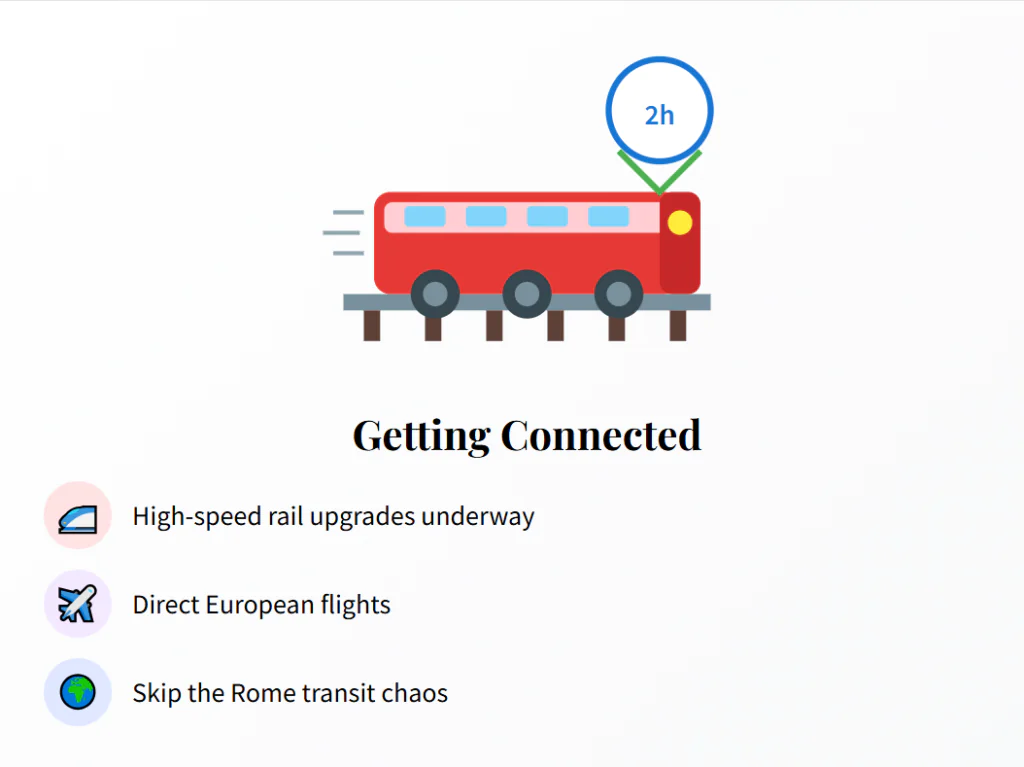
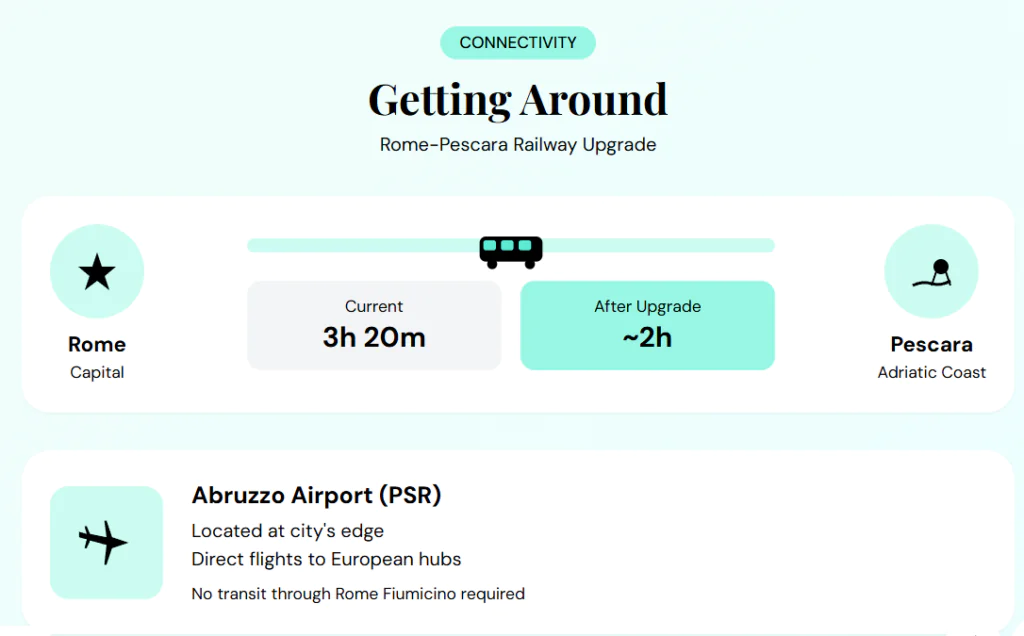
Pescara also performs exceedingly well regarding travel connectivity, as the convenient Abruzzo Airport sits very close to the central city limits. This allows you to completely skip the logistical nightmare of navigating Rome’s massive Fiumicino airport for regional flights. Furthermore, the vital Rome-Pescara railway line is currently undergoing a massive upgrade that will soon drop the cross-country travel time from over three hours down to just two, earning it an infrastructure score of 7 out of 10.
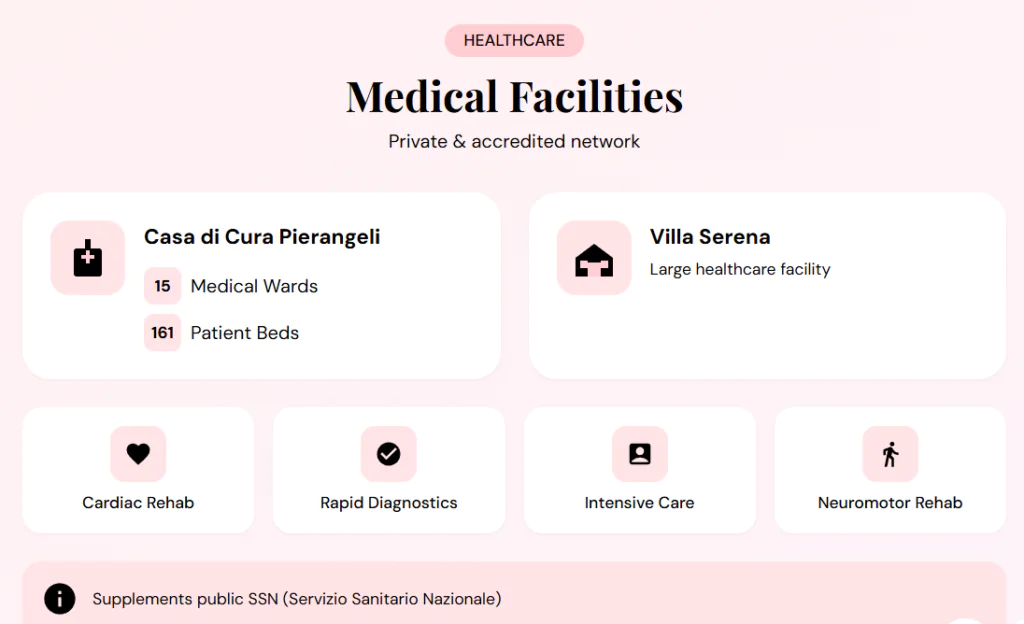
Local healthcare is highly affordable, and the region’s private medical sector is rapidly expanding specifically to meet rising expat demand. Advanced medical facilities like Casa di Cura Pierangeli and Villa Serena offer specialized procedural care, dedicated cardiac centers, and comprehensive rehabilitation programs. Health-conscious expats will also love spending time outside, as Pescara receives over 2,300 hours of sun annually, meaning the sun shines for over 53% of all available daylight hours.
This fantastic weather fosters a thriving, year-round outdoor café culture, featuring warm summers that successfully avoid the punishing, extreme heat found further south.
One local perfectly captured the city’s unique charm, stating:
“Pescara is a city with a decent quality of life and an excellent climate, where services are very good for Southern Italy standards—which is a bit like saying ‘the best pizzeria in Stockholm.'”
Ultimately, Pescara earns a 9 for cost of living, an 8 for healthcare, a 7 for infrastructure, and an 8 for weather, securing a grand total of 32 points. This makes it an incredibly strong, budget-friendly option for any prospective expat.
4. Bari
The vibrant city of Bari is currently in the middle of a massive urban transformation that almost nobody seems to be paying attention to. It serves as the primary gateway to southern Italy and functions as a remarkably vital regional transport hub. Because the city boasts a population of roughly 316,000 people, it is absolutely not some sleepy coastal town; rather, it is a real metropolis pulsing with energy and life.
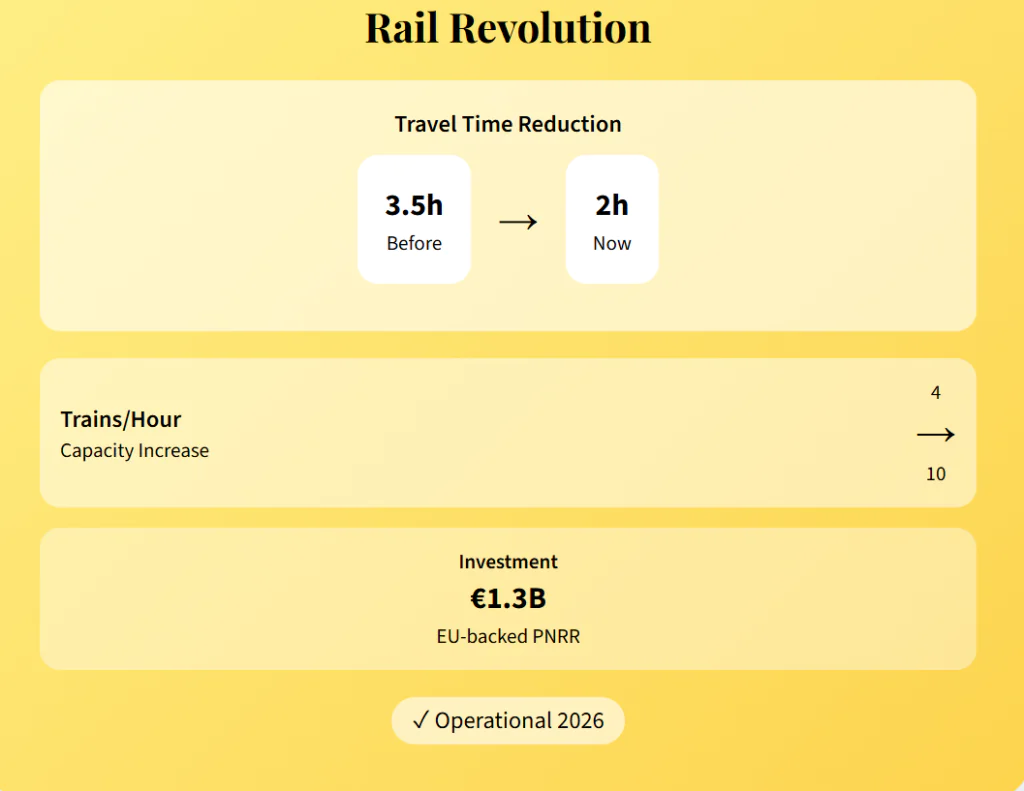
Consequently, this dense population means that certain central parts of Bari can become exceptionally busy and undeniably loud. If you are the type of person who desires absolute quiet and total isolation during your retirement, you must pick your specific neighborhood very carefully to avoid bitter regret. However, the exact factor that rockets Bari onto this prestigious list is the staggering €1.3 billion high-speed rail investment.
Additionally, the local Karol Wojtyła Airport efficiently handles a wide variety of direct international flights across Europe. Because of this flawless, multi-tiered connectivity, we proudly award Bari a perfect 10 out of 10 for infrastructure
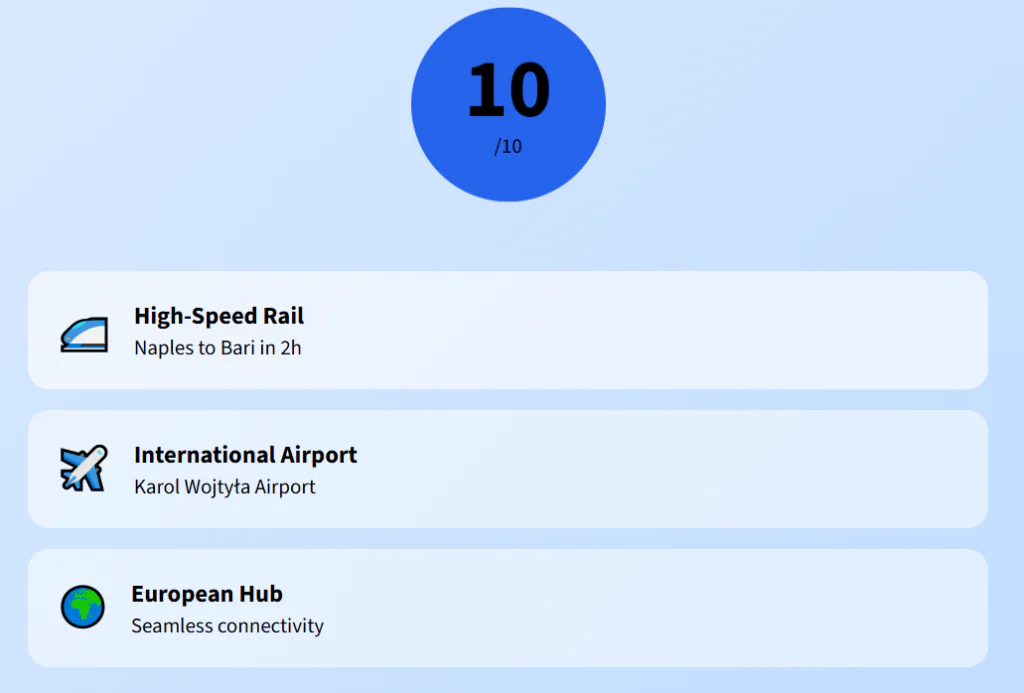
The agonizing rail travel time from Naples used to take three and a half hours, but the new upgrades have slashed that journey down to just two hours. Furthermore, the regional trains now run an impressive ten times per hour instead of just four. This massive logistical improvement means you are now seamlessly, rapidly connected to all of Italy’s major economic centers.
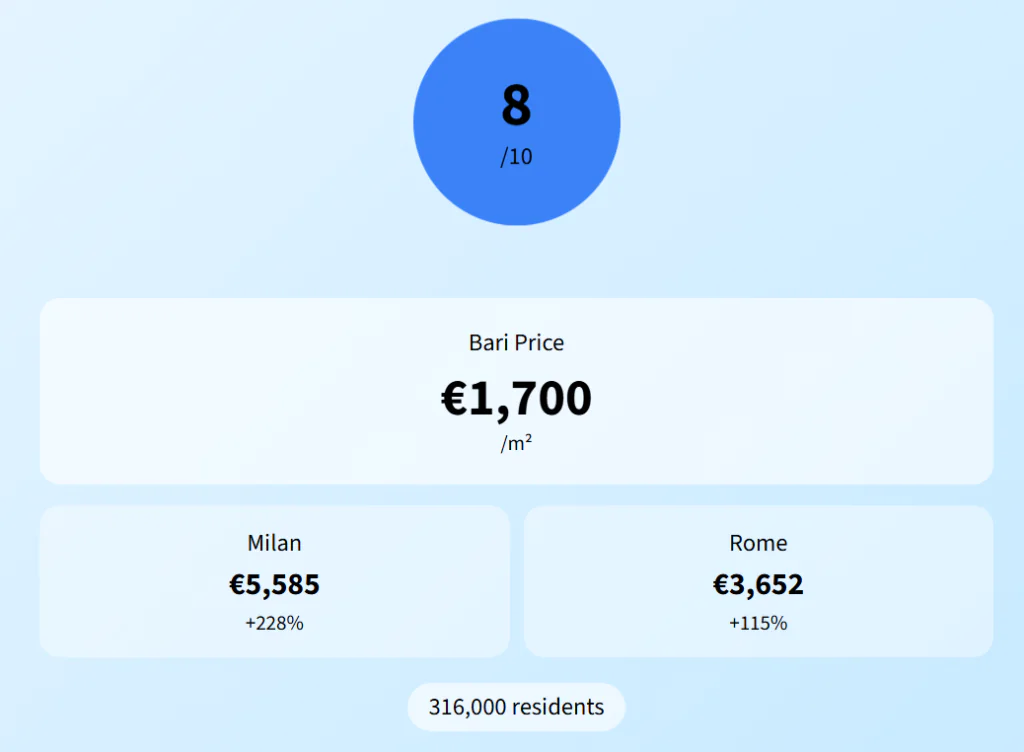
Remarkably, despite this world-class transit access, local real estate still averages a highly affordable €1,700 per square meter, which is shocking when compared to Milan at €5,585 or Rome at €3,652.
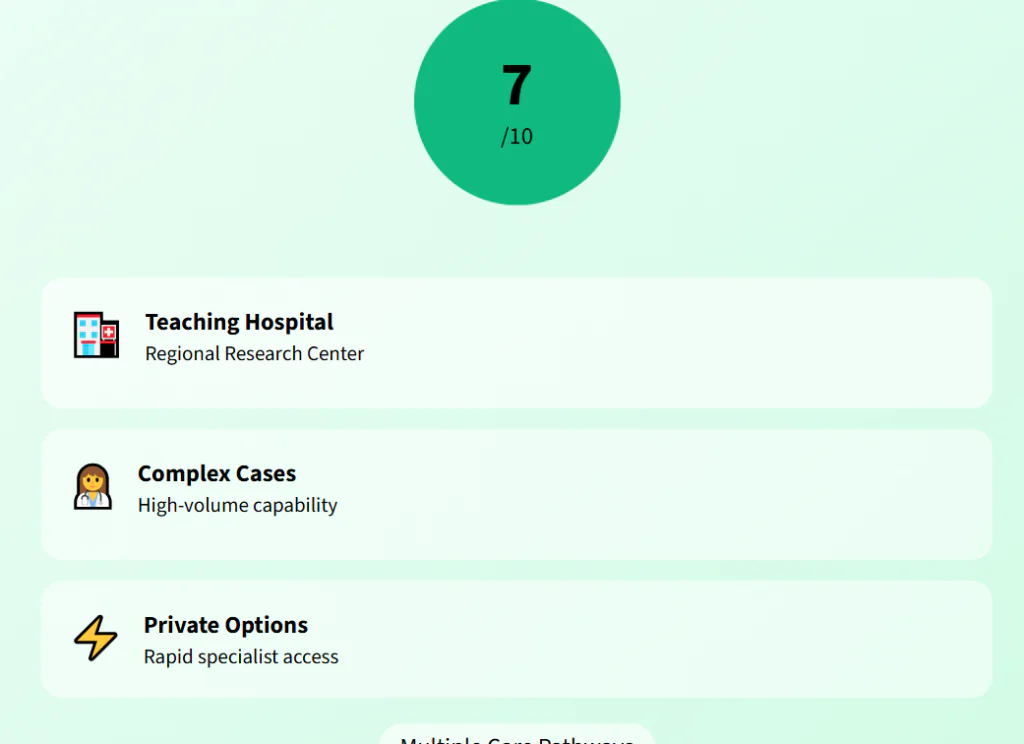
You are essentially getting access to a major, thriving city with serious international connectivity at an absolute fraction of the standard metropolitan price. The healthcare sector is highly dependable, anchored by the massive Policlinico di Bari. This specific institution is a major, cutting-edge research hospital that routinely handles the most complex medical cases for the entire surrounding region.
Naturally, there are also multiple high-end private clinics available for expats desiring immediate, specialized care without relying on the public system.
As a quick side note, while Italy’s healthcare system generally performs very well, we actually ranked the medical systems of all 27 EU nations in a separate, dedicated article if you want regional comparisons.
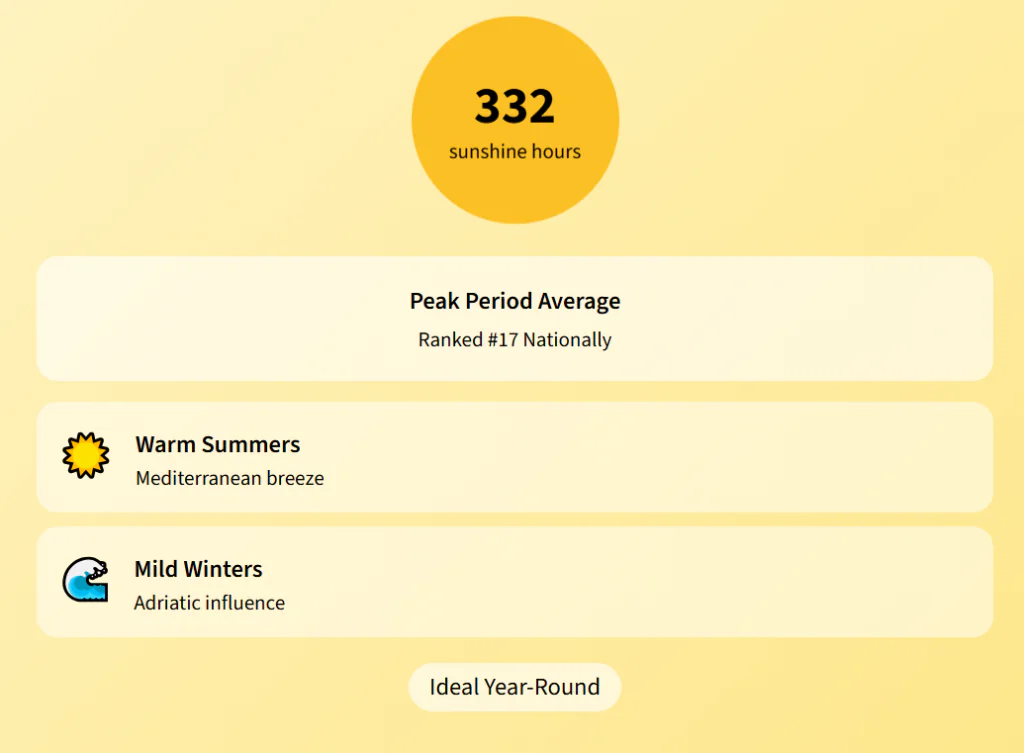
The local weather is famously warm and dry, treating residents to a glorious 332 hours of sunshine per month during the peak summer season.
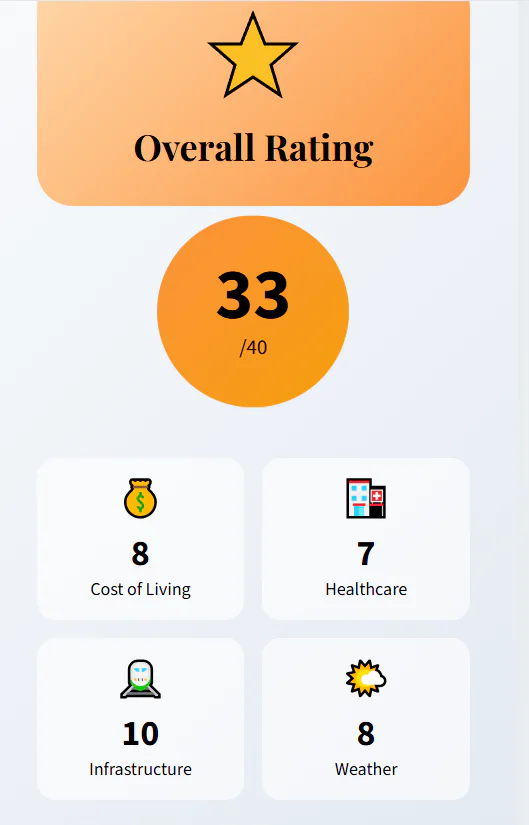
The winters remain delightfully mild, even though the brisk Adriatic wind can occasionally kick up along the coastline. Ultimately, Bari is perfectly tailored for the energetic retiree who actively refuses to retreat from an engaging, public life. It is the absolute ideal choice if you demand a big city overflowing with fantastic restaurants, endless entertainment, flawless train connections, and spectacular weather.
3. Salerno
Salerno is the ultimate, budget-conscious alternative to the famously expensive Amalfi Coast. By settling here, you get to experience the exact same dramatic cliffs, breathtaking Mediterranean views, and luxurious coastal lifestyle as you would in ultra-pricey Positano. Best of all, you secure all of those incredible geographic benefits for an absolute fraction of the standard tourist price.
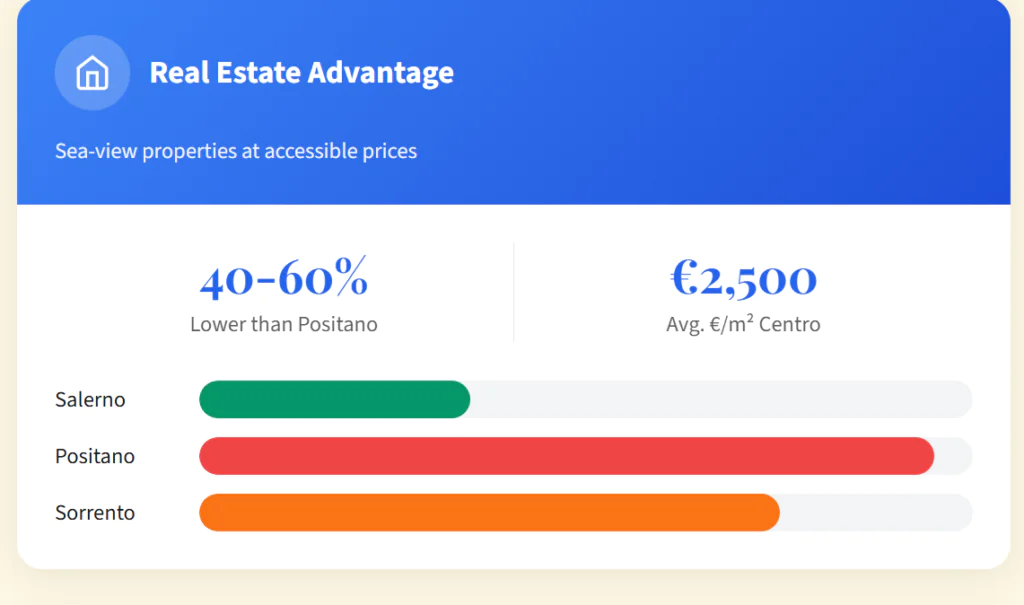
For context, real estate in the more famous luxury enclaves along the Amalfi Coast currently averages a punishing €4,500 per square meter. In sharp contrast, highly comparable coastal property in Salerno comes in at a highly accessible €1,800 per square meter. However, prospective buyers just need to be physically prepared for the challenging local terrain.
The city geographically climbs directly into the steep slopes of the Picentini and Lattari mountain ranges. If you happen to suffer from any mobility issues or simply cannot handle daily stairs and steep hills, picking the wrong neighborhood will quickly become a very painful mistake. However, if you can comfortably handle the elevation changes, the sweeping panoramic views and beautifully walkable historic streets make the effort entirely worth it.
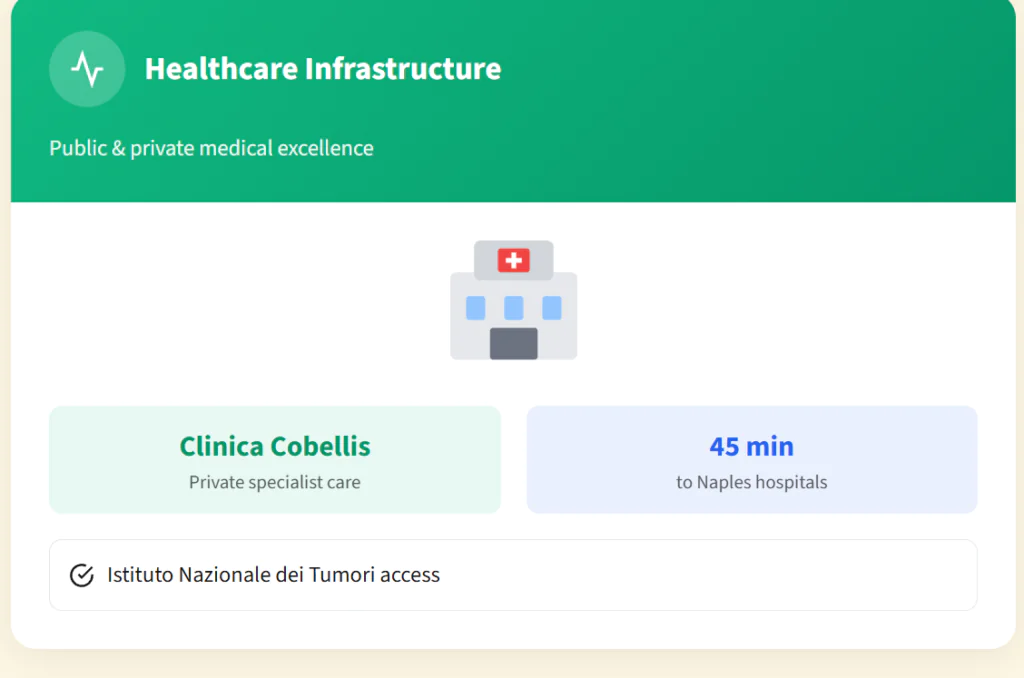
In terms of healthcare infrastructure, Salerno hosts plenty of excellent private clinics to handle standard routine medical needs. More importantly, you are located just a quick forty-minute drive from Naples, which stands as the third-largest city in the entire Italian nation. Naples boasts the prestigious Istituto Nazionale dei Tumori, which is a major cancer research center universally recognized among the highest-evaluated medical institutions in Italy, granting you immediate access to complex surgical care and specialized university treatments.
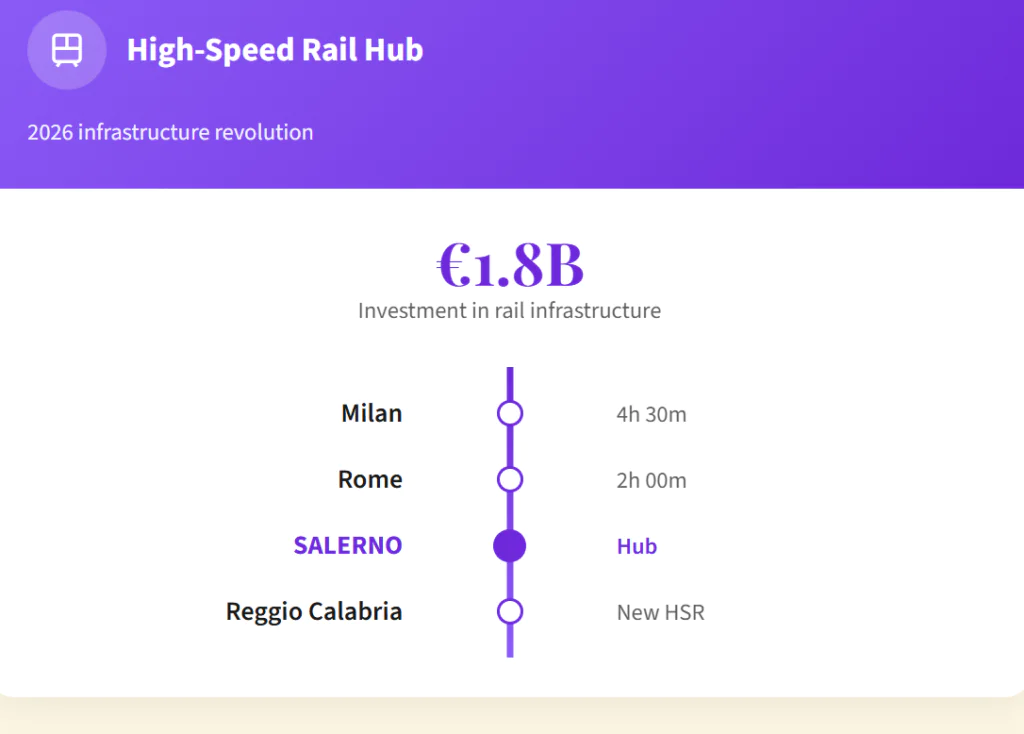
The local rail connectivity is nothing short of incredible, ensuring residents are never geographically isolated. Salerno sits directly on the primary high-speed rail line that runs flawlessly from Milan all the way down to Reggio Calabria at the very bottom of the Italian peninsula. This strategic placement means you are effortlessly connected to major northern hubs like Florence, Rome, and Milan at a moment’s notice.
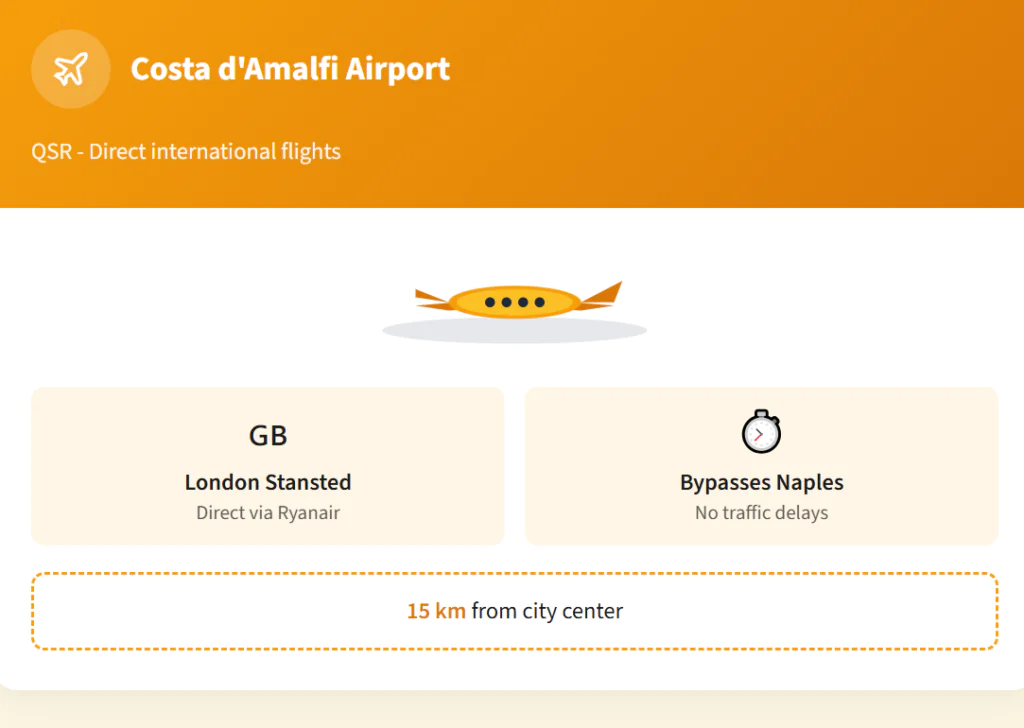
Furthermore, the city recently opened its very own commercial hub, the Costa d’Amalfi Airport, which provides direct international flights to major cities including London. Because of these expanded aviation routes, you are absolutely never trapped on the local coast anymore. This pristine rail and air connectivity is crucially important, because, speaking from my own stressful experience, driving a car in Southern Italy is rarely a peaceful endeavor.
The driving environment is notoriously harsh, featuring super narrow historic streets that perfectly explain why local manufacturers like FIAT build such incredibly small cars. Additionally, the local southern drivers are exceptionally assertive, meaning it is usually much safer and far less stressful to simply rely on the excellent train system.
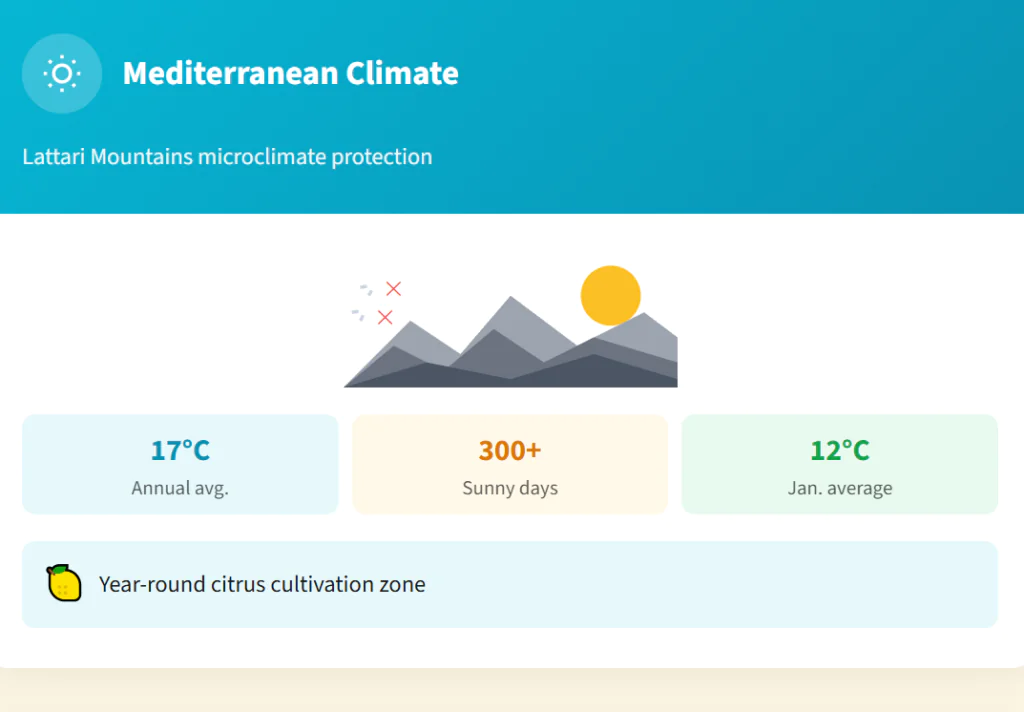
Geographically, the massive mountains directly behind the city effectively create a highly specific, protected coastal microclimate.
These towering peaks physically shield the entire town from harsh northern winds, ensuring that the local temperature remains remarkably moderate year-round. You will instantly notice fragrant citrus trees growing everywhere, which proves the climate is warm enough for delicate Mediterranean agriculture yet protected enough to stay comfortable.
As one satisfied local perfectly summarized their home:
“It is a safe, quiet town to live in; while it isn’t as intensely exciting as Naples, it is definitely much safer and noticeably cleaner.”
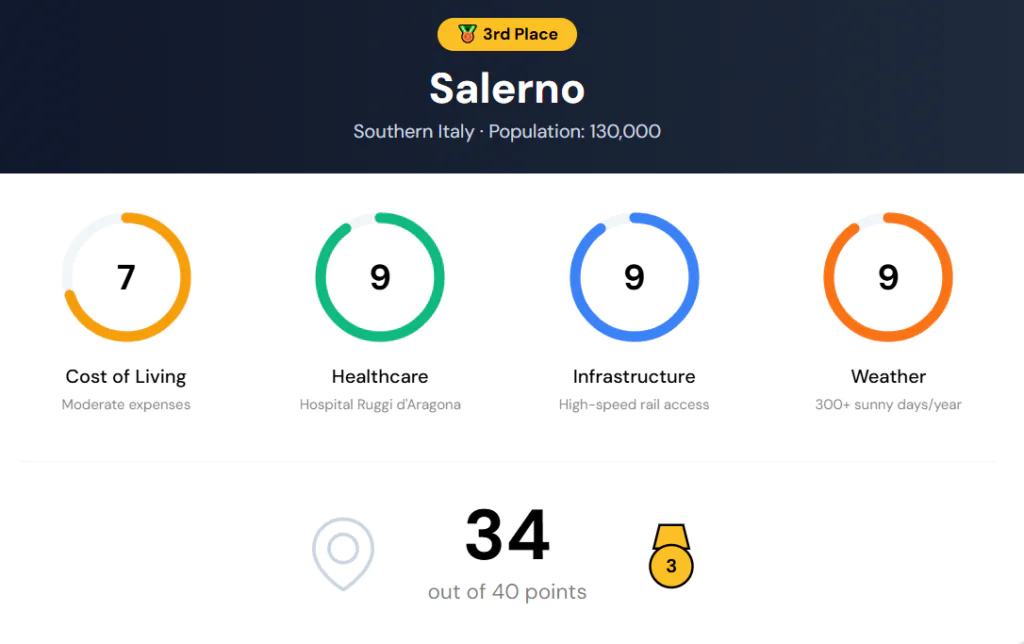
Salerno performs exceptionally well across all four of our core data indicators. It proudly earns a 7 for cost of living, a 9 for healthcare, a 9 for infrastructure, and a 9 for weather. With an outstanding total of 34 points, this coastal gem easily secures our highly coveted third-place position.
2. Syracuse
Syracuse is widely considered by many seasoned travelers to be the absolute most beautiful of the four “big” Sicilian cities, easily outshining Palermo, Catania, and Messina. However, the primary trade-off for living on such a visually splendid island is dealing with Sicily’s legendary, infuriatingly slow-moving local bureaucracy. Government forms take absolutely forever to process, and essential residential permits move at a glacial pace that will severely test your patience.
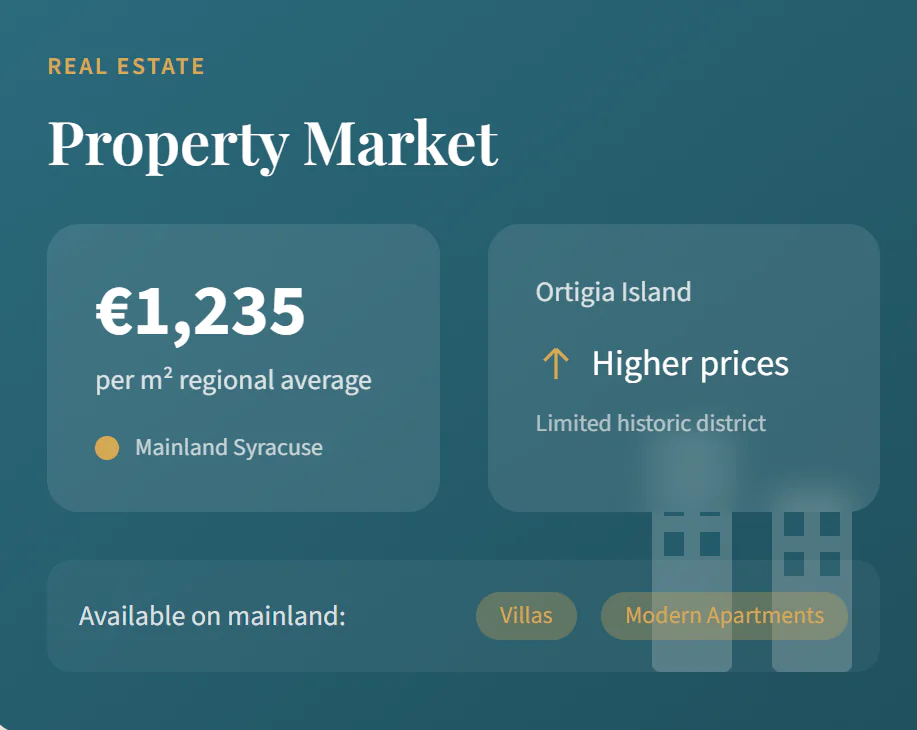
Fortunately, once you successfully get past that frustrating initial administrative setup, the incredible beauty of the city truly opens up to you. Financially speaking, choosing to live in Syracuse keeps your daily and monthly expenses remarkably low compared to the rest of Europe. Real estate here costs a shockingly affordable average of just €1,235 per square meter, allowing you to purchase sprawling luxury villas or modern apartments for an absolute fraction of northern prices.
Because your money stretches so incredibly far on this island, Syracuse easily secures a near-perfect 9 out of 10 for cost of living.
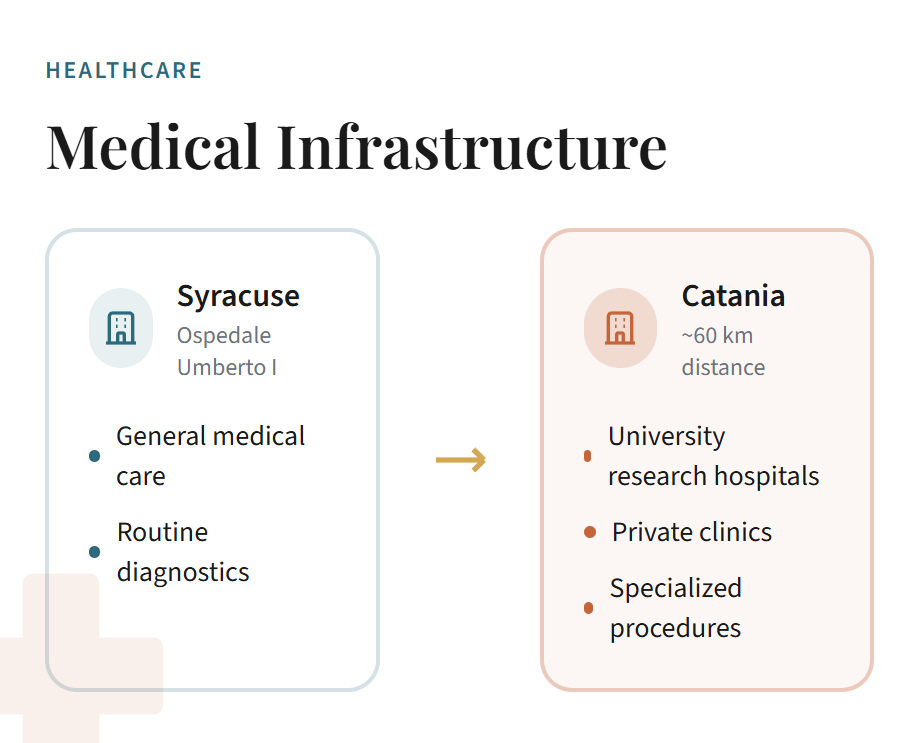
While the immediate local healthcare is merely adequate, Syracuse boasts the massive geographic advantage of being just fifty minutes away from the larger city of Catania. Catania features several major university research hospitals and elite private clinics that easily handle highly complex, specialized medical treatments.
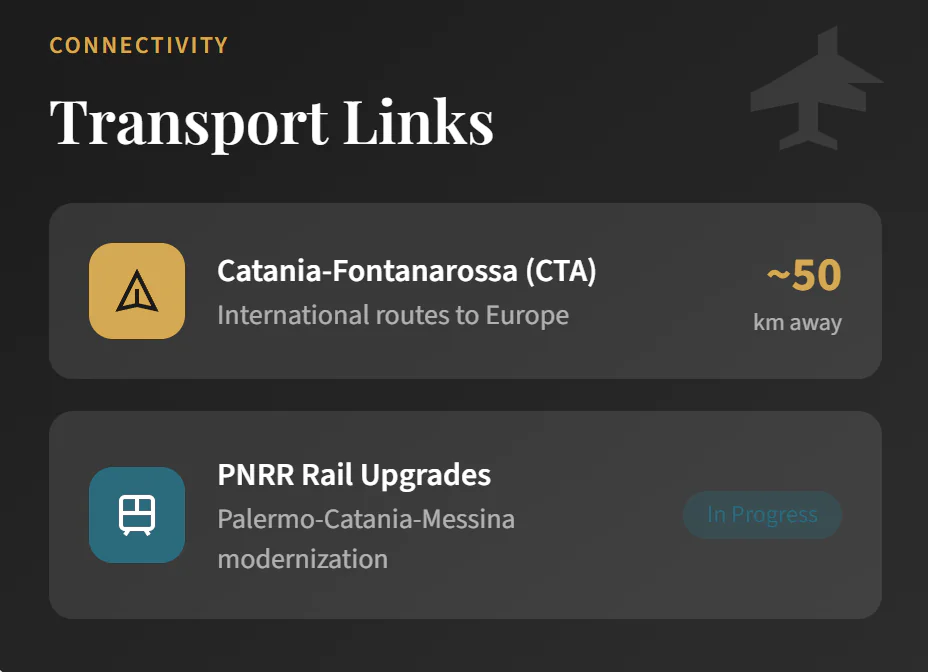
The island’s broader infrastructure is actively being transformed right before our eyes. The massive Catania-Fontanarossa Airport is located just 60 kilometers away, consistently providing direct international flights to major hubs across Europe and far beyond. Additionally, the Italian government is currently pouring an unprecedented amount of money into upgrading Sicily’s antiquated railway network through the PNRR national recovery fund.
As these new railway upgrades come online, regional travel times are rapidly dropping across the entire island. While Sicily certainly maintains a stubborn reputation for being slightly behind the times with its rough roads and slow bureaucracy, the local weather is where Syracuse truly outshines the competition.
This spectacularly gorgeous coastal city receives a staggering 346 hours of sunshine per month during its long, beautiful summers.
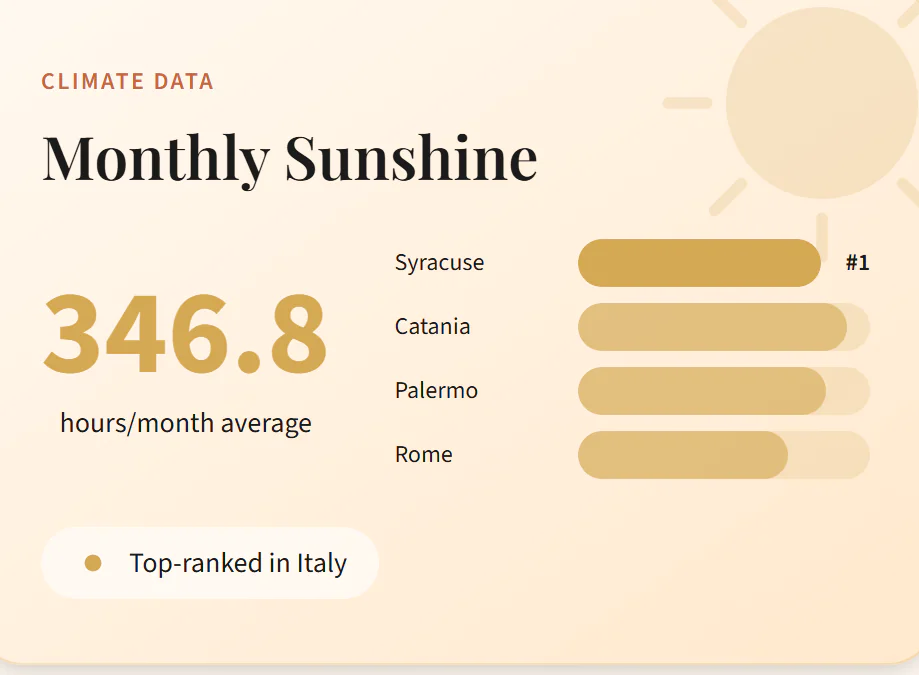
When you compare that brilliant sunlight to most standard European cities, which only average between 150 and 200 hours, you realize that living in Syracuse basically guarantees year-round sun. The winters are fabulously mild, but the peak summer months become intensely, severely hot. Therefore, you must be acutely aware of those soaring temperatures before moving if you happen to be particularly heat-sensitive.
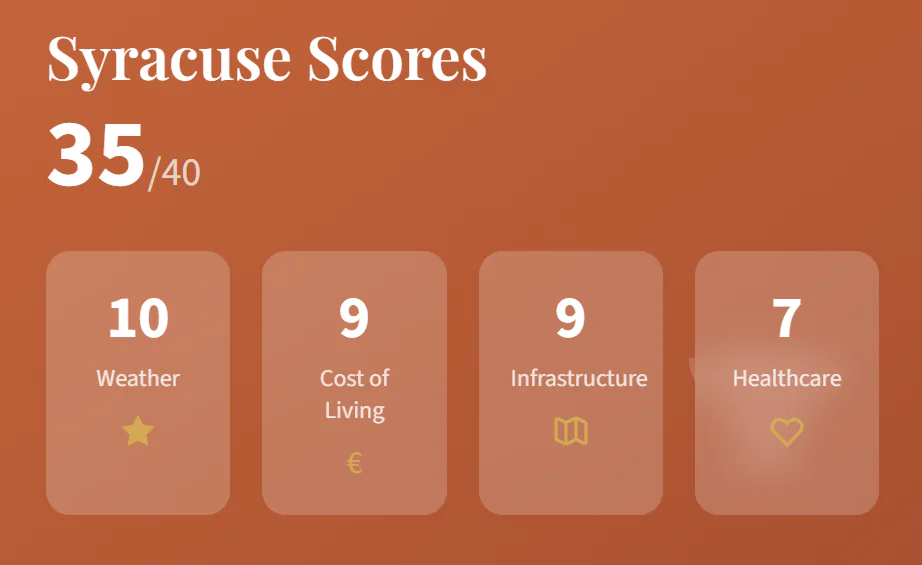
Ultimately, Syracuse is a glorious, sun-drenched, incredibly low-cost major city that provides surprisingly fast access to crucial airports and advanced hospitals on a truly stunning island.
1. Lecce (The Best Italian City to Retire in 2026)
Lecce is widely celebrated as the magnificent Florence of the South, and it stands as the absolute undisputed winner of our 2026 lifestyle index. This city is quite literally a stunning Baroque architectural masterpiece, strategically located deep down in the heel of Italy’s famous geographical boot. Historically, being located this deep in the south used to mean severe economic and transit isolation, but the recent influx of PNRR funding has changed absolutely everything.
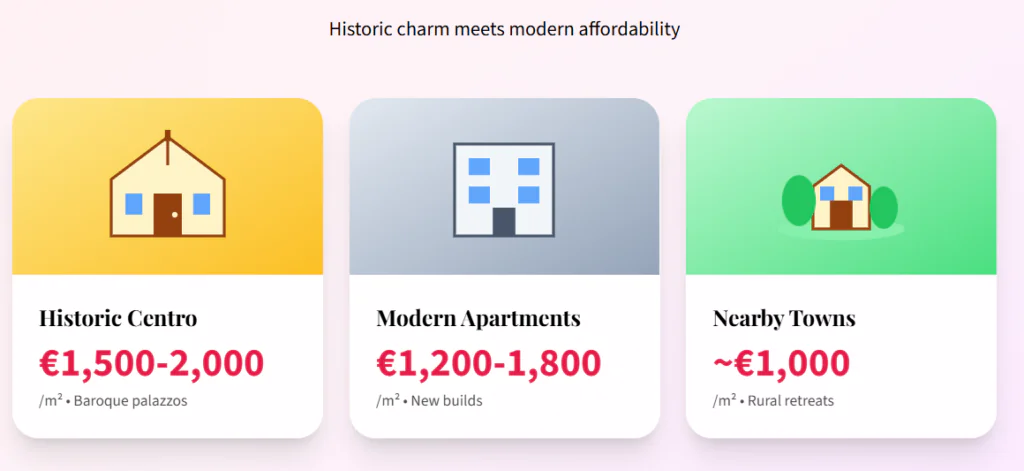
Italy’s massive national recovery fund is currently pouring billions of euros into modernizing southern infrastructure, and Lecce is aggressively securing its fair share of that developmental wealth. Despite this rapid modernization, central real estate still averages a very reasonable €1,800 per square meter. If you look just outside the main city center into the charming surrounding towns, you can routinely find gorgeous homes for as incredibly low as €1,000 per square meter.
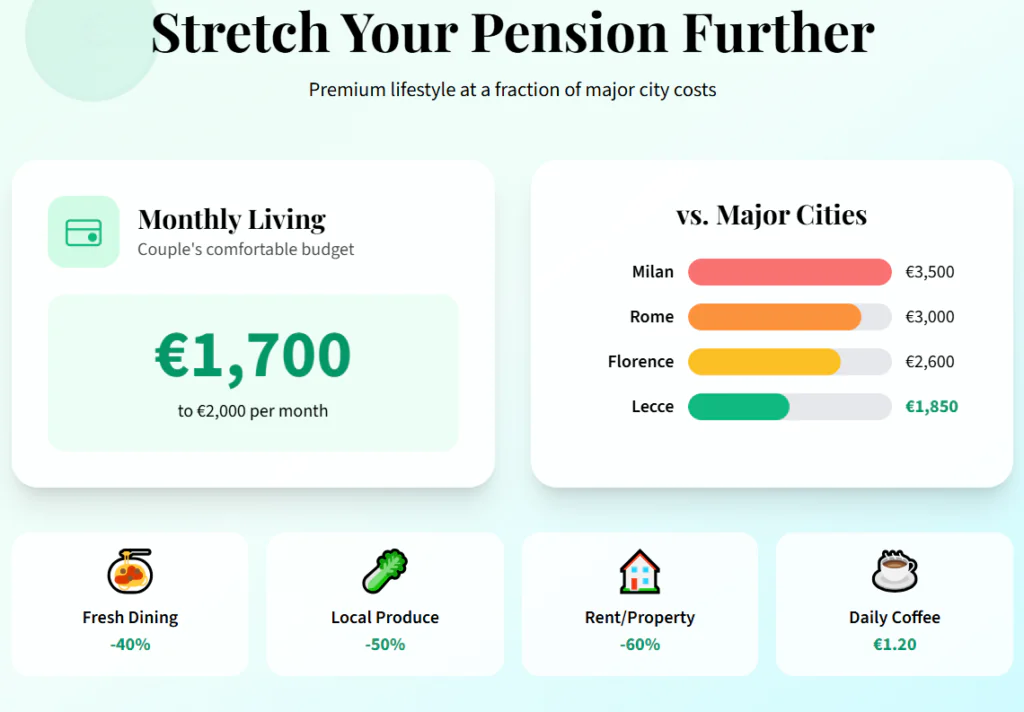
Because prices are so depressed, you can easily purchase a stunning historic apartment or a sleek modern villa and still have plenty of retirement money left over in the bank. A retired couple can live a highly comfortable, engaging lifestyle here for between €1,700 and €2,000 per month, easily earning Lecce a phenomenal cost of living score of 9 out of 10. The local infrastructure also secures a fantastically good score, primarily because the bustling Brindisi Airport is located just an easy thirty-five-minute drive away.
From there, highly affordable low-cost flights connect you directly to virtually every single major European financial and cultural hub. Massive metropolitan centers like London, Paris, and Berlin are all easily reachable in comfortably under two hours of total flight time. However, Lecce’s real developmental draw for 2026 is its highly lucrative newfound connection to Italy’s premier fast transit rail corridor.
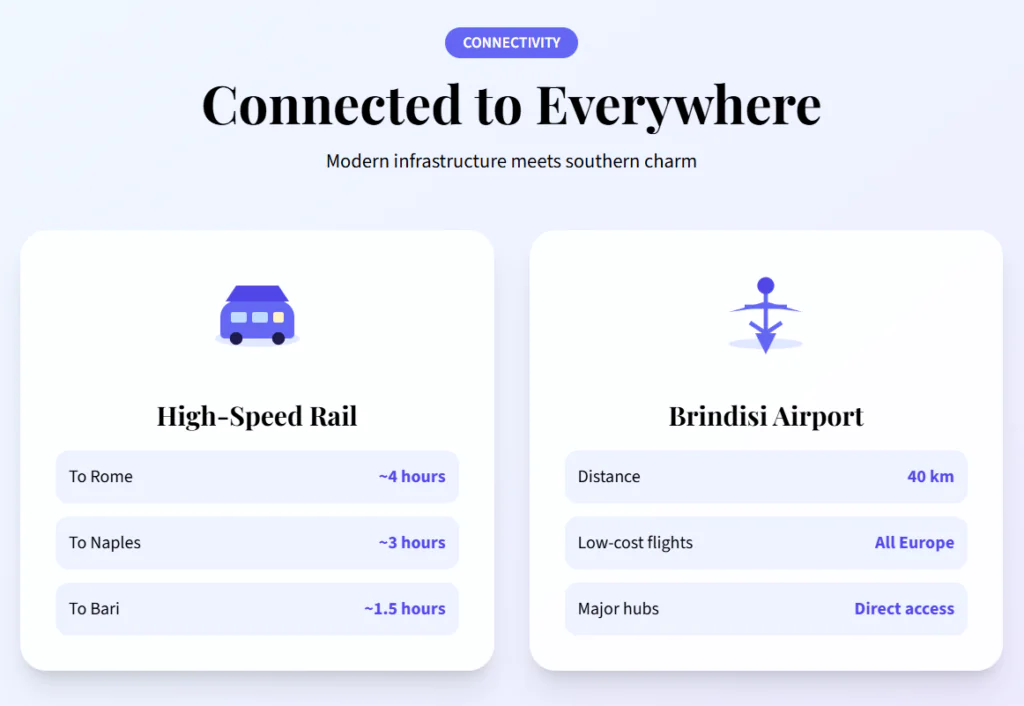
Because of these upgrades, you can now comfortably reach Rome in just four hours or speed over to Naples in a mere two and a half hours. This spectacular blend of air and rail connectivity comfortably secures an elite infrastructure score of 9 out of 10.
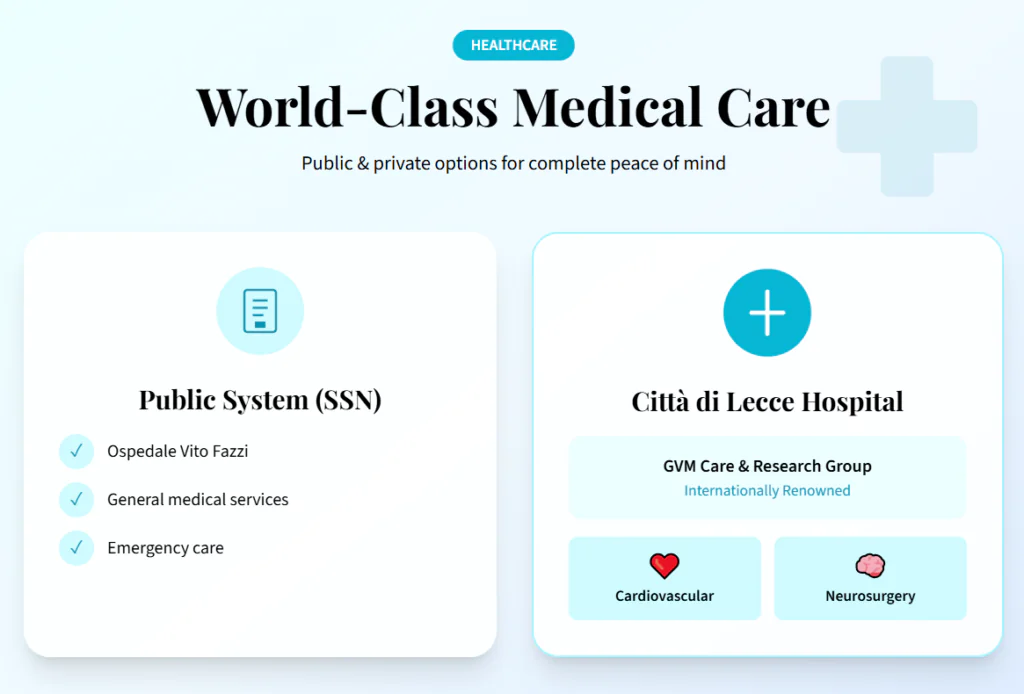
Medically speaking, the highly respected Città di Lecce Hospital specializes heavily in advanced cardiovascular surgery and complex interventional cardiology. For highly reliable, everyday routine care, residents have immediate access to the expansive Ospedale Vito Fazzi public facility. Furthermore, many local expats and wealthy retirees simply prefer to utilize the region’s excellent private clinic options to entirely skip any frustrating public wait times.
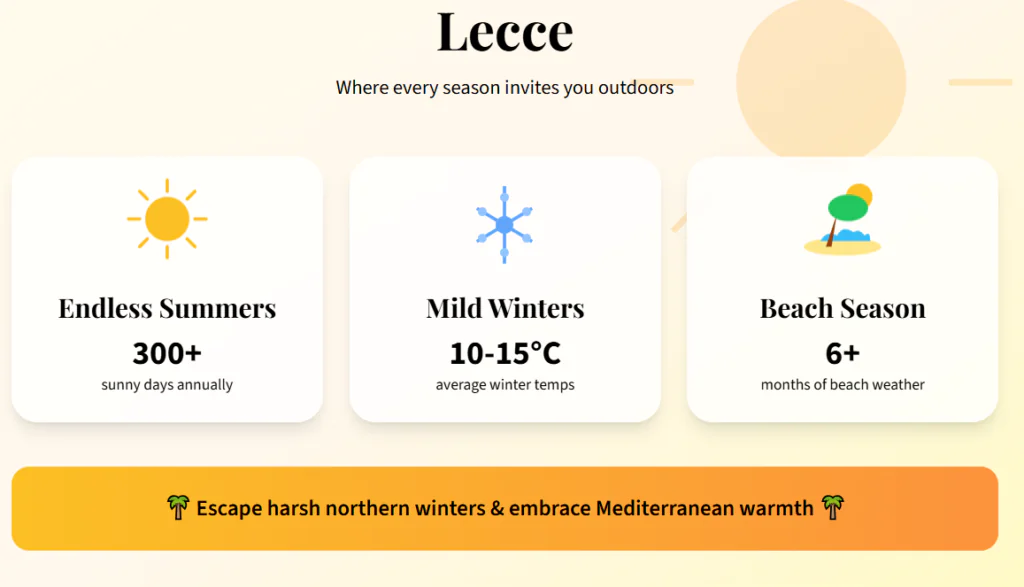
Now, for the crucial weather data you have undoubtedly been waiting for: Lecce consistently records some of the absolute highest annual sunshine hours in all of Italy. The local southern winters are so incredibly mild that you will rarely ever need to pull out a heavy winter coat. If you are specifically seeking a highly active, sun-drenched, year-round outdoors lifestyle, this is unequivocally the absolute perfect place for you.
This glowing sentiment is perfectly echoed by a current resident, who enthusiastically told our team exactly what it is like to live there. He stated:
“Lecce is a fantastic town to live in; I moved here about three years ago, and our main hospital is sparkly, gorgeous, and completely modern. While some older roads do need some work, the city is continuously upgrading and maintaining the roadways, and the local traffic is honestly not bad at all.”
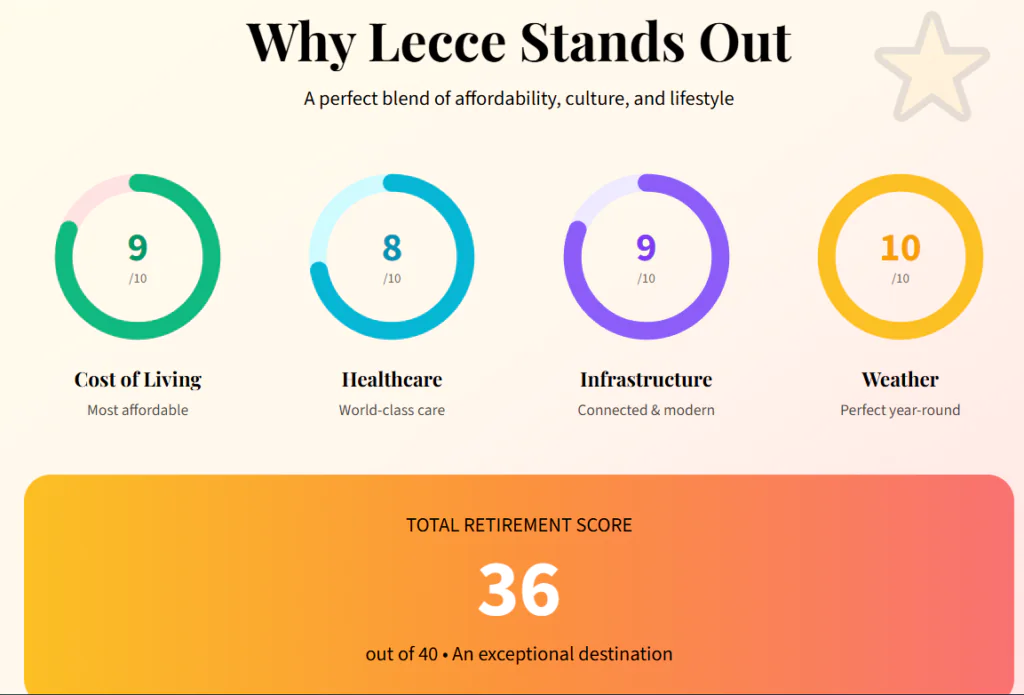
Ultimately, Lecce offers the absolute most perfectly balanced combination between affordable daily costs and premium quality of life anywhere in Italy for 2026. It is certainly not just some isolated small town sitting in the middle of nowhere; rather, it is a brilliantly connected major city overflowing with top-tier services, breathtaking historic beauty, and endlessly sunny weather.
Conclusion On The Best Italian Cities in 2026
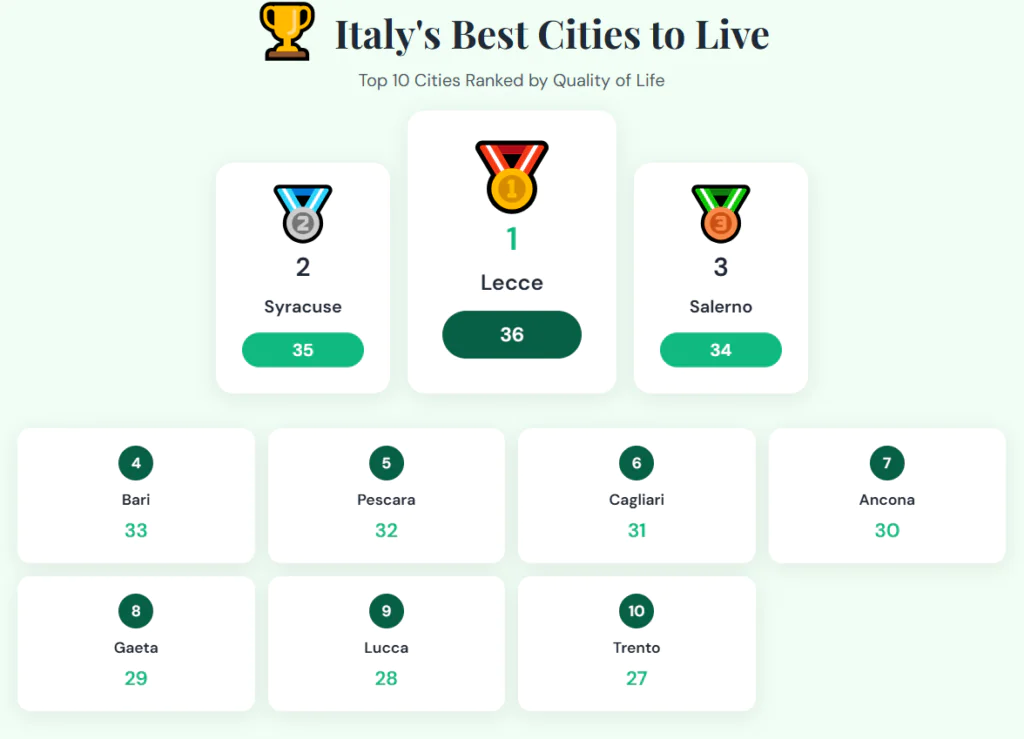
| Ranking | City | Region |
| 10 | Trento | Trentino-Alto Adige |
| 9 | Lucca | Tuscany |
| 8 | Gaeta | Lazio |
| 7 | Ancona | Marche |
| 6 | Cagliari | Sardinia |
| 5 | Pescara | Abruzzo |
| 4 | Bari | Apulia |
| 3 | Salerno | Campania |
| 2 | Syracuse | Sicily |
| 1 | Lecce | Apulia |
Now, when I talked about the incredible housing prices in these cities, you probably noticed that along the beautiful Italian seaside, you can actually find stunning homes for sale for less than the price of a Lexus!
Levi Borba is the founder of expatriateconsultancy.com, creator of the channel The Expat, and best-selling author. You can find him on X here. Some of the links above might be affiliated links, meaning the author earns a small commission if you make a purchase.