Often, expats choose their new home in Spain based solely on a vacation they had.
That is a catastrophic mistake.
A great weekend trip tells you nothing about the local tax laws that will cut into your savings every year. It also tells you nothing about the wait times at the hospital when you get sick.
I have guided hundreds of retirees in Europe, and the ones who fail are the ones who chose a beach bar over a tax strategy.

Today, we ignore the pretty photos and rank 10 cities based on five hard factors:
- housing costs,
- healthcare quality,
- real climate data,
- transport access, and
- taxes.
The city everyone recommends is actually a tax trap, while another contender on this list offers a 100% bonus on wealth tax, effectively wiping it out.
I will also show you which city protects your family by offering a 99% break on inheritance taxes.
At the top of our list, the race is extremely close, and the best city in Spain for 2026 is NOT the one you think.
So, we start with…
The Criteria To Define the Best Spanish Cities to Retire in 2026
We analyzed five hard data points that determine your actual quality of life and built a formula called the ‘Total Retiring Value.’
It assigns a maximum of 100 points to each city, removing the emotion and leaving us with objective, real results.
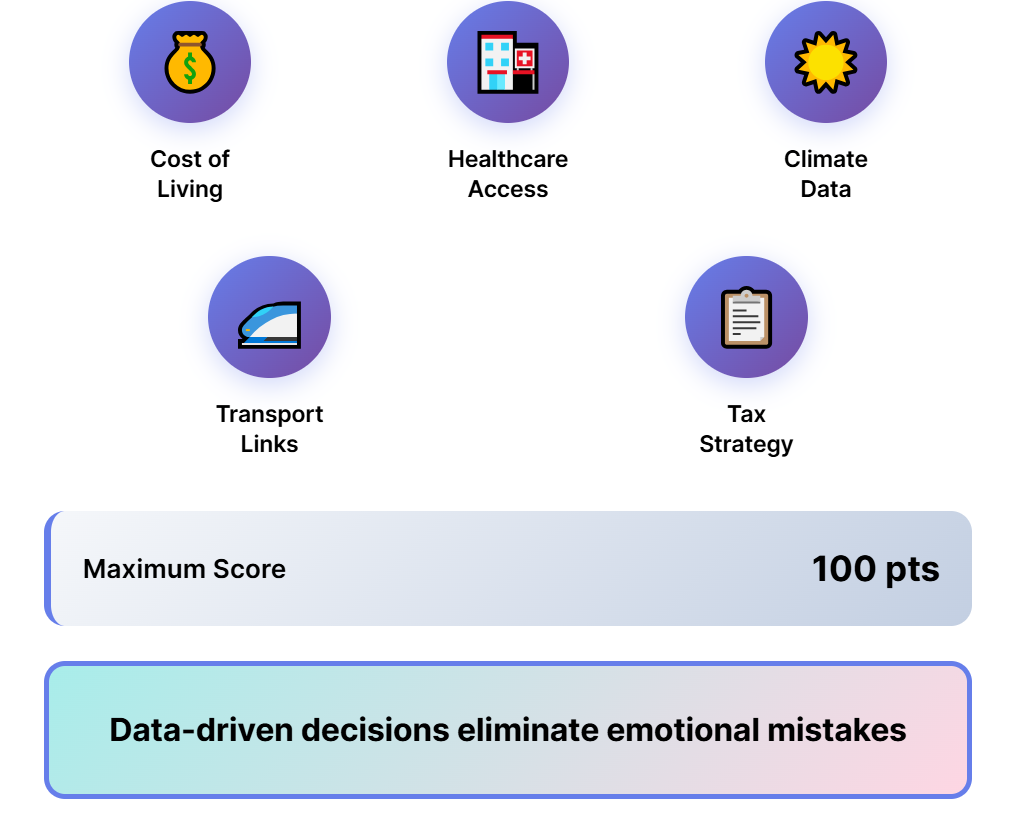
- First is the Cost of Living, weighted heavily by housing prices. This is the single biggest expense that drains your fixed income, so higher costs immediately lower the grade.
- Second is Healthcare, where we track access to top-rated hospitals in the public and private systems.
- Third is Climate, where we reward sunshine hours but penalize excessive rain or extreme heat.
- Fourth is Infrastructure, and this functions as a strict filter.
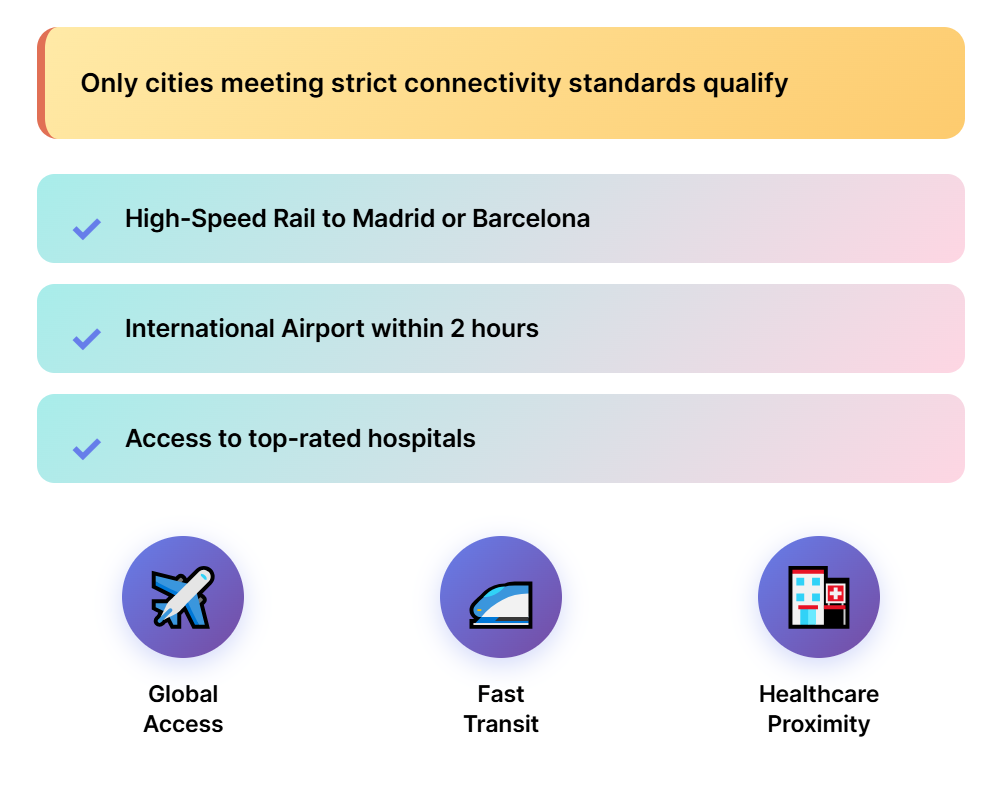
To even make this list, a city must connect to Madrid or Barcelona via High-Speed Rail or possess an international airport within two hours.
Finally, we look at Tax Efficiency. This factor exposes the fiscal differences between autonomous regions: one region might tax your global assets, while another offers 100% bonifications on Wealth and Inheritance Tax.
That fiscal gap is often larger than your rent.
By the way, in the next few weeks, I will use this same method to make a top 10 list of another European country I know well, but I am torn between two giants: France or Italy. Which one do you want to see analyzed next? Type ‘France’ or ‘Italy’ in the comments right now, as I am going to let the vote decide the next article.
So, we start with our tenth-place city.
10th Place: Vigo
If you want a Spain that feels closer to Ireland than the Costa del Sol, Vigo might be the first place people point to.
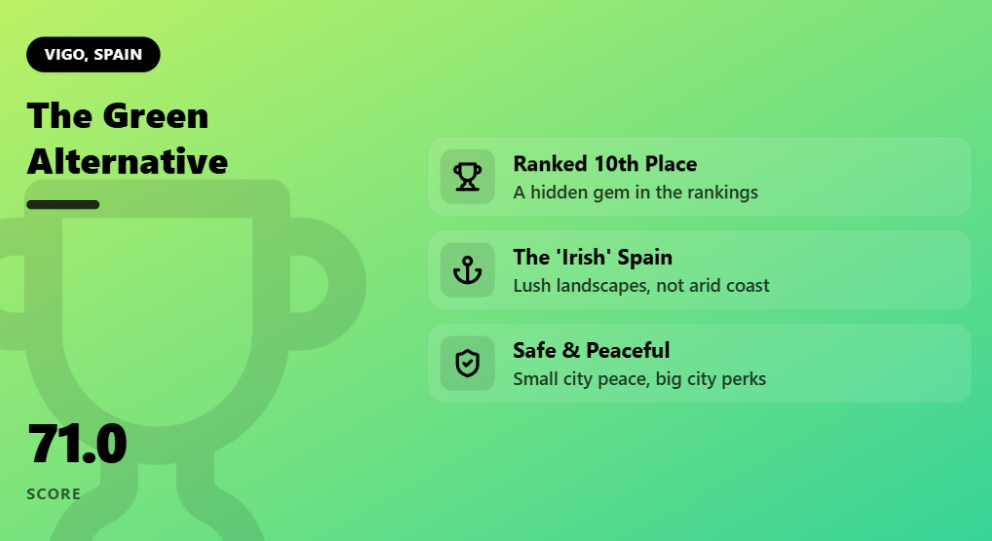
Healthcare is the reason Vigo makes the top 10 at all, and it is the clearest win for you. Hospital Álvaro Cunqueiro anchors the score because it is one of the newest and most technologically advanced hospitals in Spain. That gives you peace of mind comparable to a much more expensive capital city, without needing to live in one.

Now for the downside, which drives the ranking, as Vigo runs on an oceanic climate pattern that is quite different from the Mediterranean weather. The Climate score is 9 out of 20, and that is the main reason it lands this low even with strong healthcare. Rain shows up often across the year; albeit winters stay mild and the coast reduces some of the worst wind, the precipitation still takes days off your calendar.
If your plan includes daily walks, terrace lunches, or hobbies that need predictable weather, this matters.
A local told us,
“Of course Galicia is very rainy, but people live their lives even though it is pouring, and you can do a lot of things. If you stay at home just because it’s rainy, I don’t recommend Galicia to you.”

Infrastructure is usable, but it does not give you speed. The Atlantic Axis rail link connects you toward Madrid, but the trip time runs about 4 hours, which turns a journey into a full travel day. Air travel works similarly, as Vigo-Peinador Airport covers the basics, making Porto’s larger international airport across the border the practical workaround.

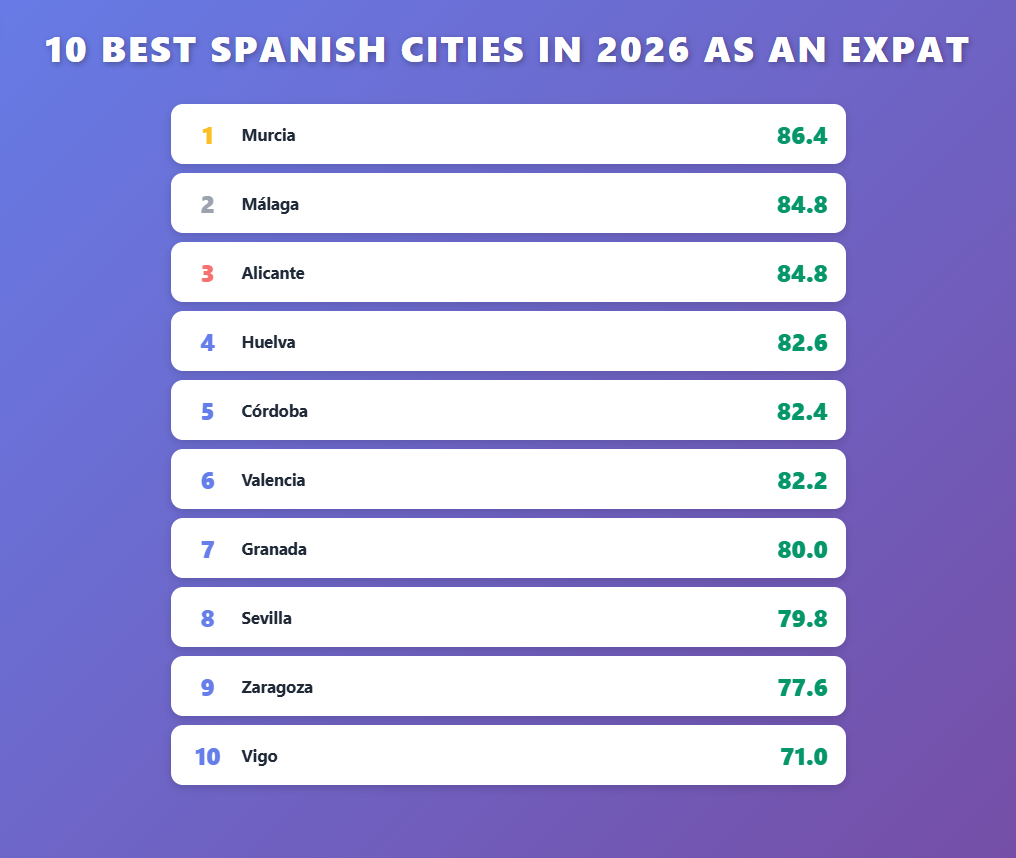
It expands your route options, but it adds another step and more ground travel. Vigo scores 18 out of 20 on Tax Efficiency thanks to the Galician Tax Shield and inheritance rules that treat close relatives better than many expect. It is attractive, but it is less definitive than the full 100% tax-free zones we will discuss later, meaning Vigo finishes 10th with a final score of 71.0.

9th Place: Zaragoza
Zaragoza is the hub that lets you move fast without paying capital-city prices.
Infrastructure carries Zaragoza, earning almost a perfect score at 19 out of 20 because of the connection triangle you receive. You live on the Madrid–Barcelona AVE line, where the times truly matter: Madrid is just 1 hour and 15 minutes away, and Barcelona is 1 hour and 25 minutes away.
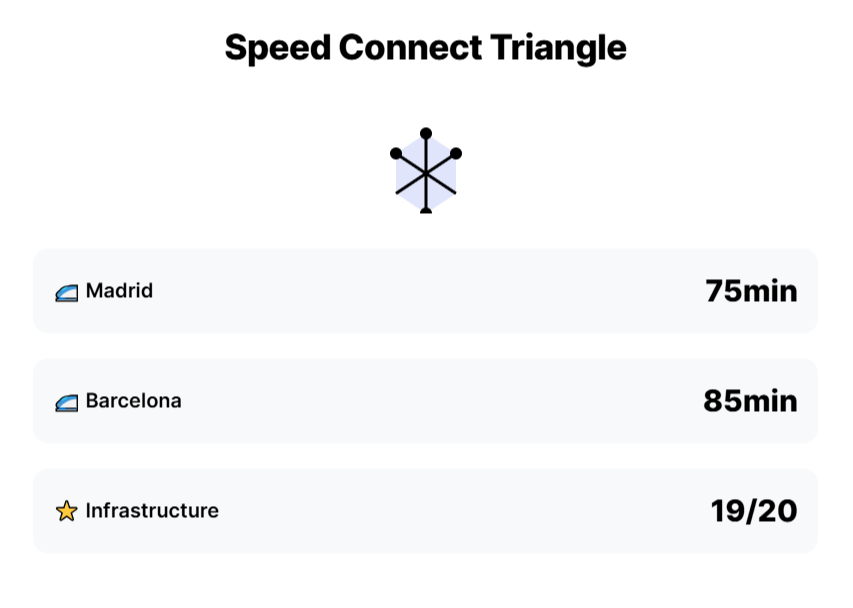
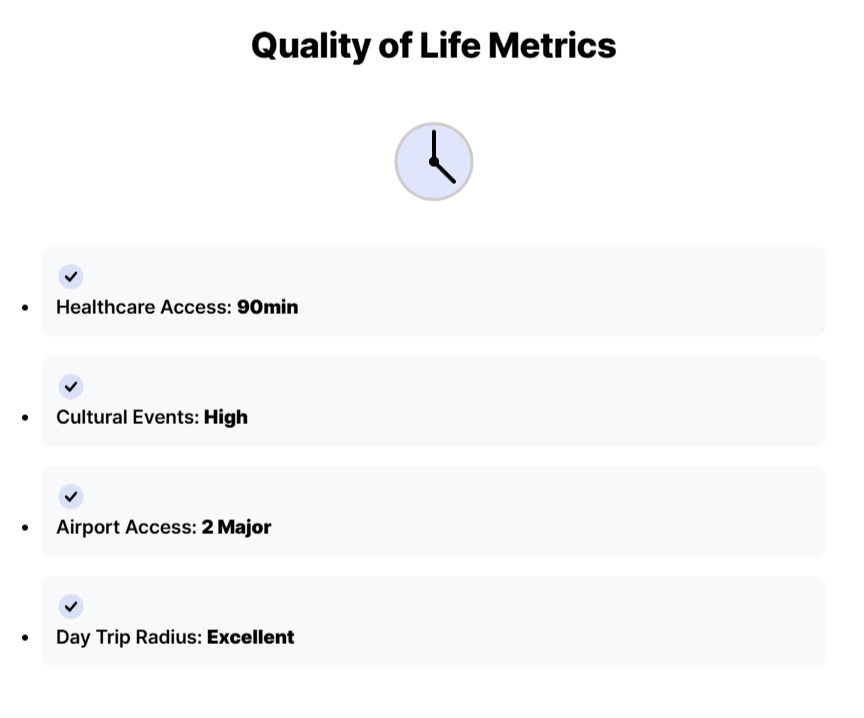
That puts two major economic centers, two cultural calendars, and two of Spain’s main international airports within an easy train ride. For you, that turns specialist appointments, embassy visits, long-haul flights, and family connections into day trips instead of overnight plans.
In terms of housing, prices have increased, but they stay below the big magnets. By late 2025, averages move past 2,190 euros per square meter, which is quite reasonable for a city with this level of infrastructure. This applies to renters too, because sale prices usually pull rents up behind them.
Taxes land in the middle, which is why the Tax Efficiency score is 17 out of 20. Aragón has a 99% bonification on Inheritance Tax for close heirs, protecting a lot of value for spouses and children. Wealth Tax rules help as well, featuring a standard exemption of 700,000 euros plus another 300,000 euros for your main home.
These benefits are standard and less aggressive than the low-tax regimes in the South, where some regions go much further. After the exemptions, higher net-worth households can still face a bill, so this is not a “set it and forget it” tax region.
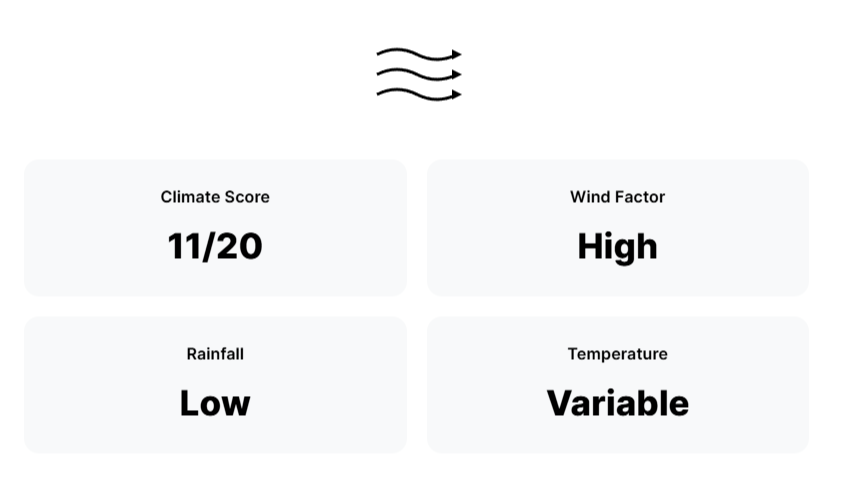
The climate knocks Zaragoza down to 11 out of 20. Rainfall stays low under a continental semi-arid pattern, so you avoid the constant wet days in the north. The problem is the Cierzo, a wind so aggressive here that stepping outside might count as a non-surgical facelift.
That dry northwest wind changes how the temperature feels, forcing constant adaptation across the year. A sunny day can still feel cold because of wind chill, summers bring sharp heat, and winters turn biting fast. That swing decides how often you actually use the city you pay for, landing Zaragoza in 9th place with a final score of 77.6.

8th Place: Sevilla
Sevilla is a city many people fall for on their first trip to Spain, but we don’t score cities on vibes; we score them on what hits your wallet, your health plan, and your day-to-day comfort.
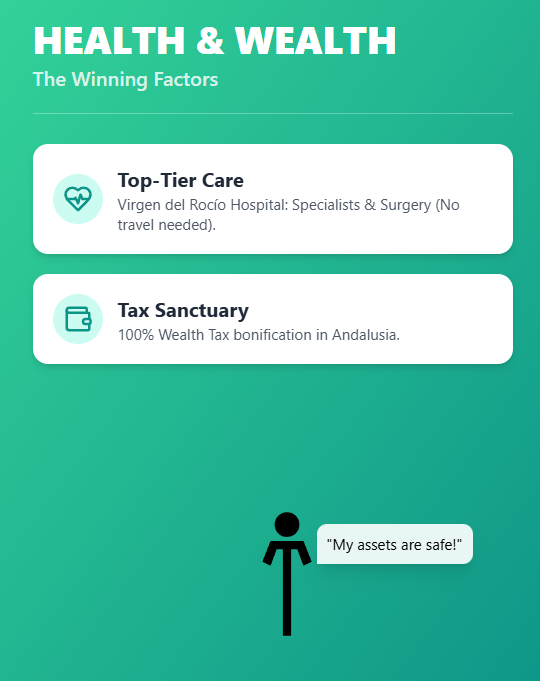
Healthcare is a massive high point of Sevilla. Hospital Universitario Virgen del Rocío is one of the biggest hospital complexes in Spain, built for high-level care rather than just basic checkups. If you need specialists, tests, or surgery, this kind of center matters because it cuts the need to travel to another region for serious treatment.
Taxes also push Sevilla up, as Andalusia gives you a 100% Wealth Tax bonification. Santa Justa station is the hub of the first AVE line in Spain, allowing you to reach Madrid in just 2.5 hours. Sevilla Airport offers a good set of European routes and connectivity, cementing its strong transport profile.

Now we must look at the penalties. The cost of living hits harder than many people expect for the south, which is why the Cost score drops to 12 out of 20. Home prices are rising 12.9% in 2025, with the average reaching 2,693 euros per square meter.
Such prices eat into the advantage provided by the perfect tax score of 20 out of 20. Rentals currently track at 12.9 euros per square meter. If you retire on a fixed income, that housing line item can erase the tax advantage fast, because you pay it every month rather than once a year.
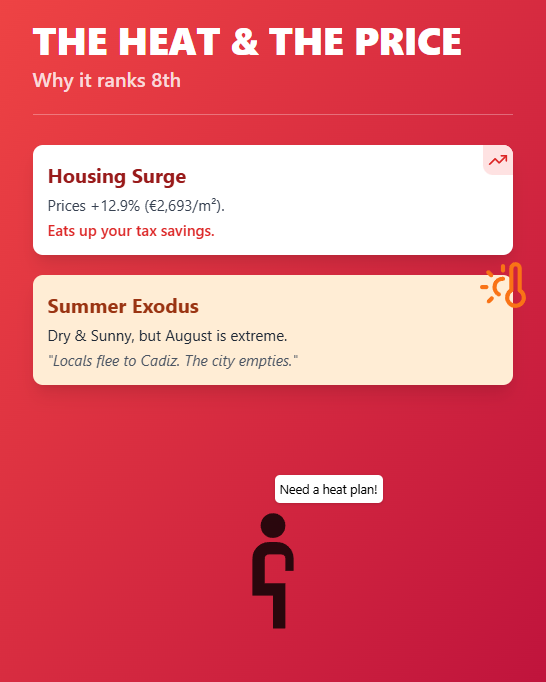
In terms of Climate, Sevilla runs dry and sunny, which helps, and winters stay mild. However, summer heat pushes into the extreme range, dramatically changing how you use the city. Long walks turn into early-morning errands, and midday outdoor time is better avoided if it is 40°C outside.
If you plan your retirement around being outside, you need a heat plan, not just a fan.
A local told us that:
“During summer it gets super hot, and people escape to their secondary homes along the coastlines of Cadiz and Huelva. Those who can’t afford it often stay back in Sevilla, but every August the city empties up and people leave to go to the beach.”
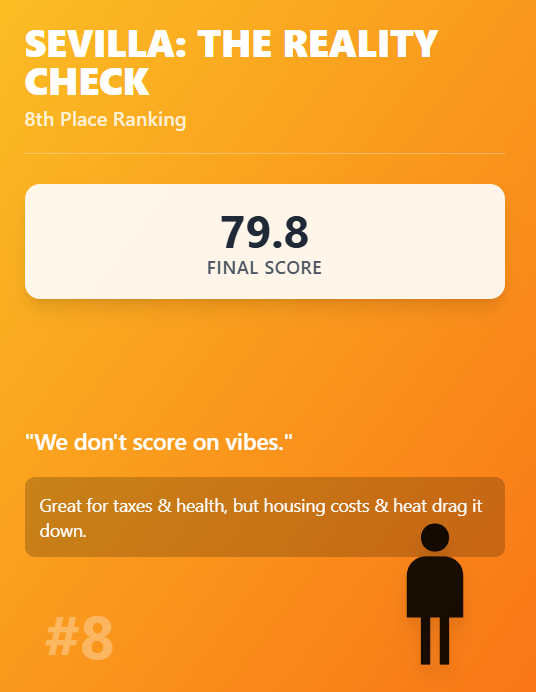
That mix of top-tier taxes, strong hospitals, higher housing costs, and tough summers puts Sevilla in 8th place with a final score of 79.8.
Next, we look at a city where geography changes the lifestyle fast. It offers a completely different environmental dynamic for expats.
7th Place: Granada
If you want a city where you can see snow in the distance and still live in the south, Granada gives you that perfect mix.
You get the Sierra Nevada at your doorstep, but you still live in a place that runs on patios, late dinners, and a big student calendar. The University of Granada keeps the city active, supporting services, rentals, and daily life outside peak travel months. If you care about culture, the Alhambra area and the older neighborhoods retain value because supply stays tight and demand remains constant.
On cost, Granada performs quite well. In 2025, prices rose 11.4%, but the average square meter is still at 2,556 euros. That is not incredibly cheap, but it stays comfortably below many of the more inflated coastal markets.
You also get a wide range of options inside the city. Historic homes in Albaicín price high, while areas like Zaidín offer more modern apartments that cost less and often include better parking and building access.

Healthcare is another major strength for this location. San Cecilio Hospital ranks among the top 25 public hospitals in Spain, and the newer facilities around the PTS Health Technology Park improve capacity for specialists and complex care. If you plan for aging, a good hospital matters far more than trendy neighborhoods.
Taxes help more than most people realize. Granada falls under Andalusia’s rules, so you get a 100% Wealth Tax bonification and a 99% Inheritance Tax benefit. For many expats, this completely changes long-term planning for savings and for passing assets to family.

I share the full data charts and infographics for these cities on my Patreon. Join now to receive $108 worth of welcome gifts instantly, even if you join on the free tier. If you join any paid tier, you will also receive all my best-selling eBooks on living abroad, plus specialized monthly reports with all the changes you need to know, all for the price of a coffee!
Now, we must discuss the trade-offs of Granada. Infrastructure limits Granada’s score, as the AVE links to Madrid, but the trip runs 3 hours or more because of the track alignment. The local airport, Federico García Lorca, has limited routes, so you often depend on Málaga Airport, which takes about 90 minutes by road.
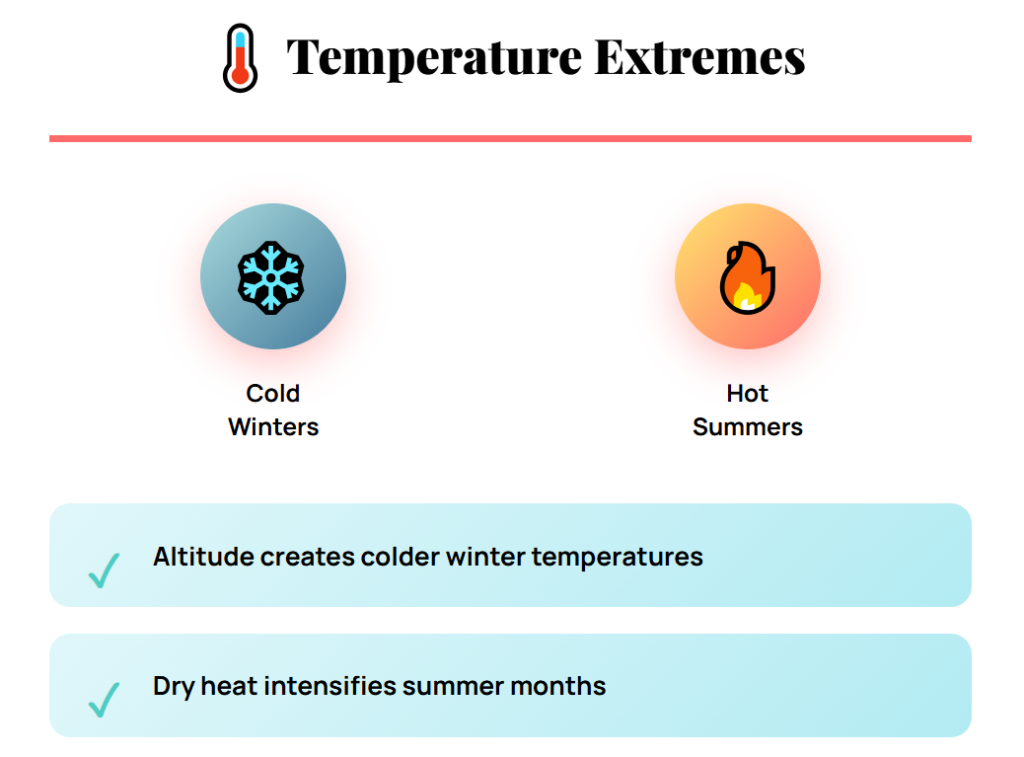
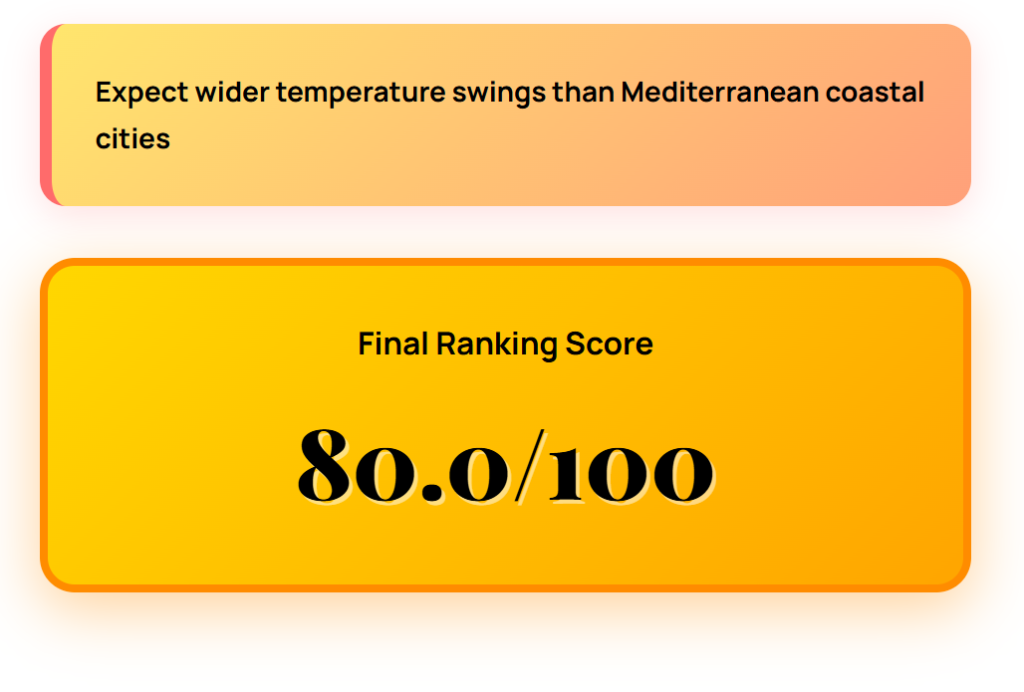
Climate also forces a compromise. Winters get cold for southern Spain because of the altitude, and summers run hot and dry.
You do not get the coast’s temperature smoothing, so you really feel the seasonal swings, placing Granada in 7th place with a final score of 80.0 out of 100.
6th Place: Valencia
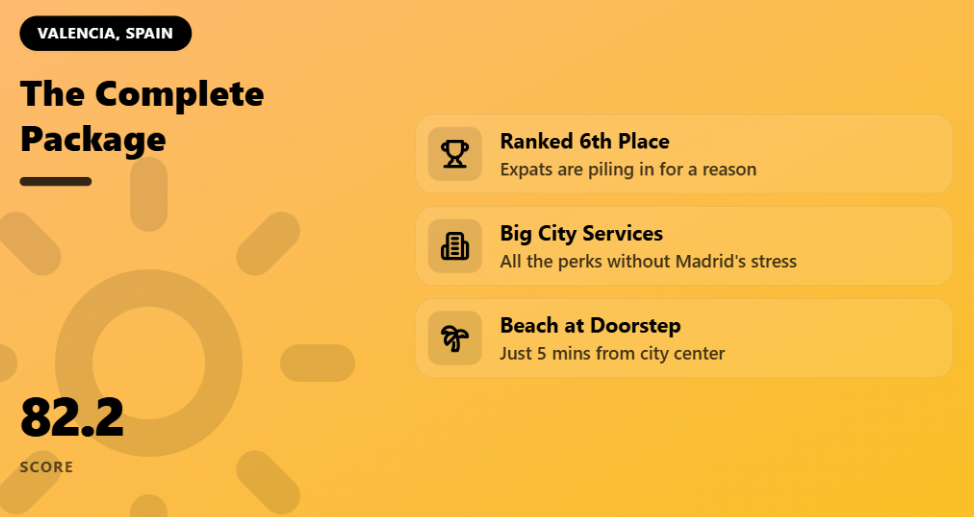
Valencia feels like the city that checks almost every box, which is exactly why expats keep piling in.

You get big-city services without Madrid’s frantic pace, and you still live five minutes from a beach on a normal day. Healthcare is the anchor here, as Hospital Universitari i Politècnic La Fe ranks in the top six hospitals in Spain. It is built for complex cases rather than just basic care, providing a massive safety net.
On top of that, the private medical network is exceptionally deep. IMED and Hospital Quirónsalud add fantastic options if you prefer private institutions with faster scheduling.
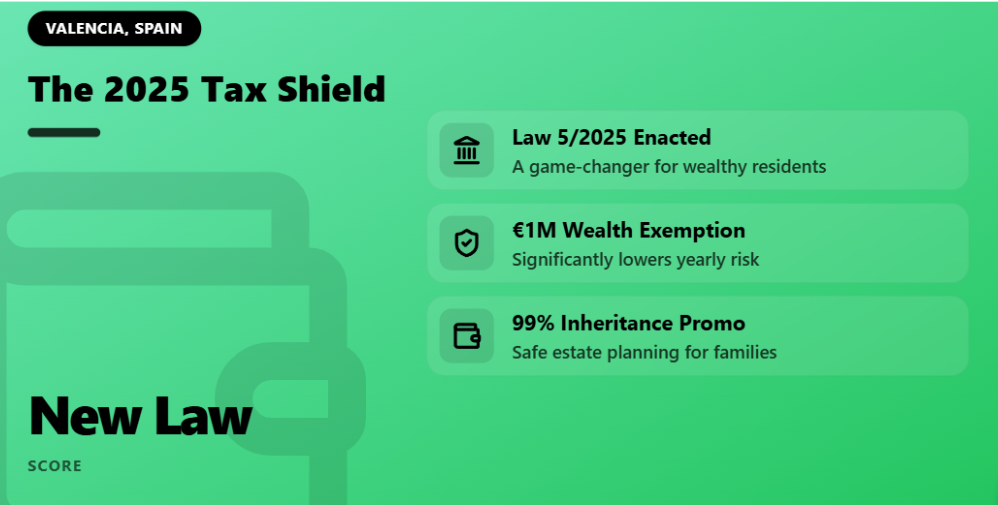
Regarding taxes, Valencia completely changed the equation for 2025 and 2026. Law 5/2025 brought a 99% inheritance bonification and a 1,000,000 euro exemption for wealth tax. For many households, that combination lowers yearly risk and also makes estate planning much simpler.
If you plan to hold assets and pass them to family, those rules can save real money compared to regions with tighter exemptions. Climate helps Valencia score near the top, as you get a mild Mediterranean pattern with manageable rainfall. Humidity runs higher than in drier parts of the southeast, but the city’s layout effectively reduces heat stress in summer.
The Turia Gardens cut through the city and act like a long green corridor, lowering the “concrete heat” effect you feel in dense blocks. Manises Airport keeps expanding routes and covers most major European capitals, which matters heavily if you plan frequent trips or expect regular visitors. The AVE high-speed train gets you to Madrid in under two hours.
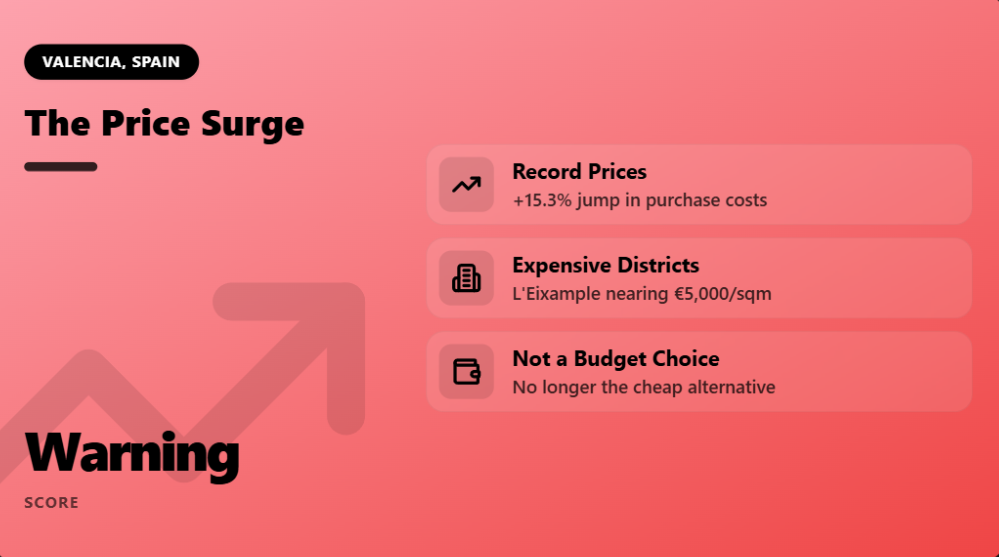
Add the metro, the port, and a full set of city services, and Valencia stays easy to navigate without a car. The problem is cost, and the financial numbers are moving incredibly fast. In 2025, purchase prices jumped 15.3% to a record 3,269 euros per square meter.
Districts like L’Eixample are now approaching 5,000 euros per square meter, while average city rents have reached 15.9 euros per square meter. Valencia is no longer the budget alternative, and that financial pressure keeps it out of the top five. It finishes with a final score of 82.2 out of 100.
Now we go back to Andalusia for a city that turns retirement into a math problem you can actually win. It offers massive financial advantages without sacrificing the core Spanish lifestyle.
5th Place: Córdoba
Córdoba does not rely on hype; it wins on low housing pressure and a tax setup that protects your balance sheet year after year.
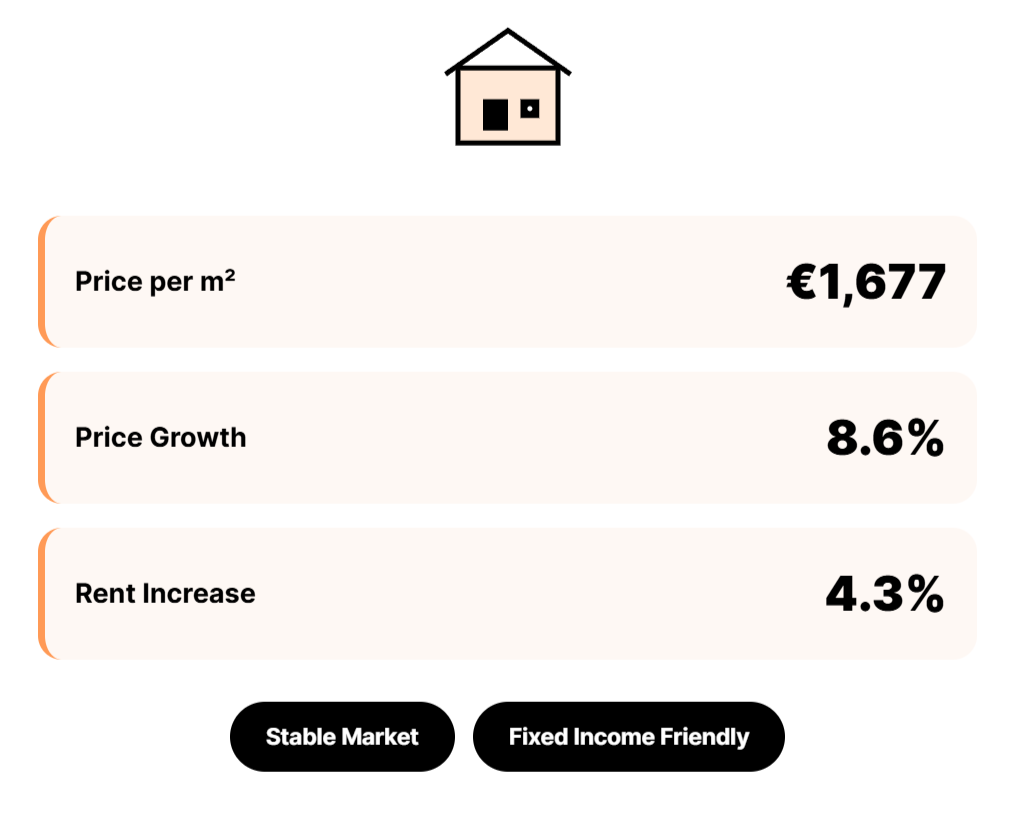
Starting with housing, Córdoba’s price growth stays highly controlled. In 2025, property prices in the city rose only 8.6%, reaching a very affordable 1,677 euros per square meter. Rent growth also stays low, creeping up just 4.3% annually.
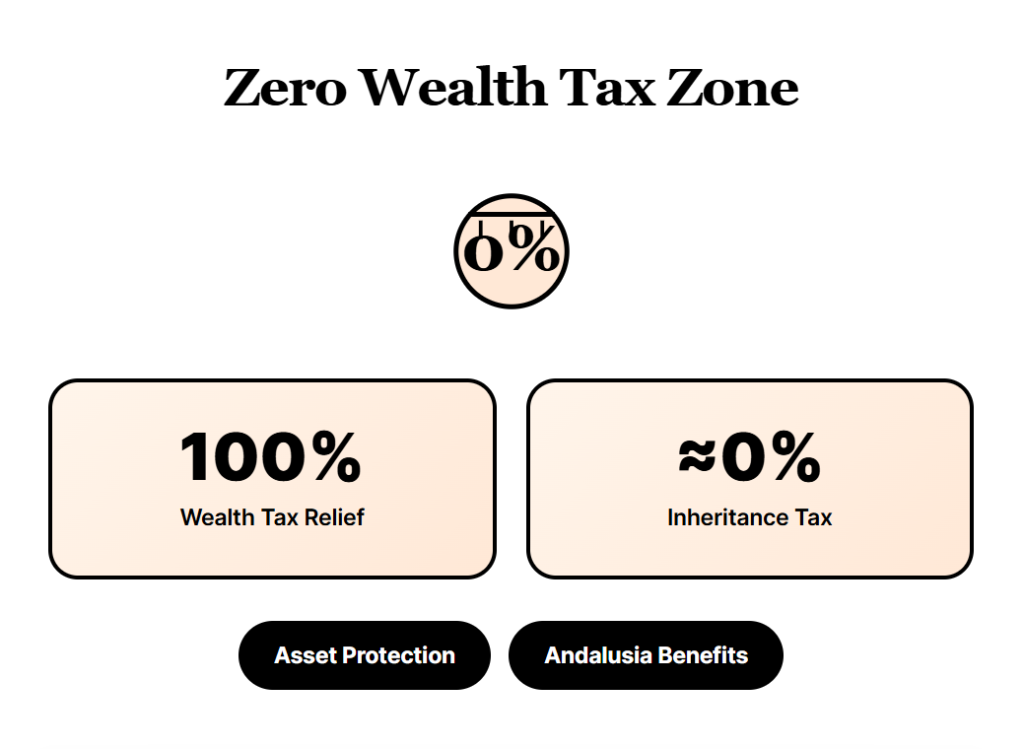
Andalusia provides a 100% Wealth Tax bonification, which means you face a 0% Wealth Tax bill under the regional rules. If you have investments or property, this is a massive positive point. The region also keeps inheritance tax close to zero in many common family cases.
Hospital Universitario Reina Sofía acts as a national reference center for organ transplants, including heart, lung, liver, and pancreas procedures. By the way, in terms of healthcare, Spain does quite well when compared to the rest of Europe. It may not be number one overall, but it is highly decent; I actually ranked the healthcare systems of all 27 EU nations in another article, in case you want to check it out.
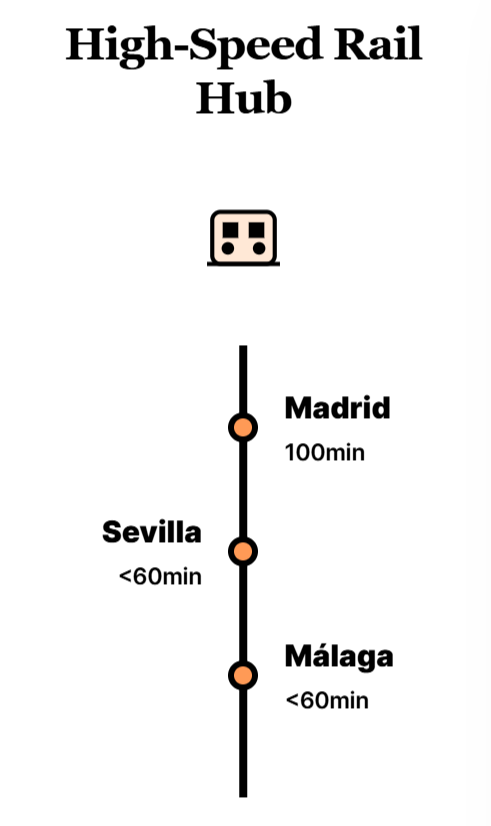
From Córdoba, you can reach Madrid by train in just 1 hour and 40 minutes. Sevilla and Málaga are both under an hour away. Infrastructure is another reason Córdoba climbs so high on this list, as the high-speed rail network turns the city into a highly practical base.
Córdoba does not have its own commercial airport, but those quick rail times make the airports in Málaga and Madrid usable without a long drive. Climate is the only real penalty for this location. Córdoba stays dry and sunny, but the summer heat is absolutely extreme.
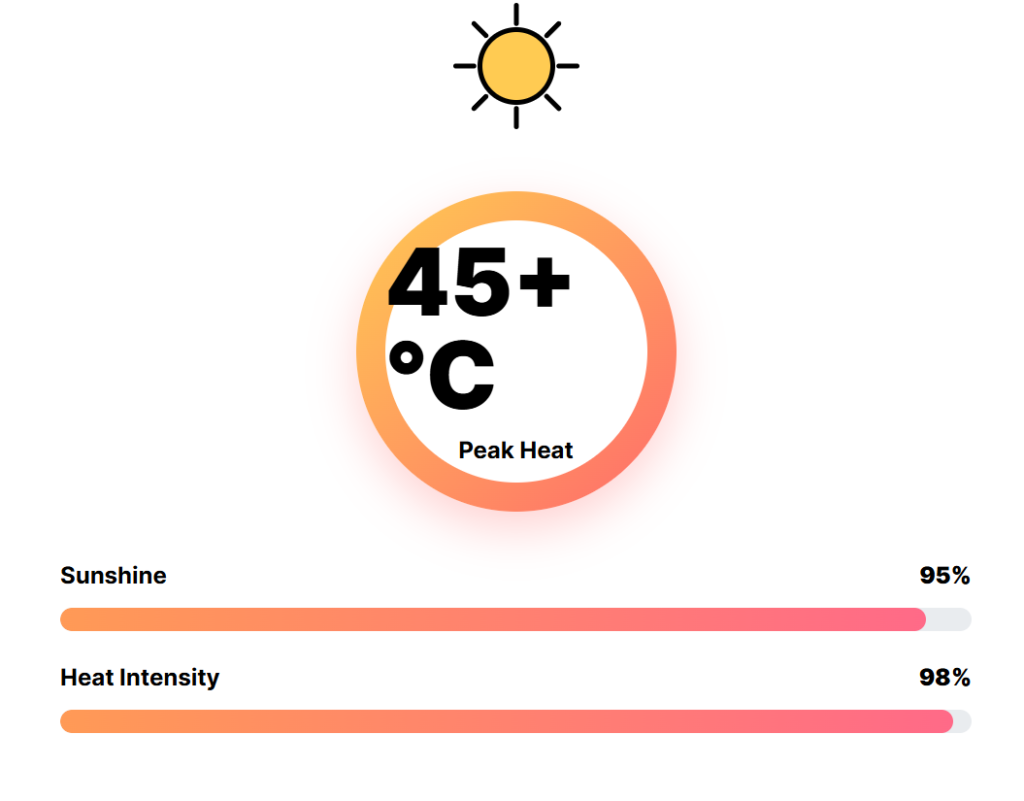
The city often records some of the highest temperatures in Spain, with days frequently hitting 45°C. If you can handle the heat, the financial and logistical benefits are immense. Córdoba easily takes 5th place with a final score of 82.4 out of 100.
4th Place: Huelva
If you care about sunshine more than nightlife, Huelva plays a completely different game.
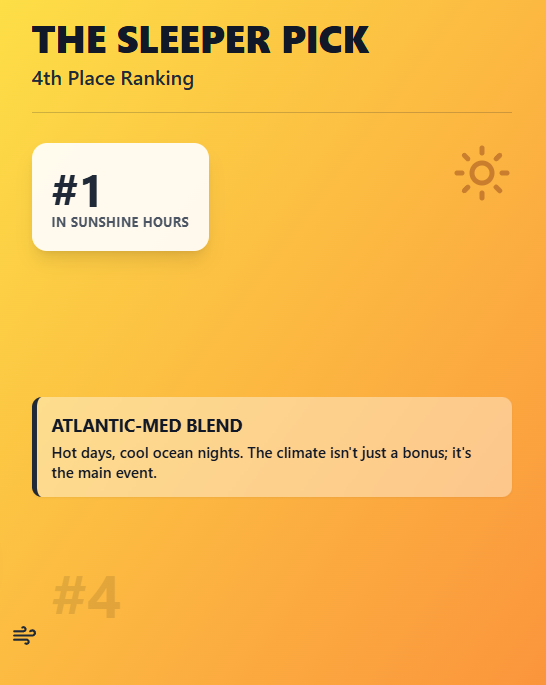
This is the sleeper pick because the climate score genuinely works there as a functional asset, not just a nice extra. Huelva holds the top spot in Spain for annual sunshine hours, driving daily life in a very simple way. You get more usable days for walking, running errands, and simply being outside.
The climate works like a perfect Atlantic-Mediterranean blend. You still get warm summers, but the ocean air cools the evenings, allowing the heat to drop faster than in many inland cities. Rain shows up occasionally, but it does not dominate the calendar the way it does in the far north.
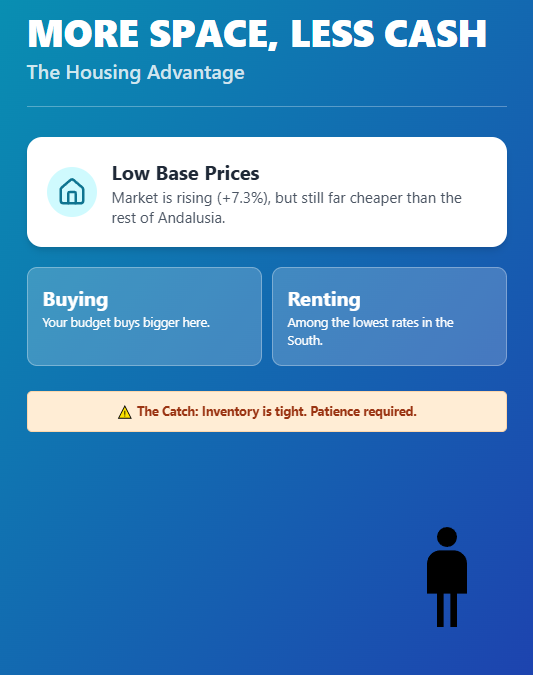
Housing is where Huelva separates itself from most cities that retirees look at first. Prices in the province rose 7.3%, but the base stays incredibly low versus the rest of Andalusia. If you rent, you also benefit significantly because rents stay among the lowest in southern Spain.
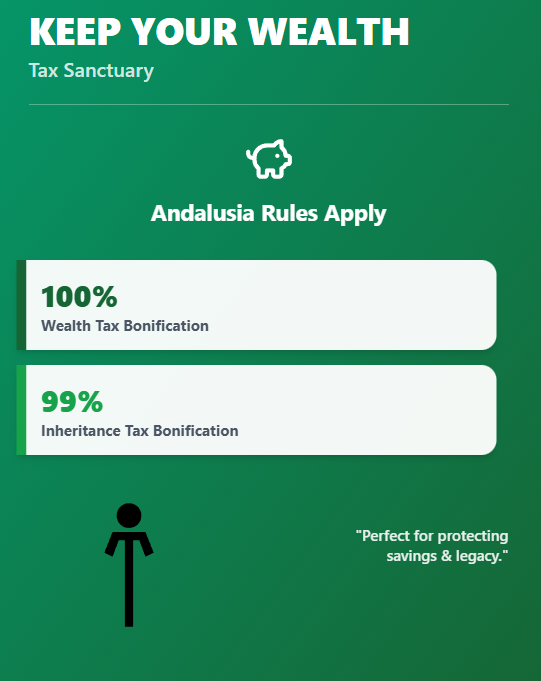
However, you may need more time to find the exact layout or location you want, since the real estate market is smaller. Taxes add a second major win for this province. Huelva follows Andalusia’s rules, meaning you get a 100% Wealth Tax bonification and a 99% Inheritance Tax bonification.
The trade-off clearly shows up in healthcare and transport. Hospital Universitario Juan Ramón Jiménez covers standard care and emergencies reliably. However, it does not rank with Spain’s top national hospital lists the way bigger city facilities do.
For higher-complexity care, the main alternative is Sevilla, and that drive takes about 1 hour. Rail service reaches Madrid on Alvia trains in less than 4 hours, using the high-speed line after Sevilla, but you do not get direct AVE speed or frequency.
This is how a local described Huelva to us:
“It is a nice, smallish city, and even if it is not as beautiful as other cities in the region, it is still pretty. It’s by the sea, it has good food, and it is conveniently close to Sevilla.”
Huelva earns 4th place with a final score of 82.6 out of 100.

3rd Place: Alicante
Alicante takes the 3rd spot, tied exactly with Málaga at a score of 84.8, which proves just how thin the margins are at the top.
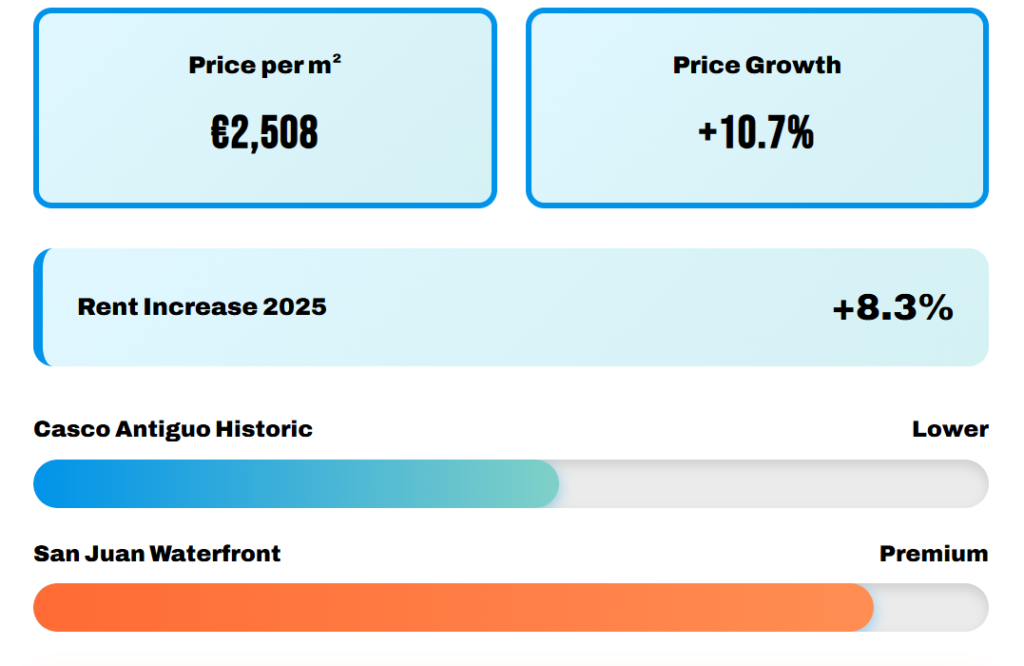
Housing is a hot subject when talking about this city. In 2025, property prices in Alicante rose 10.7%, pushing to just over 2,500 euros per square meter. Rents also climbed, going up by 8.3% across the market.
It is not cheap, but it stays in a range where you can still buy without needing luxury-level savings. Within the same city, you can choose older units in Casco Antiguo or larger, newer apartments near San Juan, and the price difference is very real. Healthcare is the quiet reason Alicante works so well for expats.
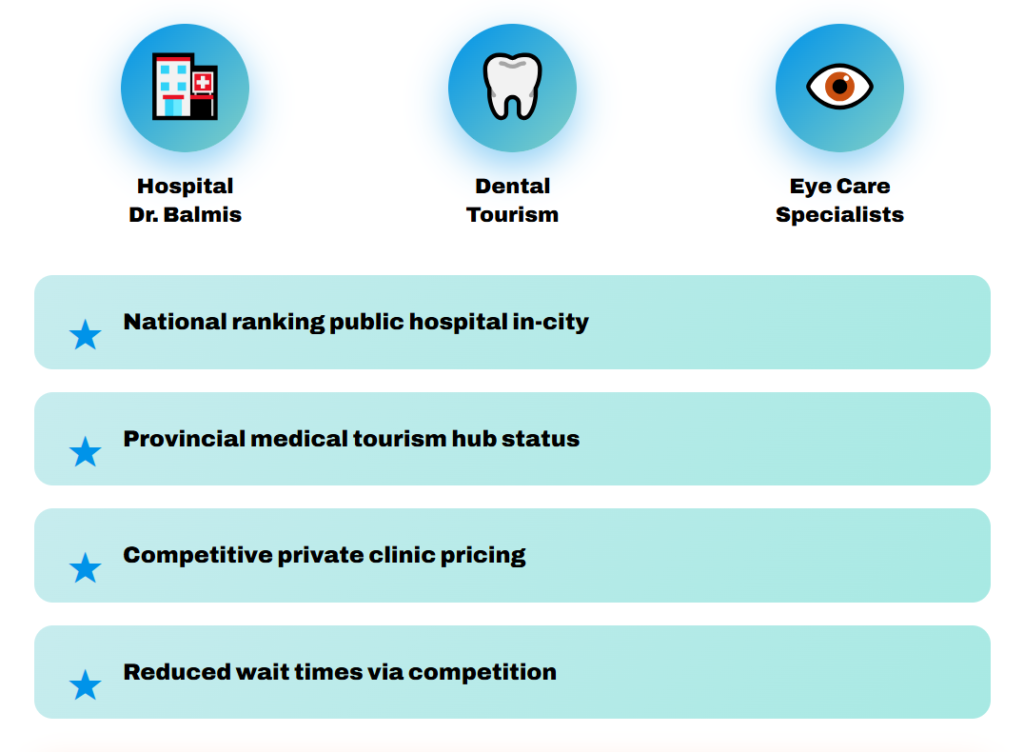
Hospital General Universitario de Alicante ranks well in national assessments, giving you a serious public hospital option right in the city. On top of that, the province operates as a massive medical tourism hub. That matters because private clinics compete hard on services that retirees use a lot, like dentistry, eye care, and orthopedic treatment.
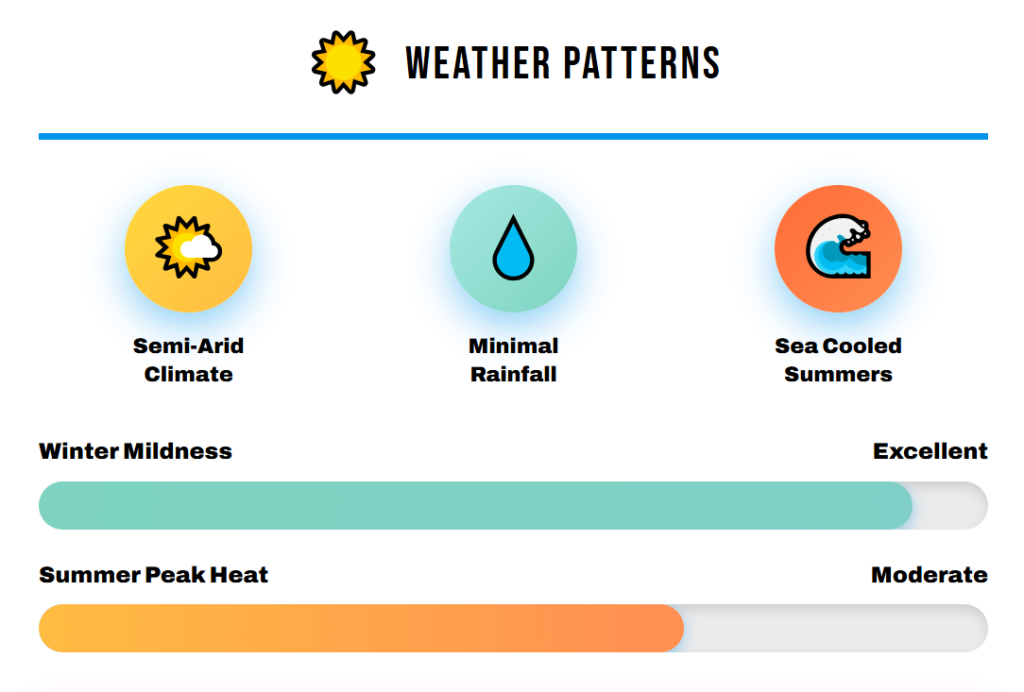
Climate pushes Alicante near the top of our metrics. It follows a semi-arid pattern with very low rain, while winters consistently stay mild. Summers do warm up, but the sea breezes reduce the peak heat, even if the overall humidity climbs.
Infrastructure is one of Alicante’s strongest points, and the 18 out of 20 score tells you exactly why. Alicante-Elche Miguel Hernández Airport is the 5th busiest in all of Spain. You get heavy flight coverage to the UK, Germany, Scandinavia, and the Benelux region, with many flights going directly to smaller cities, not just capitals.
For domestic travel, the AVE high-speed train connects you to Madrid in about 2 hours and 20 minutes.
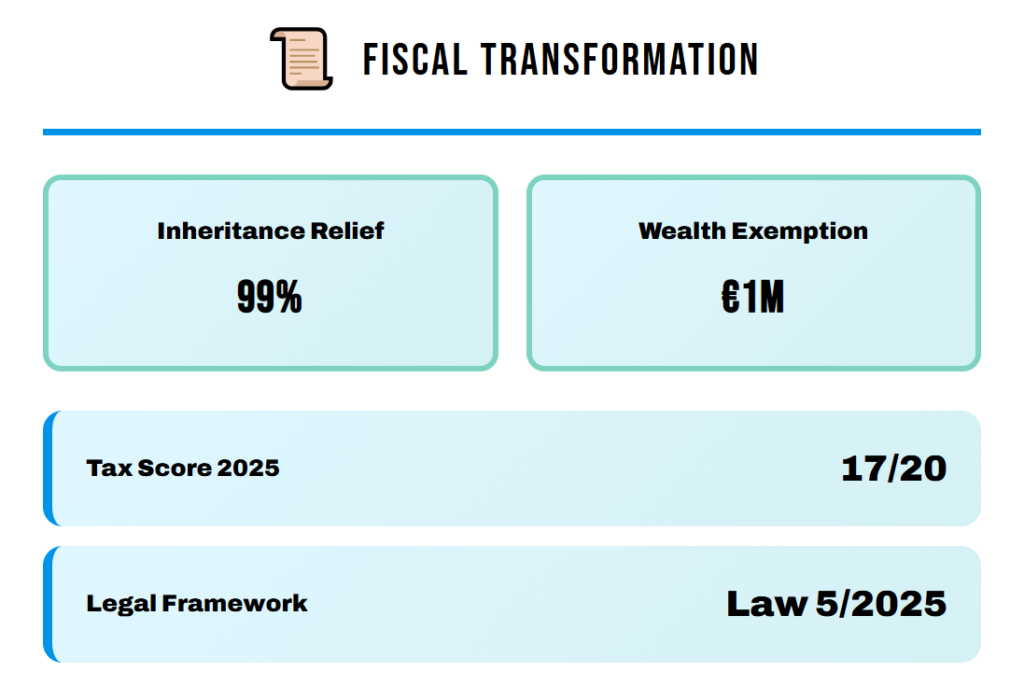
Taxes actually decreased in 2025, earning the city a solid 17 out of 20 score. Law 5/2025 gives a 99% inheritance tax bonification for close family, and the region adds a 1,000,000 euro wealth tax exemption for residents.
Alicante officially earns 3rd place with a final score of 84.8 out of 100.
Now we move to a city that perfectly matches this score, but the housing numbers drastically change the story.
2nd Place: Málaga
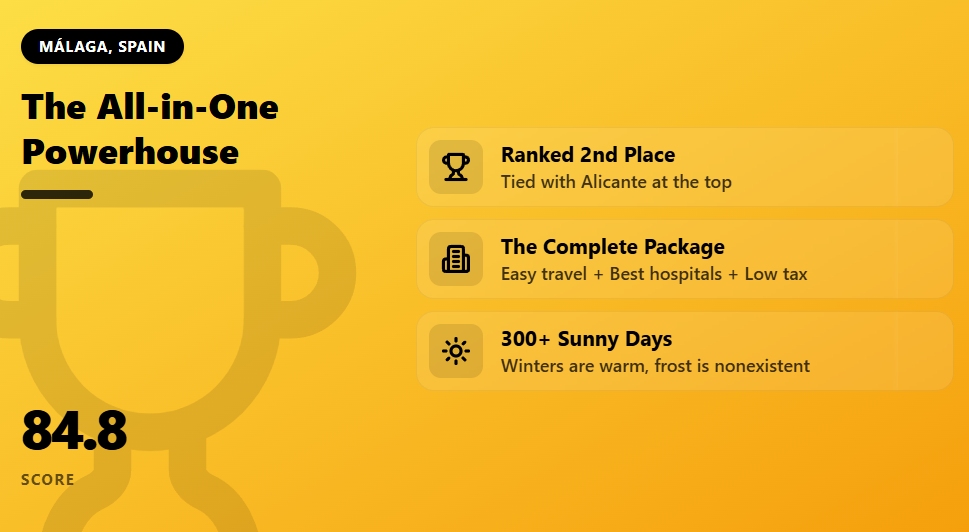
Málaga gets 2nd place tied with Alicante, but it achieves this with a completely different mix of strengths.

Infrastructure scores a perfect 20 out of 20 across the board. Málaga-Costa del Sol Airport ranks as the third most important airport in peninsular Spain, running like a real international hub rather than just a seasonal terminal. You get direct links across Europe, plus long-haul routes to places like New York and key Middle East connections.
On rail, María Zambrano station plugs directly into the AVE network, putting Madrid just 2 hours and 40 minutes away. Add the growing metro system and the massive cruise port, and you can live completely car-light without losing any mobility. Taxes also score a perfect 20 out of 20.
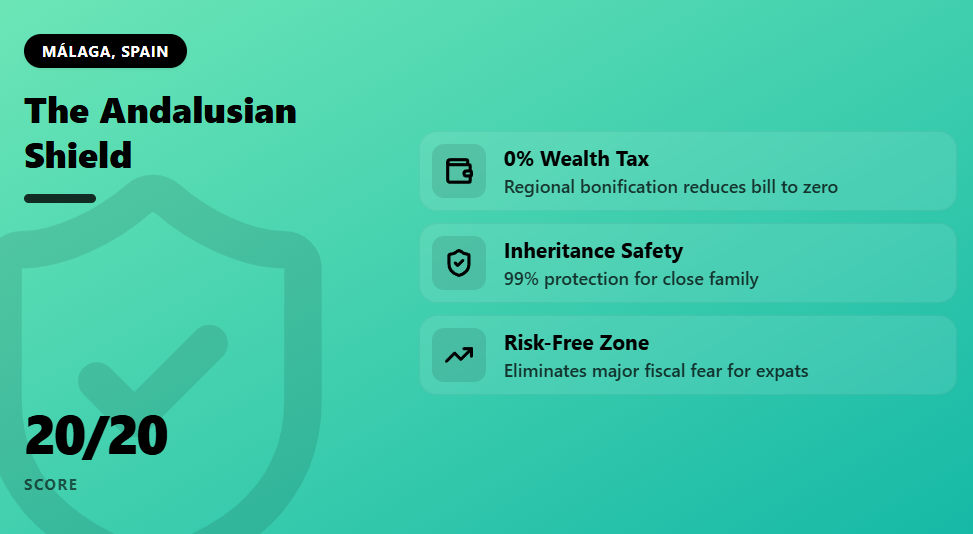
Andalusia applies a 100% bonification on Wealth Tax, which takes your regional Wealth Tax bill straight to zero. For many expats, that single policy is the difference between “Spain works” and “Spain is too risky.” The region also applies a 99% bonification on inheritance and gift tax for close family groups, fully protecting the assets you plan to pass on.
Healthcare comes in at 17 out of 20 because you get incredible depth and multiple options. Hospital Regional Universitario de Málaga and Hospital Virgen de la Victoria cover major public medical specialties. The private system is equally robust, featuring premium providers like Vithas and Quirónsalud.
Climate heavily boosts the city, scoring a brilliant 19 out of 20. Málaga enjoys about 300 sunny days per year, winters stay wonderfully warm for mainland Europe, and frost is close to nonexistent. The surrounding mountains block cold north winds, while the sea breeze cuts summer peaks compared to harsh inland heat.
So, why does Málaga miss the number one spot? Housing heavily drags the Cost score down to an 8 out of 20. Prices rose a staggering 15.4% by late 2025.
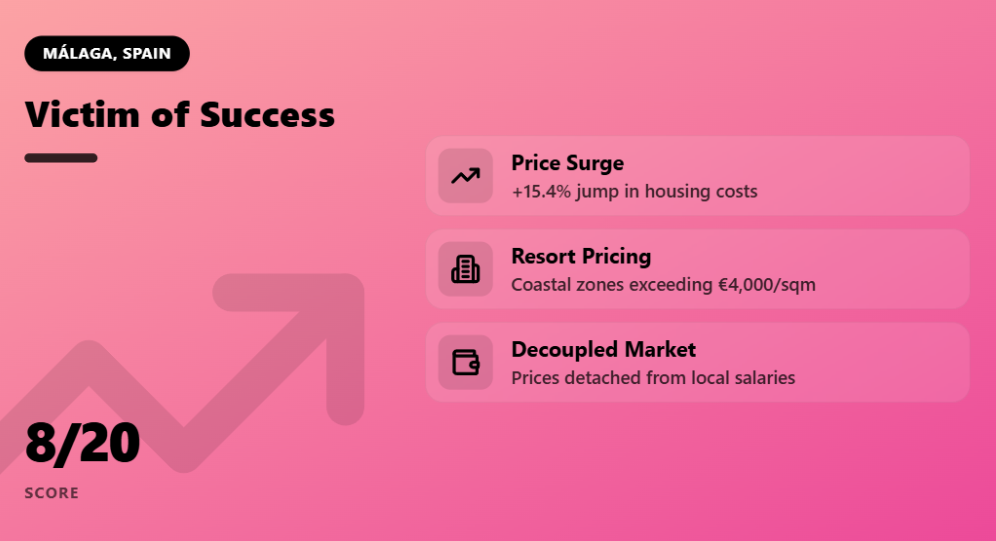
The city average reaches 3,643 euros per square meter, and premium coastal zones easily push past the 4,000 euro mark. Málaga is effectively a victim of its own success; international demand pushes a resort-style price structure that is completely decoupled from local salaries.
A local described Málaga to us by saying
“It’s my hometown, so I may be biased, but it has nice weather with mild autumns, winters, and springs. it has marvelous villages around like Ronda and Frigiliana, natural places like El Caminito del Rey and El Torcal, and easygoing, laidback people. The bad side, however, is the increasingly high prices in housing and eating out.”
Málaga ties on total points, but our formula heavily rewards balance and affordability over absolute excellence in isolated areas.
This leaves the top spot open for a city that delivers a significantly better Cost of Living score while maintaining high standards elsewhere. The winner simply provides more value for every euro spent.
1st Place: Murcia – The Best City to Live or Retire in Spain in 2026
If you expected Madrid, Barcelona, or the Costa del Sol to win, this result will completely shock you.
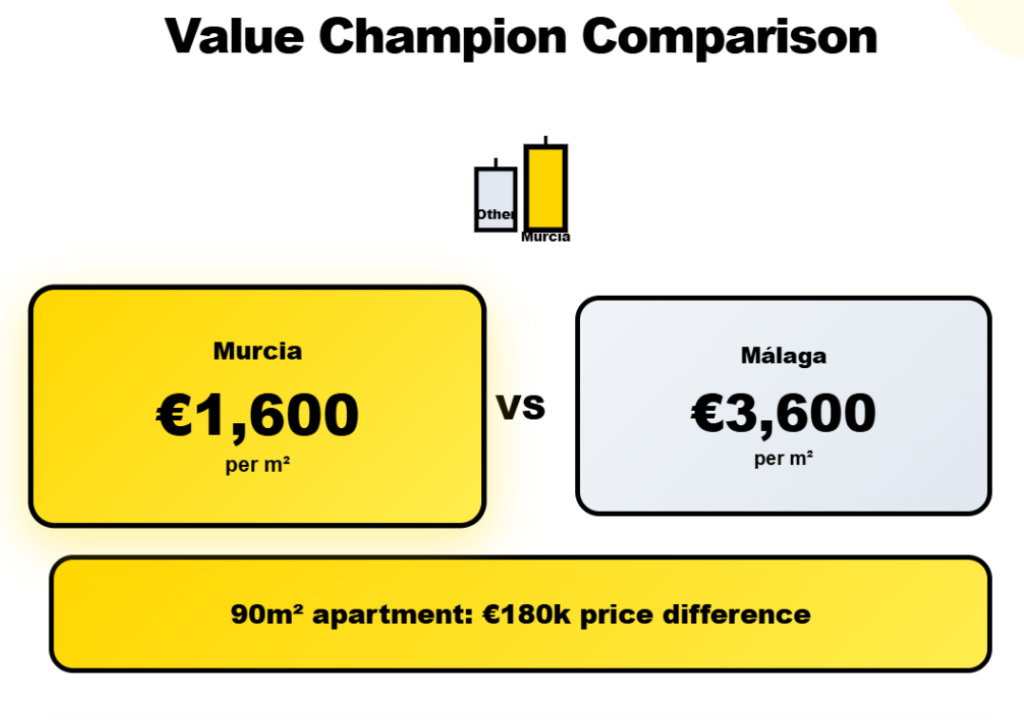
Murcia takes number one because it keeps scoring high across every factor without forcing you to pay a “fame tax” in housing. Start with Cost, where the score is a stellar 18 out of 20. Late 2025 shows a 23.6% year-on-year increase in housing prices, the fastest in Spain, yet average prices remarkably stay between 1,500 and 1,704 euros per square meter.
Murcia still has prices far below its neighboring autonomous region capitals, even after this massive surge in demand. That financial gap truly matters for your retirement budget. A 90-square-meter apartment at 1,600 euros per square meter costs near 144,000 euros.
In Málaga, that exact same size at 3,600 euros per square meter pushes past 324,000 euros. That massive difference can literally fund premium private health insurance for decades. Healthcare keeps Murcia from feeling like a compromised budget pick.

Hospital Clínico Universitario Virgen de la Arrixaca actually ranks in the top 20 public hospitals in all of Spain. It works as a crucial national reference center for high-complexity care, including major transplants and pediatric surgery. The climate is predictably dry and incredibly easy to plan your life around.
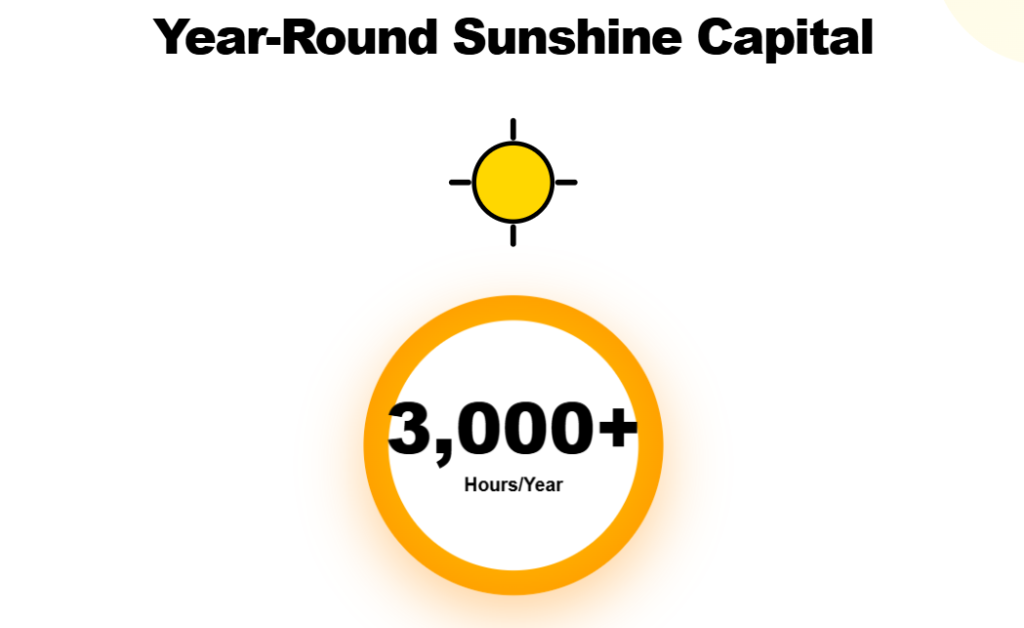
Murcia gets over 3,000 hours of sunshine per year. Summer heat is very real, with July and August pushing past 35°C, but it is also one of the driest cities in Europe.
Infrastructure is highly competent and accessible. AVE high-speed service gets you to Madrid in under 3 hours. Murcia Corvera Airport offers direct flights to the UK, and Alicante’s massive international airport is less than one hour away by car.
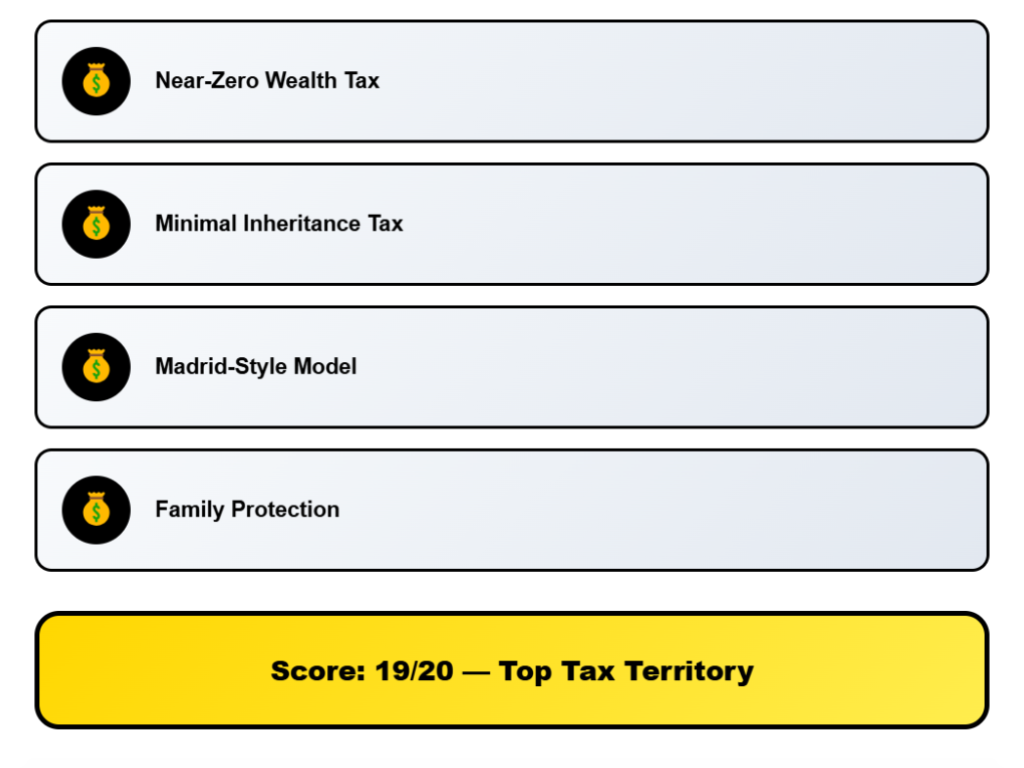
Taxes close the deal with a fantastic 19 out of 20 score. Murcia completely follows the successful low-tax models of Madrid and Andalusia. It uses large regional bonifications that cut Wealth and Inheritance Tax to near-zero levels in many cases.
Because of this unbeatable balance, Murcia officially finishes 1st with a final winning score of 86.4 out of 100.
Now, when I talked about the housing prices in these cities, I just talked about square meters. However, in Spain, you can actually find homes for sale for less than the price of a car! There are ready-to-move homes in Spain available for less than $99,000.
Levi Borba is the founder of expatriateconsultancy.com, creator of the channel The Expat, and best-selling author. You can find him on X here. Some of the links above might be affiliated links, meaning the author earns a small commission if you make a purchase.