Is Catalonia the best place to live in Spain—or a massive financial mistake?
For several expats I helped, Catalonia is the best community in Spain. For others—especially many of you—it is an absolute deal-breaker.
So today, we compare Catalonia versus the best autonomous communities in Spain across six key factors.
By the end of this comparison, you will know exactly where Catalonia ranks and which regions beat it in each aspect.
The results are surprising. Catalonia wins only one category, yet that single advantage is powerful enough to keep people choosing this place.
If you are planning a move to Spain, this breakdown will change your decision, and we will start our comparison with something crucial.
Factor 1 – Cost of Living
Extremadura vs Catalonia
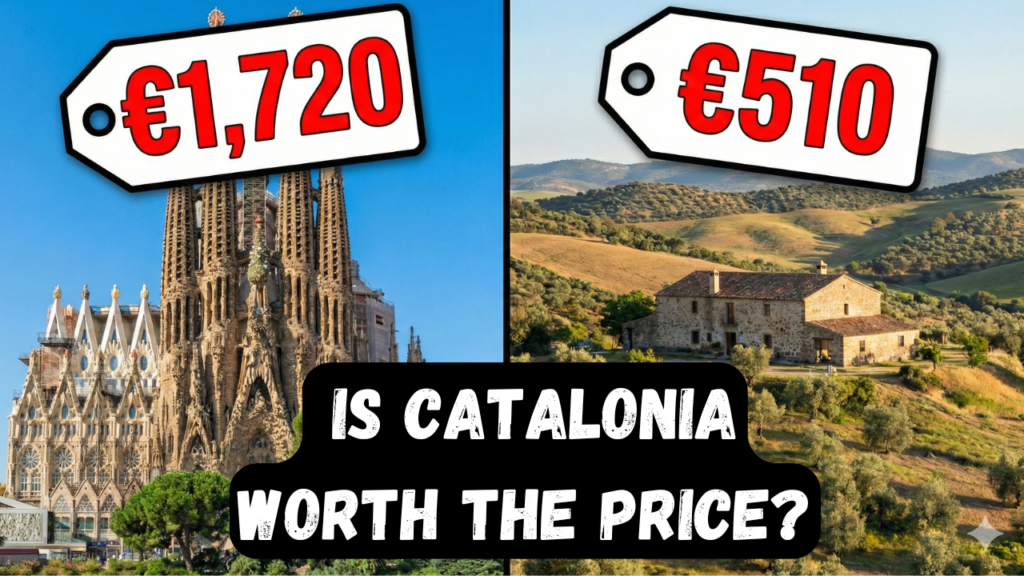
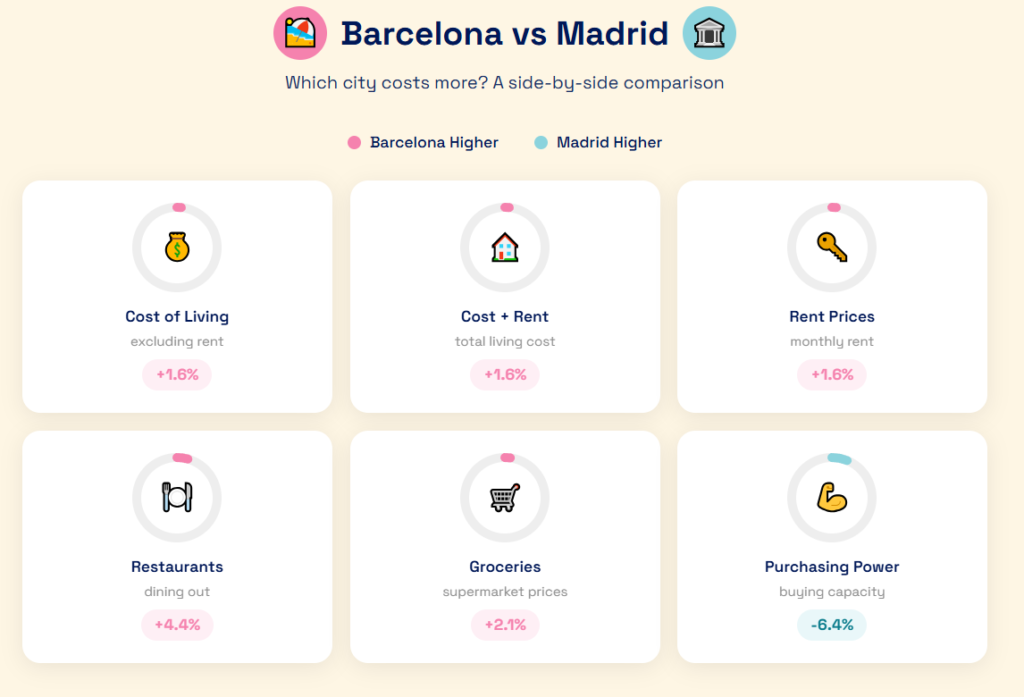
What does €4,100 per month buy you in Barcelona versus €2,000 in Extremadura? The exact same lifestyle. That gap is the foundation of the Catalonia Premium, and it starts with housing.
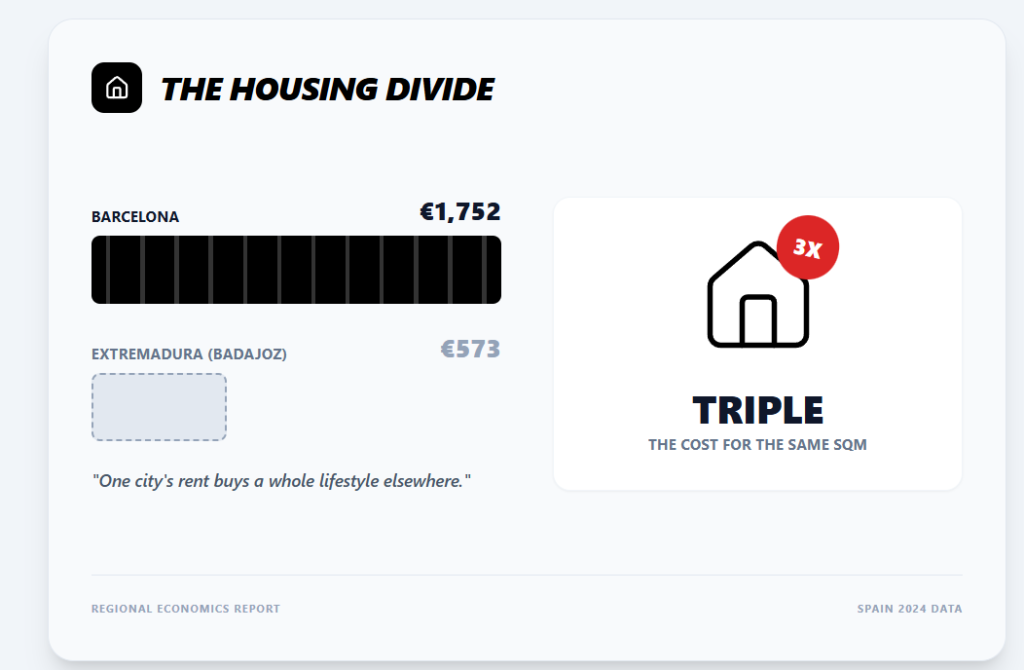
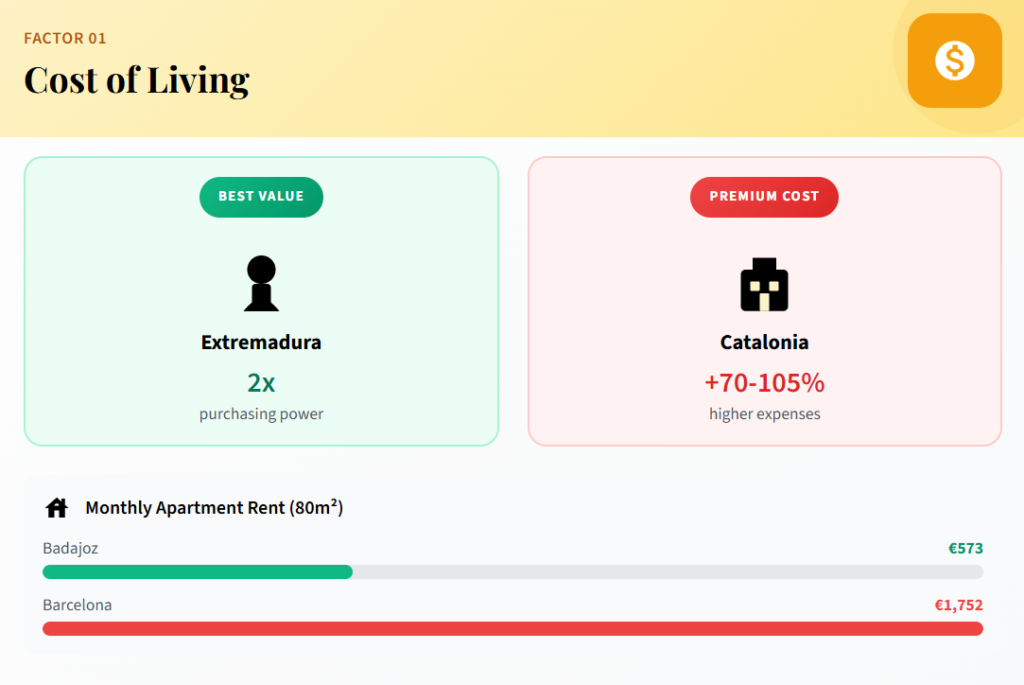
Barcelona city rent averages €21.90 per square meter. Extremadura cities like Badajoz clock in at €7.17 per square meter. An 80-square-meter apartment in Barcelona costs €1,752 monthly to rent, whereas the same apartment in Badajoz runs just €573.
Purchase prices follow the exact same pattern. Properties in Barcelona cost on average €5,400 per square meter. Similar properties in Badajoz, Extremadura, cost €1,850 per square meter.
Barcelona real estate costs nearly triple what you pay in Extremadura for comparable space. High international demand and limited supply drive Barcelona’s prices upward, while Extremadura’s interior location keeps costs grounded. Housing is only the beginning, as groceries, utilities, and daily expenses stack the same way.

The grocery basket index in Catalonia scores 107.4. Extremadura scores 92.1. Annual per capita food and beverage spending reaches €1,910 in Catalonia versus €1,640 in Extremadura.
That is €270 extra annually just to eat the exact same meals. Monthly utilities average €170 in Catalonia versus €135 in Extremadura. Higher municipal taxes and tariffs in Catalonia push up basic service costs significantly.
Over a year, that €35 monthly gap adds €420 to your budget. Combined with food costs, you are already paying €690 more annually before considering rent or dining out. Leisure and dining costs further accentuate the premium.
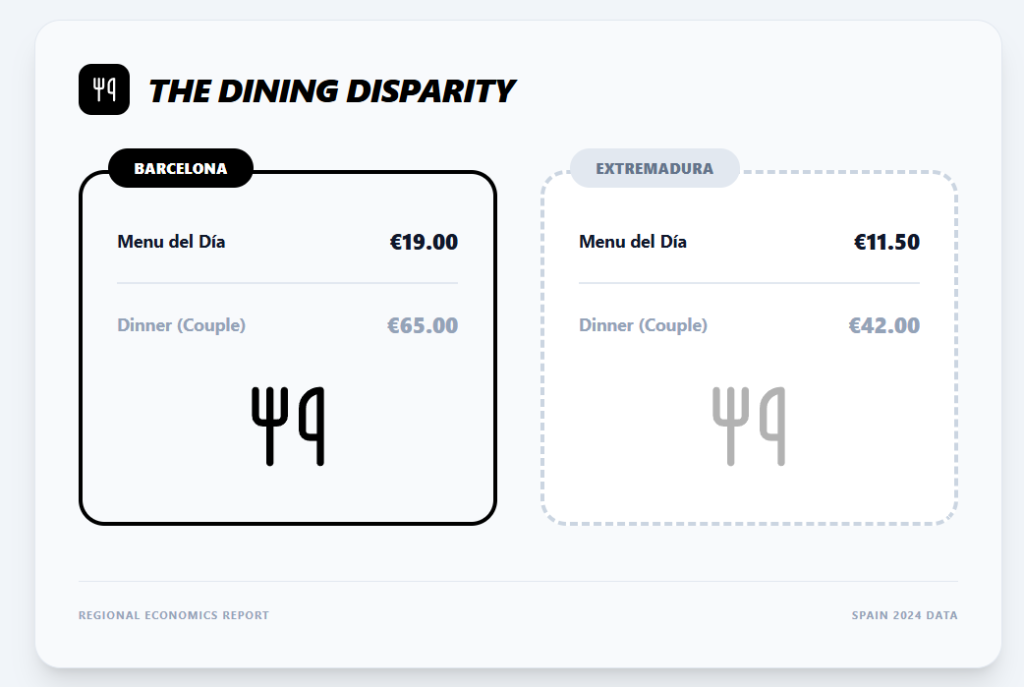
A traditional Menú del Día in Barcelona ranges from €15.50 to €19.00, particularly in neighborhoods with expats. The same lunch in Badajoz or Cáceres costs between €11.00 and €13.50, often including local wine. A mid-range dinner for two in Barcelona runs €65.00, but in Extremadura, you pay just €42.00.
Even everyday social activities cost 50% more in Catalonia. The cumulative effect is decisive. Maintaining a Barcelona standard requires a 105% premium over Extremadura.
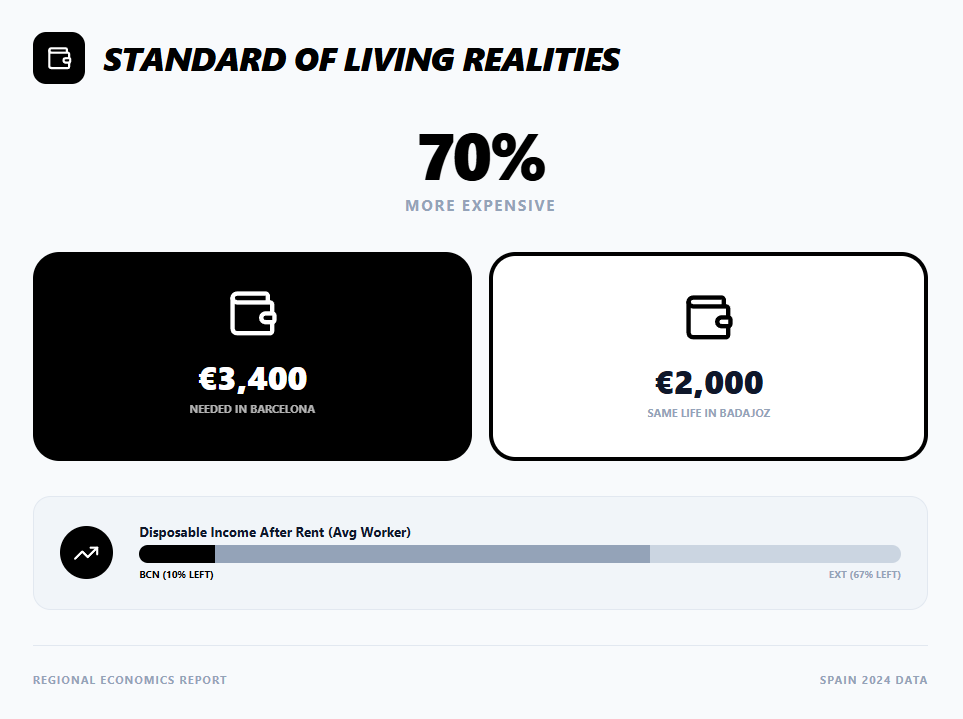
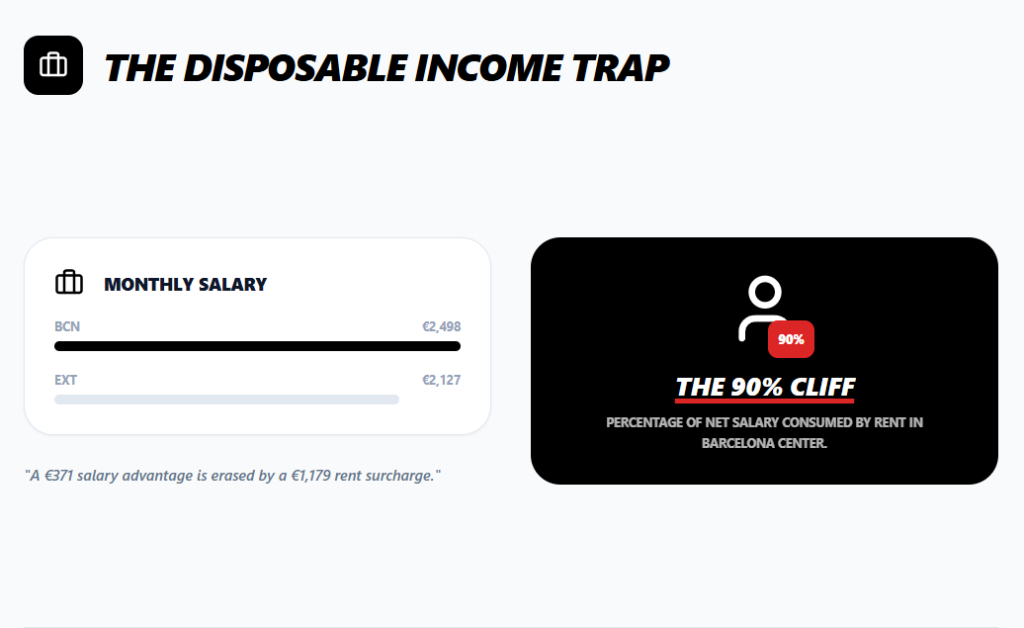
A lifestyle costing €2,000 monthly in Badajoz demands approximately €3,400 in Barcelona, making it 70% more expensive for the same quality of life. Salary differences do not close the gap. The average gross monthly salary in Catalonia reaches €2,498 versus €2,127 in Extremadura.
That €371 difference sounds meaningful until you account for housing. Rent for an 80-square-meter apartment in Barcelona city center can consume up to 90% of a single worker’s net salary. In Badajoz, the same apartment takes only 33% of net income.
For a family of four, the monthly expenditure difference for housing and basic services alone exceeds €1,500 when comparing major centers in Catalunya to major cities in Extremadura. A person earning €50,000 lives a very comfortable life in Badajoz. In Barcelona, that same income places you in the middle-to-lower income bracket, struggling to save.
Extremadura wins cost of living decisively by offering twice the purchasing power for the same income level. Budget-conscious retirees and digital nomads gain significant financial freedom by choosing Extremadura over Catalonia. The region is the clear champion for maximizing resources while maintaining a high quality of life.
Unfortunately, Extremadura has an issue with an ageing population and low birth rates, so until recently, it was even paying people to move there!
But saving money means nothing if your wealth gets drained by regional taxes—and that is where the next battle becomes even more stark.
Factor 2 – Taxes
Andalusia
A high-net-worth expat earning €150,000 per year faces a tax bill of €58,600 in Catalonia versus €54,950 in Andalusia. Spain allows autonomous communities to set their own income tax on top of the national base, and Catalonia applies higher income tax rates than Andalusia. Regional IRPF brackets are the first layer of divergence.
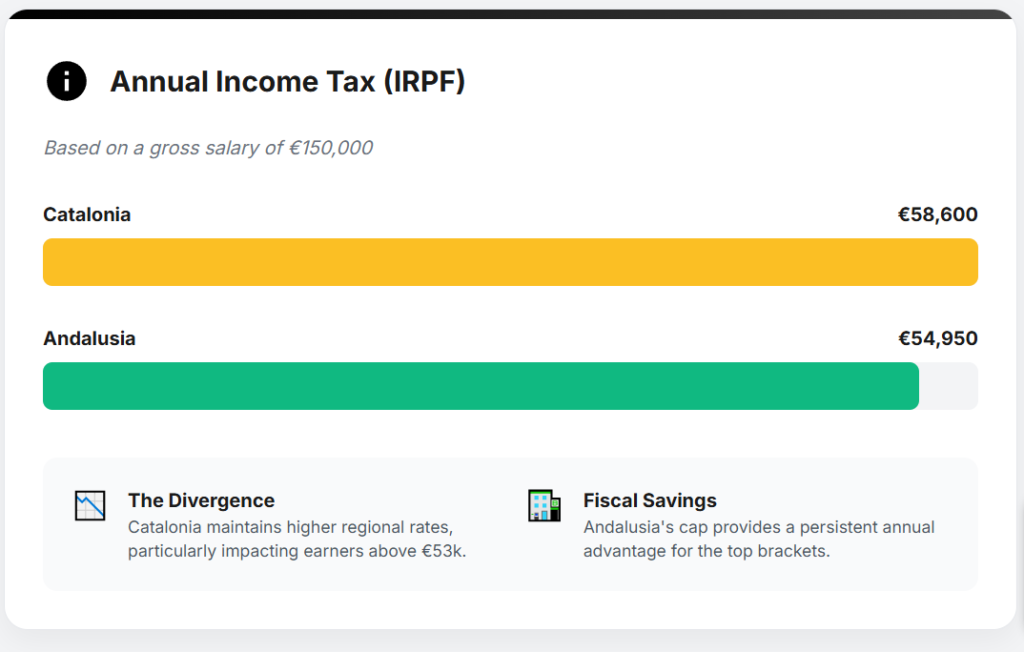
IRPF stands for Impuesto sobre la Renta de las Personas Físicas, the personal income tax in Spain. Catalonia applies higher rates across several income tiers, particularly for incomes exceeding €53,407. Andalusia caps its rates much more favorably for higher earners.
The bracket differences compound as income rises, so a professional earning €150,000 pays thousands more in Catalonia than in Andalusia for the same gross income. Wealth Tax creates an even larger gap between the two regions. Catalonia imposes a €500,000 exemption per individual, with an additional €300,000 exemption for a primary residence.
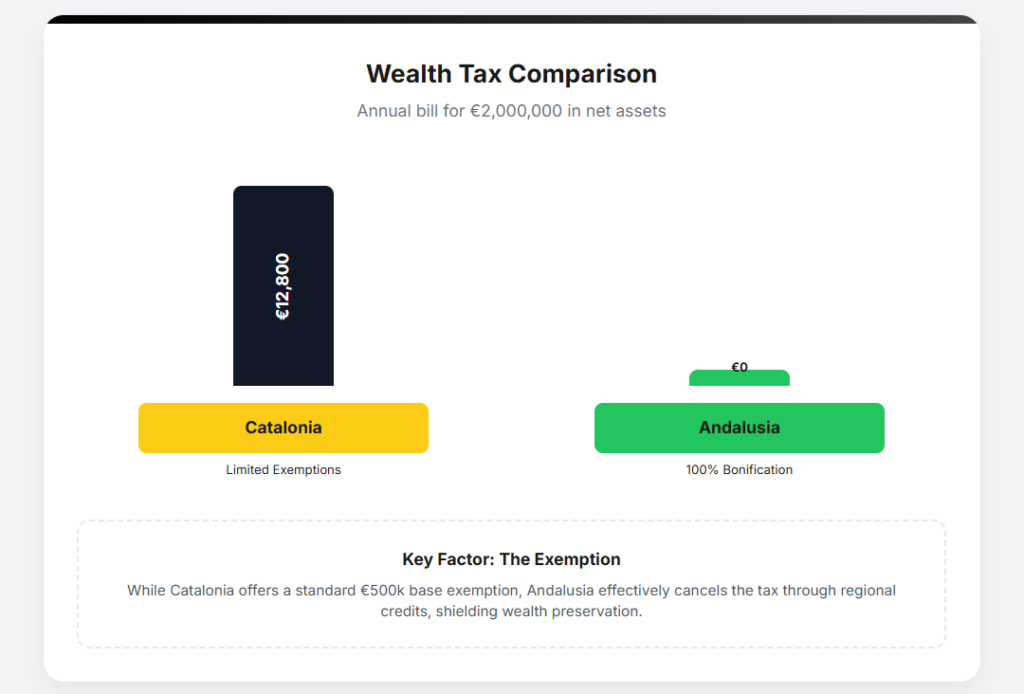
Andalusia offers a 100% bonification on its regional Wealth Tax, effectively zeroing out the tax for most residents. An expat with €2,000,000 in net wealth pays approximately €12,800 annually in Catalonia. In Andalusia, the bill drops to €0 due to the generous bonification.
Inheritance Tax reveals a chasm between the two regions. Andalusia grants a 99% bonification for inheritances and gifts within Group I and Group II heirs—children, spouses, and parents—for values up to €1,000,000. Catalonia applies a variable and much less forgiving bonification system.
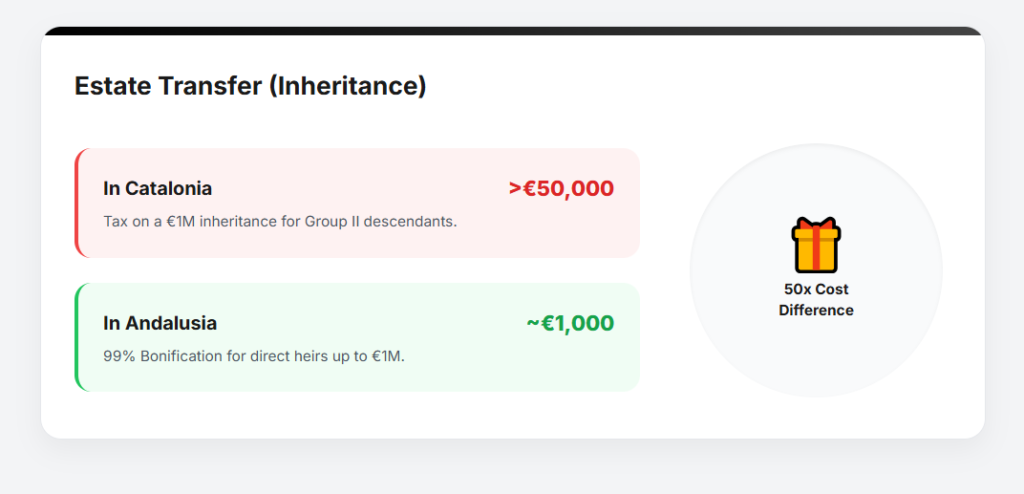
Spouses receive a 99% credit, but descendants in Group II face higher taxes on larger estates. An inheritance of €1,000,000 costs over €50,000 in Catalonia compared to approximately €1,000 in Andalusia. Estate planning in Catalonia becomes exponentially more expensive for families transferring wealth.
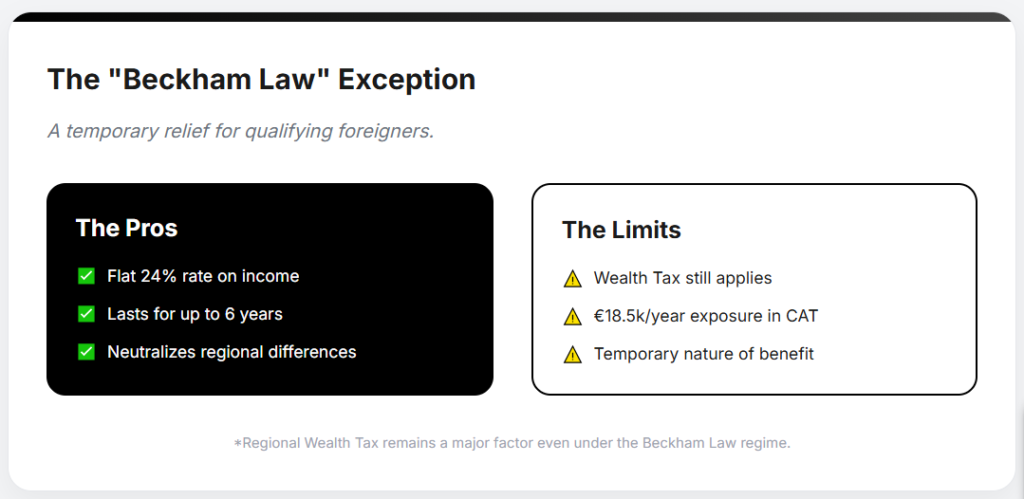
The Beckham Law acts as a potential equalizer for income tax differences, but only temporarily. This special regime allows qualifying foreign professionals to pay a flat 24% rate on Spanish-sourced income for up to six years, regardless of region. Under the Beckham Law, your income tax is exactly the same regardless of where you live in Spain.
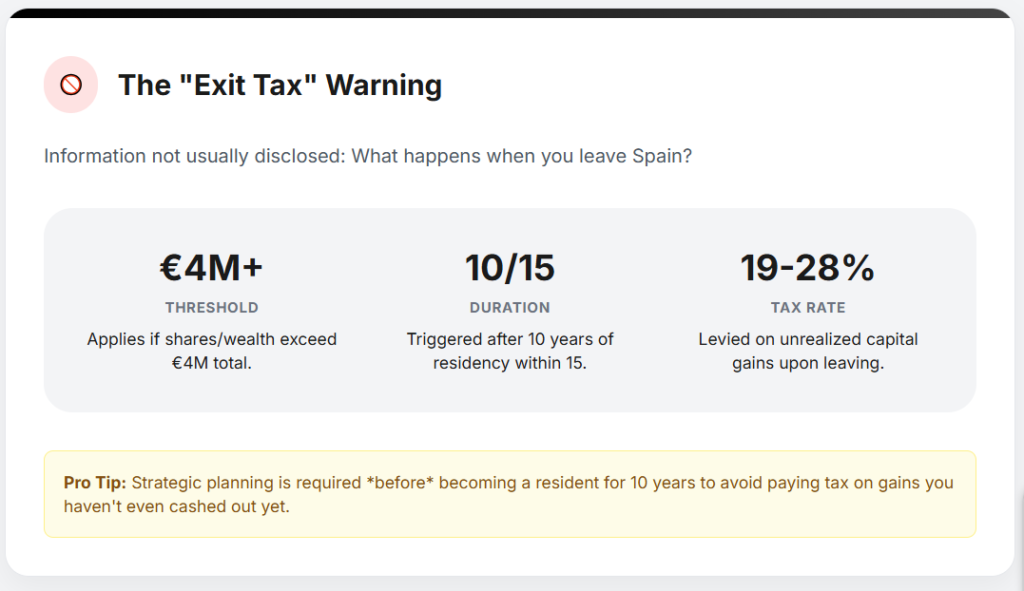
However, other taxes remain region-dependent, meaning the law will not shield you from costs like Catalonia’s €18,500 annual Wealth Tax. An expat with €2,000,000 in assets and an income of €150,000 faces significantly higher annual tax bills in Catalonia compared to Andalusia. Over a decade, the combined income, wealth, and inheritance tax differences can easily reach six figures for high-net-worth individuals.
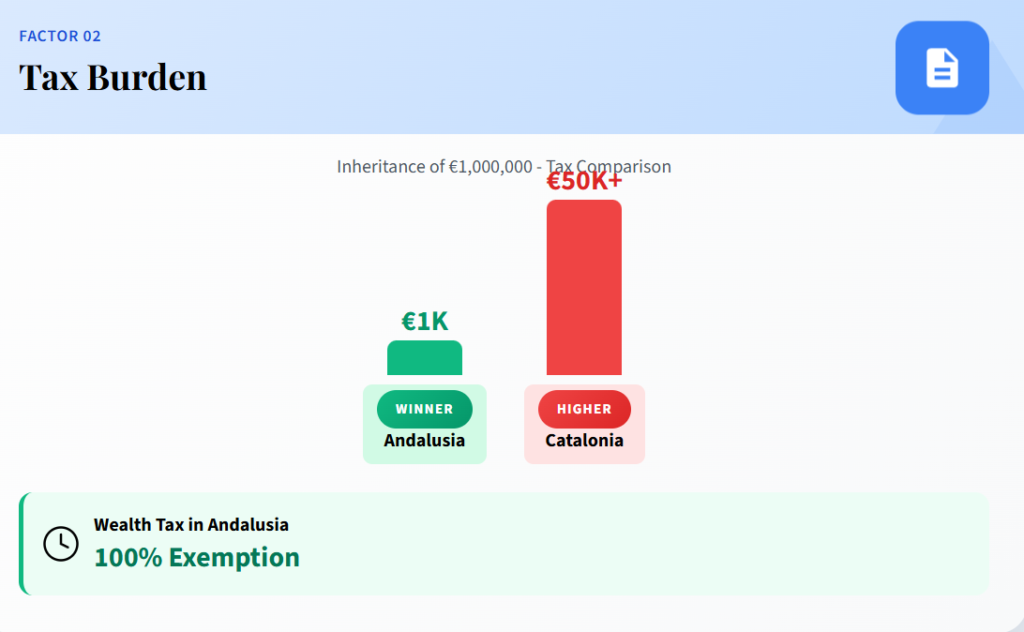
In one of my previous articles, I covered why mistakes with taxation are one of the main reasons expats go broke in Spain. When it comes to your overall tax bill, Andalusia is the clear winner. The region offers a pro-market, low-tax model designed specifically to attract and retain high-net-worth residents and capital.
I was also thinking about comparing the regions in France or Italy, so please let me know in the comment section by saying either ITALY or FRANCE.
Factor 3 – Safety and Crime
Extremadura
Catalonia registers a crime rate of 65.8 incidents per 1,000 inhabitants. Extremadura records just 32.9 per 1,000 inhabitants. The national average stands at 50.3 per 1,000 inhabitants.
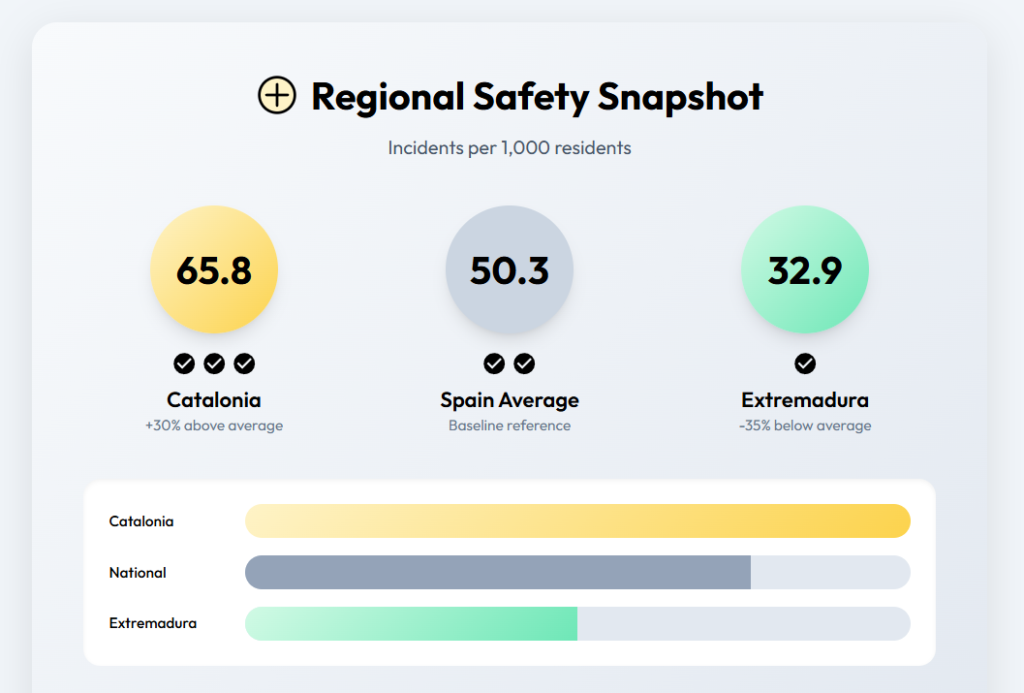
Catalonia exceeds the national average by 30%, while Extremadura operates at nearly half the national rate. Petty theft completely dominates Barcelona’s crime profile. Hurtos, which are thefts without violence, account for 22.5 incidents per 1,000 inhabitants in Barcelona.
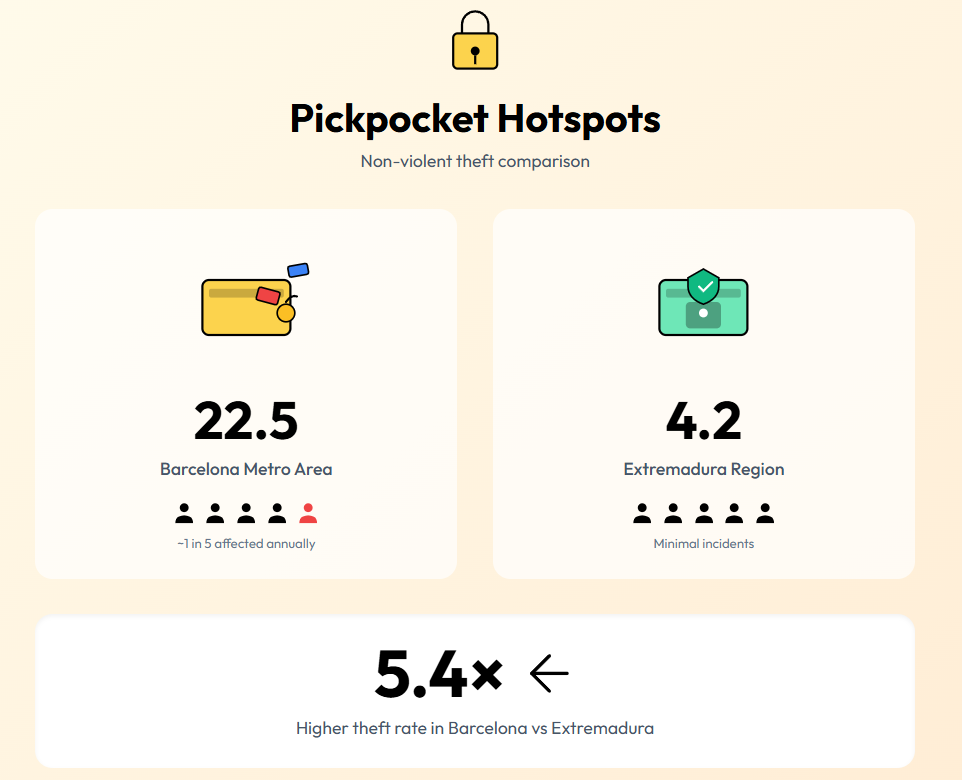
Extremadura reports only 4.2 incidents per 1,000 inhabitants for the exact same category. In the first half of 2024 alone, Catalonia reported 82,246 thefts, marking the highest figure in Spain. It also leads the country in the number of car thefts.
The probability of experiencing a phone or wallet theft is highest in Barcelona compared to any other Spanish city. You walk through Las Ramblas or Barceloneta, and the risk is constant. I was personally a victim of thieves once in Barcelona, exactly at the Las Ramblas.
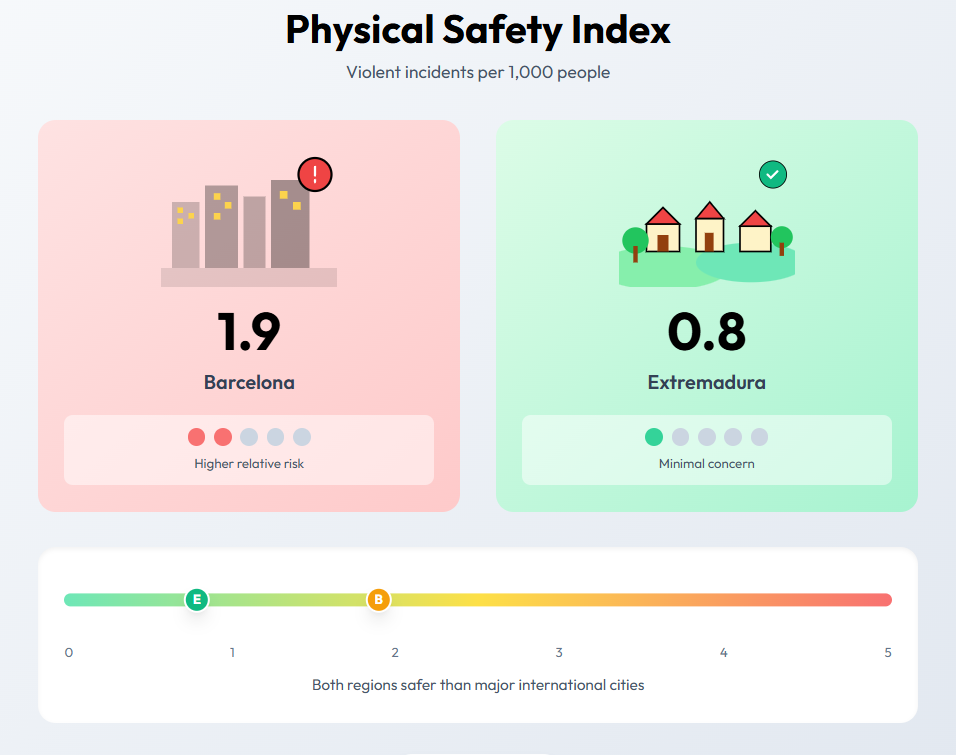
Barcelona records 1.9 violent incidents per 1,000 inhabitants. Extremadura reports a mere 0.8 per 1,000 inhabitants. Violent crime remains low in both regions when compared to major US or UK cities, but compared to the rest of Spain, Catalonia’s rate is very high.

In Extremadura, violent crime is so rare it is almost not worth mentioning. Cities like Badajoz and Cáceres maintain incredibly calm environments. The 0.8 violent incidents per 1,000 figure reflects a safer, more tranquil daily experience.
You can walk through neighborhoods at night without concern, making the safety difference truly tangible. Policing models diverge significantly between the two regions. Catalonia is governed by the Mossos d’Esquadra, an autonomous police force with deep regional roots.
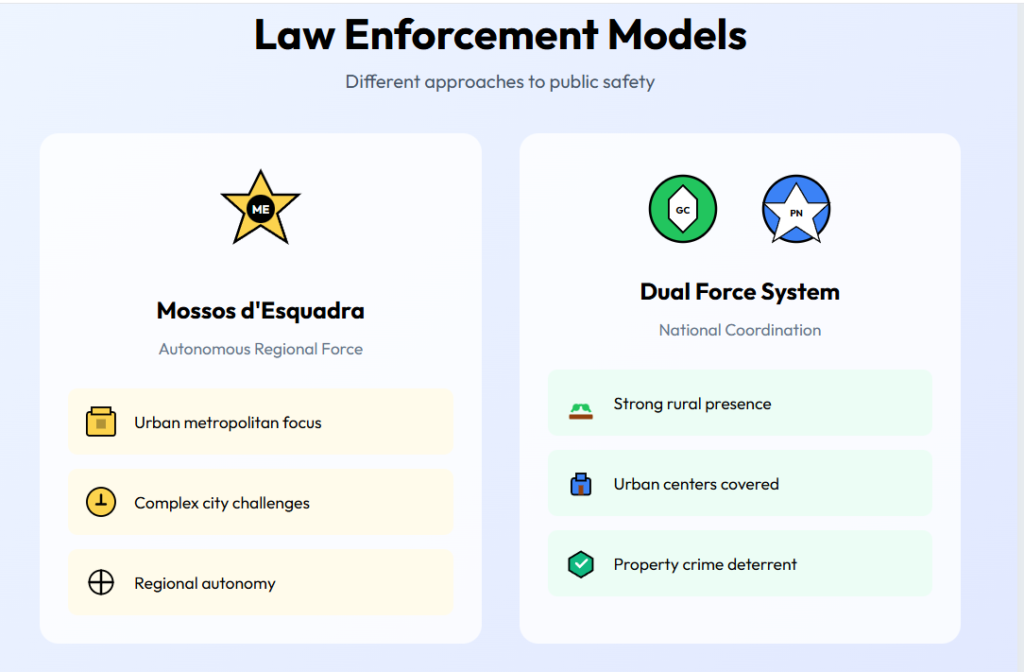
The Mossos focus on urban management and handling complex metropolitan challenges, though political tensions occasionally strain operations. Extremadura operates under the Guardia Civil and Policía Nacional. The Guardia Civil maintains a strong presence in rural areas, acting as a powerful deterrent for property crime in smaller municipalities.
The Policía Nacional effectively covers the urban centers of Extremadura. Expats in Barcelona must actively adjust their routines to avoid certain metro lines. They skip neighborhoods known for pickpocketing, carry minimal cash, and keep their phones secured.
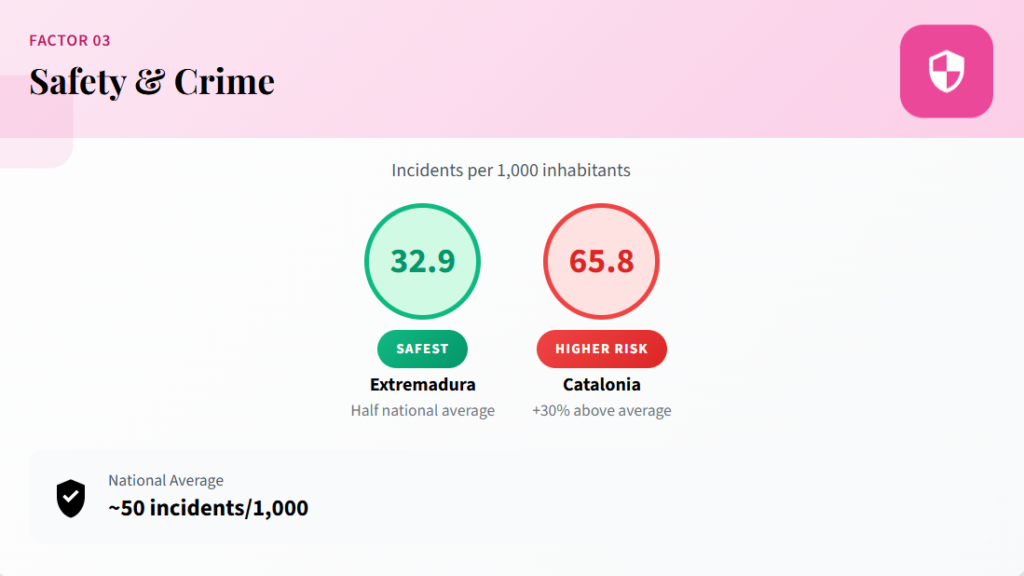
This constant vigilance quickly becomes a mandatory part of daily life in Catalonia. In terms of safety, Extremadura takes the trophy because it has a crime rate less than half of Barcelona’s. The 32.9 versus 65.8 rate of incidents translates directly into peace of mind.
There, the feeling of being safe actually matches the data, giving you a sense of calm that Barcelona simply cannot match. Safety is critical, but it is only one dimension of quality of life, and when we measure the full picture using the HDI, a different region takes the lead.

Factor 4 – Quality of Life
Community of Madrid
The Community of Madrid ranks first in Spain with an HDI of 0.942 and a life expectancy of 85.1 years. Catalonia ranks fourth with an HDI of 0.922 and a life expectancy of 83.5 years. That gap in the rankings actually shows up in your paycheck and your lifespan.
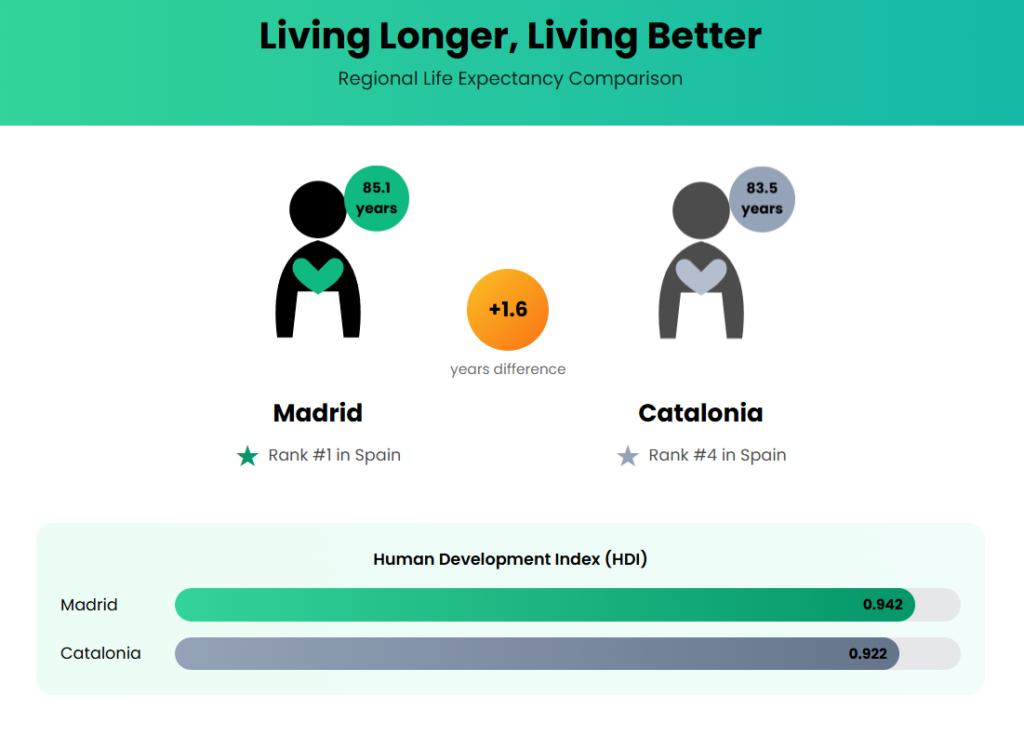
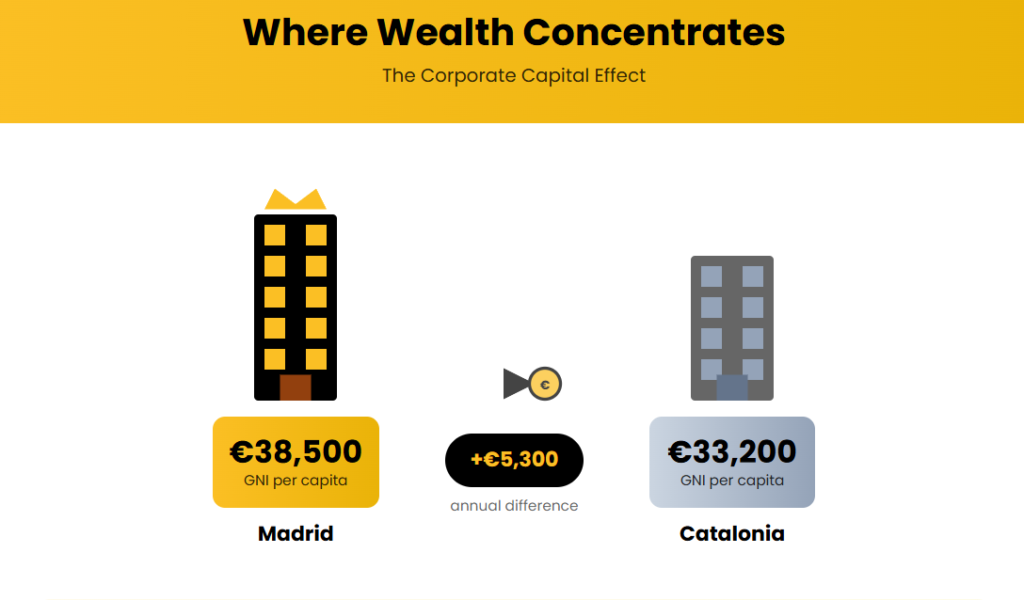
Madrid residents live 1.6 years longer on average than Catalans. That gap places Madrid among global leaders in life expectancy. Madrid’s GNI per capita reaches €38,500, while Catalonia’s GNI per capita stands at €33,200.
The €5,300 difference is driven by multinational headquarters and high-paying financial sector roles concentrated in the capital. Companies like Telefónica, Repsol, and Santander base their operations in Madrid. The concentration of corporate headquarters creates a massive cluster of high-income professionals.
Catalonia spends €3,730 per capita on public services, while Madrid spends €2,933. Despite that, Madrid scores higher on the education index, boasting more top universities and research institutions within its borders. Universidad Complutense, Universidad Autónoma de Madrid, and IE Business School continually attract national and international talent.
How you spend your morning commute looks very different in these two cities. Madrid has a radial infrastructure with heavy suburban commuting. Workers in municipalities like Alcalá de Henares or Móstoles face long commutes into the city center.
The radial metro and Cercanías train system connects the periphery, but commute times stretch beyond 45 minutes for many. Barcelona benefits from a 15-minute city concept in its central districts. The Eixample district places daily necessities within walking or cycling distance.
You access groceries, schools, and offices without a car. The compact urban layout completely reduces commute stress for central residents. However, Barcelona’s outer industrial belts face commutes exceeding 40 minutes.
Municipalities in Vallès or Maresme experience severe infrastructure bottlenecks. Workers commuting from Sabadell or Mataró to Barcelona face heavy congestion daily. The 15-minute city advantage applies only to central Barcelona districts, not the broader metropolitan area.
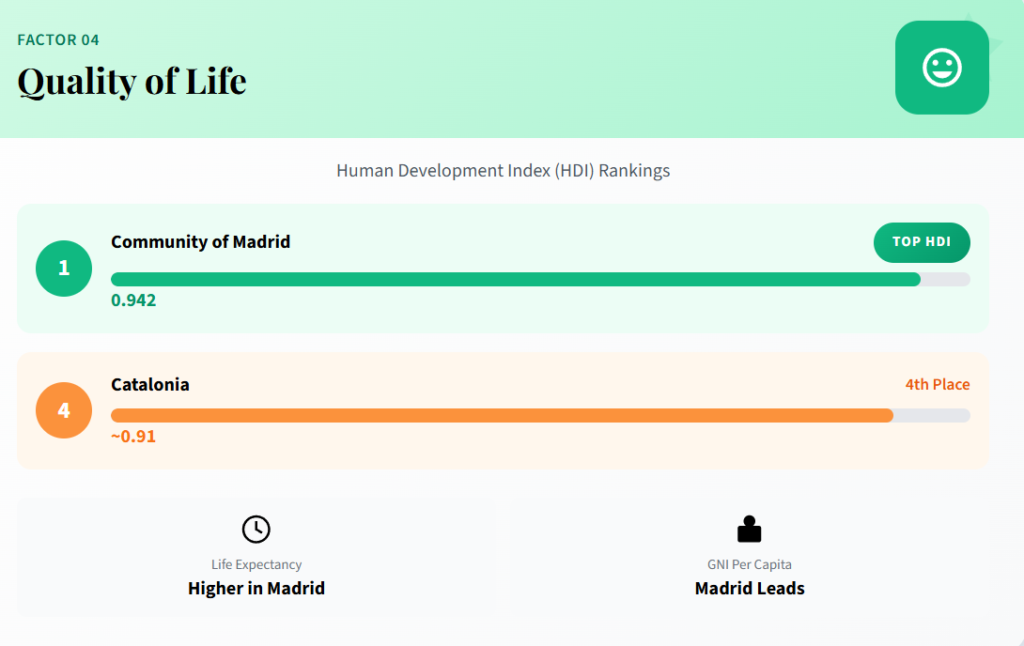
Madrid’s suburban commute challenges directly mirror Barcelona’s outer belt problems. The Community of Madrid wins quality of life by HDI standards. The region combines higher life expectancy, greater income, and stronger educational outcomes, meaning residents of Madrid live longer and earn more.
Public services matter, but nothing affects daily life more than access to timely healthcare—and that is why healthcare is our next point.
Factor 5 – Healthcare
Navarra
System quality metrics show that Navarra’s primary care wait averages 5.8 days. Catalonia’s primary care wait averages 8.7 days. Non-urgent surgery waits stretch to 128 days in Catalonia versus 82 days in Navarra.
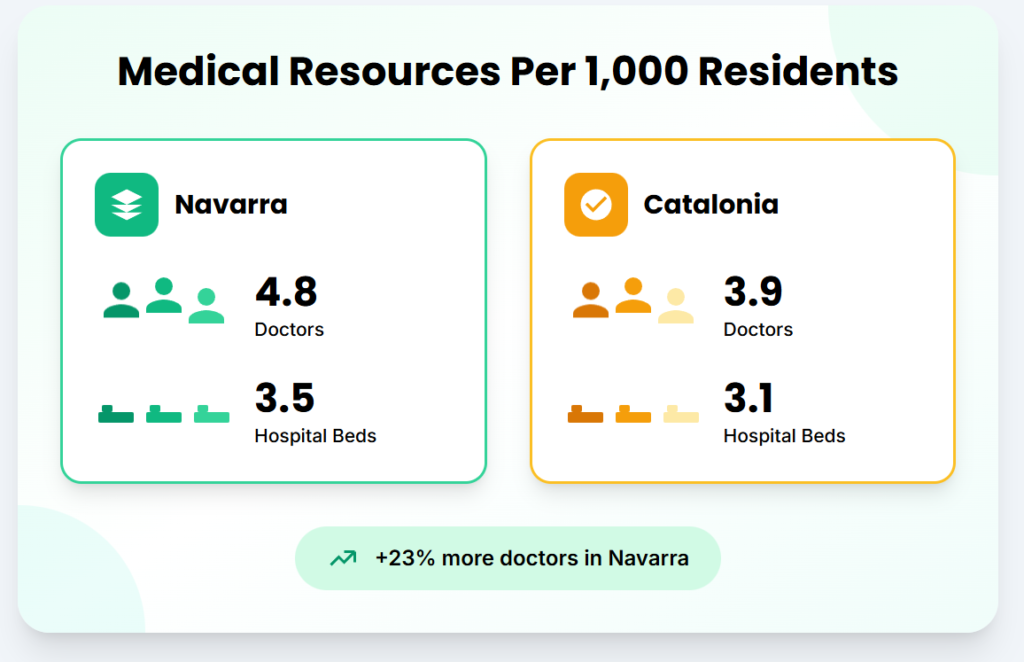
That is 46 additional days waiting for a procedure that directly affects your quality of life. Catalonia reports the highest percentage of patients in Spain waiting over six months for surgery. The public surgical capacity is undeniably strained beyond efficiency.
Navarra boasts 4.8 doctors per 1,000 residents and 3.5 hospital beds per 1,000. Catalonia shows 3.9 doctors per 1,000 residents and 3.1 beds per 1,000. Navarra’s higher ratios translate directly into shorter wait times and better patient care.
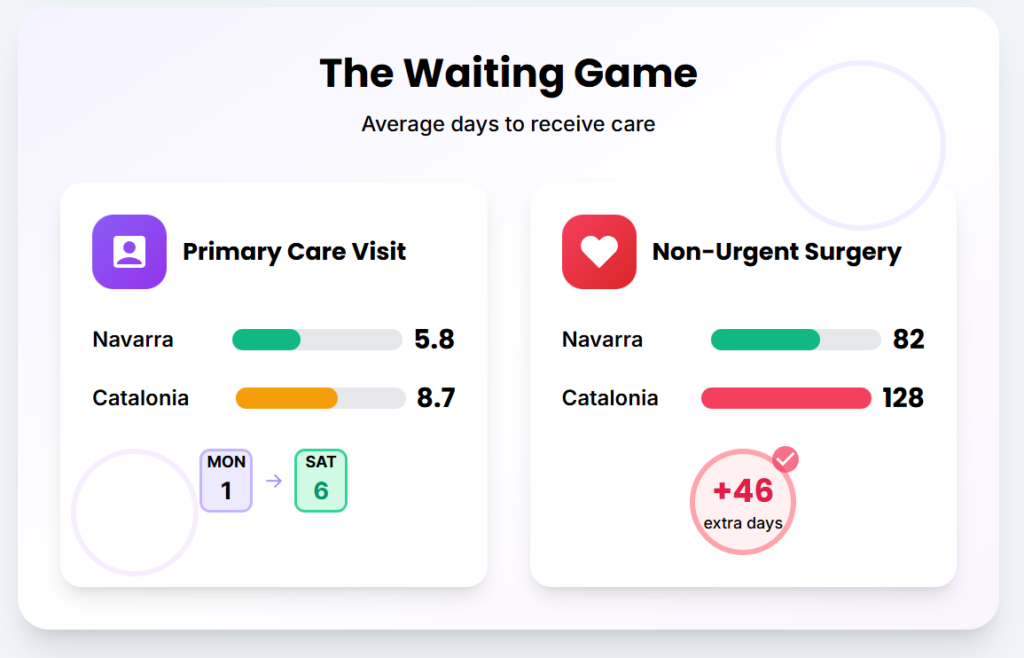
You gain access to medical professionals faster because the infrastructure supports demand more efficiently. About 28% of Catalan residents opt for private insurance to bypass public-system delays. Families in Barcelona pay €160 to €240 per month for high-end private health insurance.
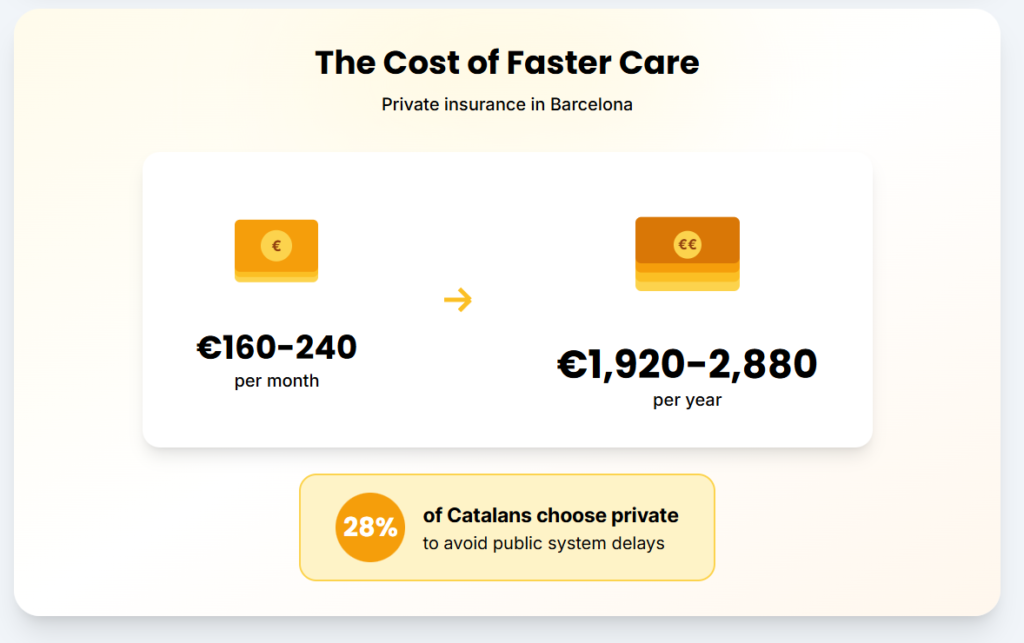
That is €1,920 to €2,880 annually added to household budgets. People pay for private insurance because they simply do not want to wait for the public system. You pay to avoid waiting months for surgery or weeks for a specialist appointment.
The Federation of Associations for the Defense of Public Health ranks Navarra as Spain’s top healthcare system. Navarra’s public system, Osasunbidea, operates with an efficiency that significantly reduces private-sector reliance. Shorter wait times and higher resource density make the public option highly reliable.
You can trust the public system in Navarra without needing a backup plan. The public healthcare experience delivers timely care without requiring supplemental insurance. In Barcelona, private insurance becomes a strict necessity for families prioritizing health access.
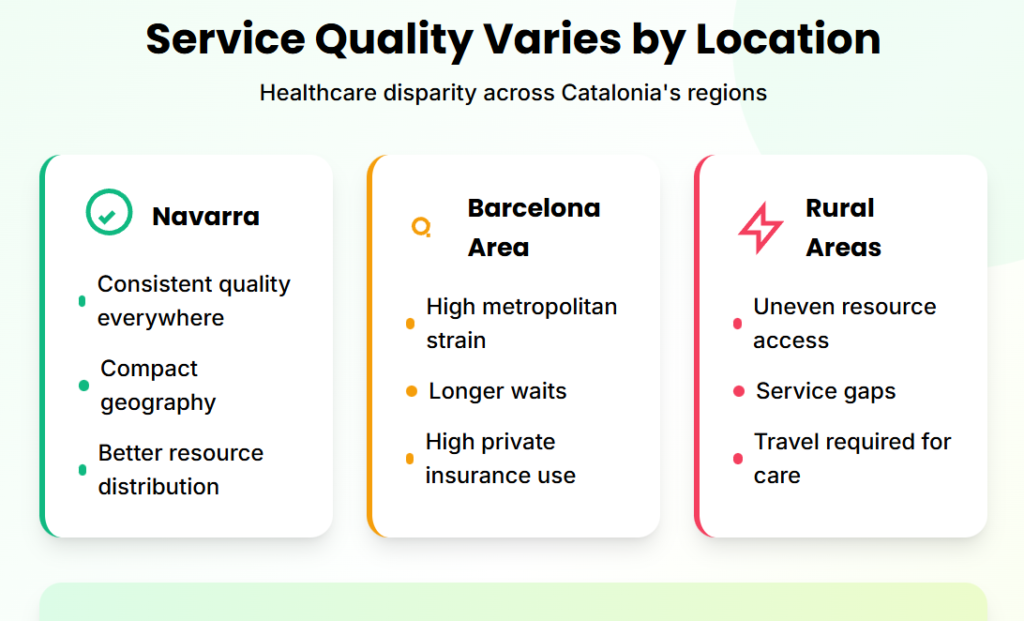
Thousands of euros flow annually into private premiums to secure timely care. Catalonia’s world-class private hospitals are exceptional, but they come at a cost that compounds year after year. Navarra’s efficient public system concentrates within a smaller, more manageable region.
Catalonia’s larger population and extensive metropolitan areas, especially Barcelona, place uneven strain on healthcare resources. The disparity contributes to longer wait times and service variations across the region. You experience different quality levels depending on which part of Catalonia you live in.
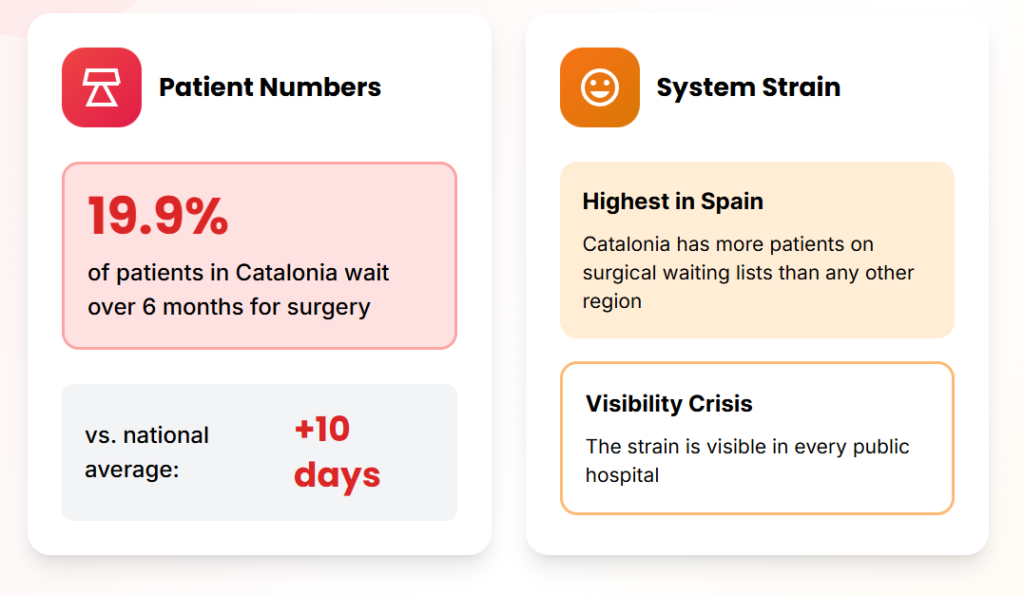
Navarra maintains consistency across its territory because the geographic scope allows better resource distribution. The average wait time for non-urgent surgeries in Catalonia exceeds the national average by approximately 10 days. A notable 19.9% of patients face waits exceeding six months, and this strain is visible in every public hospital.
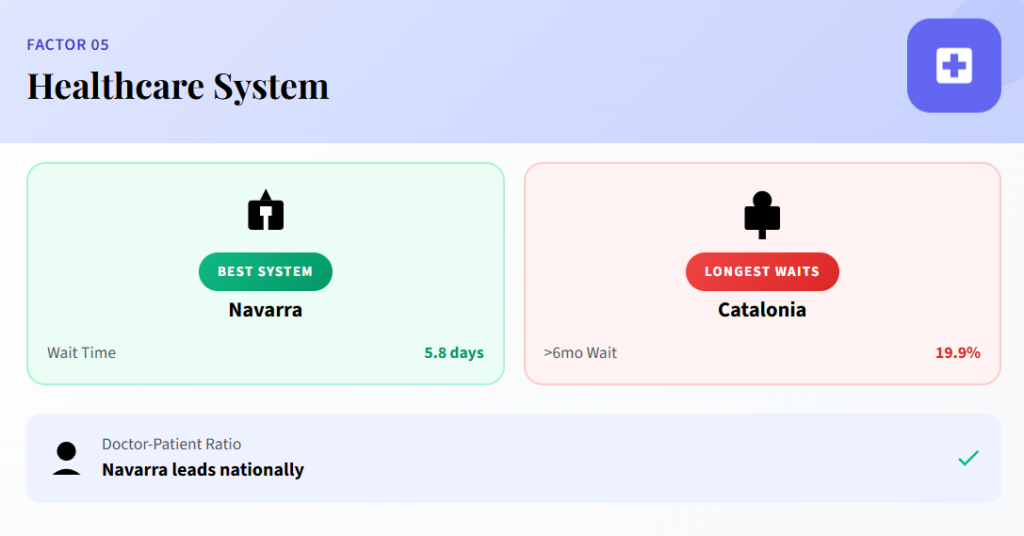
The public system struggles to meet demand, ultimately forcing residents toward private alternatives. If your health is the priority, Navarra is definitively the best place to be in Spain because the region offers superior doctor-to-patient ratios, shorter wait times, and an efficient public system.
Healthcare, safety, taxes, and costs all favor other regions, so the reason expats still choose Catalonia lies in the one category where it dominates completely.
Factor 6 – Geography
Galicia
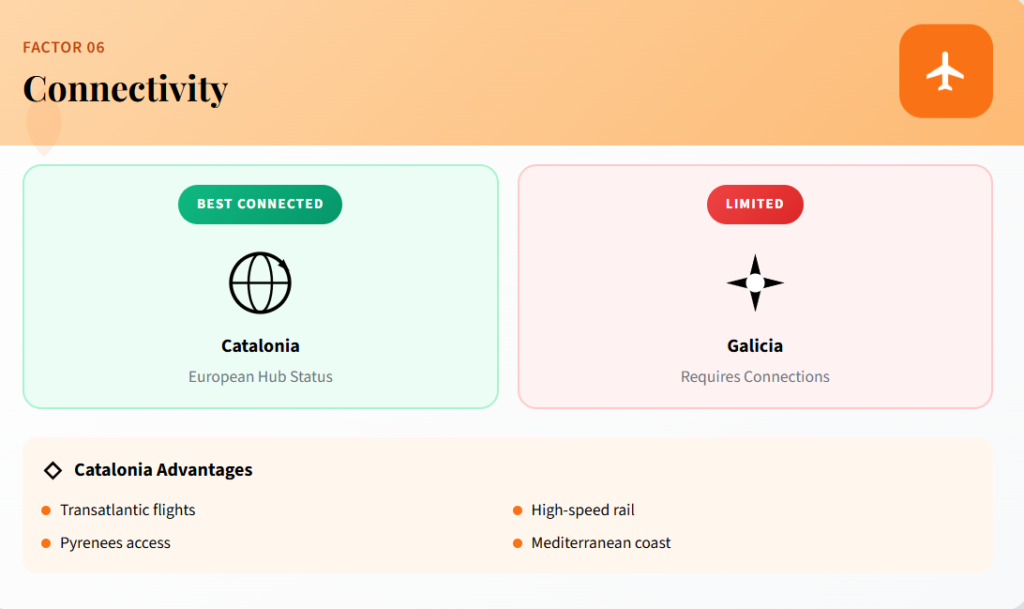
Barcelona-El Prat Airport offers direct flights to over 15 cities in the UK and North American hubs including New York, Miami, San Francisco, Chicago, Montreal, and Toronto. Galicia’s regional airports require connections via Madrid or Lisbon for most long-haul destinations. Santiago Airport offers direct flights to only three to five cities in the UK with no transatlantic routes.

Vigo Airport serves just one to two cities in the UK. You save hours on every international trip by choosing Catalonia. The connectivity gap severely affects expats who travel frequently for work or family.
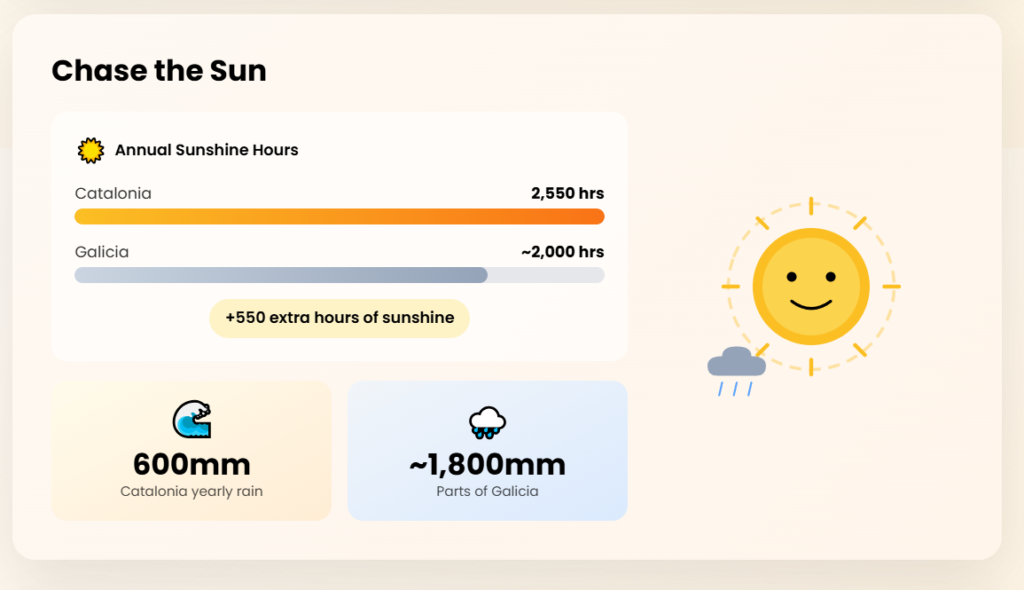
Direct flights eliminate layovers and reduce total travel time by four to six hours per round trip. Catalonia delivers 2,550 annual sunshine hours. Galicia receives between 1,929 and 2,193 sunshine hours, resulting in 350 to 600 fewer hours of sun per year.
Rainfall in Catalonia averages 600 mm annually. Galicia is one of the wettest spots in Spain, with some areas getting nearly triple the rain compared to Catalonia. The climate difference significantly affects outdoor activities, mood, and lifestyle quality throughout the year.
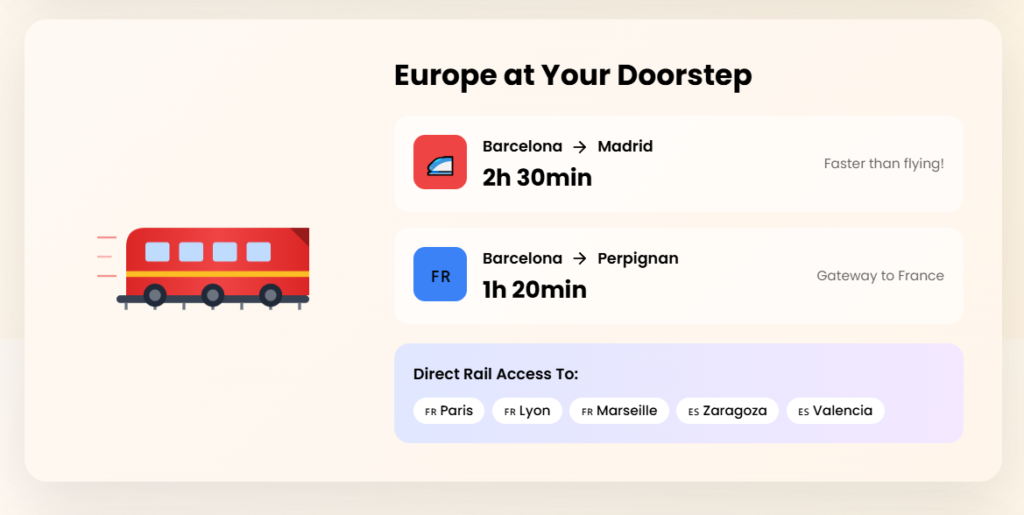
Barcelona’s summers hit highs near 29°C with mild winters around 9°C.
Galicia stays much cooler, rarely breaking 30°C even in the heat of summer, and maintains a more humid climate year-round. The Atlantic influence creates a temperate environment, but the higher moisture content makes it feel much cooler.

You experience Mediterranean warmth in Catalonia versus Atlantic dampness in Galicia. The temperature and humidity profiles create highly distinct living experiences. High-speed rail from Barcelona to Madrid runs in just 2.5 hours.
The route connects Catalonia’s economic center to Spain’s capital faster than flying when you account for airport security and travel time. Cross-border connections to Perpignan take one hour and 20 minutes, linking Barcelona directly to France’s rail network. Catalonia operates as a European transport hub, not just a Spanish regional endpoint.
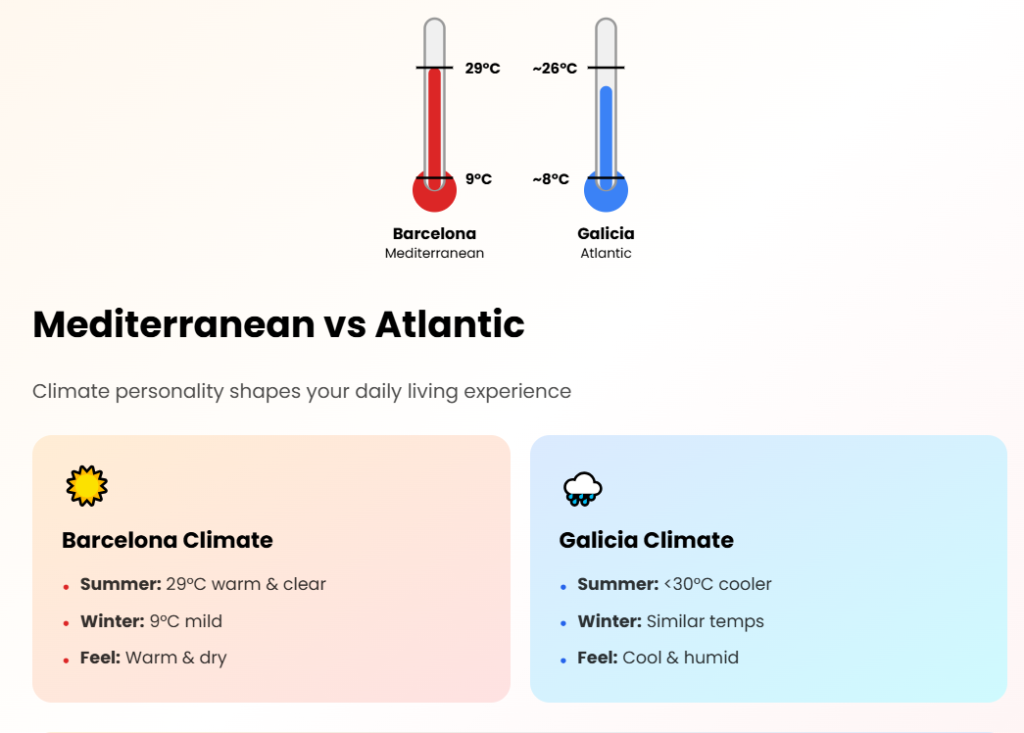
You access Paris, Lyon, and Marseille via high-speed rail without backtracking through Madrid. If you work remotely for a US company or visit family in the UK multiple times per year, the time and cost savings easily offset higher rent. Catalonia offers Mediterranean beaches, Pyrenees skiing, and Barcelona within a highly compact region.
La Molina and Masella ski resorts are accessible in one hour and 45 minutes from Barcelona. Costa Brava beaches are reached within an hour, allowing you to ski in the morning and swim in the afternoon during shoulder seasons. For expats who travel frequently for work or family, the time and cost savings from direct flights and high-speed rail can offset higher living expenses.
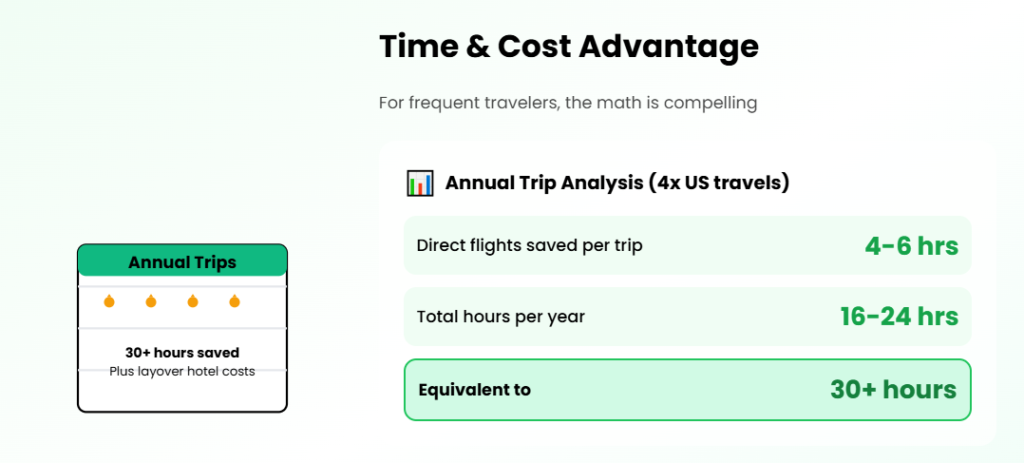
If you fly to the States four times a year, you are saving over 30 hours of travel time alone and eliminating layover hotel costs. Nowhere else in Spain can compete with Catalonia’s mix of weather, mountains, and global travel. This single advantage is powerful enough to keep people choosing Barcelona, even while losing in cost, taxes, safety, quality of life, and even on healthcare, where Navarra has the upper hand.
Remember that I mentioned Navarra in the part about healthcare? It is one of the most ignored Spanish regions, together with two other autonomous communities, but it has so much to offer. That is why I covered these three understated regions that are quite specific and have qualities that no other place in Spain has.
Levi Borba is the founder of expatriateconsultancy.com, creator of the channel The Expat, and best-selling author. You can find him on X here. Some of the links above might be affiliated links, meaning the author earns a small commission if you make a purchase.