What if most of what you’ve heard about retiring in Argentina is wrong? What if the budget advice is dangerous? What if the timelines are nearly impossible? What if the lifestyle promises are… fake?
The biggest lies aren’t about the steak or the tango. They are about infrastructure, finance, and huge regional differences in this massive country.
Argentina’s railroad system is basically dead — cross-country travel is either 18-hour bus marathons or US$400 flights. The “affordable paradise” budget you calculated? It’s missing critical costs that only locals know about.
But please, don’t get me wrong: Argentina is incredible — and a great place too. In fact, it is one of the countries that I recommend the most for my readers, and I have helped many of you move there.
However… we also must be realistic.
Today I’m revealing 10 lies about Argentine retirement that nobody admits. Each one could cost you big time.
Lie Number 1: You can live on US$1,000 a month.
What if the budget that convinced you to move to Argentina leaves you broke within six months?
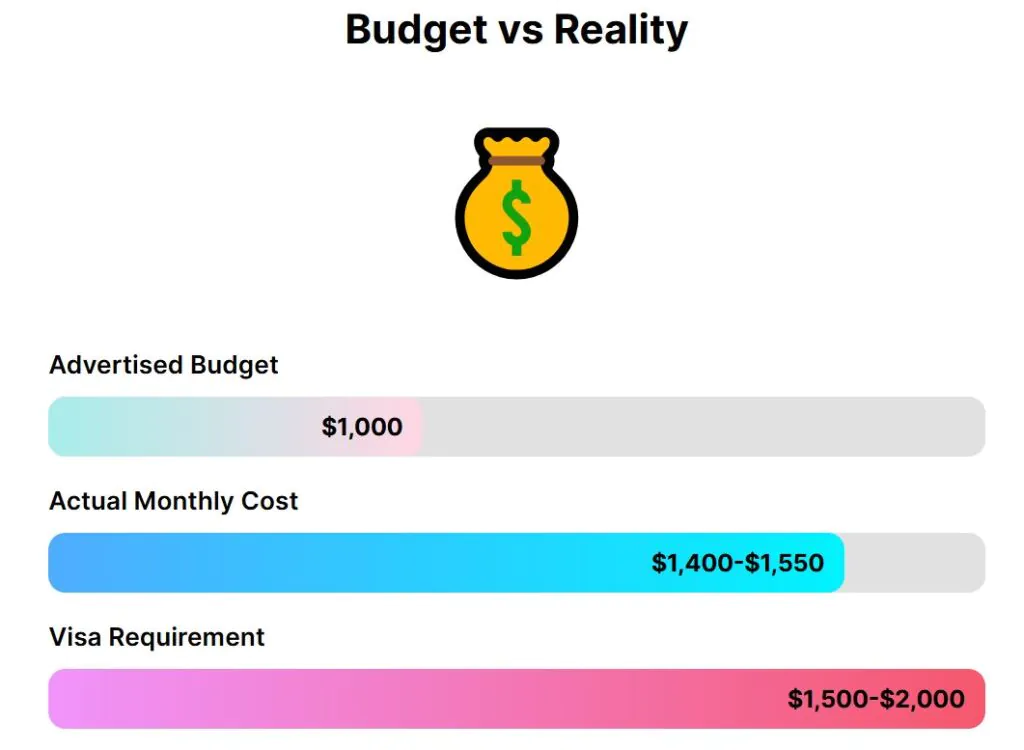
The US$1,000 monthly retirement thing isn’t a complete lie, but it’s a dangerous half-truth. You can live on US$1,000 in Argentina — just not in any major city.
Some expat blogs and YouTube channels promote this fantasy budget while showing footage of Buenos Aires cafes and elegant boulevards. They’re selling you on retiring in Argentina’s most expensive city with a budget that won’t cover your basic needs there.
The Argentina Expat survey suggests a single expat’s grocery bill is on average US$224. That’s more than one-fifth of your fantasy budget gone just on food. Healthcare costs pile on top of that, and the US$1,000 figure crumbles under real-world expenses.
Here’s what makes the budget myth legally dangerous: Argentina’s residency requirements contradict it. Currently, the government demands proof of US$1,500 to US$2,000 monthly passive income for visa approval. They set these thresholds because they understand the actual cost of living.
Housing costs destroy the US$1,000 budget before you buy groceries, and a one-bedroom apartment in Buenos Aires runs US$500 to US$1,000+ monthly.
The budget lie isn’t just wrong — it’s financially dangerous for retirees on fixed incomes. You’ll arrive in Recoleta expecting affordable living and discover your pension doesn’t cover basic expenses.
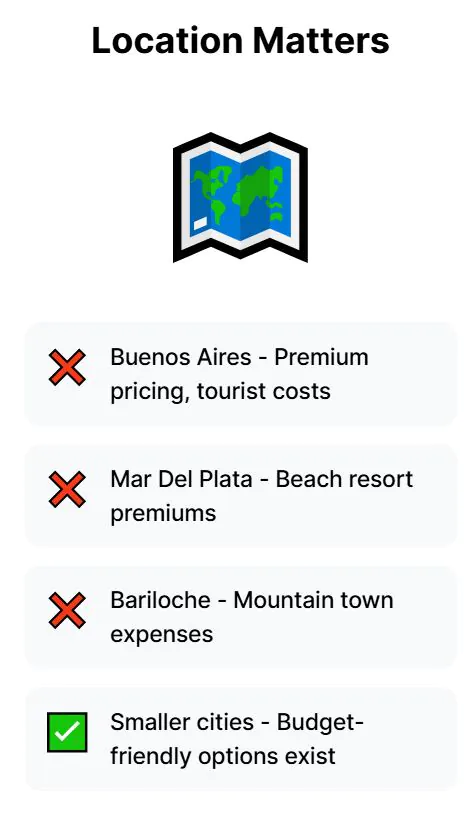
Now, I said this “Argentina for US$1,000” was a half-truth, not a complete lie, because there are places where you can live on such a small budget in Argentina. I even talked about some of them in a previous video. But not in Buenos Aires, or Mar Del Plata, or Bariloche.
And by the way, this is also valid in places like Chile or Brazil. I was even thinking about making similar videos on the lies about Chile or Brazil that people believe. If you would like me to do such a video, please let me know in the comment section.

Lie Number 2: Getting residency is quick and straightforward.
Here’s what nobody tells you about Argentina’s residency process — it’s designed to test your patience, not welcome you quickly.
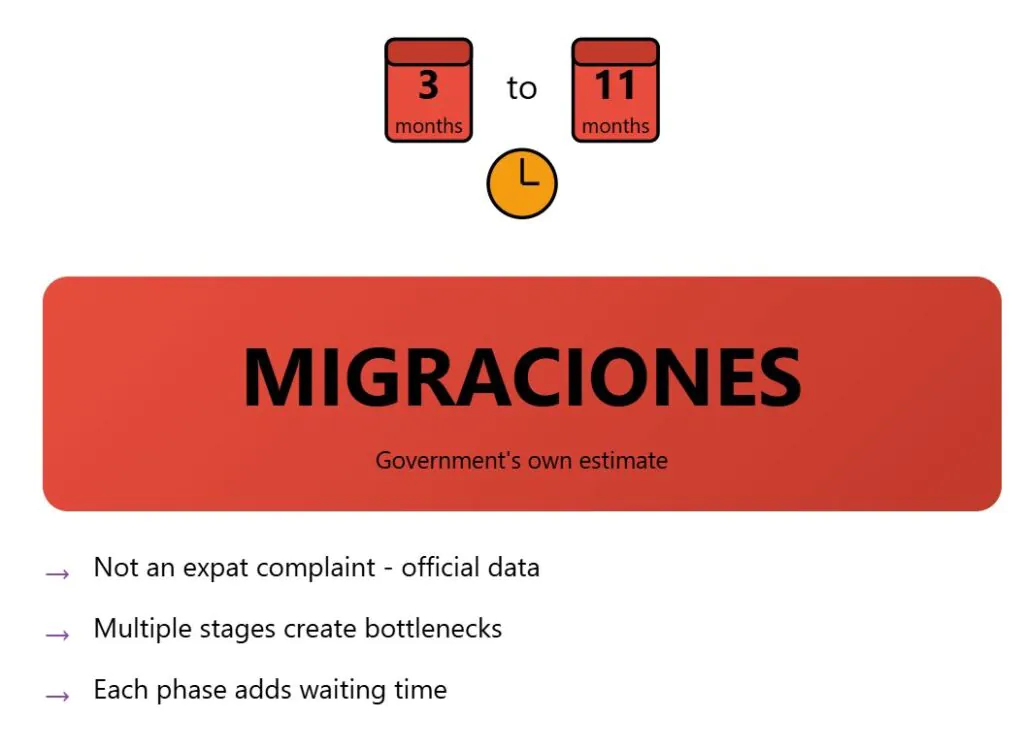
Official processing times stretch 3 to 11 months through Argentina’s Immigration Department, known as MIGRACIONES. The process involves multiple stages: online pre-application, mandatory in-person interview, and lengthy internal document processing. Each stage creates bottlenecks that extend your timeline.
You need clean police clearance certificates from every country where you’ve lived for more than one year within the last three years. These foreign documents also often require apostilles. Then you need certified Spanish translations by official sworn translators.
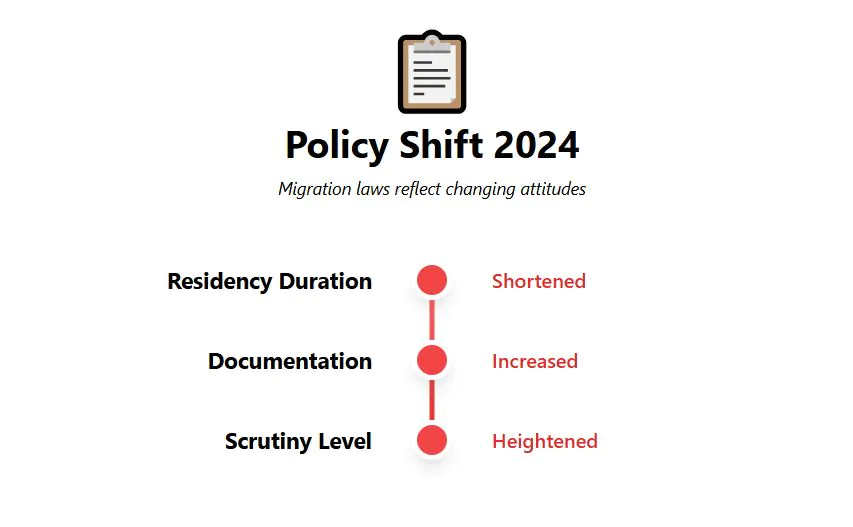
Recent government changes tightened immigration rules further. A 2024 migration decree cut temporary residencies to 90 days, down from 180. The constant renewal cycle adds bureaucratic burden and scrutiny.
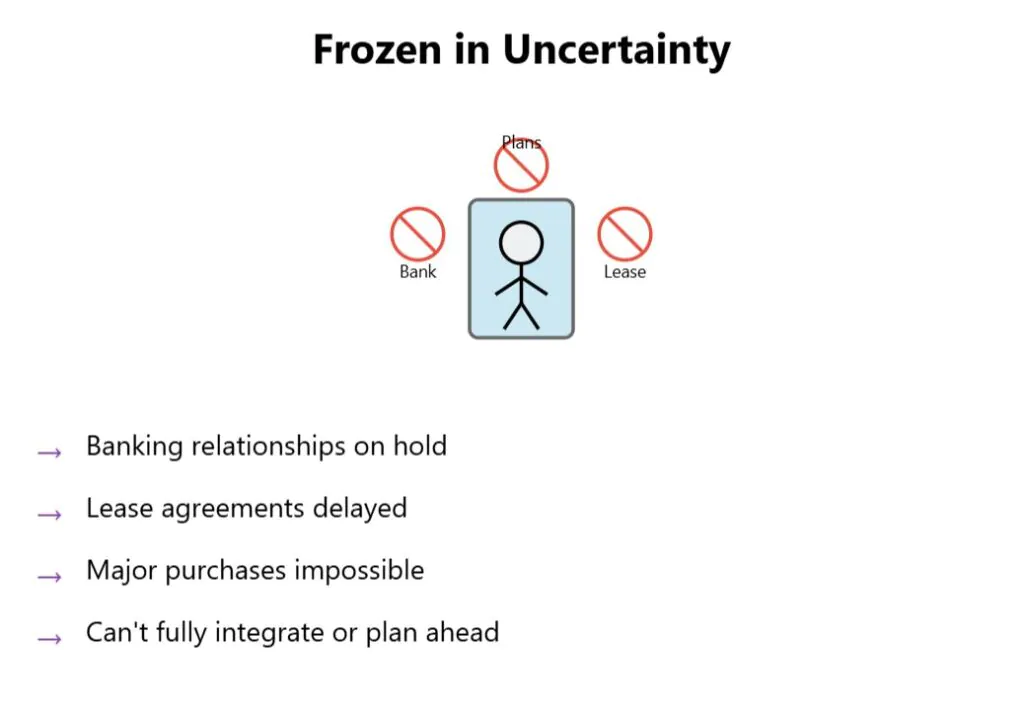
During the processing limbo period, you’re financially and logistically frozen. You can’t fully integrate or plan long-term while your status remains uncertain.
Plan for a 12 to 18-month total timeline from document gathering to final approval. Maintain backup housing arrangements and financial cushions for extended waiting periods.
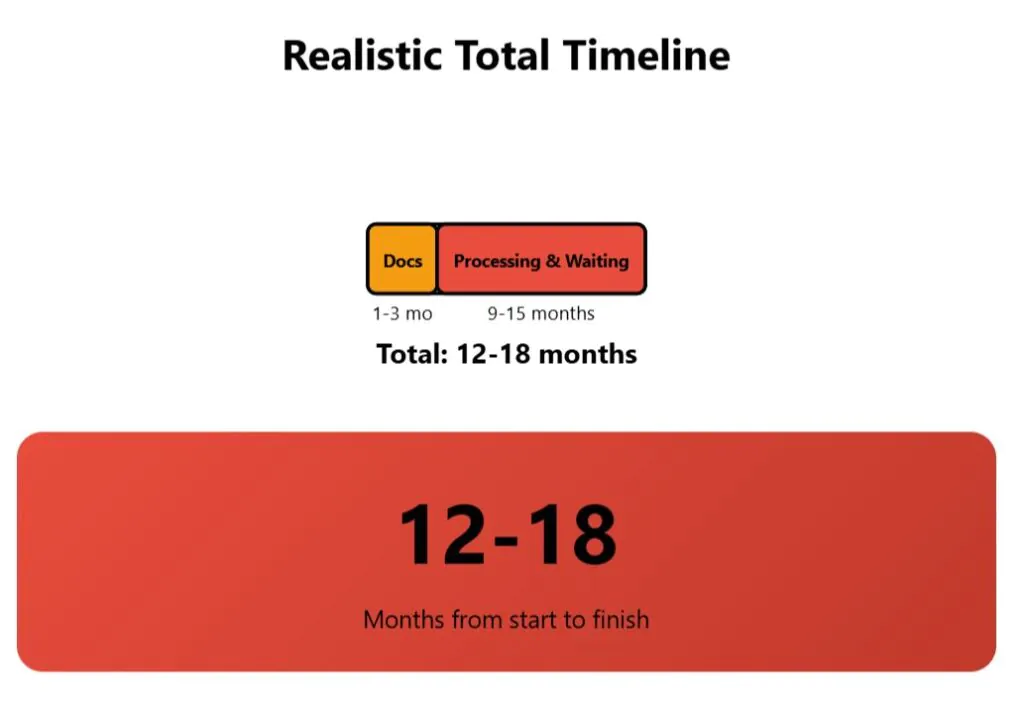
The quick residency promise isn’t just wrong — it leaves unprepared applicants stranded in bureaucratic limbo.
PS: I have some really good news: FREE FOR A LIMITED TIME: Grab your Expat Wealth & Lifestyle Compass ($108 value) today! Includes our 74-page guide of Affordable European Cities, our Zero-Tax countries report, and our expat checklist. http://patreon.com/The_ExpatJoin us here before this offer ends.
Lie Number 3: You can get by just speaking English.
Thinking you can retire comfortably in Argentina speaking only English?
Tourist areas in Buenos Aires create the illusion that English fluency works for daily life. Hotels in Palermo and Recoleta employ bilingual staff, for example. But this bubble gives you false confidence about language requirements.
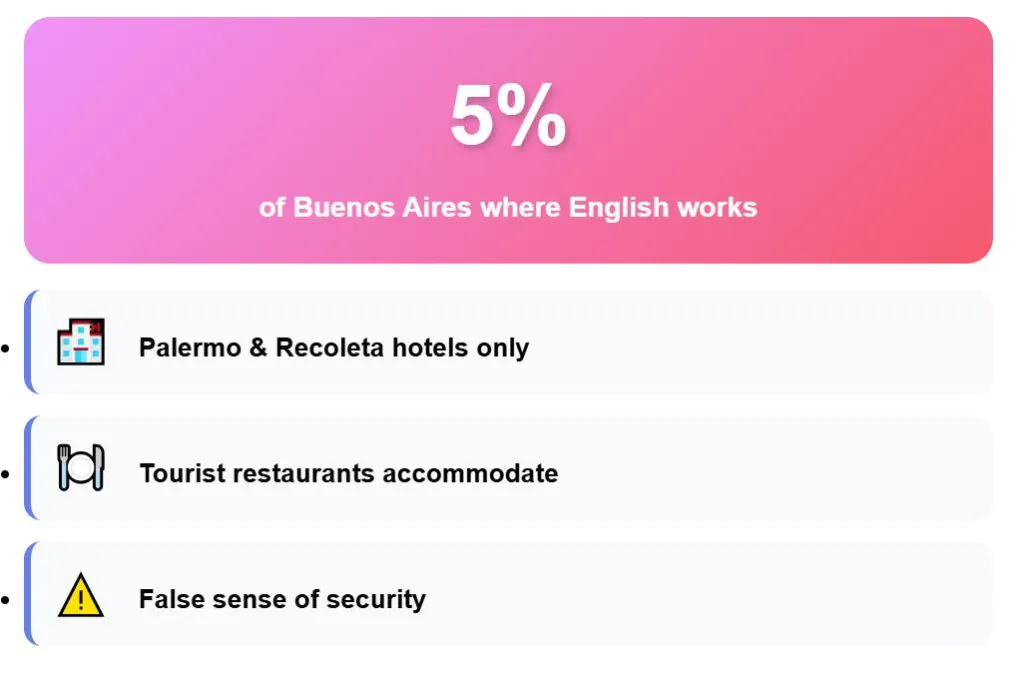
Once you step outside expat neighborhoods, finding English speakers is way more uncommon. You can’t open a bank account, schedule medical care, or complete residency paperwork without Spanish skills.
Some of Argentina’s dialects add complexity that confuses even Spanish speakers from other countries. In certain accents, they cut the S at the end of words, or the C in the middle of words, or they simply do not pronounce half of the things they were supposed to say.
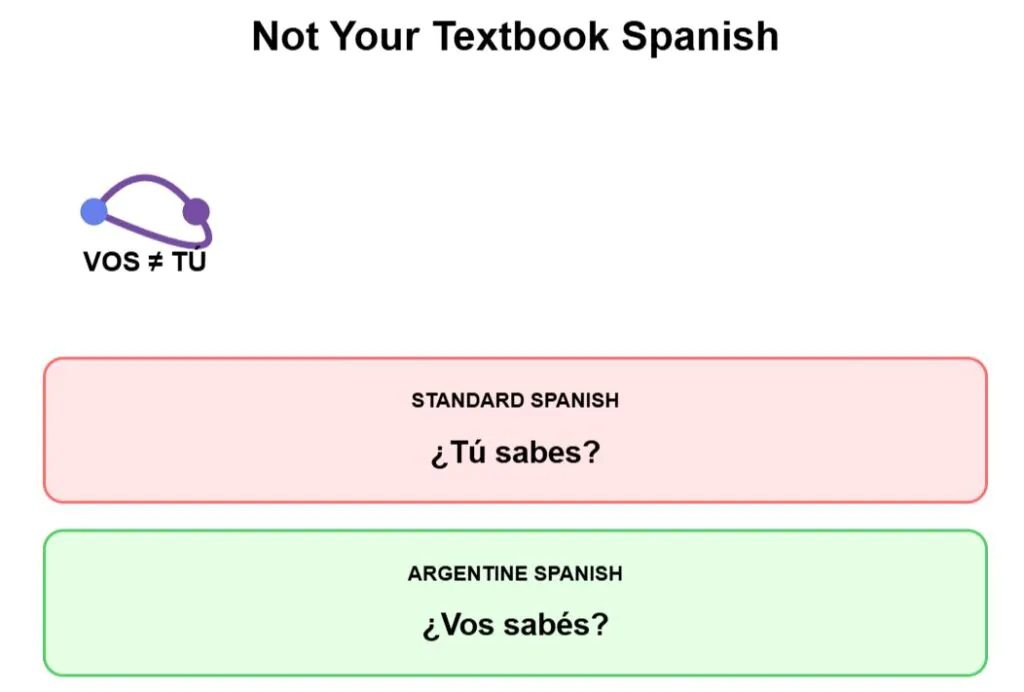
In Buenos Aires, they swear they speak better, but the pronunciation carries Italian influence that changes familiar words — lunfardo slang. Essential Lunfardo terms include “Che” for “hey” or “mate,” “Boludo” as “dude,” “Plata” for money, “Bondi” for bus, and “Quilombo” for mess or problem.
When you face bureaucratic problems — which locals call “quilombo” — you need precise communication. Police interactions, medical emergencies, and legal disputes demand fluency that translation apps cannot deliver.

Legal and financial matters demand professional translation services, adding hundreds to monthly expenses. Social integration remains surface-level without Spanish fluency. The English-only approach traps you in an expensive expat bubble, limiting your experience.
Fortunately, Spanish is a relatively easy language to learn, and one of the best ways to learn it is to have fun. That is why I usually recommend an app called LingQ — you learn while having fun and using content you enjoy.
Lie Number 4: Argentinians are always friendly and open to foreigners.
Argentina’s reputation for warmth and hospitality comes with conditions that most expat guides conveniently ignore.
Travel blogs paint Argentines as universally welcoming to foreign retirees seeking a new life. Argentina’s inflation crisis and currency instability created some financial stress for locals. Openness varies dramatically by location.
Tourist hotspots in Buenos Aires show different dynamics from other large cities, which also differ from residential neighborhoods in interior provinces. Palermo and San Telmo cater to international visitors, creating artificial warmth that doesn’t reflect broader social attitudes.
Recent migration law changes also affect such perception. The 2024 migration decree shortened temporary residencies and increased documentation requirements.
Regional differences create vastly different experiences. Provinces like Salta and Jujuy maintain more welcoming cultures toward outsiders, while southern provinces may show more skepticism toward expats.
Argentines socialize within tight-knit groups developed over decades. You can’t expect instant friendship. Argentine hospitality exists, but isn’t guaranteed.
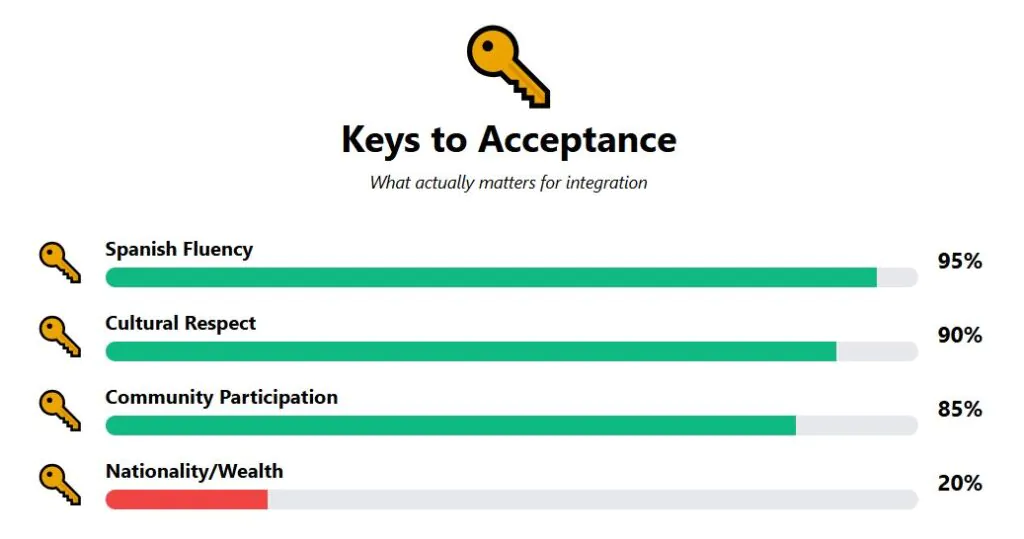
You must earn acceptance through cultural respect. Learning Spanish, understanding local customs, and so on matter more than your nationality or financial status.
Lie Number 5: Argentina is a warm, sunny country year-round.
Argentina spans from subtropical north to frigid Patagonian south — climate varies dramatically by region. The country stretches 3,700 kilometers from Bolivia’s border to Antarctica’s doorstep.
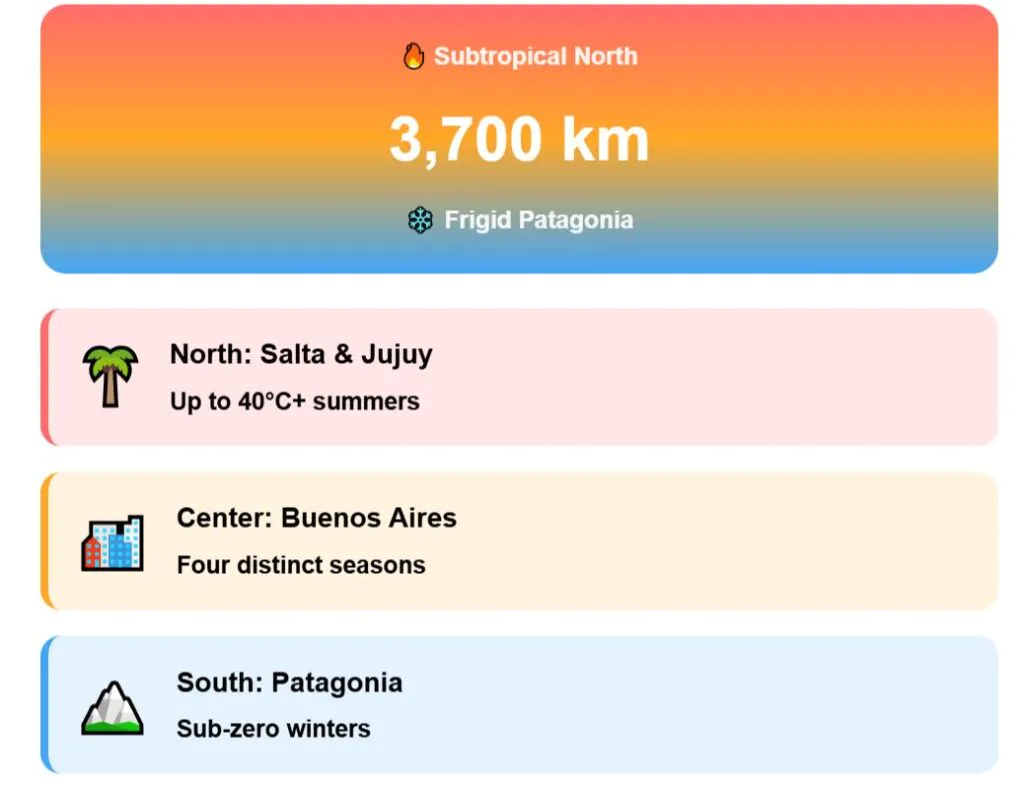
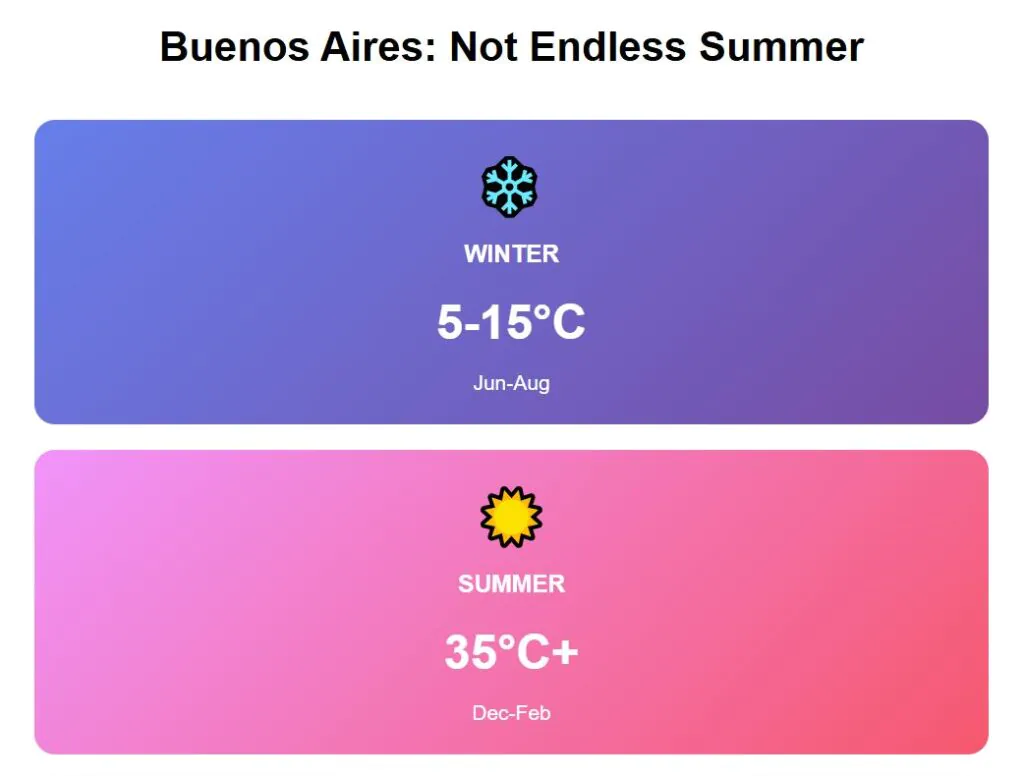
You can’t have consistent weather across such massive geographic diversity — each region brings distinct seasonal patterns and temperature extremes. Buenos Aires has winters dropping to 5-15°C and summers reaching 35°C. The capital gets cold enough to require heating from June through August, and hot enough during summer to turn on air-conditioning.
Southern regions see sub-zero temperatures with brutal Patagonian winds that make heating essential and expensive. Patagonian heating costs consume significant portions of monthly budgets. You need heavy winter clothing, proper insulation, and consistent heating fuel.
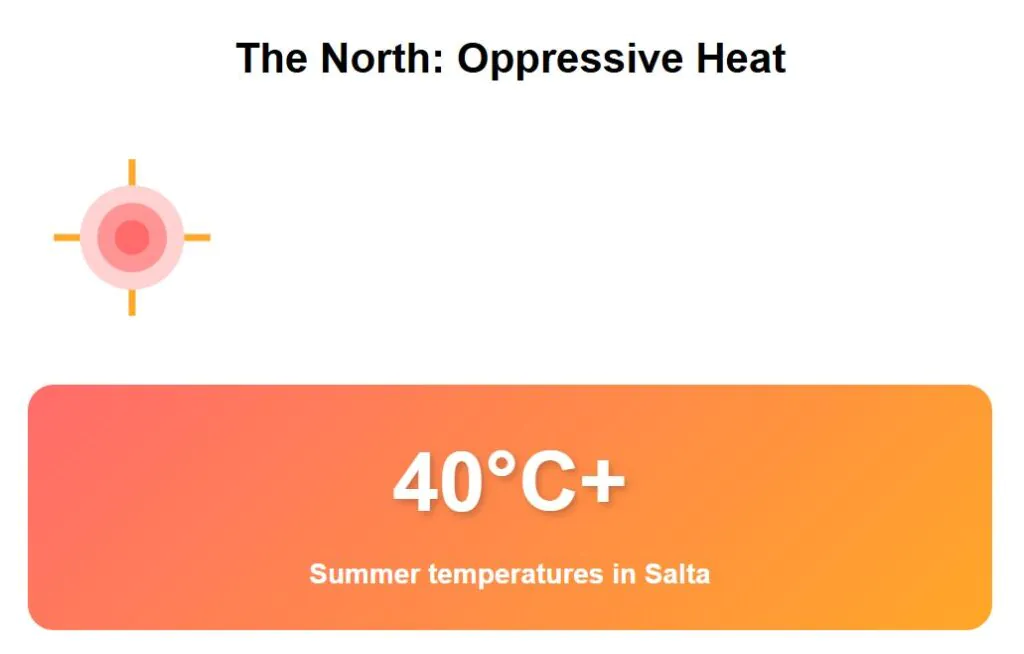
Northern areas battle oppressive heat and humidity with seasonal rains that require air conditioning and dehumidification. Salta and Jujuy provinces reach temperatures above 40°C during summer months. The combination of heat and humidity creates unbearable conditions without cooling systems.
Seasonal rains bring moisture that demands dehumidification equipment. Winter heating bills and summer cooling costs create similar budget shocks.
The uniform warm climate myth leads to poor location choices and inadequate preparation for weather extremes. The warm country assumption can leave you shivering in Bariloche or sweltering in Salta without proper preparation for Argentina’s diverse climate realities.
Lie Number 6: Argentina has so many beautiful beaches.
Argentina’s long coastline creates expectations of tropical scenery similar to Brazil or the Caribbean. But in reality, Argentinian beaches have colder Atlantic waters and temperate, seasonal experiences rather than a tropical paradise.
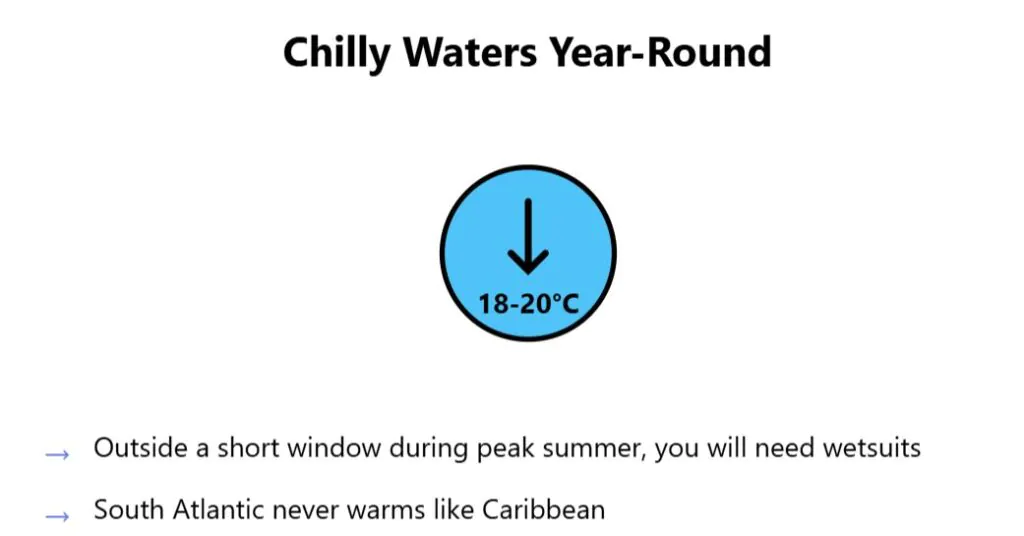
The South Atlantic Ocean doesn’t warm up like the Caribbean or Mediterranean. Water temperatures peak at 18-20°C during summer months — cold enough to require wetsuits for extended swimming. Most beach activities center around sunbathing and walking, not water recreation.
Mar del Plata and coastal resorts crowd with locals only during peak summer months when water remains chilly. Argentina’s most famous beach destination fills with porteños escaping Buenos Aires heat from December through February.
Patagonian coastline provides scenic beauty but water temperatures that never support comfortable swimming — unless your name is Wim Hof. Places like Peninsula Valdés allow for whale watching and dramatic landscapes while the water stays frigid year-round due to Antarctic currents.
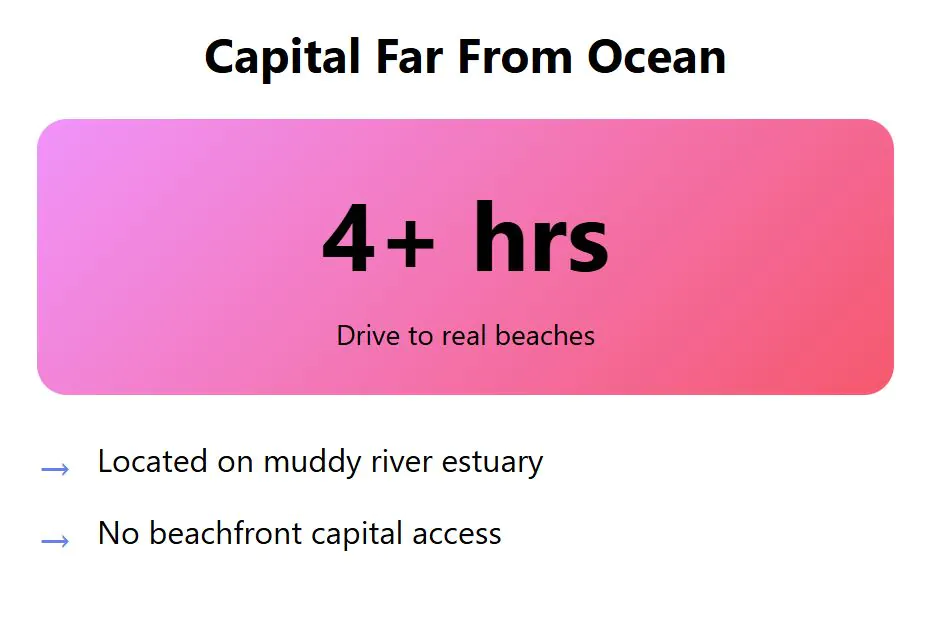
Most beach experiences center around temperate, wind-swept shores that require jackets even in summer. Buenos Aires is located on the Rio de la Plata, not the ocean, limiting direct beach access from the capital. The massive river estuary creates muddy brown water unsuitable for swimming or beach recreation.
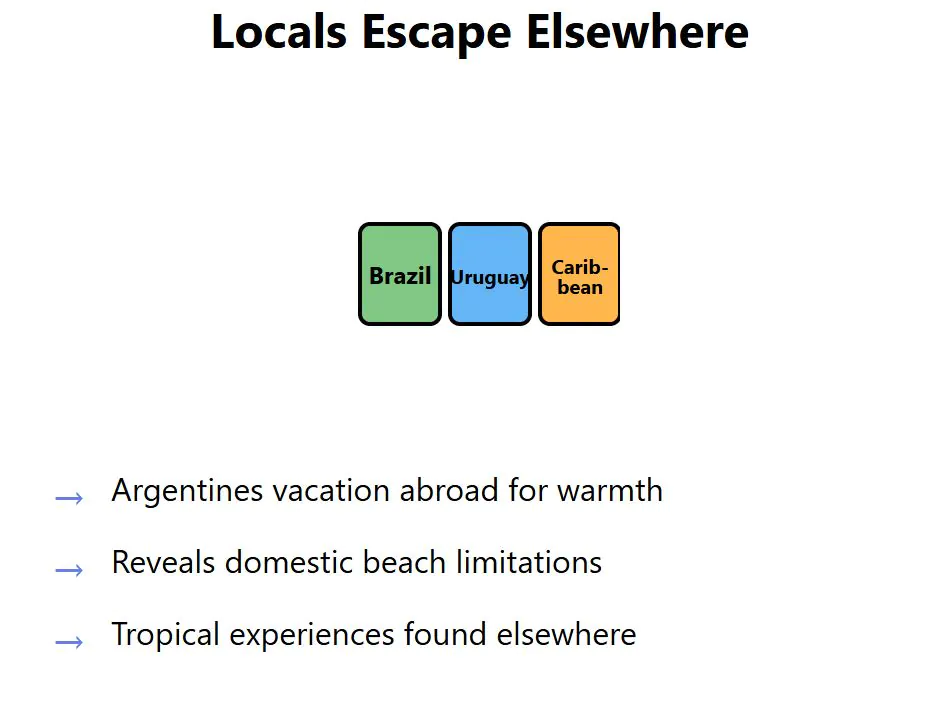
Capital residents must travel hours to reach actual ocean beaches. Locals often travel to neighboring countries for truly warm beach vacations, revealing Argentina’s coastal limitations. Their beaches offer scenic beauty and seasonal recreation, not tropical beach retirement fantasies.
Lie Number 7: It’s easy to integrate because Argentina feels like Europe.
Buenos Aires’ European architecture creates a dangerous illusion that daily life will feel familiar and comfortable. Italian and Spanish heritage plus European-style buildings suggest easy cultural adaptation for Western retirees.
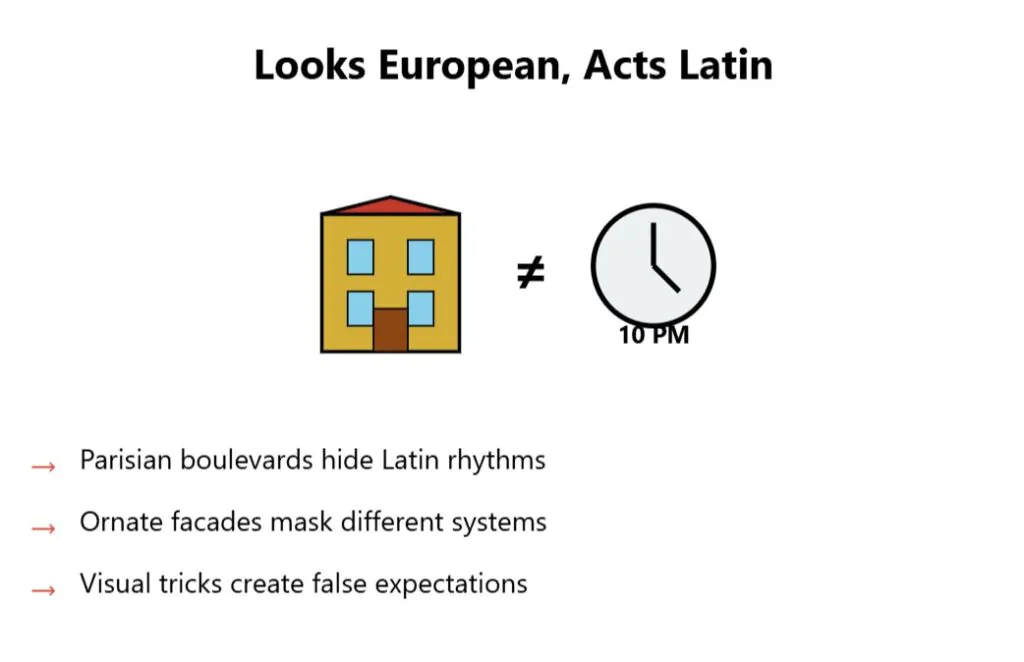
The wide boulevards, ornate facades, and Parisian-inspired cafes make Buenos Aires look like a South American Paris. But beneath the European veneer lies distinctly Latin American social norms, bureaucracy, and service standards.
The architecture might scream Europe, but the culture operates on different principles. You discover this gap the moment you try to accomplish basic tasks like scheduling appointments at a government office.
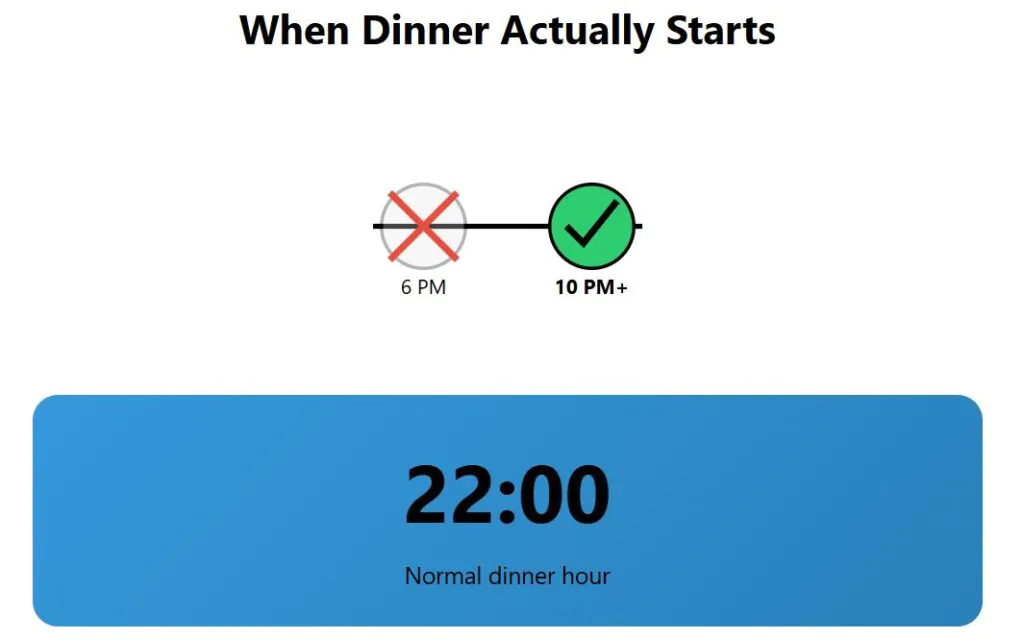
Cultural norms also have big contrasts. Argentines eat dinner at 10 PM or later. You must adapt to late schedules, relationship-focused business culture, and indirect communication patterns.
Direct confrontation gets avoided through elaborate politeness that Europeans and North Americans find confusing. These social rhythms clash with Western expectations of efficiency and directness. Staff prioritize maintaining pleasant relationships over solving problems quickly.
This isn’t bad service by Argentine standards — it’s relationship maintenance that keeps society functioning smoothly. Government offices close for extended lunch breaks and operate shortened schedules.

Banking illustrates this cultural disconnect. The marble columns and elegant interiors suggest Swiss efficiency but deliver Argentine social interaction instead.
Successful integration requires embracing Latin American social rhythms, not expecting European efficiency. The Europe-like assumption leads to frustration and culture shock — Argentina is proudly Latin American despite its architectural aesthetics.

Lie Number 8: You can easily travel the entire country by bus or train.
Argentina’s massive flat terrains suggest comprehensive transportation networks for easy domestic travel. But the country’s rail system died decades ago, leaving you with brutal bus marathons or expensive flights.
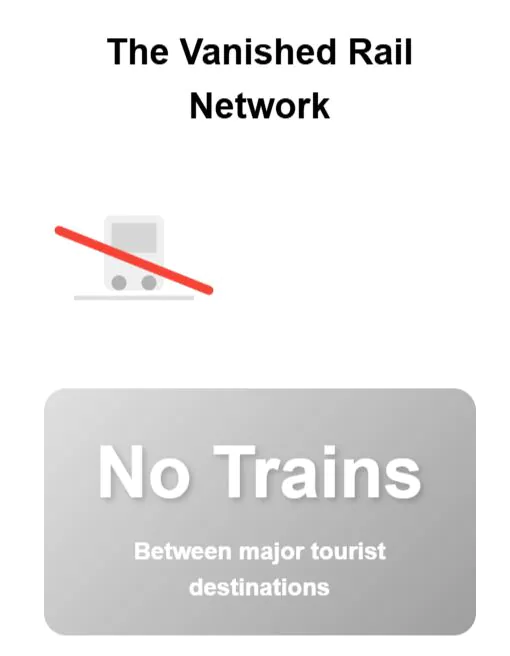
Passenger rail service has collapsed, making cross-country train travel virtually impossible for tourists and residents. Argentina once maintained extensive rail networks connecting most major cities. Political decisions and economic crises destroyed this infrastructure over several decades.
Today, you can’t take trains between Buenos Aires and popular destinations like Mendoza or Córdoba. Long-distance travel relies on bus networks that turn simple trips into endurance tests.
Some trips take over 20 hours by bus. That’s a full day trapped in a moving vehicle crossing Chaco or Patagonian emptiness. Buenos Aires to Salta requires 20 hours through changing landscapes and climate zones. Buenos Aires to Bariloche? 22 hours.
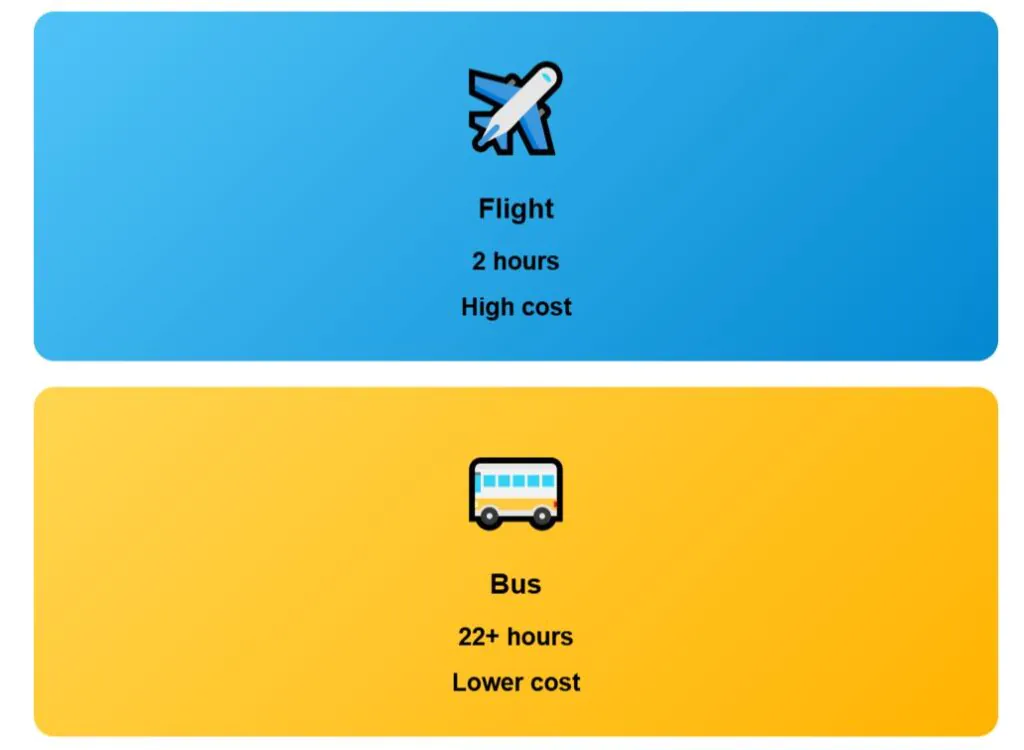
Multi-day bus travel is physically demanding — extended sitting and uncomfortable sleeping challenge physical stamina. Domestic flights provide speed but cost US$200 to US$300 for routes that should be affordable rail journeys.
Limited transportation options restrict location flexibility and increase travel costs. Geographic isolation between regions makes it difficult and expensive to travel inside Argentina.
The easy travel myth ignores infrastructure reality — Argentina’s size becomes a liability without functional rail connections linking its scattered population centers.
Lie Number 9: Argentinians are very critical of their country.
Expat forums describe Argentines as uniformly negative about their country, suggesting easy bonding over shared complaints. But… Argentine patriotism runs deep, with passionate responses to sports, culture, and history that contradict the critical stereotype.
Watch any World Cup match or witness discussions about asado, Perón, or the Malvinas. The pride becomes unmistakable when Argentines defend their cultural achievements or discuss their country’s natural beauty.
Argentines complain about inflation, corruption, and government failures while maintaining deep love for their culture and identity. Reactions to events like the crisis of 2001 get misinterpreted as a permanent national character rather than situational responses.
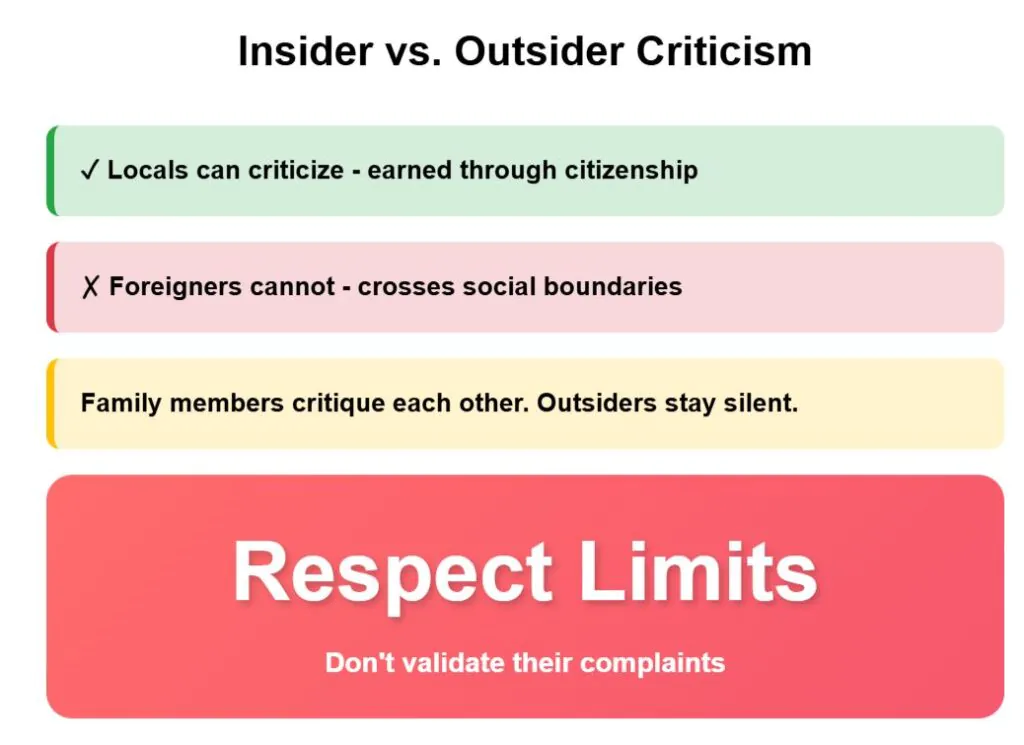
The economic collapse created temporary despair and anger that visiting foreigners witnessed and recorded. Criticism comes from love of country, not self-hatred — locals can critique while outsiders cannot.
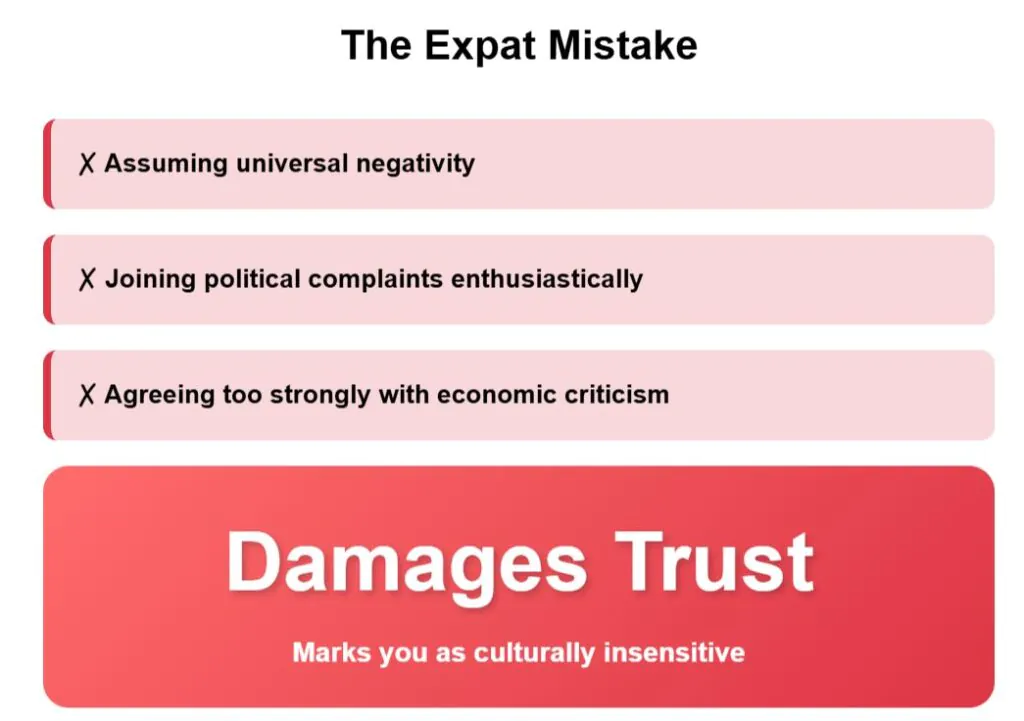
Argentines earn the right to complain through citizenship and shared struggle. When foreigners join these conversations, they cross social boundaries that damage relationships. Family members can criticize each other, but outsiders cannot.
Listen more than you speak when political discussions arise. Show respect for Argentine achievements while acknowledging their frustrations without adding your own criticism.
Lie Number 10: You don’t need to tip in Argentina.
Some travel guides suggest tipping is unnecessary or minimal in Argentina compared to North American standards. These sources claim Argentine service culture doesn’t expect gratuities like restaurants in the United States or Canada.
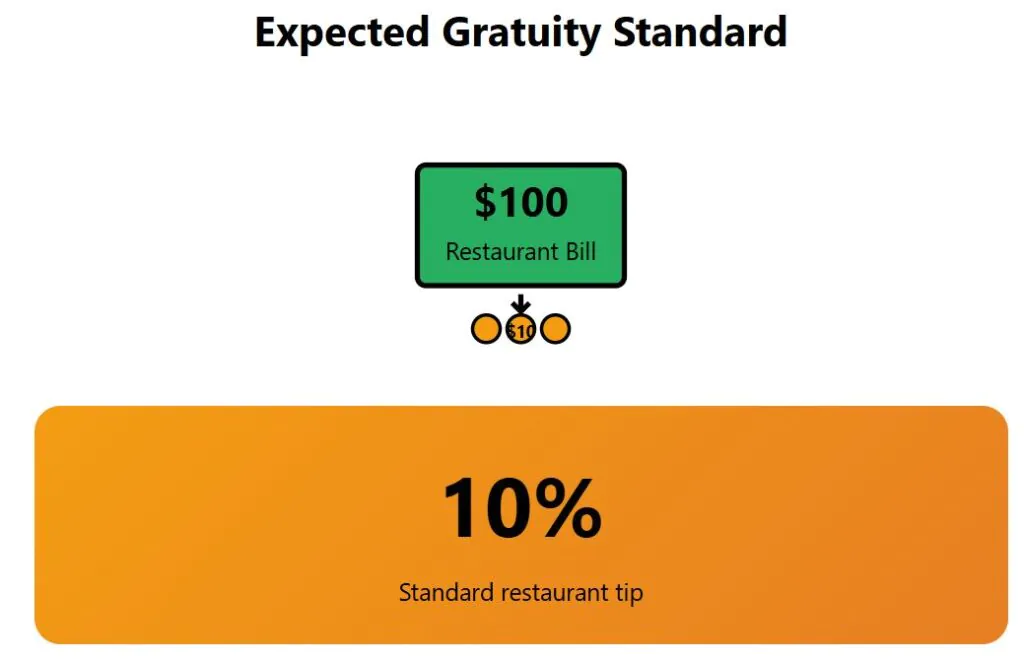
Not true. Tipping remains customary in Argentina’s service economy, especially for cash-dependent workers. Restaurant service workers expect 5 to 10% when service charges aren’t included.
You’ll see locals leaving tips at cafes, restaurants, and bars throughout Buenos Aires and other major cities. Workers remember customers who tip well and provide better service on return visits. Stiffing workers damages your reputation and future service quality.
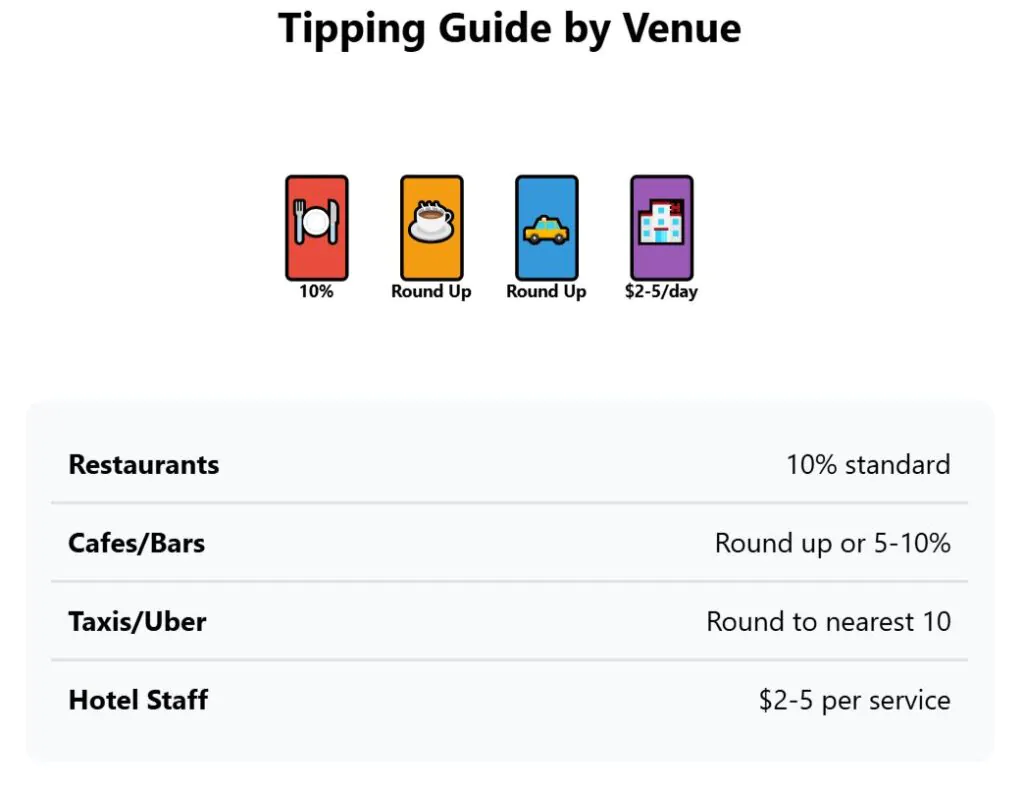
Word spreads in service communities about customers who don’t tip appropriately. Rounding up bills or modest tipping shows cultural awareness and respect for local economic realities.

You don’t need to match North American tipping rates, but complete avoidance will not help you to socialize or even have a place to sit the next time you visit that café.
And Argentina has wonderful cafés, just like entire South America. I saw many of them personally during my 26 years living in that part of the world, and that is why I selected for you the best cities in South America in one of our most important articles ever.
Levi Borba is the founder of expatriateconsultancy.com, creator of the channel The Expat, and best-selling author. You can find him on X here. Some of the links above might be affiliated links, meaning the author earns a small commission if you make a purchase.