Buy in Portugal!!” “Move to Spain!!” “France is incredible for retirees!!” And look, those places have a huge appeal. But I’ve lived in Europe for nearly a decade now, and I’ve bought property here more than once.
Over the years, I’ve watched too many expats make devastating financial mistakes. Take Spain, for example. An American finds a stunning apartment, buys it, lives there half the year, and decides to rent it out while he is back home in the US. But when he returns, he discovers that Spain’s legal system makes it incredibly difficult — and expensive — to evict a non-paying occupier.
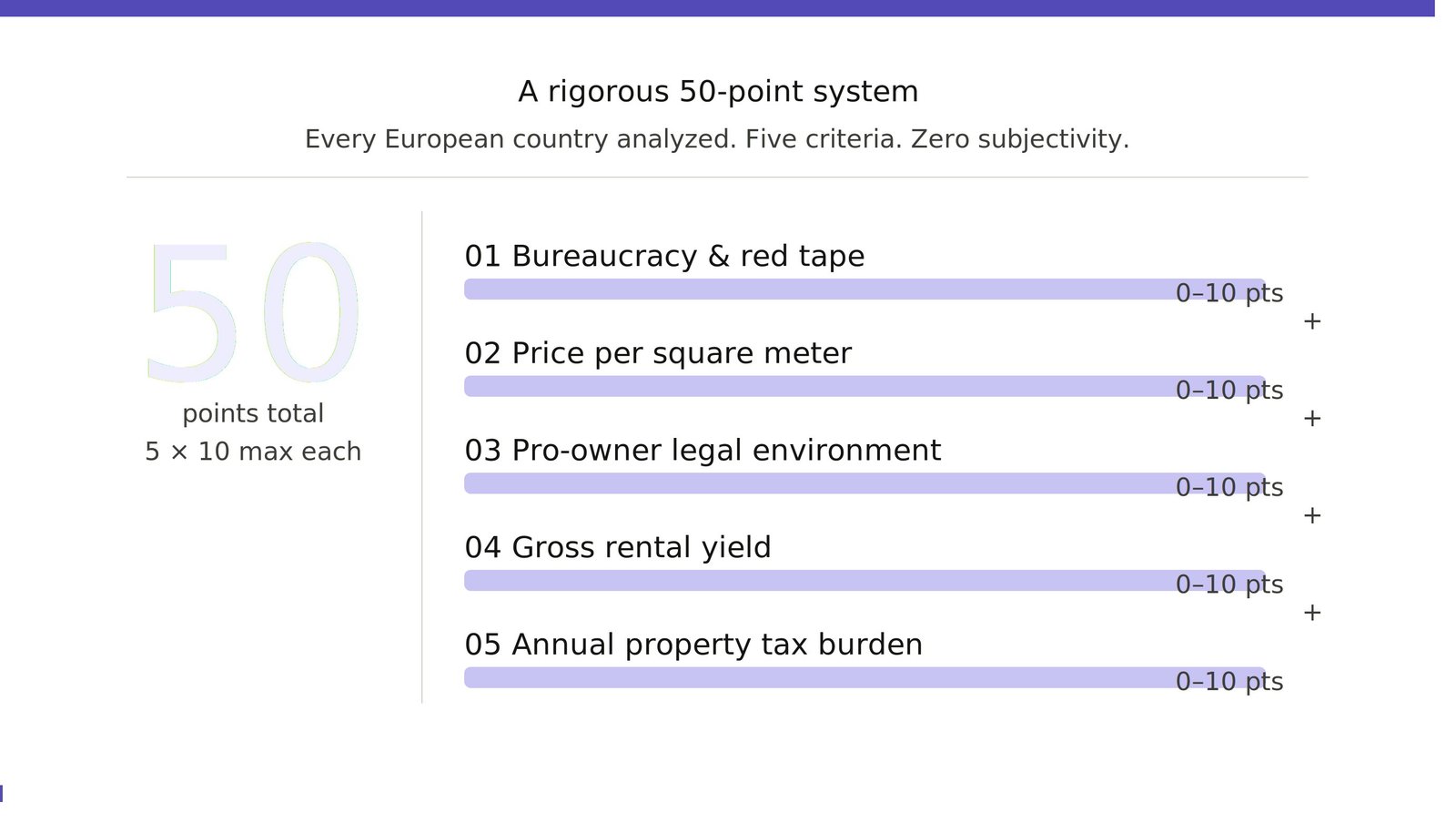
The good news, however, is that those issues are not everywhere. You just have to know where to look. To find the safest, most profitable countries to buy property, our team analyzed every country in Europe. We built a rigorous 50-point scoring system using five objective, financial, and legal criteria. Then we found the 15 best.

The Criteria
Five criteria. Each scored from zero to ten. Fifty points total. That’s it.
The first criterion is bureaucracy, because how long it actually takes to buy a property, and how much paperwork a foreign buyer faces, directly affects your cost and stress level. The second is price per square meter, scored on a straight inverse scale, so lower prices score higher. For each country we chose a mid-sized city that is also attractive to expats to serve as a proxy for real estate prices.
The third is the pro-owner legal environment, which tells you what happens if a tenant stops paying and won’t leave. The fourth is gross rental yield, which is simply the rent a property generates divided by its purchase price, expressed as a percentage.
The rental yield matters because if, after buying a European property, you want to spend a few months back in your country, renting it out during that time helps to cover costs. The higher the percentage of the rental yield, the more rent you can generate if you decide to rent it out.
The fifth criterion is the annual property tax burden. This scoring system doesn’t care about the weather or the food. So, time to go for the ranking.
Join my Patreon for all the sources and charts from our videos, plus access to specialized reports, and an algorithm that will help you define the best country for you! patreon.com/The_Expat
15th Place: The Country Most Americans Dream About Has Almost Impossible Evictions
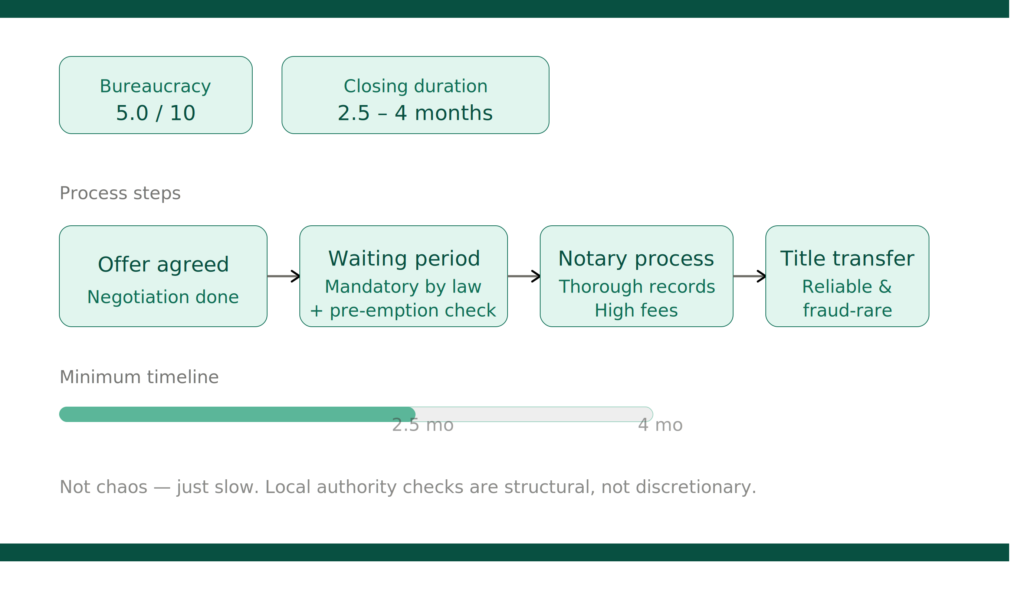
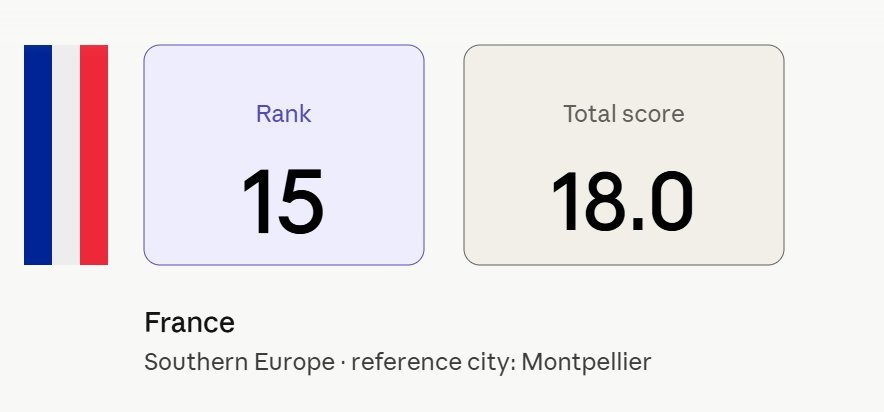
France sits at number 15, and I want to be fair about why. Let’s talk about bureaucracy first. Closing takes a minimum of around four months because of mandatory waiting periods and local authority pre-emption checks built into the law — it is slow, and notary fees are quite expensive.
Our reference city is Montpellier, where real estate costs around $4,000 per square meter. Montpellier, despite not being expensive for French standards, is the most expensive city in this top 15 — so for the price factor it gets just 1 point.
The rental yield is around 4.0%, and the annual tax burden is not small. The taxe foncière alone runs between €1,200 and €1,600 per year for a typical apartment, and once you add communal charges and refuse collection, you’re looking at closer to €1,800.
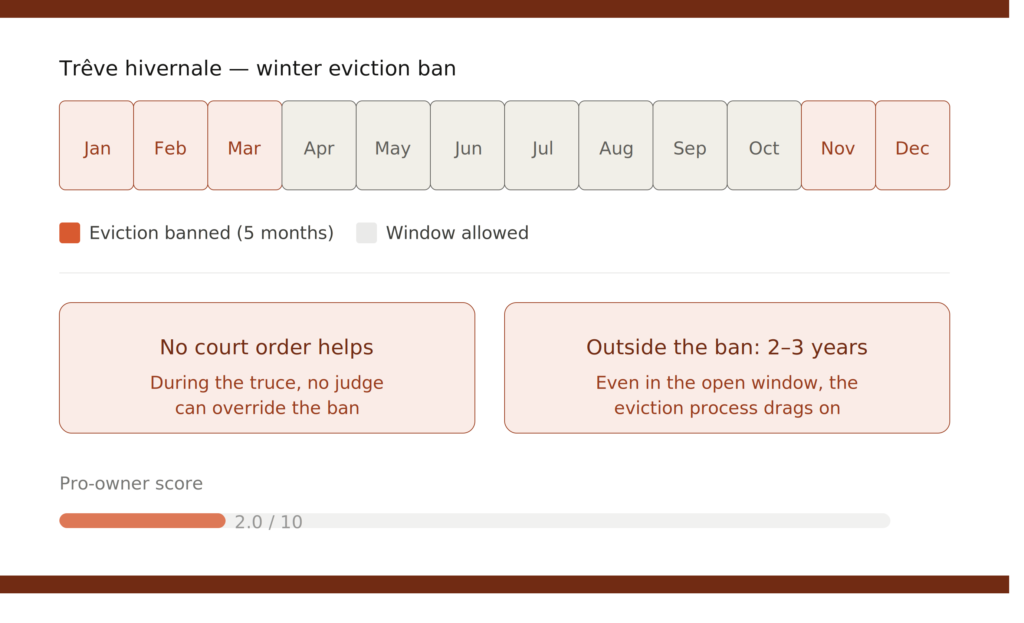
The pro-owner score is just 2.0 out of 10, and this is where it gets really uncomfortable. France has a law called the trêve hivernale — the winter truce. Between November 1st and March 31st, you cannot legally evict a non-paying tenant. No court order or amount of unpaid rent changes that. That’s five months every single year where the law ties your hands completely, and outside that window the eviction process still takes two to three years.
If you plan to live in France full-time and never rent it out, then this is not a problem for you. On the brighter side, the property title system in France is very dependable. The records are reliable, and title fraud is almost unheard of. That kind of legal security is very good but does not compensate for everything else on our scorecard, so France scores 18.0 points.
Despite all this, there are lovely cities in France where the cost of living is impressively low for the quality of life they deliver. We’ve previously covered the 10 best French cities.
14th Place: A Good Country Where a Squatter Can Ruin Your Year
Spain is probably the country everyone would expect in such rankings, and I get it. But our scoring system strips the “sunny bias” away — and what’s left has a serious problem.
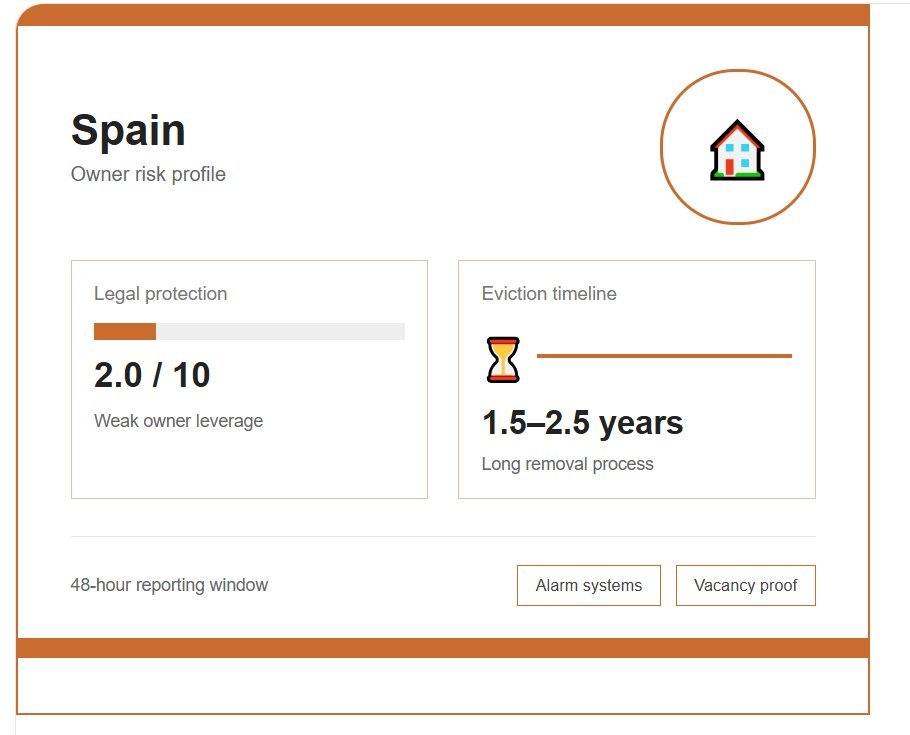
Spain has a well-documented squatter crisis — the okupas — where unauthorized occupants take over a property. If you don’t report the intrusion within 48 hours, the judicial process to remove them drags on for 1.5 to 2.5 years. Spanish real estate lawyers now routinely advise foreign buyers to install specific alarm systems and document their property’s vacancy status before they even move in (yes, just to protect a property you already legally own). The pro-owner legal environment gets only 2 points, one of the lowest in our ranking.
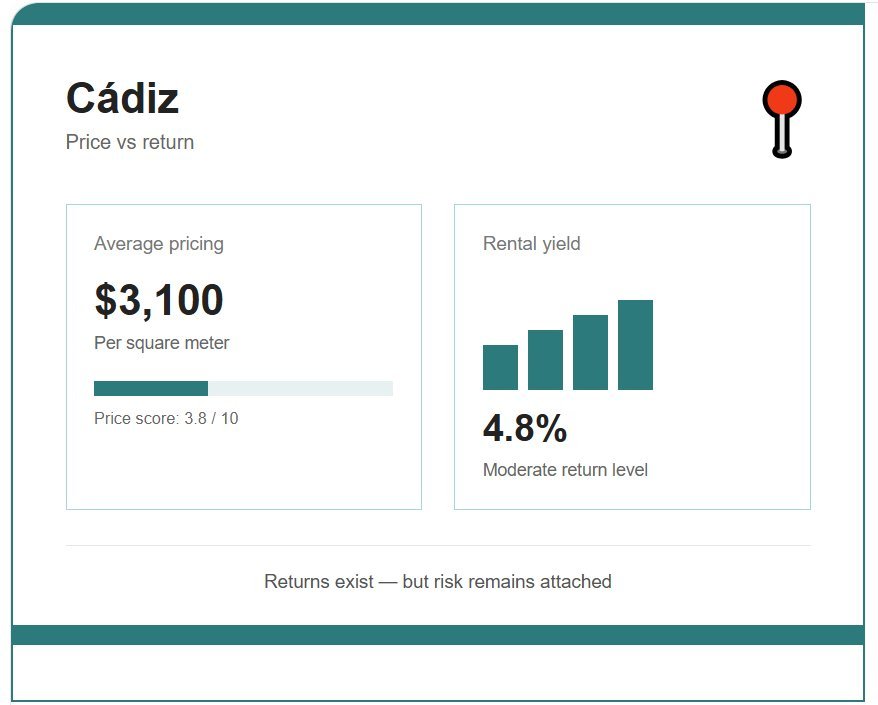
Our reference city is Cádiz, where prices average $3,100 per square meter. Rental yields are around 4.8% — which is just moderate, at best.
Bureaucracy is not bad — there is some paperwork, but the process is standardized and manageable. In terms of taxes, the IBI municipal tax is around €600 to €900 per year, and once you add communal fees and refuse collection, total annual costs can reach €1,200.
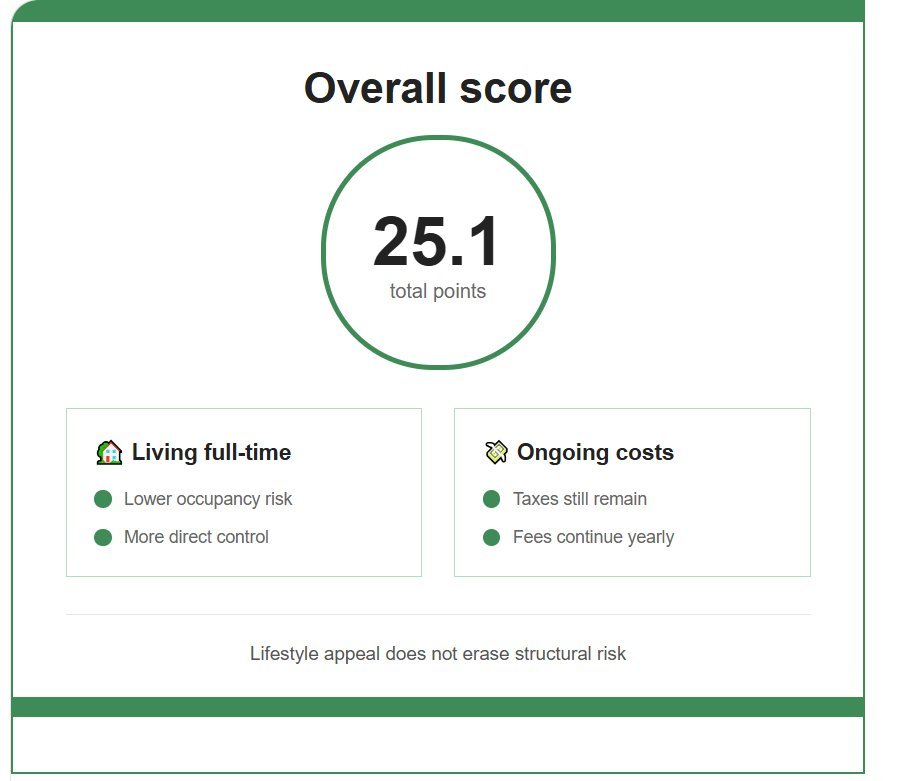
Spain scores 25.1 points. If you plan to live there full-time and never rent it out, the legal risk shrinks — but the tax burden doesn’t move.
13th Place: Beautiful Coastline, but Huge Paperwork
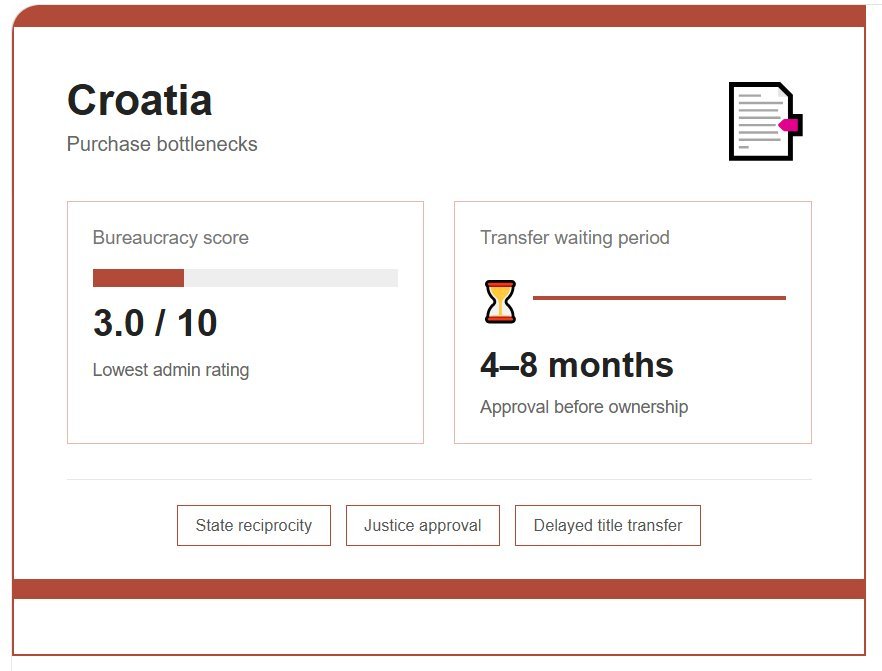
Croatia joined the Eurozone in 2023 — no more currency risk for foreign buyers. But Eurozone membership didn’t touch the bureaucracy, and that’s where Croatia loses points fast.
If you’re an American buyer, you first have to prove “reciprocity” between Croatia and your specific US state, and then you need approval from the Ministry of Justice. That process takes 4 to 8 months. You’ve paid your money, but you don’t legally own the property yet — and there’s nothing you can do to speed it up.
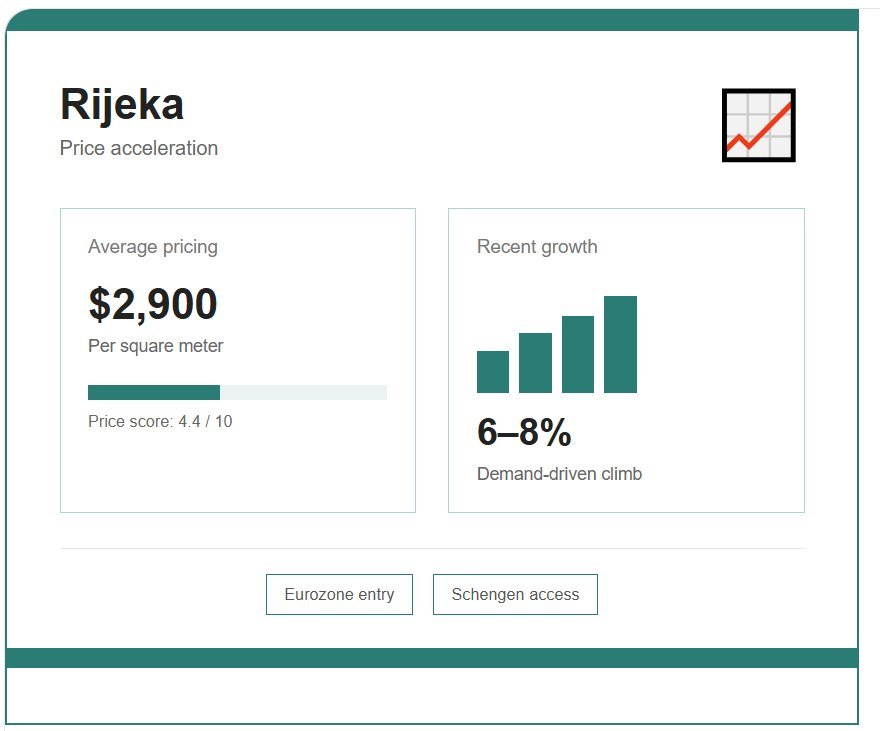
Rijeka, our reference city, has home prices around $2,900 per square meter, with prices climbing 6 to 8% in the past year alone, driven by Eurozone and Schengen entry pulling in foreign demand.
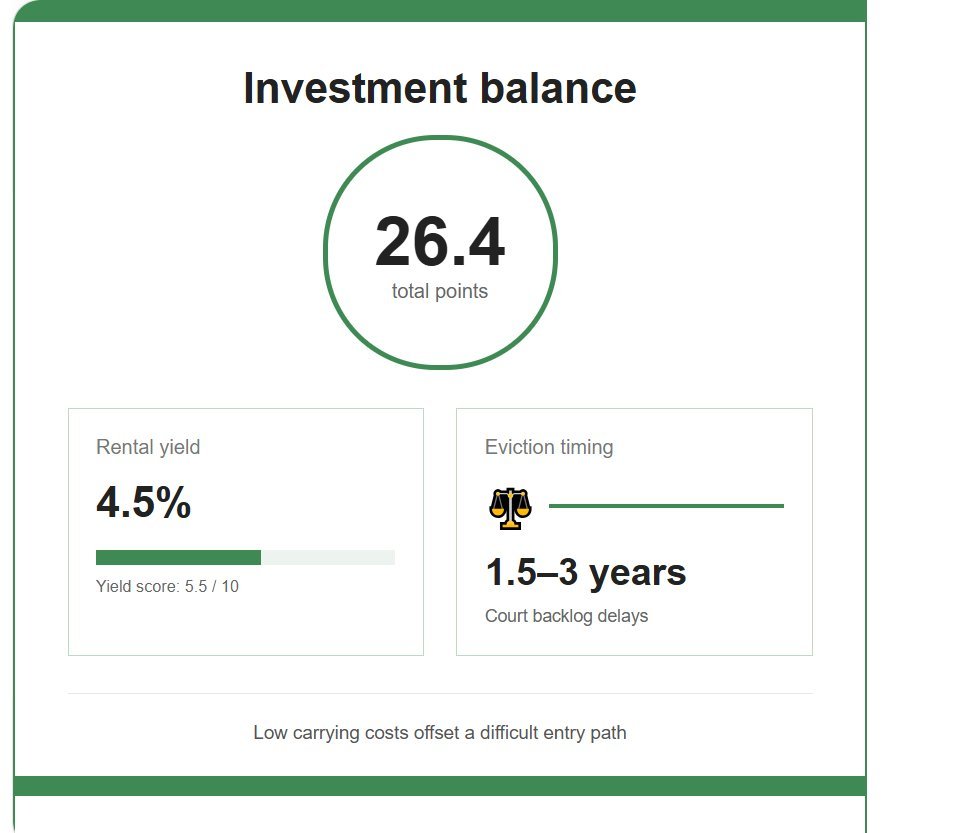
In the tax factor is where Croatia shines — it got 9.5 points out of 10, because ongoing ownership costs are minimal, typically €150 to €250 per year for a mid-range apartment. The rental yield in Rijeka is on average 4.5%, so it is just average, at best. Evictions take 1.5 to 3 years due to court backlogs.
Croatia’s total score is 26.4 points. Low holding costs reward you — but only if you survive the purchase process first.
12th Place: A Country That Was Cheap (But No Longer is)
From Croatia we go to a country that has almost no annual property tax at all.
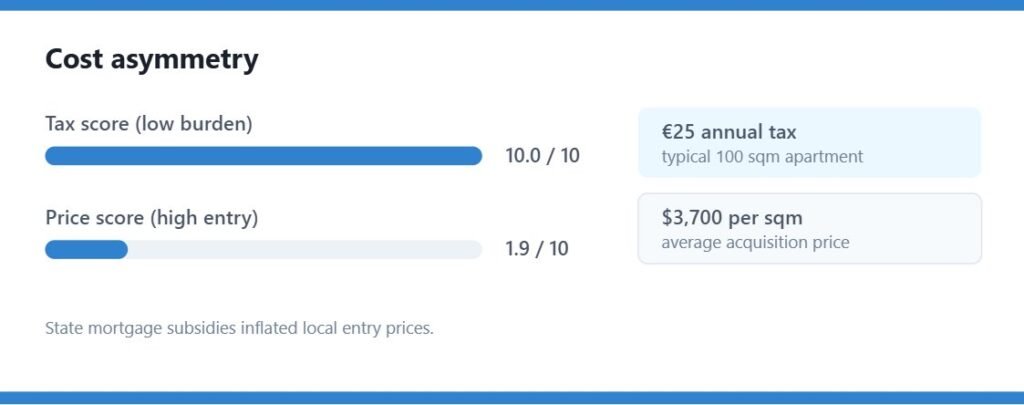
Poland’s annual property tax on a 100 square meter apartment in Gdańsk? About €25 a year. Not per month. Per year. To put that in context, a comparable apartment in New Jersey would cost you $8,000 to $12,000 a year in property taxes. That earns Poland a perfect 10.0 out of 10 on our tax burden metric.

But Poland also has one of the highest entry prices on this list — an apartment in Gdańsk costs around $3,700 per square meter, so on the price factor it gets just 1.9 points. A government mortgage subsidy program (the “2% Credit” initiative) pushed domestic demand up, causing prices to rise up to 15% higher than they’d otherwise be.
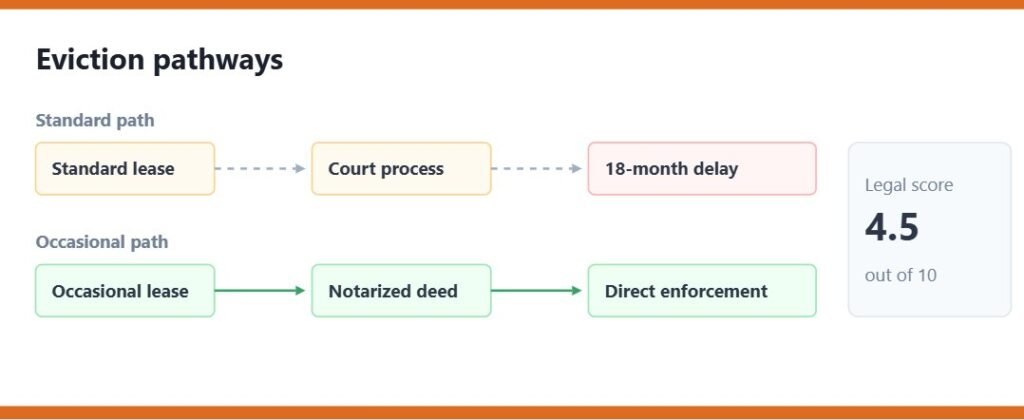
The legal environment for landlords is also not friendly. Polish tenancy law protects certain categories of tenants so strongly that eviction through a normal court can drag on for 18 months or more. But there’s a type of contract called the Occasional Lease — or Najem Okazjonalny — where the tenant declares another property they can move to if evicted. In these cases it is much faster to enforce eviction.
Not every tenant will agree to sign one, but if you’re renting part-time while abroad, getting that signature before they move in is non-negotiable.
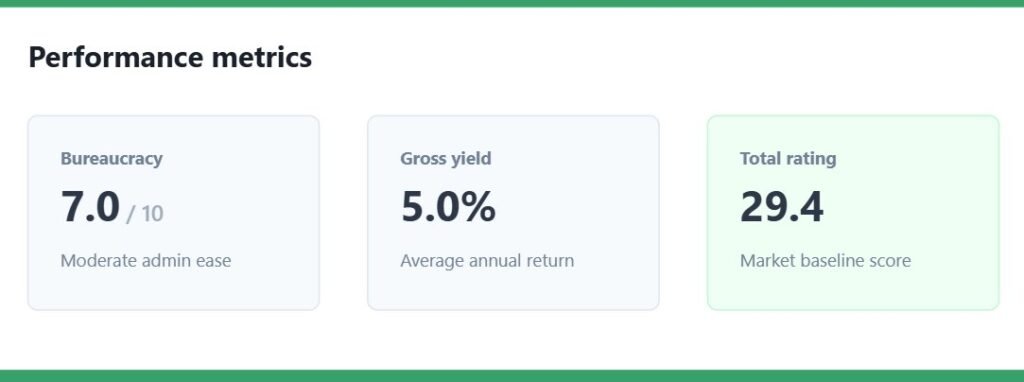
Bureaucracy for a landlord is moderate, and the rental yield in Gdańsk averages 5.0%, so nothing extraordinary, but not terrible. One more risk that doesn’t appear in the score: currency. You’re buying in Polish złoty, and the USD to złoty rate has swung a lot recently.
Poland scores 29.4 points — a market that was once cheap, but now has prices close to Germany, and where laws favour tenants.
11th Place: The Hyped Place (Until Laws Changed)
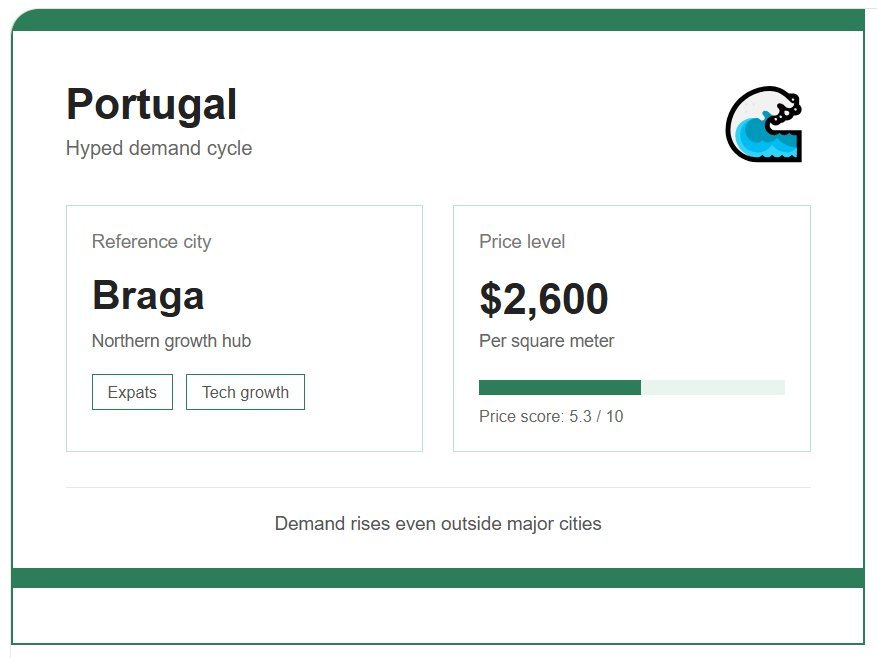
Portugal has been all over the internet for the past decade. The NHR tax regime, the D7 visa, the Golden Visa — there’s been a whole system built around pulling foreign buyers in.
Braga, our reference city in northern Portugal, costs on average $2,600 per square meter. Prices there climbed 6 to 8% in the past year alone, driven by Brazilian and North American expats looking for alternatives to Lisbon and Porto.
The rental yield averages 5.5% — one of the better yield numbers among EU markets on this list, so we give Portugal 7.5 points in this factor. To buy, you’ll need a NIF number, a notarial deed, and land registry enrollment, taking 60 to 90 days.
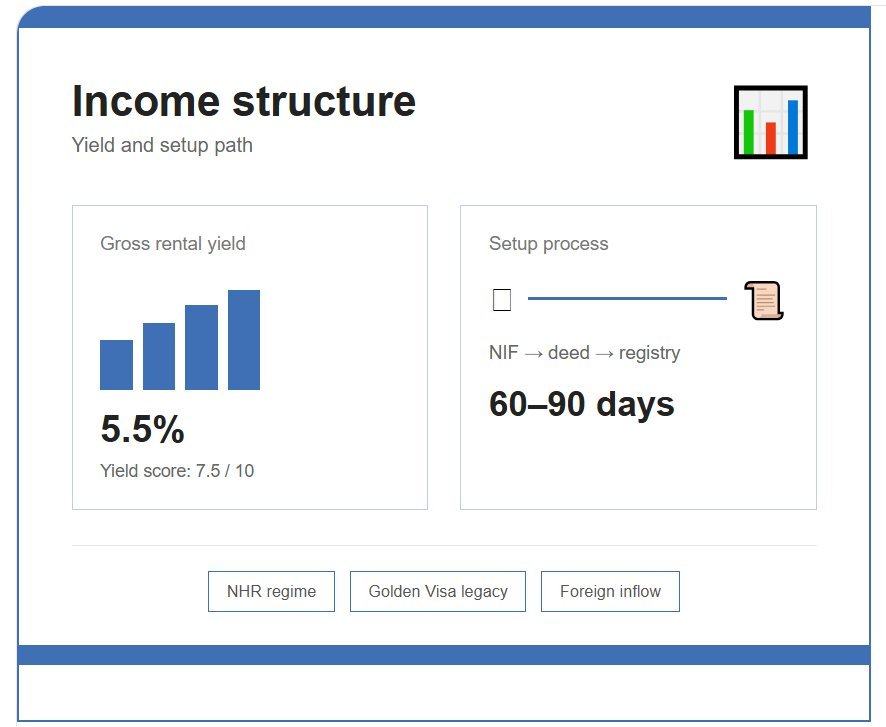
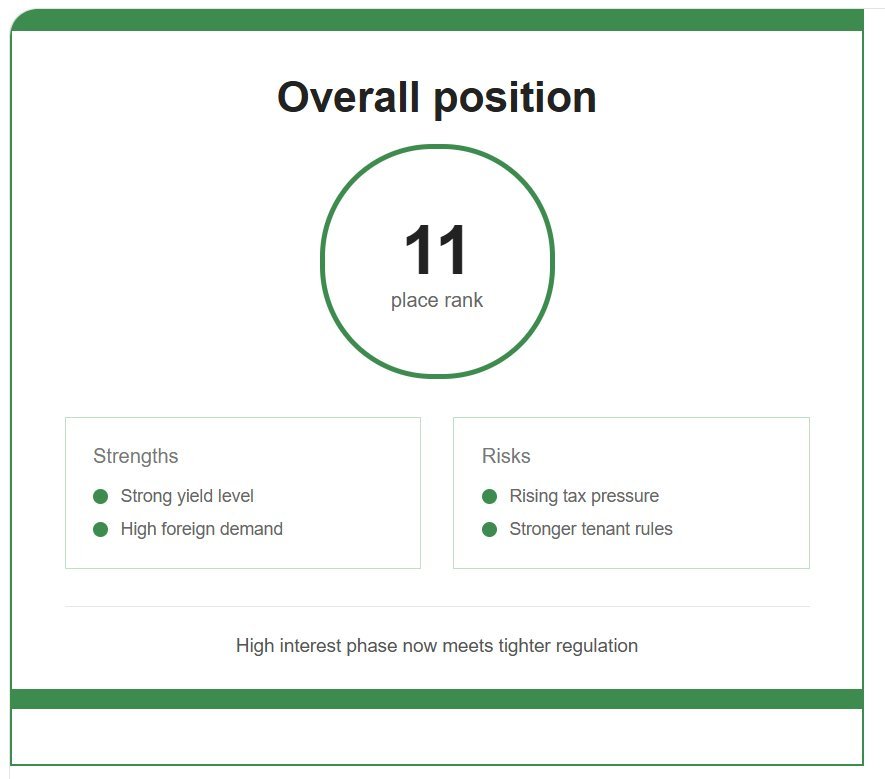
Property taxes (the IMI) are not very high, so it gets 7.5 points on that. However, in terms of legal protection, Portugal gets just 3 points. Portugal has a national rental arbitration system called the Balcão Nacional do Arrendamento, created specifically to speed up evictions. In practice, it still takes more than 18 months to resolve a dispute with a non-paying tenant.
In total Portugal gets 29.8 points and the 11th place.
10th Place: The Tax Exemption That Changes Everything
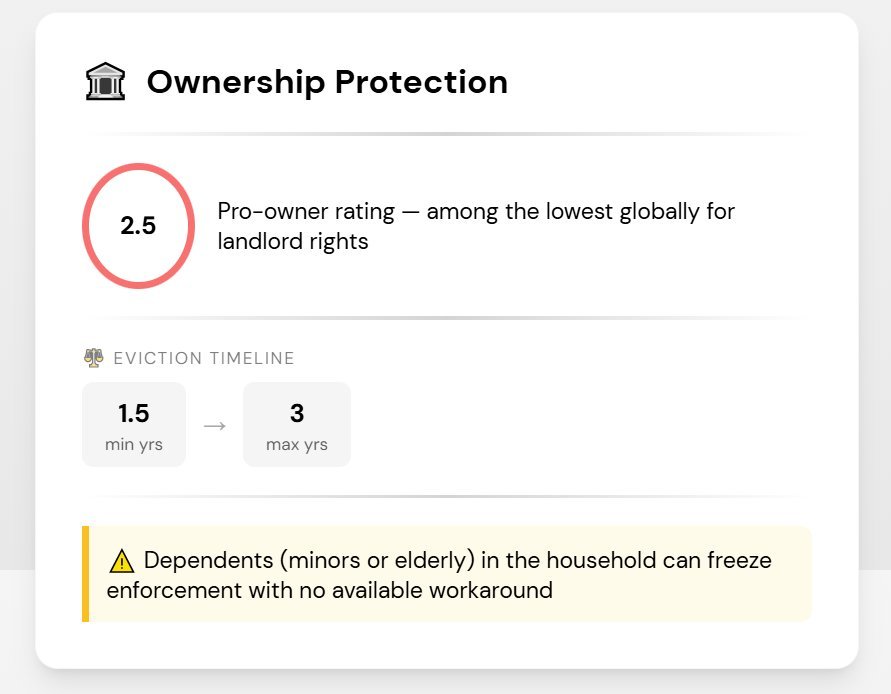
Let’s first talk about the downsides of Italy, like the pro-owner score of just 2.5 out of 10. The formal eviction process — the sfratto per morosità — takes from 1.5 to 3 years through the standard courts. And if your tenant has minors or elderly dependents, social services can block evictions.
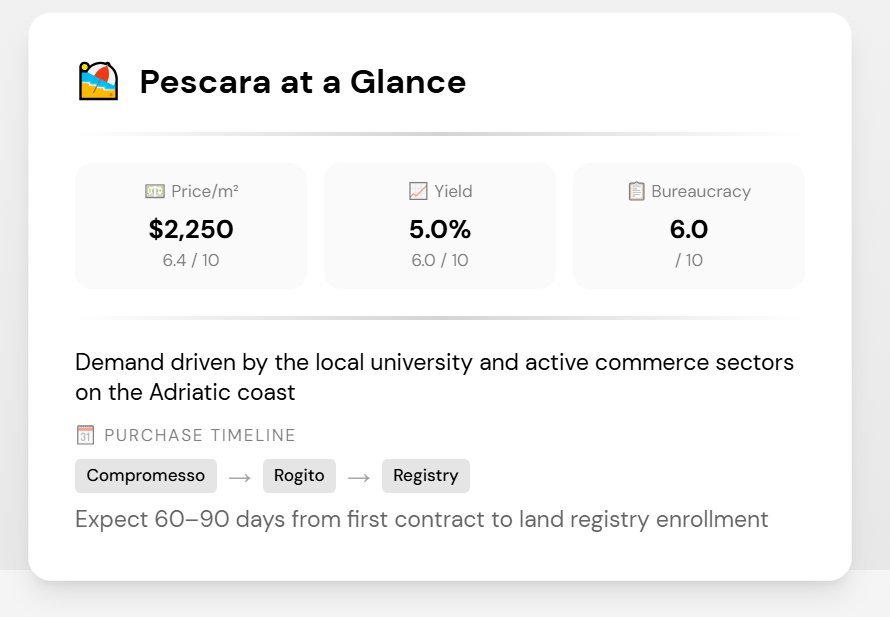
Now back to the good part. Pescara, our reference city on the Adriatic coast, has an average home price of just $2,250 per square meter — 6.4 out of 10 on price. Italy outside Rome, Milan, and Florence is far more affordable than most people assume. Rental yields in Pescara average 5.0%. While bureaucracy requires paperwork, it does not take more than 3 months for all formalities.
Now the best part: if you live in Italy year round, Italy’s main property tax, the IMU, doesn’t apply to your primary residence under the Prima Casa exemption. Under the same Prima Casa program, your transfer taxes also drop from 9% to 2% of the home value. The only major mandatory tax left is the TARI garbage collection fee — usually less than €350 a year.
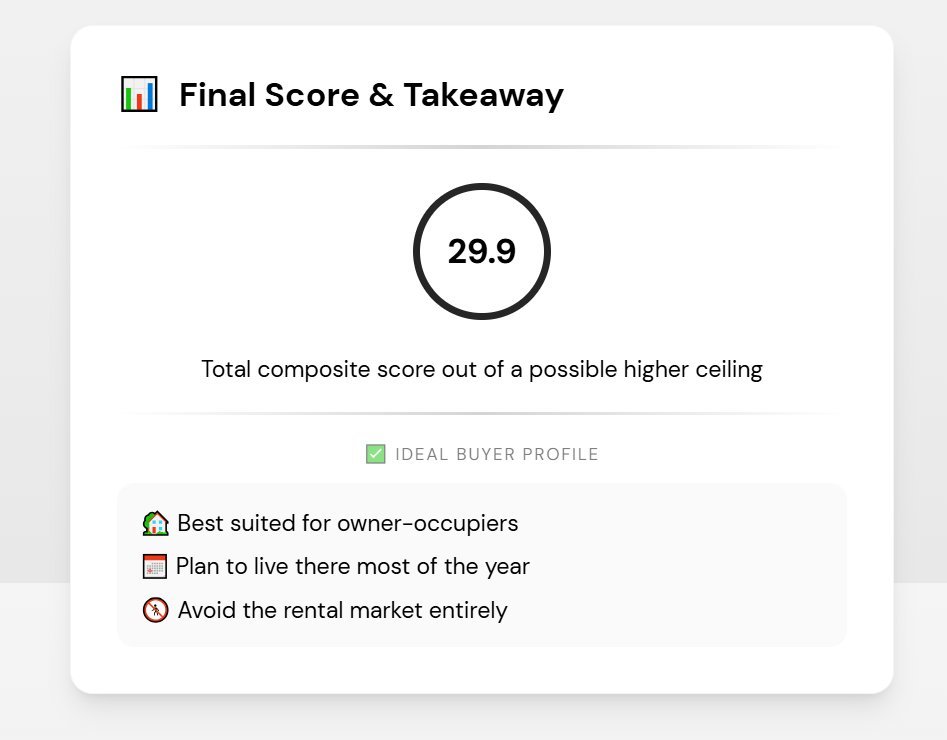
In total Italy scores 29.9 points — a market that is good for buyers who plan to live there most of the year and stay out of the rental market entirely. The most curious thing about Italy is that, despite the issues, there is currently a rush of international buyers looking for property there.
9th Place: The Quiet Market That Almost Nobody Talks About
Slovakia does not appear in most expat property articles. It’s not a beach destination, it’s not a Golden Visa country, and it doesn’t have the name recognition of its neighbors.
Košice, our reference city in eastern Slovakia, is the country’s second-largest city, home to a growing IT sector and two large universities that keep rental demand stable year-round.
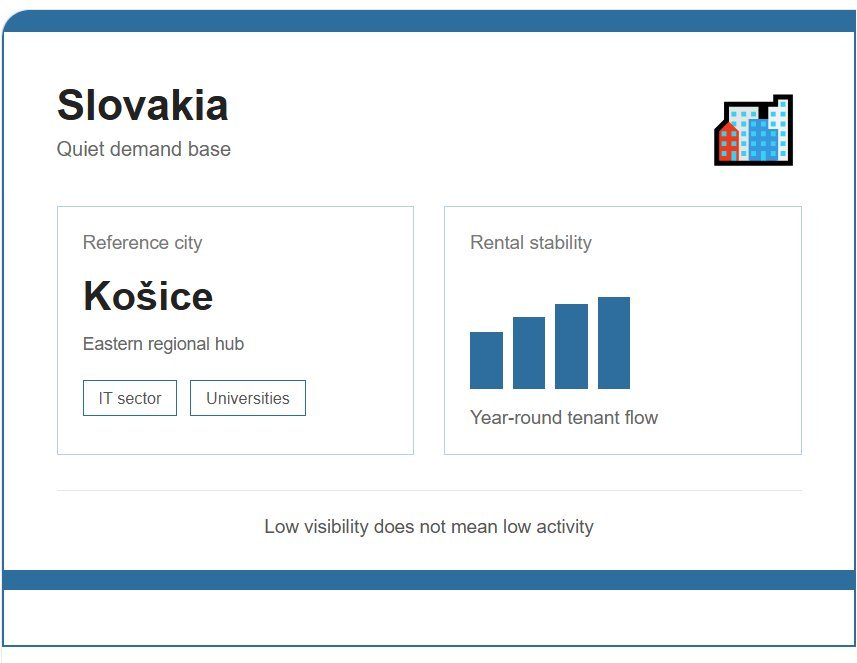
The annual property tax on a mid-range apartment? Less than €80 a year — so it gets 10 points in the tax factor. The purchase process is also relatively fast — taking less than 30 days. Slovakia is the only country in Central Europe that allows foreigners to buy property with almost no restrictions.
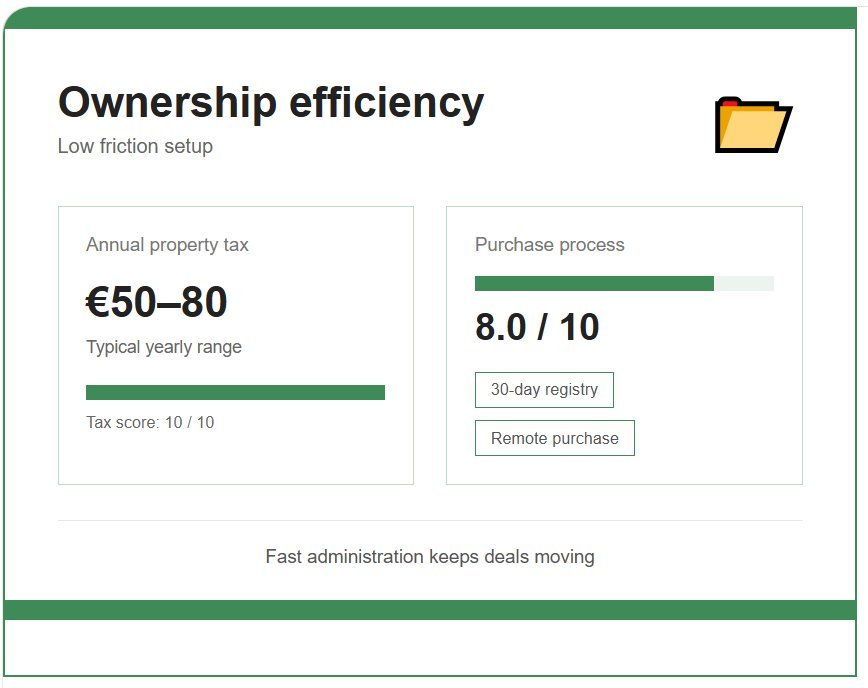
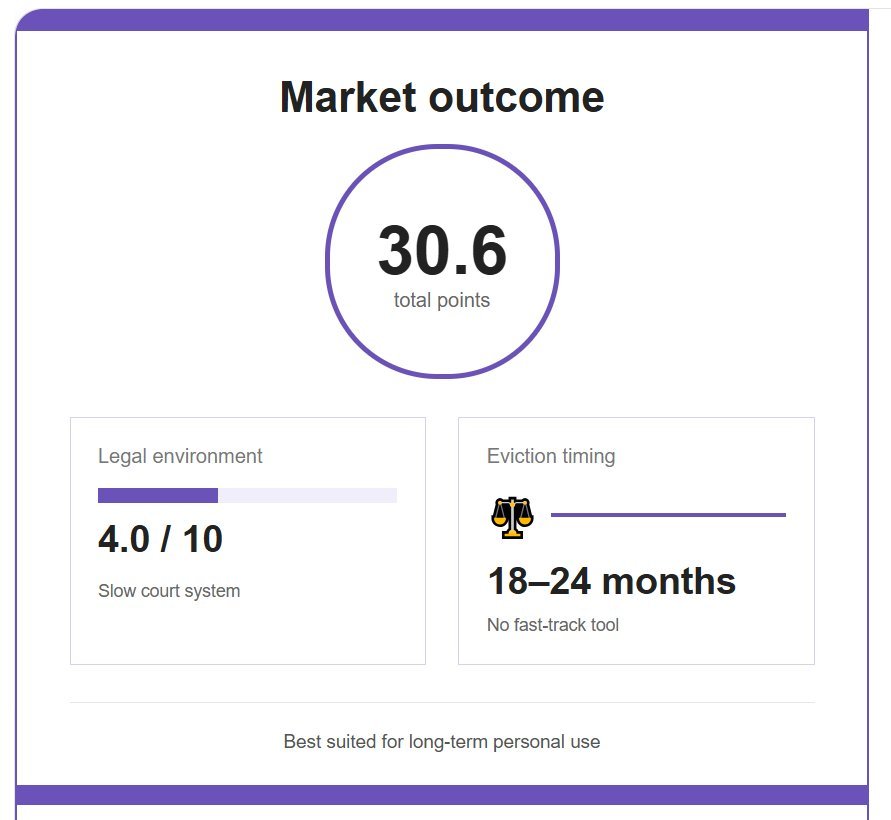
Just like in Poland, home prices in Slovakia increased drastically, close to western levels. That price increase pushed rental yields down to 4.5% per year. Regarding pro-owner laws, Slovak courts are slow, evictions take 18 months to two years, and there’s no fast-track mechanism. The pro-owner legal environment gets 4.0 out of 10; and in total, Slovakia scores 30.6 points — a market very similar to Poland, where prices increased drastically, but still has some positive sides.
For all the sources, charts, and maps behind this ranking, plus a private community where we answer your questions directly, consider joining us on Patreon.
8th Place: The Market That Looks Better Than It Scores
Greece has been pulling in foreign buyers for decades, and the Golden Visa program — granting residency if you purchase certain properties — has added a whole new wave of international interest. But our scoring system doesn’t reward residency programs. It rewards what happens after you own the property.
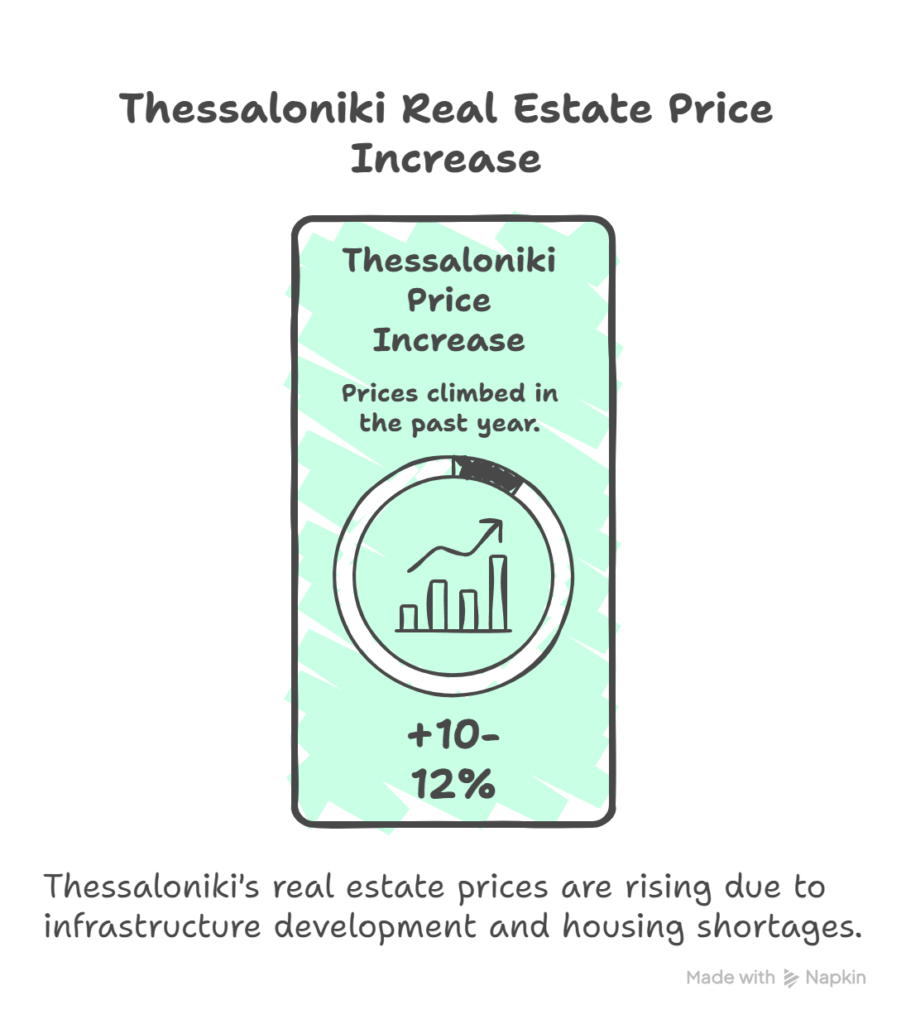
We used Thessaloniki as our reference city — the 2nd city of Greece, and a place we already covered in previous articles. Prices average $2,700 per square meter, and this number climbed between 10% and 12% in the past year alone.
Greek bureaucracy is legendary, and to buy a property is no different. You’ll need a tax number called an AFM, a local lawyer, a notary, and a pre-purchase tax clearance check. The seller also needs an engineer-certified building report confirming no illegal extensions exist. The whole process takes up to 5 months — one of the slowest on this list.
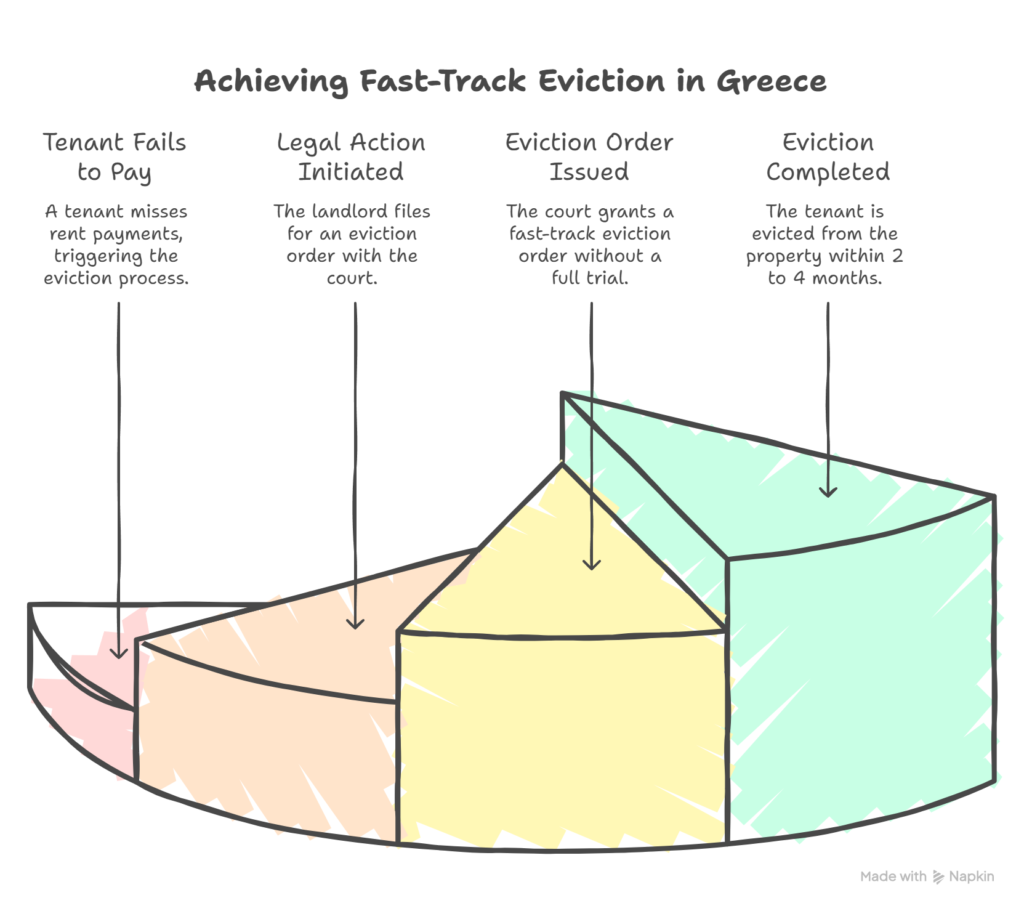
Where Greece surprises you is the pro-owner legal environment, which comes in at 7.0 out of 10. Greece has a fast-track eviction order for non-paying tenants that doesn’t require a full trial, and in practice it resolves in 2 to 4 months.
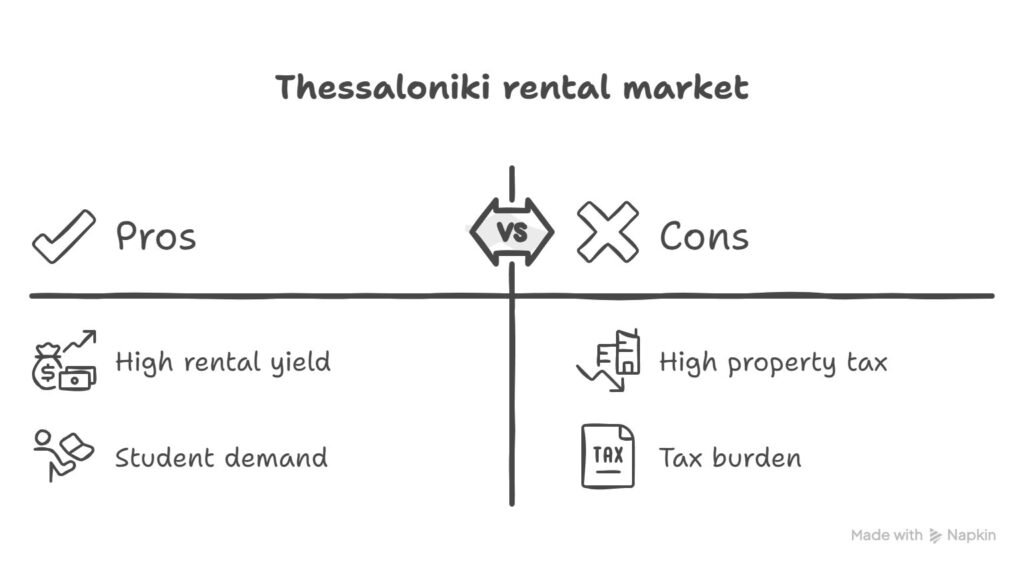
The rental yield in Thessaloniki averages a respectable 5.8% per year. And in terms of taxes, the annual property tax (ENFIA) costs €400 to €600 per year for a mid-range apartment.
So distributing all the points across the 5 factors, Greece scores 31.8 points — a place where the purchase process and bureaucracy are the main things working against you.
7th Place: Smooth & Predictable
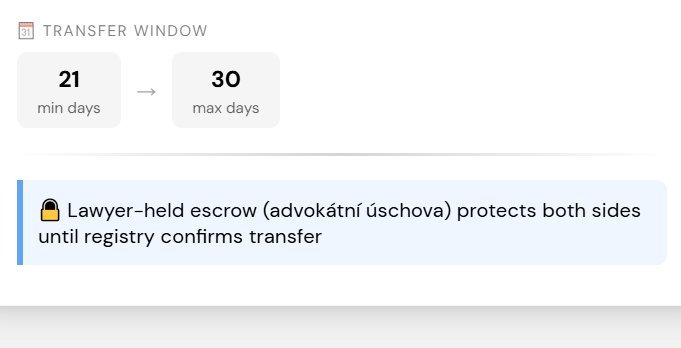
At number seven, we have the Czech Republic — and they got such a high position because the purchase process there is quite fast and simple. The land registry, the Katastr nemovitostí, is fully digital, and a Power of Attorney is accepted for remote purchases. Once you submit the paperwork, the transfer usually takes less than 30 days.
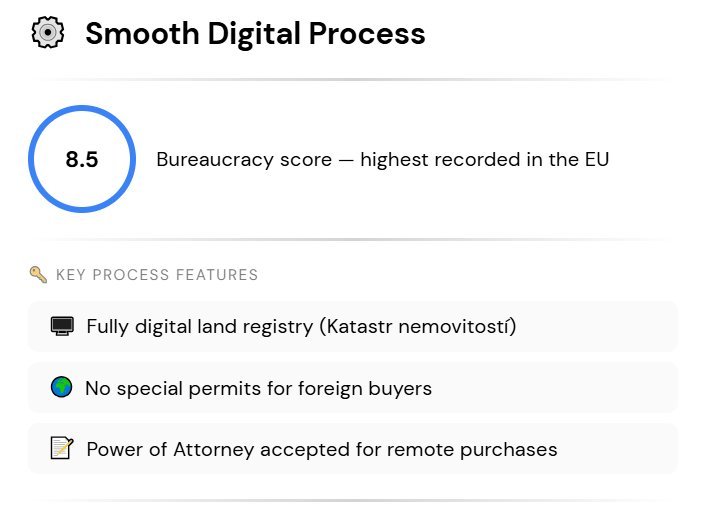
That speed comes from the advokátní úschova system, where a lawyer holds funds in escrow until the registry confirms the transfer — both sides are protected throughout.
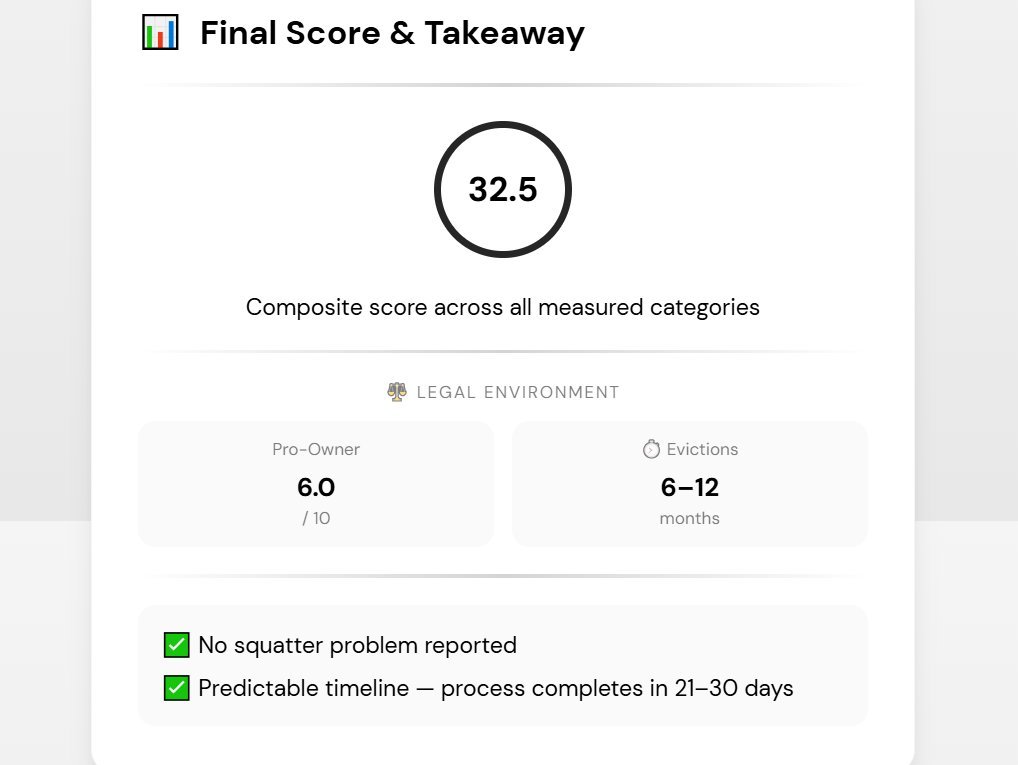
The taxes for homeowners are among the lowest. The annual property tax — the Daň z nemovitých věcí — is considerably low due to how it is calculated. It’s calculated on floor area, not market value, so a 75 square meter apartment in Plzeň carries a yearly bill of about €60 to €100. Even with garbage fees added, you’re well under €150 a year.
Plzeň, our reference city in western Bohemia, costs around $3,500 per square meter — 2.5 out of 10 on price. An 80 square meter apartment costs around $280,000, and with average rents around $980 a month, the rental yield is around 4.2%.
Evictions take 6 to 12 months and no major squatter problem is known in the Czech Republic. The Czech Republic scores 32.5 points.
6th Place: High Yield, but a Title Problem Nobody Warns You About
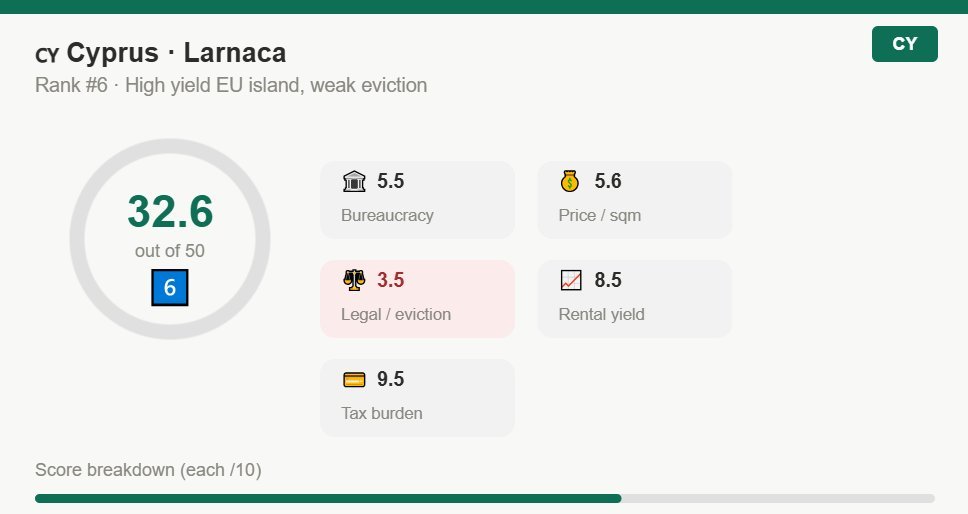
Cyprus abolished its national property tax in 2017. It is completely gone — no annual wealth tax, no immovable property tax, just small municipal fees adding up to €250 a year on a mid-range apartment.
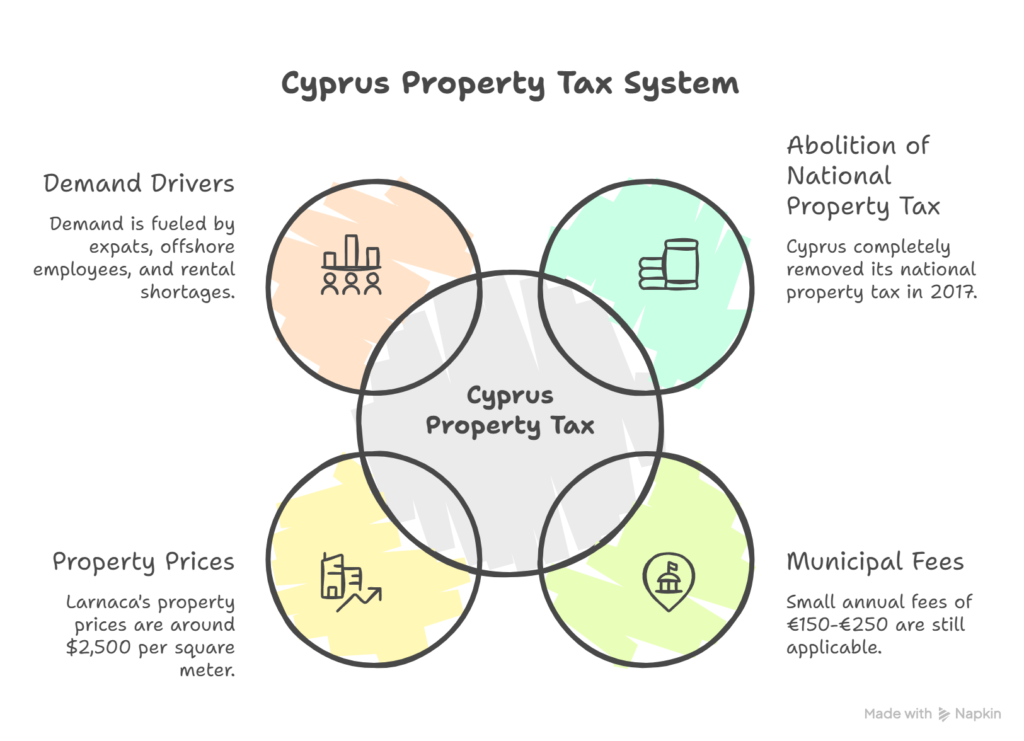
Larnaca, our reference city, has average prices around $2,500 per square meter — remarkably affordable for a place with so many tax incentives and attractive beaches. Rental yields are the highest in the European Union, averaging 6.5%. It is more than 50% higher than in France, for example.
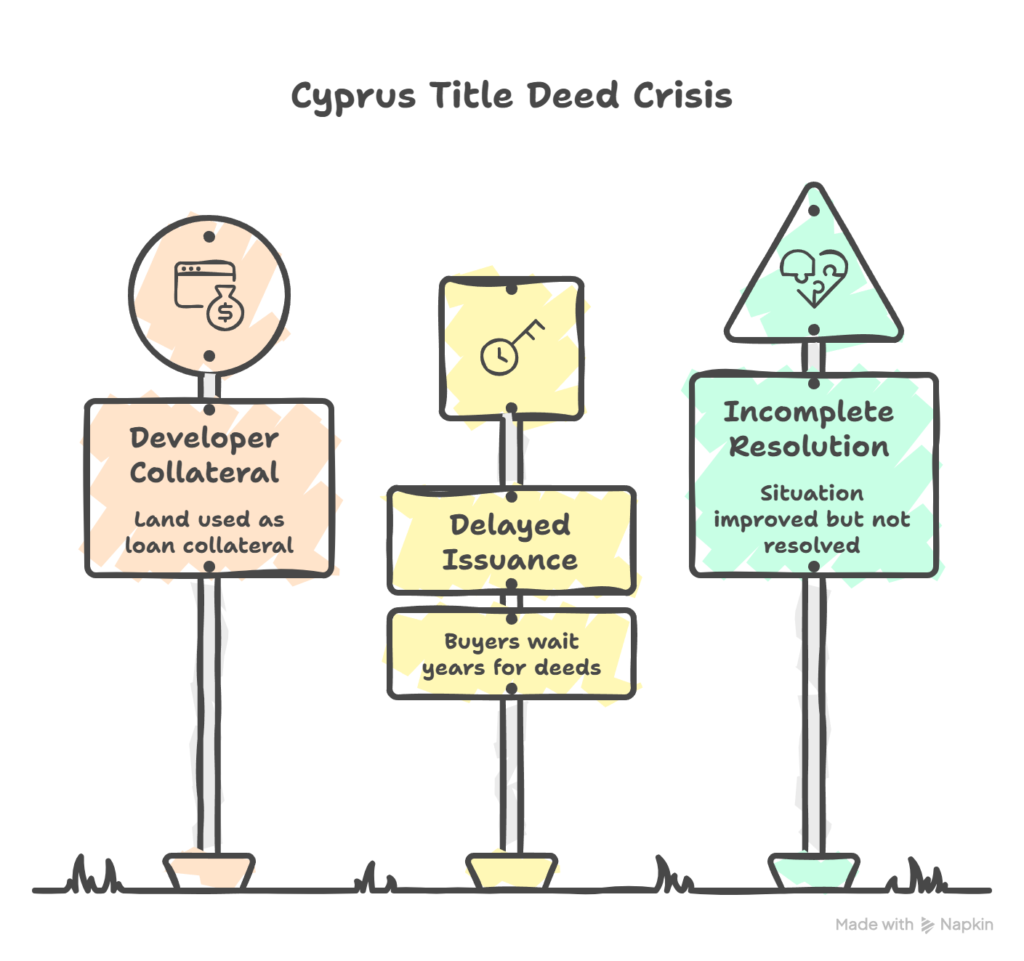
But Cyprus has a title deed problem that is rarely mentioned. A large number of Cypriot properties — particularly those built before 2008 — were sold without separate title deeds ever being issued. Developers used the land as collateral for loans, buyers bought the properties, and then waited years — sometimes decades — for a title that never arrived.
The government passed legislation to fix this, and the situation has improved, but it hasn’t fully resolved. Buying in Cyprus without a lawyer who specifically checks the title status before you sign anything is very risky.
In terms of bureaucracy, the full process to purchase a property takes 3 to 6 months. Laws are not very pro-owner, and evictions take 18 to 24 months through notoriously backlogged courts.
Cyprus scores 32.6 points — a market where the numbers attract you and the paperwork decides whether you actually benefit. Cyprus, together with Greece, also has impressive tax incentives for expats — and lovely cities that we covered in a previous article.
5th Place: Strong Growth, and Low Property Taxes
Romania has been one of the fastest-growing property markets in Eastern Europe over the past five years. Brașov — a mountain city in central Romania — has pulled in tech workers and expats at a pace that’s kept rental demand consistently ahead of supply. Prices per square meter are around $2,100. Annual property taxes on a mid-range apartment are usually under €250 a year.
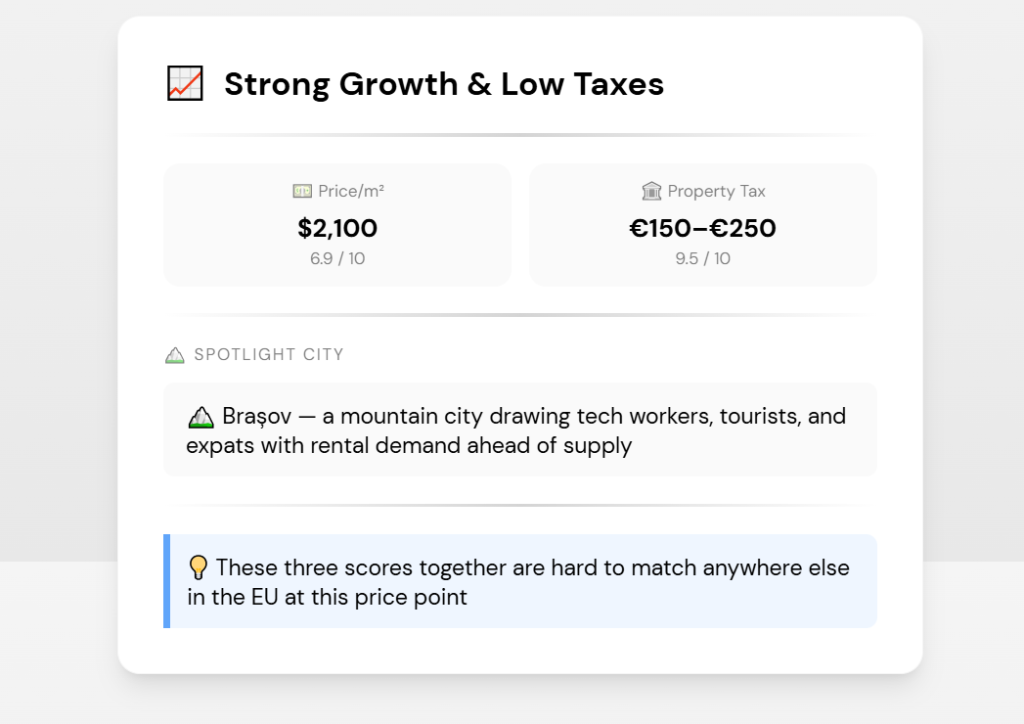
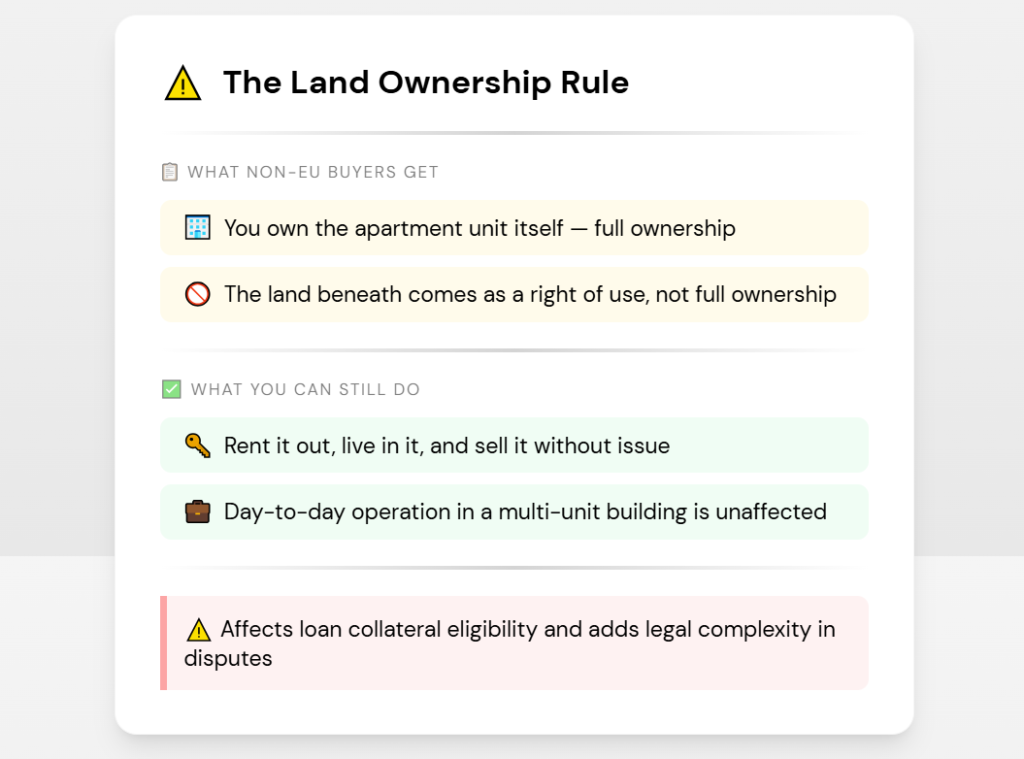
Those numbers are remarkably good — considering that this is one of the best cities inside an EU country. But… as a non-EU citizen, you can own the apartment itself — but not the land under it. You just get the right to use the land, but you do not own it.
In practice, for an apartment in a multi-unit building, this rarely causes any issue. You can rent it out, live in it, and sell it without issue. But it affects your ability to use the property as loan collateral.
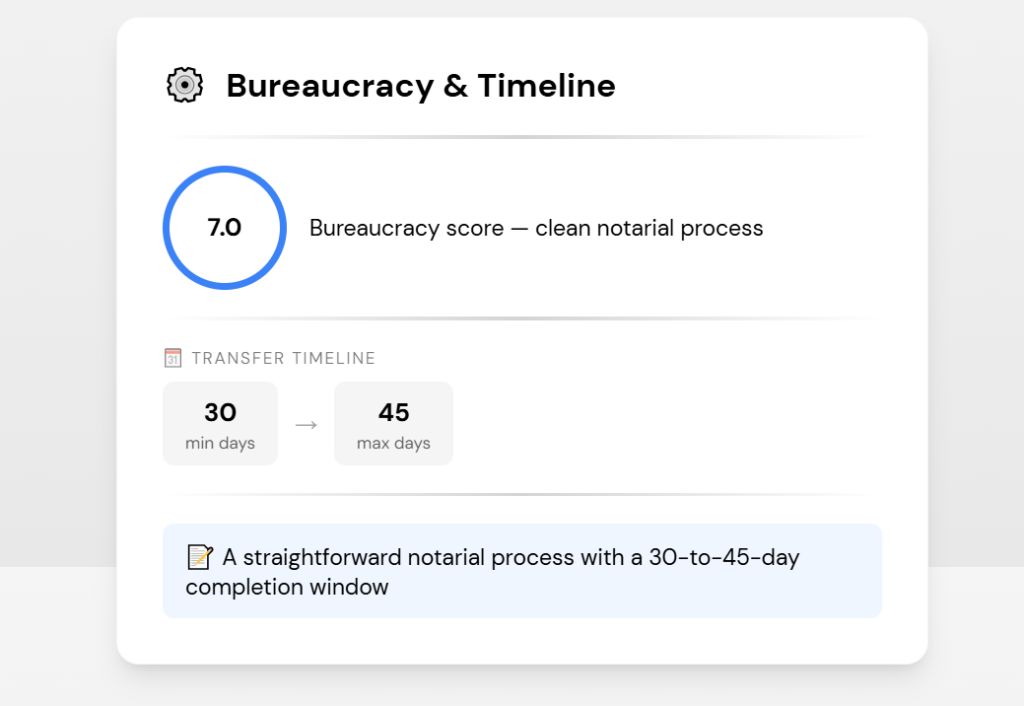
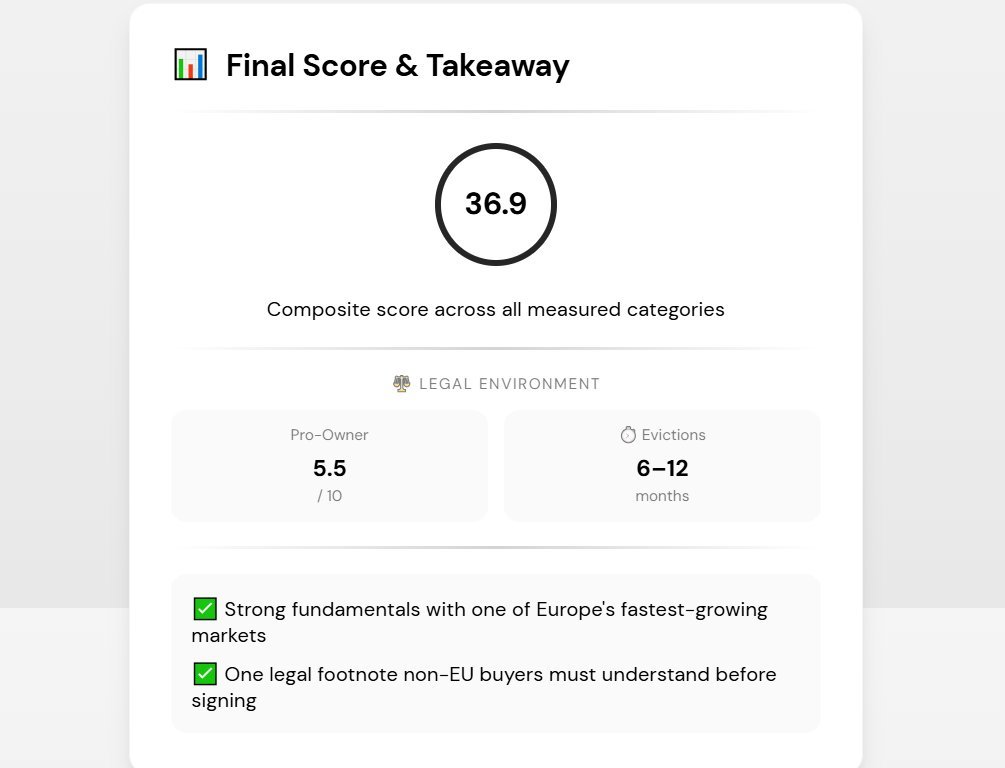
Bureaucracy gets 7.0 points due to the clean notarial process and a 30 to 45 day timeline. The laws are not the most pro-owner, with evictions taking 6 to 12 months through Romanian courts.
Romania scores 36.9 points — strong fundamentals, and one legal footnote that non-EU buyers must understand before signing anything.
4th Place: The Fastest Purchase Process on This Ranking
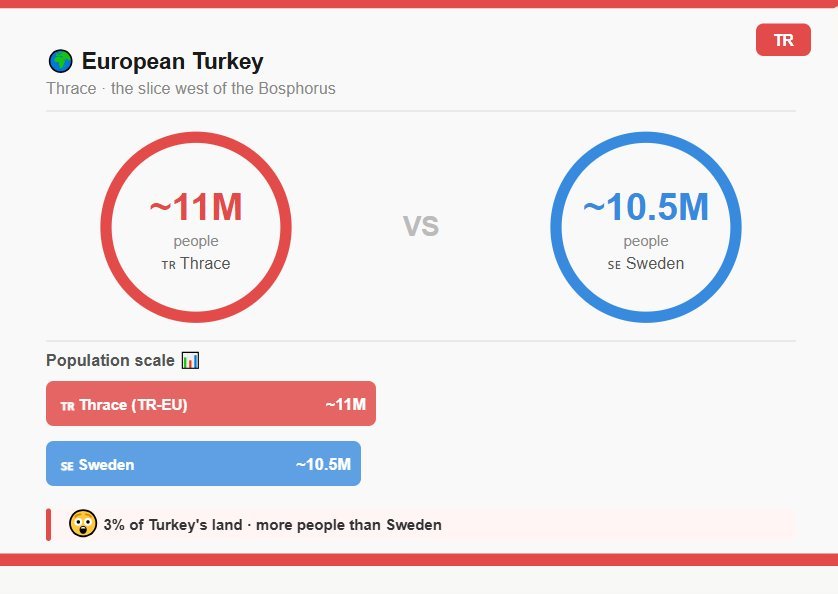
Turkey is not in the EU, doesn’t use the euro, but it is partially in Europe — and the population of the European part of Turkey is bigger than Sweden!
Among all countries we covered so far, Turkey is the one with more economic turmoils — so why does it rank fourth overall? Because it does several things better than almost every EU country we’ve covered.
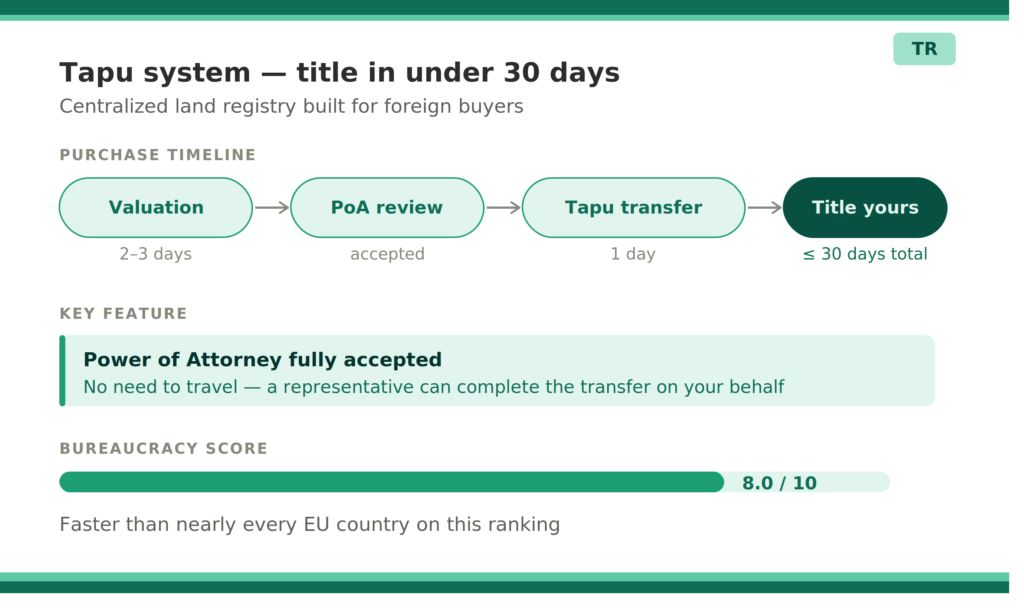
The Tapu system — Turkey’s centralized land registry — can complete a title transfer in under 30 days. A mandatory property valuation takes 2 to 3 days, the actual transfer at the Tapu office happens in a single day, and Power of Attorney is fully accepted. It is a system built from the ground up to attract foreign buyers.
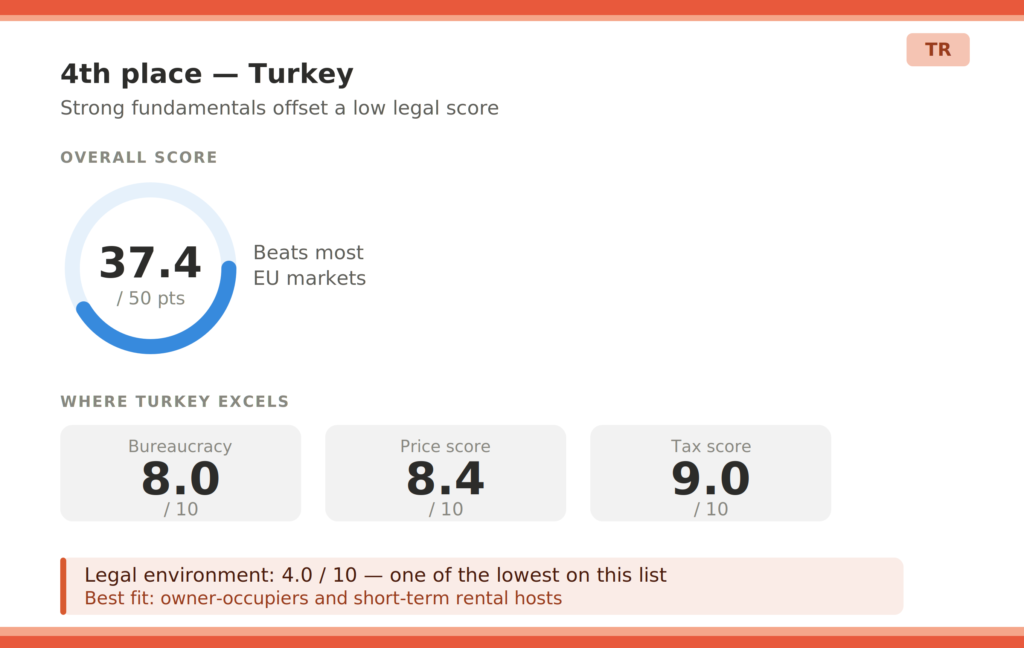
Alanya, our reference city, costs around $1,600 per square meter — 8.4 out of 10 on price. Prices there actually dropped 5 to 10% in dollar terms over the past year — and in our top 15, Turkey has the 3rd cheapest average prices (the 2 cheapest you will discover soon). Annual property taxes on a €200,000 apartment are less than €300 per year — in the EU that value is often four times more.
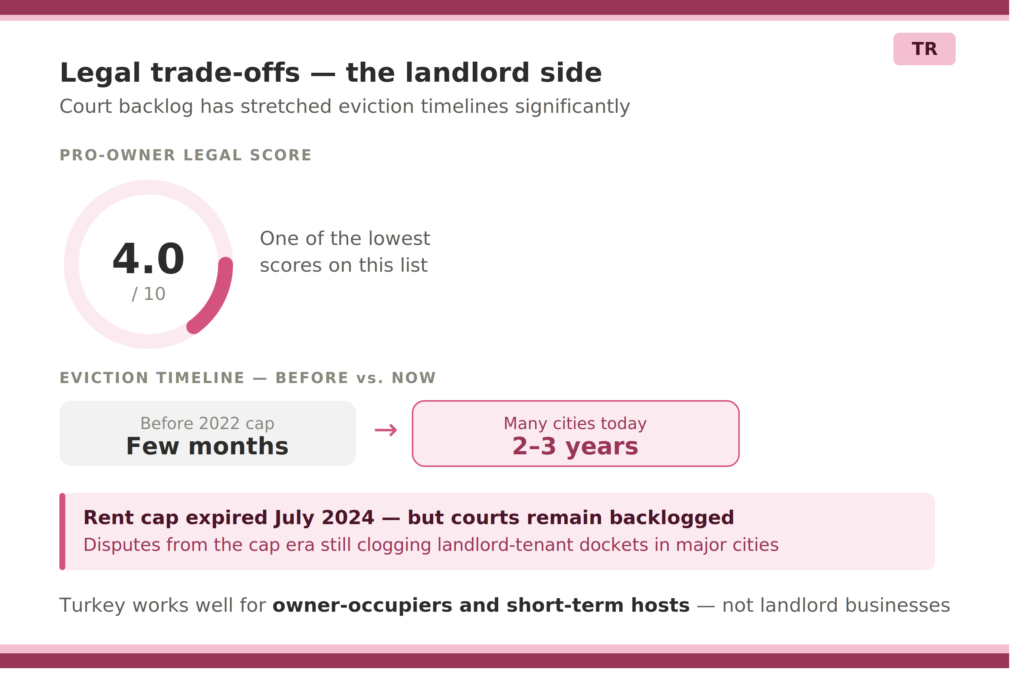
Now the trade-offs. Turkey introduced rent increase caps in 2022, and even though that cap expired in July 2024, the court system is still backed up with landlord-tenant disputes. Evictions that used to take months now take 2 to 3 years in many cities.
In total, Turkey scores 37.4 points — the country lost most of its points on the bureaucracy to evict a non-paying tenant, but on the other factors, it did pretty well.
3rd Place: There Is No Sea Here, But Prices Are Very Low (Yet)
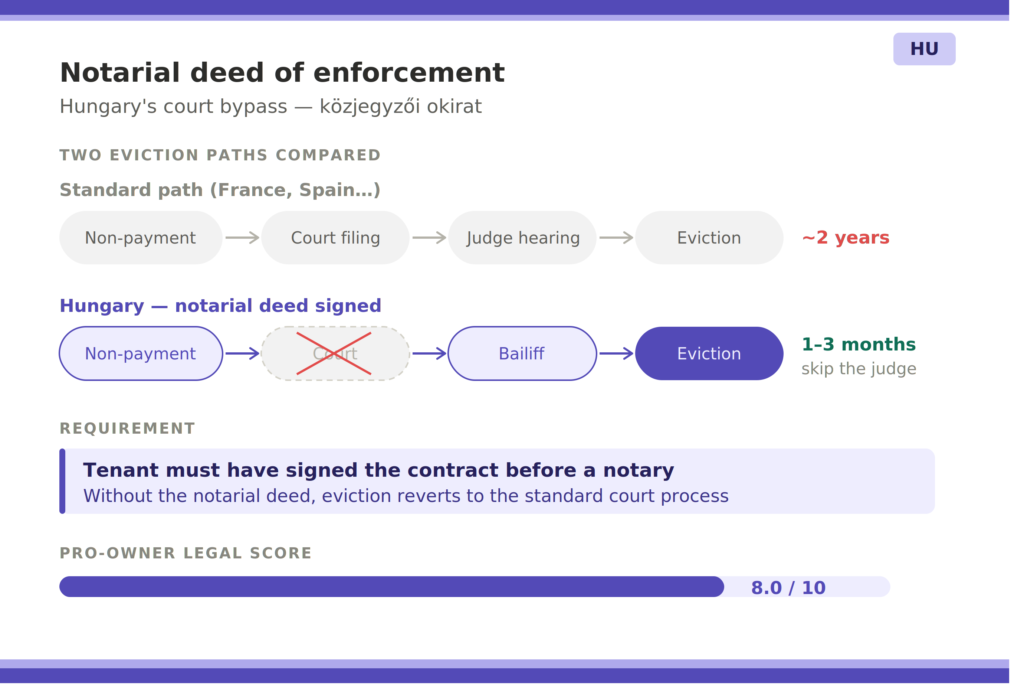
Hungary has a legal tool that almost no other country on this list has: the notarial deed of enforcement — közjegyzői okirat in Hungarian. It lets a landlord bypass the court system entirely when evicting a non-paying tenant. If the tenant signed the right contract in front of a notary, you skip the judge completely and go straight to a bailiff. Evictions that would take two years in France or Spain resolve in one to three months here.
Szeged, our reference city in southern Hungary, costs around $1,800 per square meter — 7.8 out of 10 on price. It’s a university city with a large international student population, keeping rental occupancy rates stable year-round.
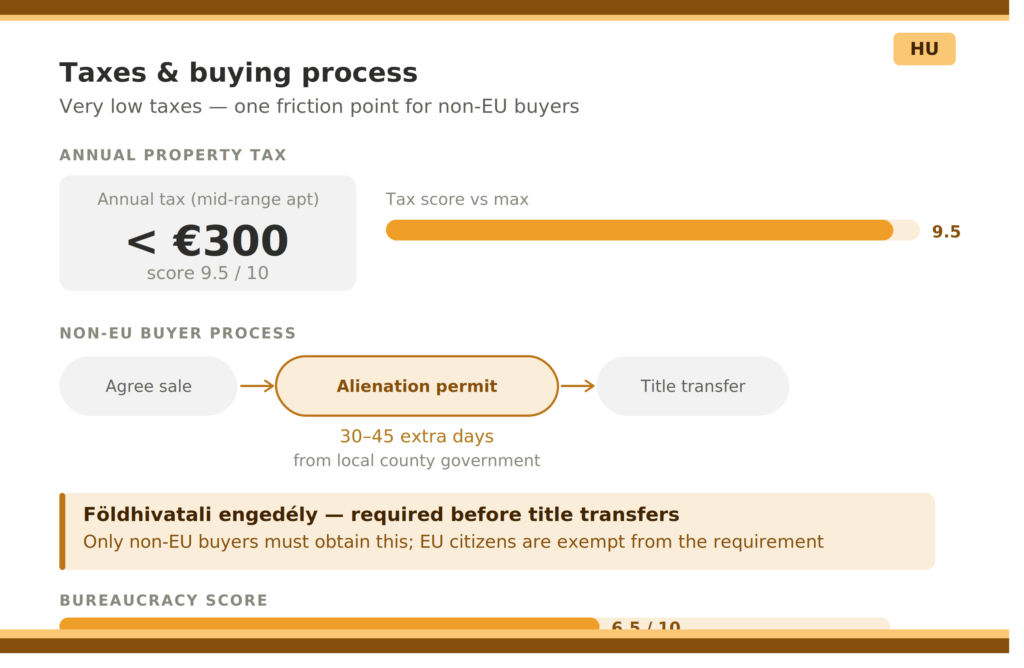
Property taxes on a mid-range apartment rarely exceed €300 per year — one of the lowest in the EU. But non-EU buyers do face one obstacle: the alienation permit — the földhivatali engedély — which you must obtain from the local county government during the purchase process. That adds 30 to 45 days to the process.
There’s also a currency consideration: Hungary uses the forint, not the euro. And the forint has lost ground against the dollar over the past decade. Your rental income converts back to dollars at whatever rate the market gives you that month.
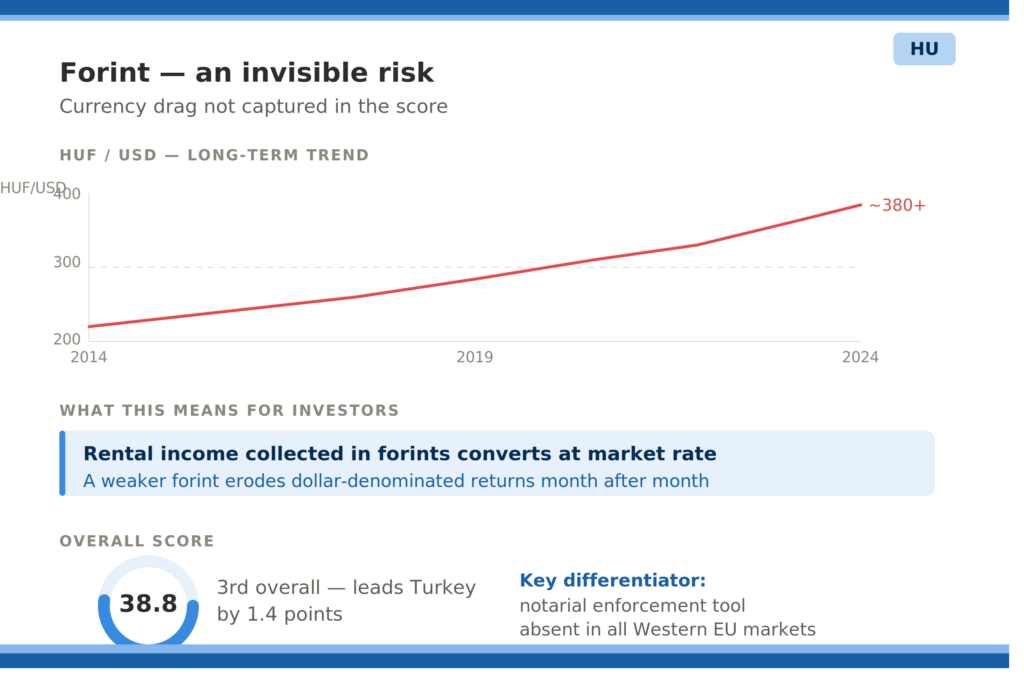
Hungary scores 38.8 points — and the notarial enforcement tool is the best feature — one that separates it from every Western European country we’ve covered.
2nd Place: The Budget-Friendly EU Option With Almost No Ongoing Costs
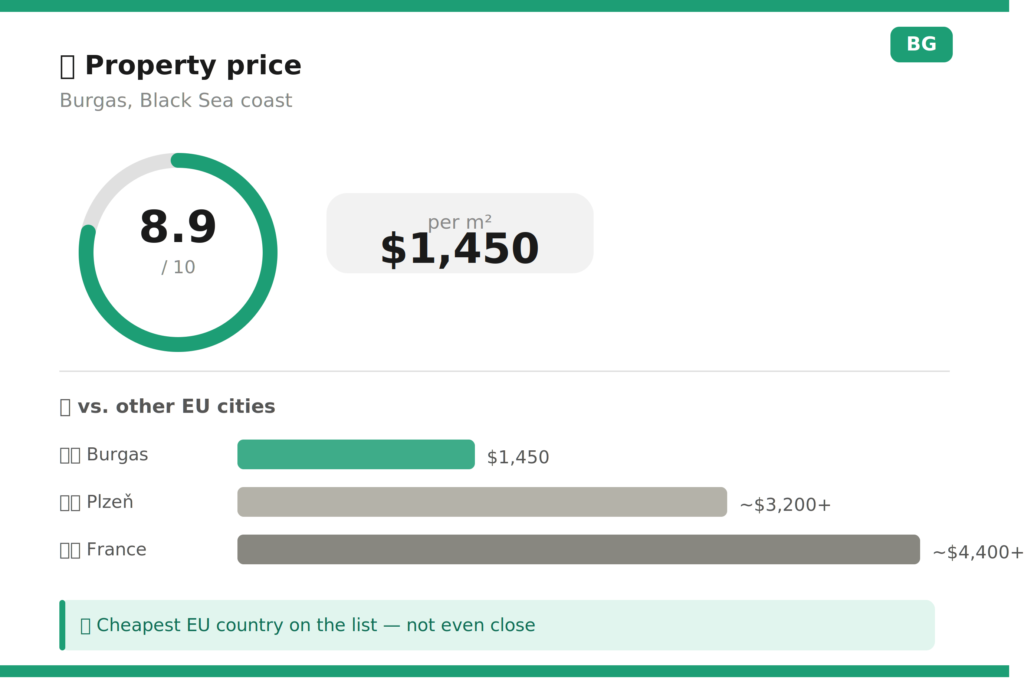
Bulgaria is the cheapest EU country on this list — by a wide margin. Burgas, our reference city on the Black Sea coast, costs around $1,450 per square meter — 8.9 out of 10 on price. That’s less than half the price of Plzeň in the Czech Republic, and less than a third of what you’d pay in France.
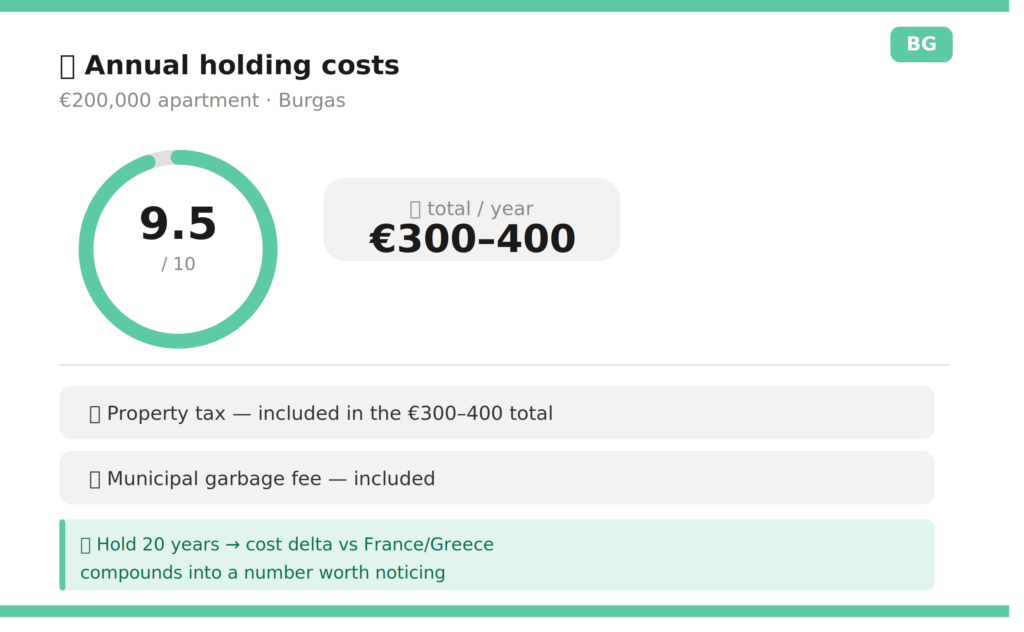
The annual property tax and municipal garbage fee combined run between €300 and €400 per year on a €200,000 apartment. The purchase process runs through a local notary, land registry enrollment, and a Bulgarian bank account for the funds transfer. The whole transaction typically closes in 30 to 45 days.
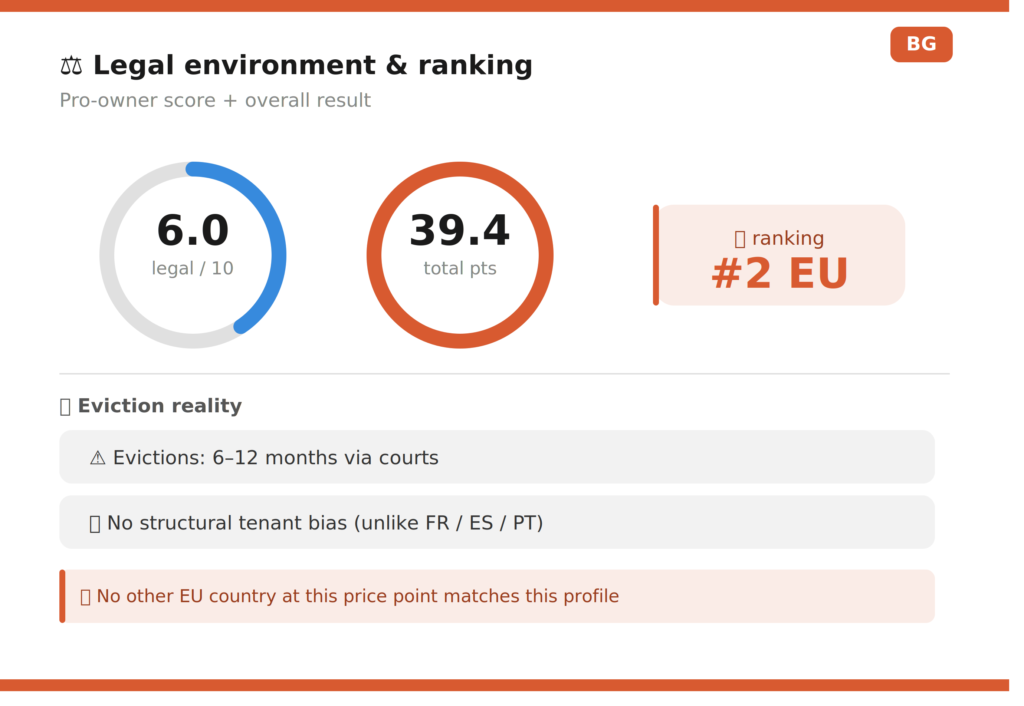
The rental yield in Burgas averages 5.5%, so slightly above what one could expect in the European Union. Evictions take 6 to 12 months through the courts — slow, but there’s no structural legal bias toward tenants the way there is in France, Spain, or Portugal.
Bulgaria scores 39.4 points — second on this ranking, and only 1 country managed to have a higher result.
The 1st Place On This Ranking (and Why It’s Not Even Close)
Georgia. Not the US state. But the country on the eastern edge of the Black Sea, bordering Turkey to the south.
It scored higher than any country on this list by a margin so large that when I first ran the numbers, I thought something was wrong. So I ran the numbers again, and again Georgia took the first place. And I felt a bit guilty because we have never made an article dedicated to them.

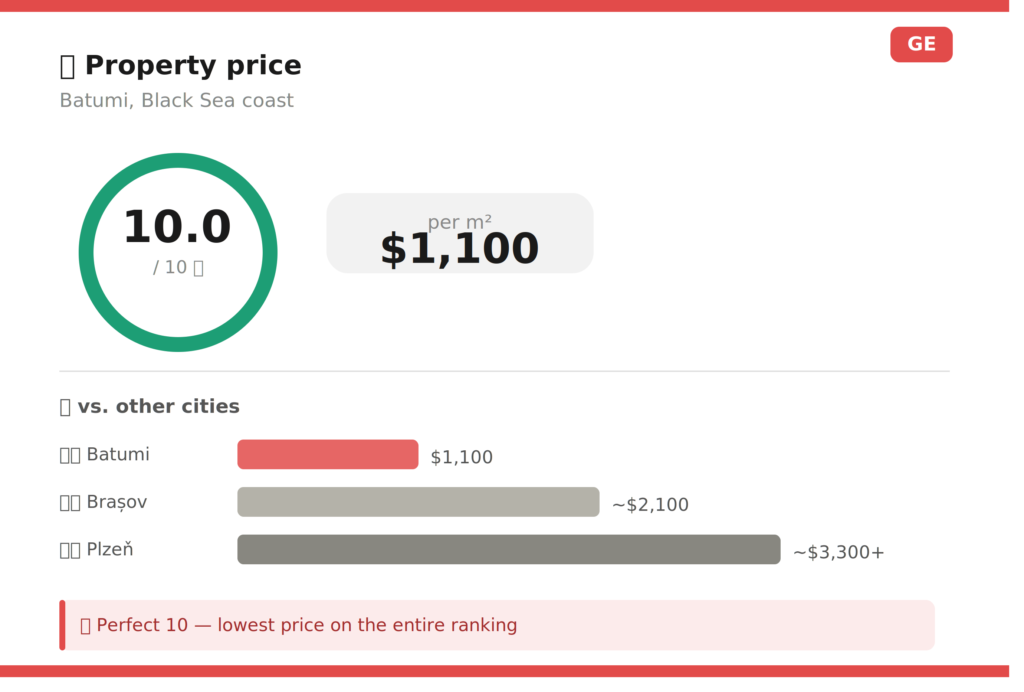
Now back to why Georgia took the first place. Batumi, our reference city on Georgia’s Black Sea coast, costs around $1,100 per square meter. Brașov in Romania costs nearly twice that. Plzeň in the Czech Republic costs more than three times as much.
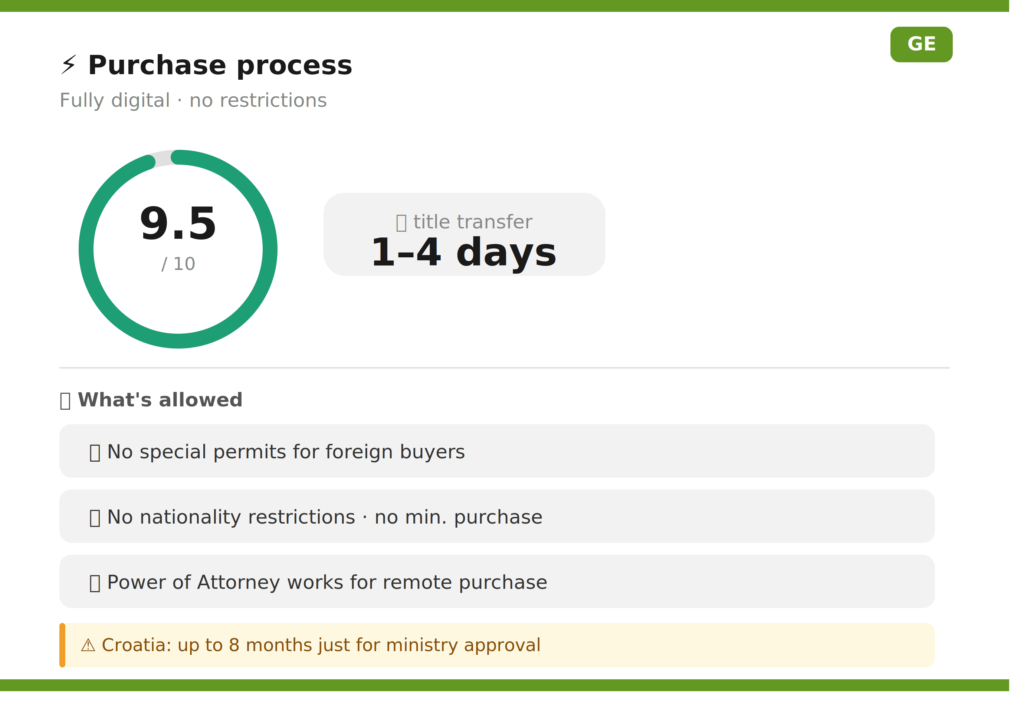
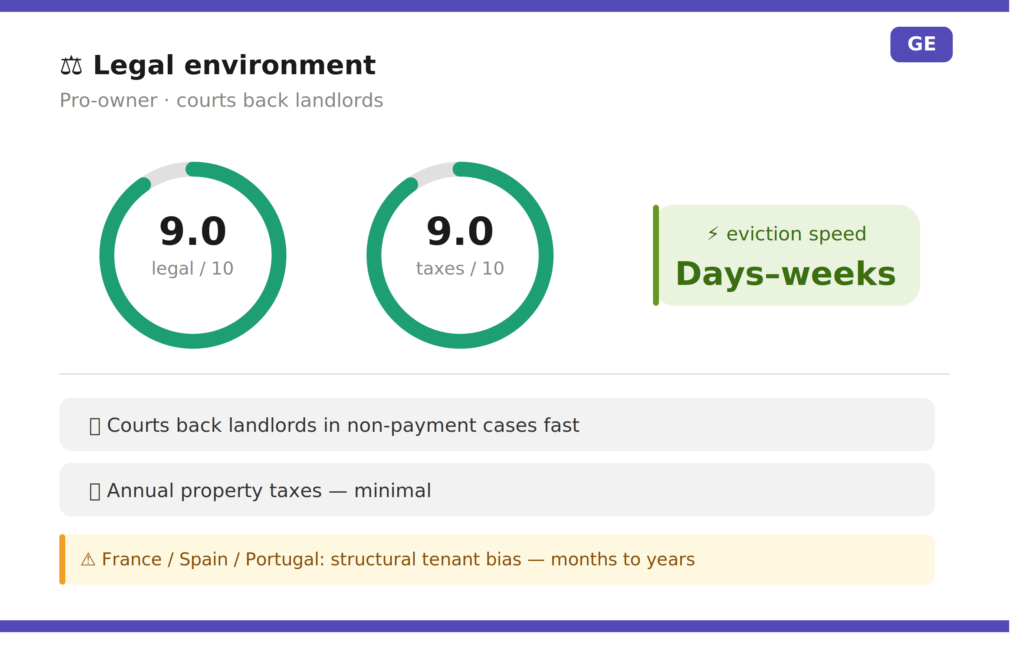
Georgia’s property registration system is fully digital, and a title transfer completes in one to four business days. No special permits for foreign buyers, no nationality restrictions, no minimum purchase amount. The legal environment is very pro-owner. Georgian courts back landlords in non-payment cases fast — evictions move through the system in days to weeks.
Gross rental yield in Batumi averages 7.5%, the highest among all countries we saw today. Annual property taxes are minimal too.
So no surprise Georgia scores 47.0 points, and opened a huge 7.6 points gap to the 2nd place.
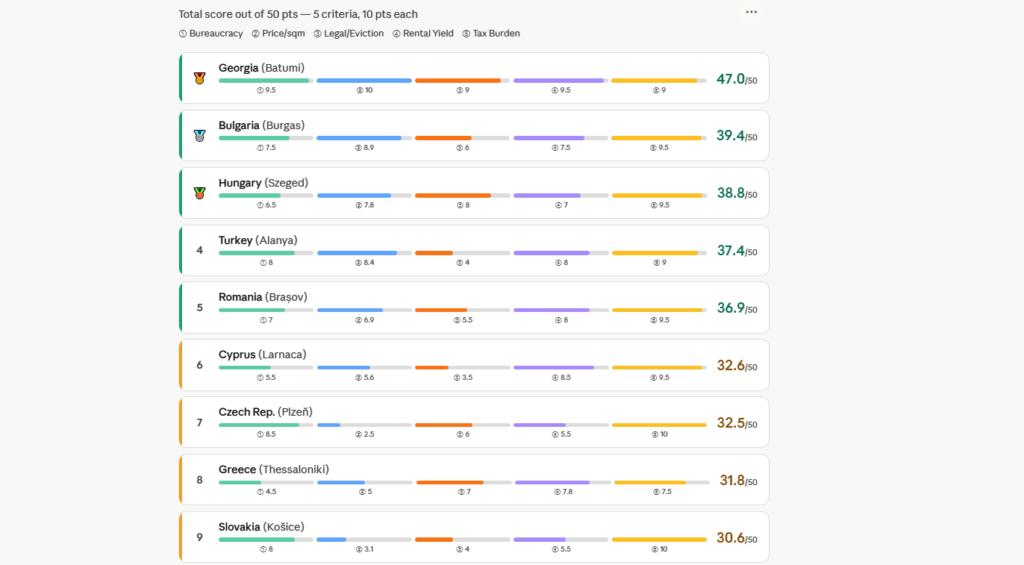
And those are the 15 best countries in Europe to buy property — ranked by the numbers, not the marketing.
But which of these countries gives you the best quality of life day to day — not just as a property owner, but as someone who actually lives there? Cost of living, healthcare, safety, climate, all of it — who are the best and the worst? We cover that in a companion article on expatriateconsultancy.com.
We’ve also covered the best European countries to buy rural property and cheap places to buy farmland in Europe for those interested in land beyond city apartments.
For all the sources, charts, and maps from this article, plus a private community where we answer your questions directly, join us on Patreon.
Levi Borba is the founder of expatriateconsultancy.com, creator of the channel The Expat, and best-selling author. You can find him on X here. Some of the links above might be affiliated links, meaning the author earns a small commission if you make a purchase.