Why would you read a guide about citizenship without investmnet? You’ve got one passport. One nationality. One country that decides where you can go, how you’re taxed, and what happens to you when things go sideways.
That’s fine until it is not. Until the government tries to grab your retirement funds. Until a capital or currency control stops you from moving your own money out of the country. Until the passport that once opened doors starts closing them.
So you start looking for a second citizenship. A backup plan. And you search for “fastest citizenship” online, and you get two kinds of articles.
The first wants you to write a check for a few hundred thousand dollars. The second is some guy reading a table off the internet, a guy who’s never set foot in a single country he’s telling you to move to.
Not me. I’ve been to nearly half the countries on today’s list, and none require an investment to qualify.
Today I will rank nine countries that will give you citizenship faster than almost anywhere else on Earth, some in as little as 2 years, with zero investment required. Let’s start with the rules of the game.
The Rules of the Game
Every country on our list was measured by one question. How quickly can a foreigner go from lawful residence to citizenship eligibility?
I also asked what obligations come attached to obtaining citizenship: taxes, military service, duties you didn’t know existed until you swore an oath.
An extra citizenship often means a stronger passport, protection against deportation, the ability to pass nationality to your children. But it can also mean military service, tax exposure, and restrictions on holding other nationalities.

And while this is about the easiest passports, if you would also like to know more about the easiest residency visas, write “Residency Visas” in the comments and help us choose the topic of our next article!
Now, we start our ranking with Cyprus.
#9 — Cyprus
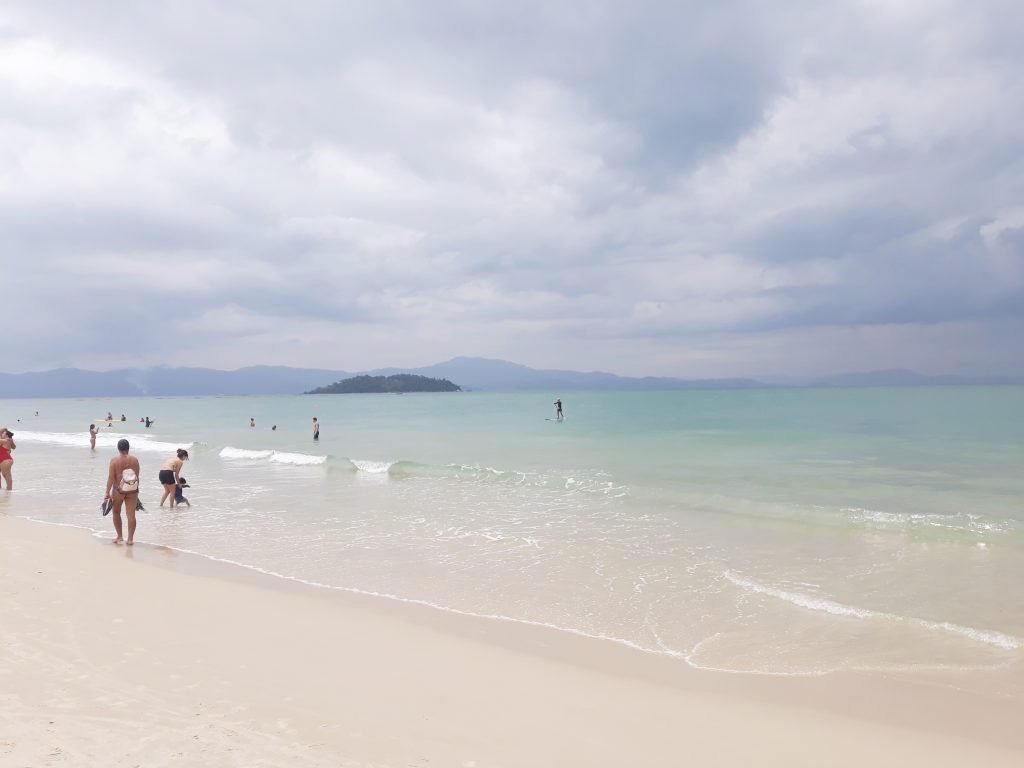
Cyprus is an island nation in the eastern Mediterranean Sea, near Turkey and Greece. It also has some of the most beautiful beaches I ever saw in my life, and that is why I go there quite often.
Cyprus has 2 routes for naturalization, one that is slow and another that is fast, and this second one is why it made it to this top 9.
The slow, ordinary naturalization route takes seven years of legal residence, proof of integration, and evidence that you intend to stay.
The fast route, for professionals earning at least US$2,900 per month, allows you to apply after just four years. You must also speak basic Greek.
This route is often the most used by qualified professionals, senior managers, researchers, and executives, unlike in the next countries, which have paths focused on retirees and pensioners.
The Cypriot passport ranks thirteenth globally with access to 175 destinations, and you get European Union citizenship: the legal right to live, work, study, and retire in any EU country.
There is also another huge benefit of this island, which is the low tax environment. This is something most articles about Cyprus skip, but not us, since we made a special article on how attractive the tax regimes of Cyprus are.
If you qualify as a non-domiciled resident (and most expats do, because you weren’t born there), Cyprus becomes one of the most tax-friendly places in the EU.

Zero tax on foreign dividends and interest for up to seventeen years. Capital gains only on property located in Cyprus, so shares, bonds and most securities are fully exempt. No wealth tax. No inheritance tax. No gift tax.
The first €22,000 of annual income is tax-free, and crypto gains are taxed at a flat eight percent.

Compare that to France, where capital gains on securities can hit thirty percent, or Spain, up to twenty-eight.
Remember that Cyprus has military conscription, with registration at sixteen. For someone in their fifties that is not much of a problem, but for a man of military age it is something to look into.
But for the right profile, EU citizenship plus one of Europe’s most favorable tax regimes is a rare combination.

From the Mediterranean, we cross the Atlantic to South America.
#8 — Brazil
As a baseline, Brazil is in the group of “four-year for citizenship” countries. But it can be MUCH faster than that, and soon I will tell you how.

The requirements are straightforward, and it is very important that during these 4 years there you learn some Portuguese.
Fortunately, however, Portuguese is a very easy language to learn. I say that from experience, since I am fluent in Portuguese.
Brazil also requires a clean criminal record and some other documents.

Of course Brazil has a lot of bureaucracy, so while you can apply in 4 years, the journey including processing times is almost always longer than that.
If you marry a Brazilian citizen, or have Brazilian children, the waiting time is much, much smaller: just one year.
Surprisingly, Brazilian citizenship gives you more benefits than most people realize. The Brazilian passport ranks sixteenth globally, with access to 169 destinations, a completely different category from most Latin American passports.

Mercosur membership gives you regional residence and mobility rights across South America, plus education agreements and recognition of certain qualifications.
And a recent Constitutional Amendment softened the old rule that acquiring another nationality could strip your Brazilian citizenship.

Now, two warnings. First, tax residence. Brazil’s tax authority can treat someone arriving under a permanent visa as a tax resident from day one.
Your worldwide income (pensions, investments, rental property, capital gains) can fall inside the Brazilian system years before you’re eligible for citizenship. The citizenship clock and the tax clock are different, and the tax clock is faster.
Second, Brazil is in the middle of a huge fiscal crisis. The government is under pressure to raise revenue, and new taxes are expected. If that burden grows over the next decade, you’ll be inside it as a citizen.
There is also the possibility of currency controls being imposed. And these currency controls are just the state saying “what’s yours is ours, and what’s ours was also yours, a few minutes ago.”
Brazilian citizenship is a good idea for someone who wants a strong passport and regional mobility across South America, especially in the Mercosur bloc.
#7 — Nicaragua
Nicaragua, a Central American country between Honduras and Costa Rica, has some of the clearest rules in Central America.
Under Nicaragua’s General Law on Migration and Foreigners, ordinary foreign residents can acquire Nicaraguan nationality after four years as permanent residents.

There’s a faster lane for some nationalities. Citizens from Spain and Central American countries qualify after just two years of permanent residence. For everyone else, including the typical North American expat, four years is the standard.

But the ordinary statute calls for renunciation of your previous nationality. If you’re an American or Canadian who wants a second passport as a backup while keeping the first one in your pocket, Nicaragua is a harder sell.
The exact outcome depends on your nationality of origin, personal circumstances, and any bilateral arrangements.

The Nicaraguan passport ranks 42nd globally, with access to 125 countries. A respectable number, and its best value is regional: you can visit Latin America and much of Europe without needing a visa.

It’s a good fit for someone who wants low living costs, Central American residency, a short timeline, and no military obligations.
Now we go all the way north.
#6 — Canada
Canada has one of the fastest times for citizenship in the developed world, and the calculation of that time is quite peculiar.
The applicant must have been physically present in Canada for 1,095 days (three years) during the five years immediately before applying.
And the time spent in Canada as a temporary resident counts too, although each day as a temporary resident counts as just half a day.

So two years as a temporary resident gives you a full year of credit, then two more years as a permanent resident and you’re there. A practical path of about four calendar years, starting from the day you first arrive legally.

Almost no other developed country does this. In most places, your citizenship clock sits at zero until permanent residence is granted.
One thing that makes it even easier is that Canada’s language and knowledge test requirements apply to applicants aged 18 to 54. If you’re 55, you skip both.
The passport is one of the strongest on Earth, with access to 183 destinations, making it the 7th strongest in the world.

And Canadian tax obligations are based on residency, not citizenship, so becoming a citizen doesn’t by itself create a new worldwide tax bill.

However, the hard part is getting in. Canada’s citizenship rule is generous. Its immigration system is not.
You need a qualifying pathway (skilled worker, family sponsorship, provincial nomination), and reaching permanent residence takes time, effort, and eligibility. But if you get through that door, you get one of the most powerful citizenships in the world.

#5 — Australia
Maybe the cleanest four-year structure in our ranking. Australia has no complex calculations.
Four years on a valid visa, with permanent residence held during the final twelve months.

But clean doesn’t mean easy. The absence limits are strict: no more than twelve months outside Australia during the four-year period, and no more than ninety days outside during that final year.
If you’re the kind of person who wants to spend three months a year back in the States visiting grandchildren, you need to plan your absences carefully.

Most adult applicants also have to pass the Australian citizenship test, conducted in English, covering Australian values, history, and democratic institutions.
For an English-speaking expat it’s manageable with preparation, and older applicants may qualify for exemptions.

What you get if you succeed is substantial. The Australian passport is among the world’s strongest, with access to 183 destinations, tied with Canada in 7th place among all nations.
In several countries lower on our list, the passport number is attractive but the institutional environment is unpredictable. Australia doesn’t have that problem.

The taxation factor, though, needs your attention. The Australian Taxation Office determines tax residency through residence tests, not citizenship.
Australian tax residents can be taxed on worldwide income: pensions, investments, rental property abroad, capital gains, all of it. That’s the trade-off: an excellent passport inside a high-tax jurisdiction.
#4 — Honduras
This is a Central American country with coastlines on both the Caribbean Sea and the Pacific Ocean.
Article 24 of their constitution says ordinary foreigners can become Honduran by naturalization after residing in the country for more than 3 consecutive years. Spaniards and Ibero-Americans by birth qualify after two. Central Americans by birth, after one.

You might expect a Central American passport to keep you locked inside the region, and you would be wrong.
Honduras has access to 130 destinations without need of a prior visa, including access to Europe and Latin America. Well below Canada or Australia, but far more than its reputation suggests.

Military service is voluntary in peacetime, for citizens between 18 and 30. The state can call citizens in wartime, but for someone naturalizing after 45, the risk is minimal.
Honduras is an option for someone who wants a Central American citizenship, low housing costs, a warmer climate, and one of the shortest naturalization periods in the hemisphere.

The trade-off is that the passport is functional but not elite, and the institutions are still prone to political earthquakes.
The hardest part of moving abroad is not deciding to go, it’s deciding where. On our Patreon, you answer a few questions about your budget, lifestyle, and priorities, and our matching algorithm gives you a personalized shortlist of regions in Europe and South America that match what you are looking for, and also places that do NOT match your profile.
You also get our 74-page guide to affordable cities in Spain, Italy, and France, our zero-income-tax country guide, and the Costly Mistakes Checklist. $5 a month, and you can cancel anytime. Get your matches here.
#3 — Bolivia
Bolivia might not have one of the strongest passports, but it has a process that is fast and straightforward (and it has a very low cost of living too).
Article 142 of the Constitution allows foreigners to naturalize after more than three years of uninterrupted residence under state supervision. That drops to two years with a Bolivian spouse, Bolivian children, or military service at the required age.

But Bolivia is not handing you a document for showing up. The process includes a written examination on Bolivian history and general knowledge, proof of uninterrupted residence, criminal-record documentation, and other documents.

While the passport is fast to obtain, it is not very strong. Bolivia ranks sixty-first globally, with access to just 78 destinations.
It’s also the only passport in the index that has lost visa-free access over the past two decades, while almost every other one held steady or gained ground.

One more thing to keep in mind: the Constitution provides that every Bolivian is obliged to perform military service according to the law, so pay attention to that if you are a young man.
For someone who already holds a strong passport and wants a second citizenship as a plan B, Bolivia is quite a fast way to obtain one, without any investment needed.

#2 — Paraguay
The silver medal goes to this landlocked country, often presented as one of the easiest for citizenship in South America. Three years and you get naturalization.
The Paraguayan constitution requires the exercise of a profession, trade, science, art, or industry in the country, and good conduct.
That professional-activity requirement is easy to miss and hard to fake. You need to demonstrate some contribution to the local economy, so sitting in a rented apartment doing nothing doesn’t qualify.

What makes it worth the process is what comes after. Paraguay is a Mercosur country, so you get regional residence rights, education agreements, and cross-border mobility across much of South America.
Want to spend a few months in Buenos Aires, a season in Montevideo, a winter in southern Brazil? Paraguayan citizenship allows you to do it.


And the passport is strong on its own: thirtieth globally, with access to 146 destinations, nearly double Bolivia’s reach.

Now, two warnings, and both are important. First, the Paraguayan Constitution allows dual nationality only through an international treaty or constitutional reciprocity.
Second, the law establishes that naturalized Paraguayans can lose their citizenship through unjustified absence of more than three years. Getting Paraguayan citizenship and keeping Paraguayan citizenship are two different problems.
Another issue: military service. The Constitution establishes compulsory military service for naturalized Paraguayan men and sets military reserve duties until age 50.
If you are under 50, there is a risk of being drafted in case of war, but I know that for most of you this is not really a problem.
Paraguay suits someone who is interested in one of the fastest-growing, low-tax (or even ZERO tax) countries in the world.
Paraguay gives you citizenship fast, but there is one country that is even faster.
#1 — Argentina
Two years: that is how fast you can become a citizen. No other country in this ranking comes close to this.
Argentina’s nationality law provides that an adult foreigner can naturalize after two years of continuous and legal residence immediately before the application.

And temporary residence counts. The official government procedure expressly applies to people holding temporary or permanent residence, so your clock starts the day your legal residence begins, not when a permanent card arrives.

The Argentinian passport is one of the biggest surprises in terms of international mobility. It is the 16th most powerful passport in the world, with access to 169 destinations, nearly identical to Brazil, and far above Paraguay, Honduras, Nicaragua, and Bolivia.

Add the Mercosur benefits (regional residence, mobility, and education agreements across South America) and the package gets even better.
Tax residence is driven by fiscal status and residency rules, not citizenship, so the passport itself doesn’t trigger a worldwide tax bill. And you’re not forced to give up the nationality you already hold.
In 2025, the government updated the rules and moved the process to a digital platform called RaDEX. If you’re reading a blog post that describes the old judicial procedure, throw it away. Because in Argentina, the rules changed for the better.
The law defines continuous residence as remaining in Argentina for the whole two-year period without leaving the country. So even a three-week vacation in Uruguay can reset your clock.

For whom is Argentina a good choice? Someone ready to settle for twenty-four uninterrupted months, whose life, work, and family allow them to stay put.
And, well, it is also a good choice for some billionaires like Peter Thiel, who think World War III is coming and Argentina is the best place to be.
Now, what if instead of Latin America, you would prefer to live in Europe? For you, we ranked the European citizenships from HARDEST to EASIEST to obtain in a separate article.

And join my Patreon for detailed reports on all the countries we covered, plus access to our algorithm that will help you discover the best country and city for you.
Levi Borba is the founder of expatriateconsultancy.com, creator of the YouTube channel The Expat, and a best-selling author. Some of the links in our articles may be affiliated links, meaning the author earns a small commission if you make a purchase.