I lived in South America for 24 years, and today I will combine that experience with hard climate data and the real opinions of hundreds of expats who have already made the move – all to define the best mild climate cities to retire in South America!
We filtered the entire continent for cities with mild winters and summers that are perfect for a barbecue outside, but not too hot to give you a headache.
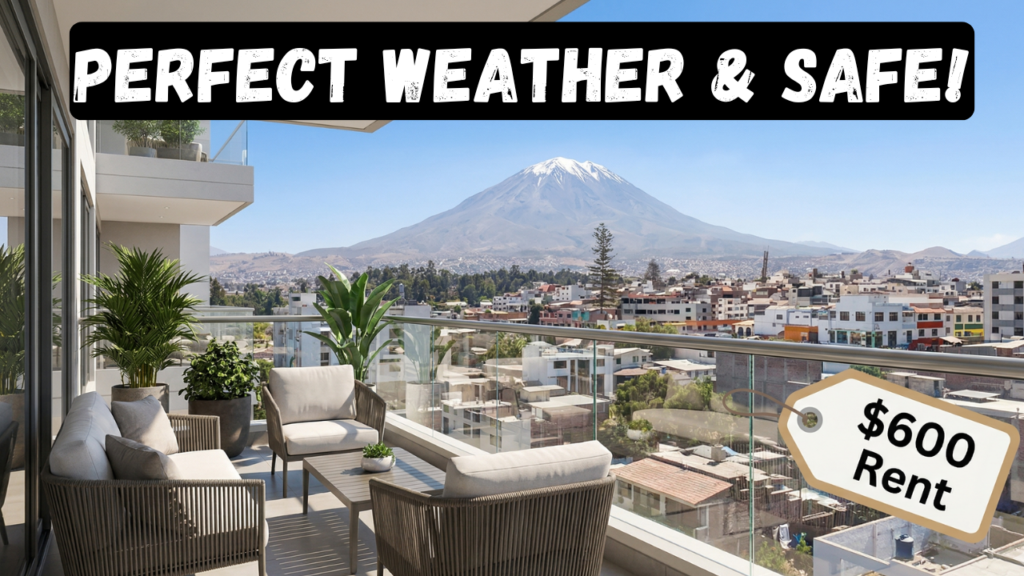
- Some of these cities have a climate that is considered by scientists as the ideal for human life—it even helps you to live longer!
- Most of them also have world-class healthcare and a very low cost of living.
- And do not worry; unlike a lot of YouTubers talking about South America, I took the care to filter out cities that are too dangerous.
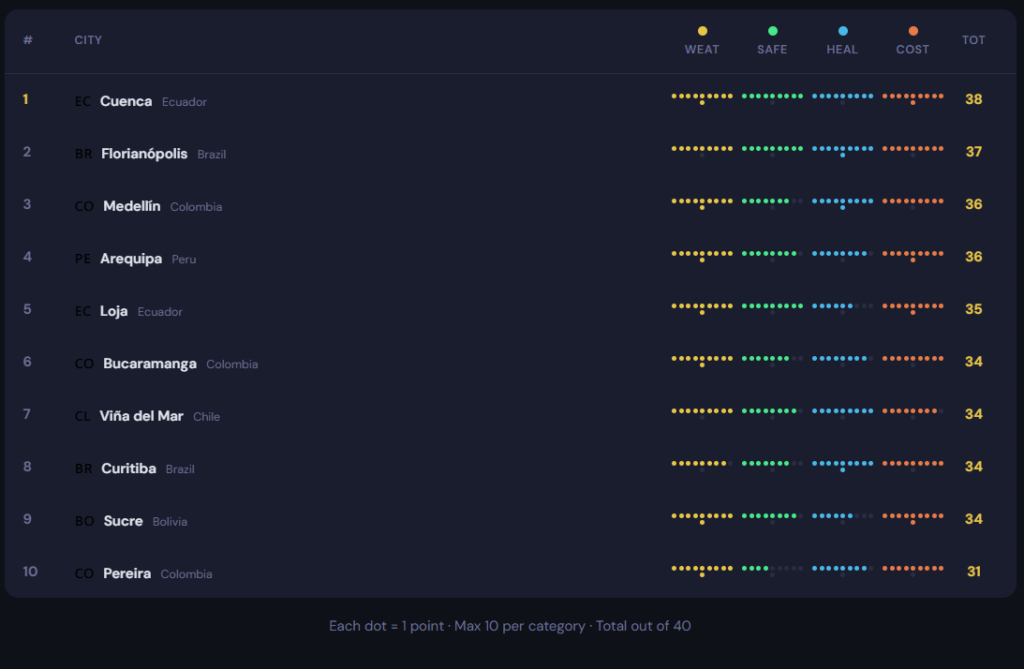
The scoring went from zero to 40 points. One Ecuadorian city hit 38 while a Brazilian island hit 37.
The top 5 cities on this list? Most people have never even considered them, but they should.
Let’s start with the criteria.
The Criteria
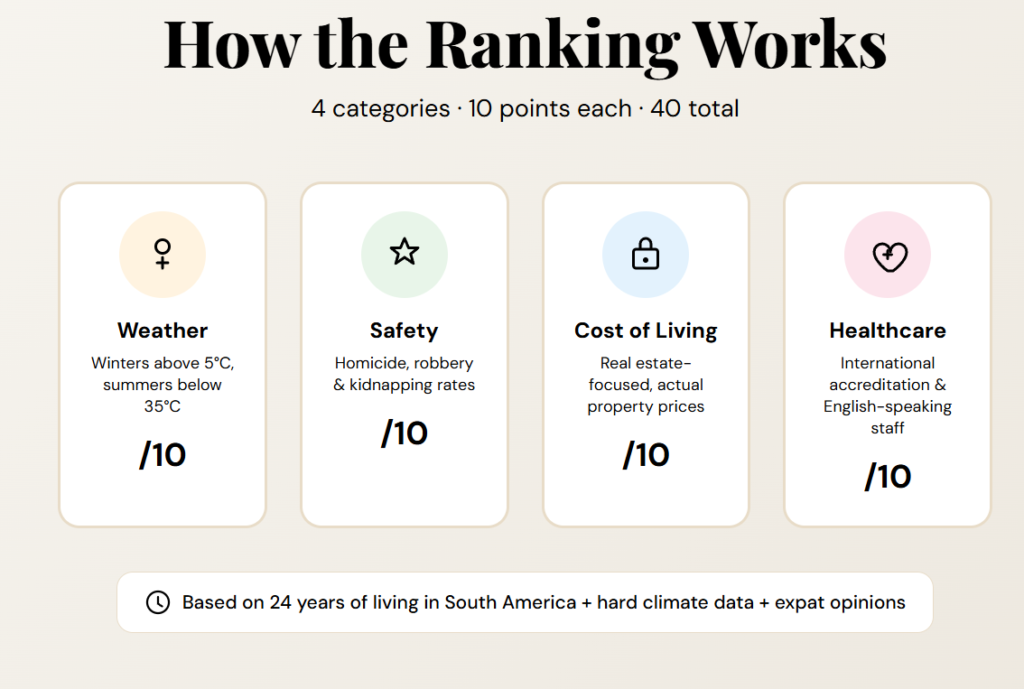
Here’s how this ranking works: four categories, each scored out of 10, for a total of 40 points. The weather filter is brutal, as winters must stay above 5 degrees Celsius most of the time, and summers cannot spike past 35 degrees often. Most of South America fails this test immediately.
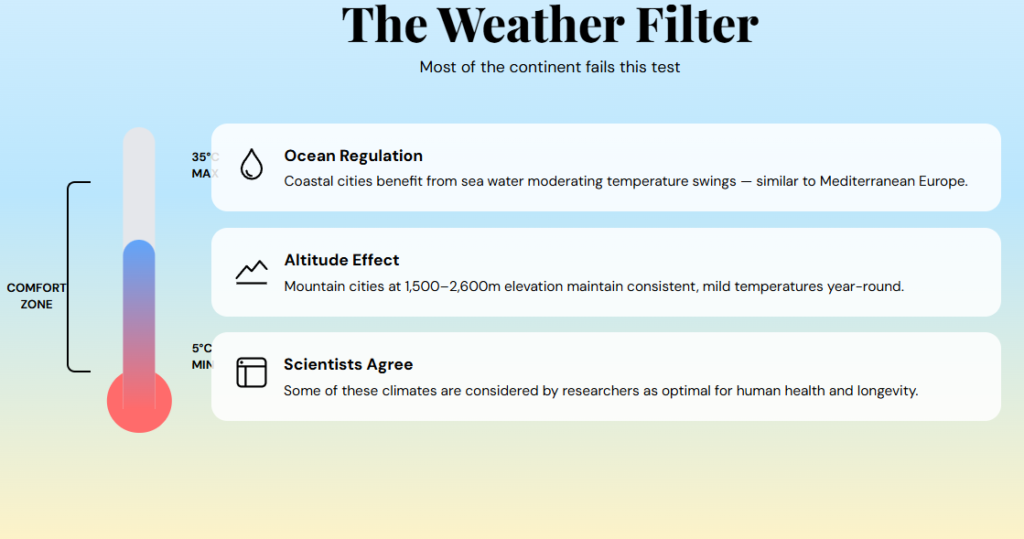
But a handful of cities nail it because either the seawater regulates their temperature (like we see in Mediterranean Europe) or because of their altitude. Safety means homicide rates, robbery statistics, and kidnapping risk. Cost of living is focused on housing prices, and for this one, I tracked actual property sales in premium neighborhoods.
Many of the cities you will discover today have fine, high-standard apartments with monthly rents below US$800! A healthcare grade 10 means hospitals with international accreditation and English-speaking staff.
And by the way, I am thinking about making a similar ranking about Europe—the best mild-climate cities in the Old Continent. What do you think? Type in the comment section “Europe” if you would like us to cover that! Now it is time to start at the bottom of our ranking.
10th Place: Pereira
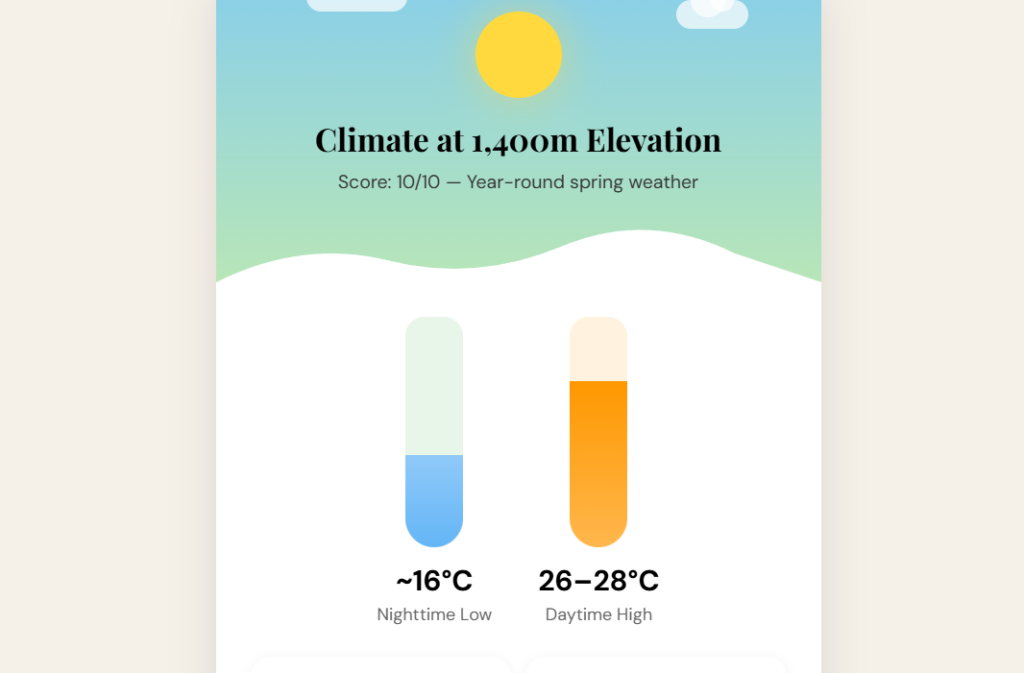
Located in the foothills of the Andes in western Colombia, Pereira has around 480,000 residents. Pereira sits at 1,400 meters elevation in Colombia’s coffee region, and that altitude does the work for you. Winter nights never drop below 16 degrees Celsius, and summer days hover around 27 to 29 degrees.
You get mild rains that keep everything green and zero flood risk in the upscale neighborhoods.
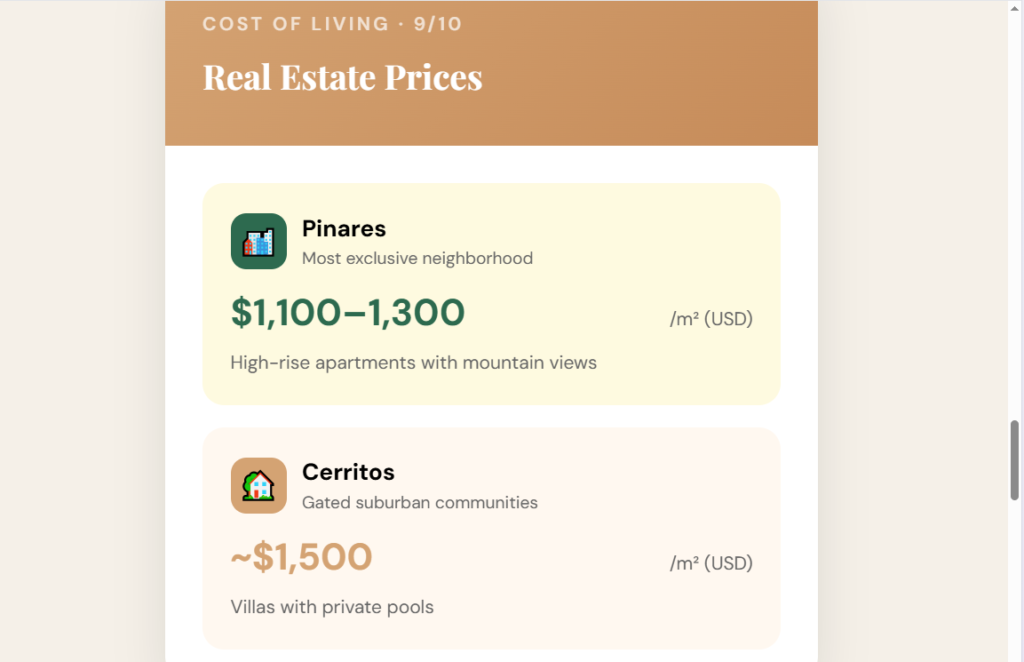
On weather alone, Pereira scores a 10 out of 10. To buy a home, the price is 1,100 to 1,300 USD per square meter in premium areas like Pinares, and monthly rents are mostly between 550 to 700 USD.
Healthcare is solid too. Clínica Megacentro Pinares and Hospital Universitario San Jorge both have English-speaking staff and modern equipment. These aren’t world-class by international standards, but they’re reliable for routine care.
Pereira’s homicide rate climbed to about 45 per 100,000 in 2025, up 83 percent from the year before.
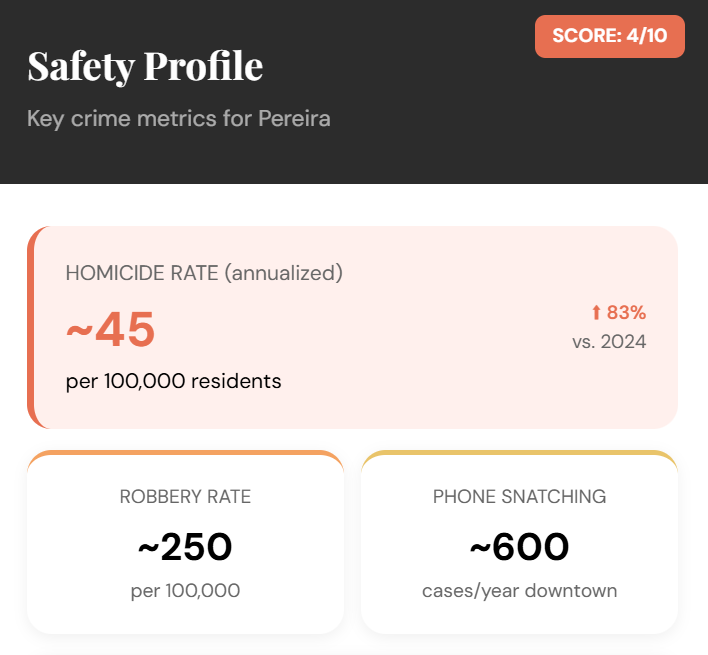
Crimes like phone snatching happen constantly in downtown areas. You need to avoid flashy displays and stay aware of your surroundings. But this doesn’t mean you can’t live well in Pereira. You can, but it is better to stay in expat-friendly neighborhoods and skip downtown after dark.
Another criticism some locals made about Pereira is that it might be tedious, as a local told us:
“Pereira is boring—sure there is nature and beautiful towns around the city, but the city itself is very monotone with limited culture and poor gastronomy (the best pizza they sell is pineapple and a corn-laden monstrosity with the crust pumped with caramel).”
Pereira got 10th place because it has some trade-offs steeper than the other cities in this ranking.
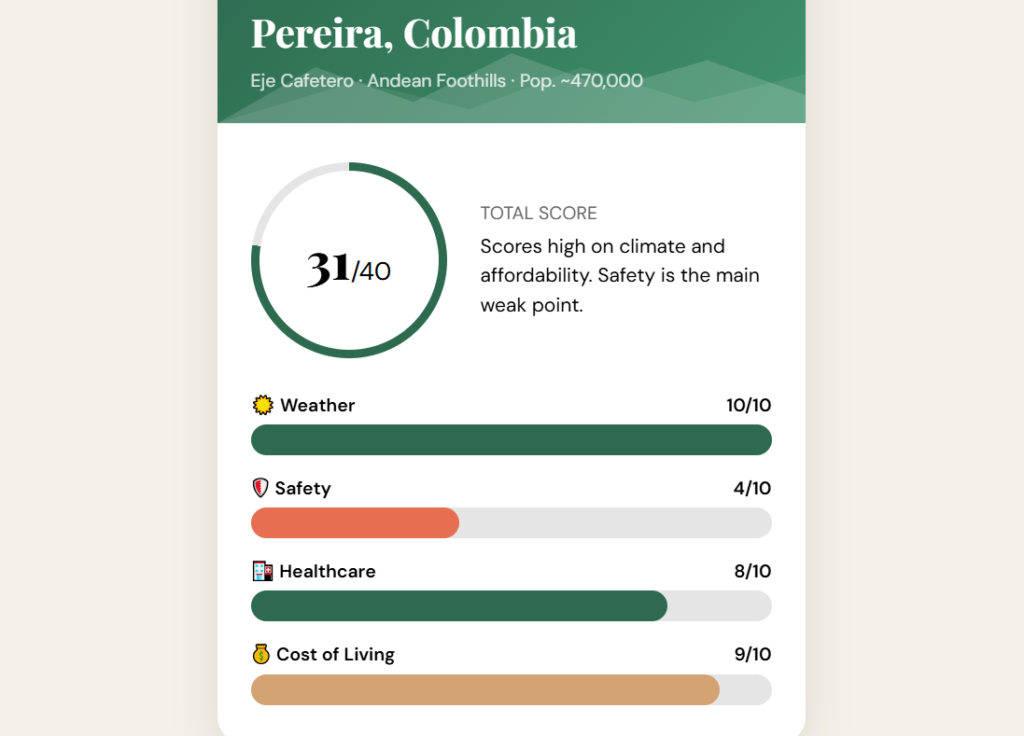
All the next 9 cities in our ranking are way safer than Pereira.
9th Place: Sucre
Nestled in the south-central part of Bolivia, Sucre is the constitutional capital and is home to about 300,000 residents.
Locals say really good things about this city, like this former resident told us:
“Sucre is pretty cool—quiet but had enough going on. Bolivians from the mountains are friendly but very timid. I ended up living in as close to a mansion as I’ll ever get. It’s a very pretty little colonial town, a couple of decent restaurants, and a decent amount of tourism. It’s at a high altitude, so it takes a while to get your breath.”
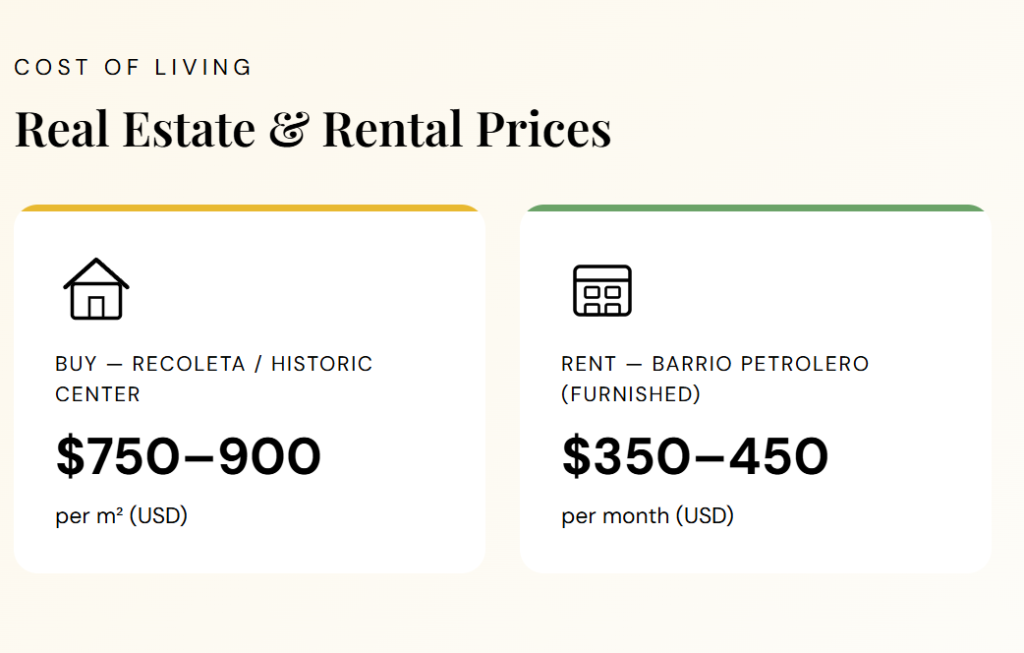
You can rent an apartment in an upscale neighborhood for 400 to 600 USD per month. These are the lowest absolute prices among the top five cities on this ranking. Your money goes further here than anywhere else we’ve covered so far.
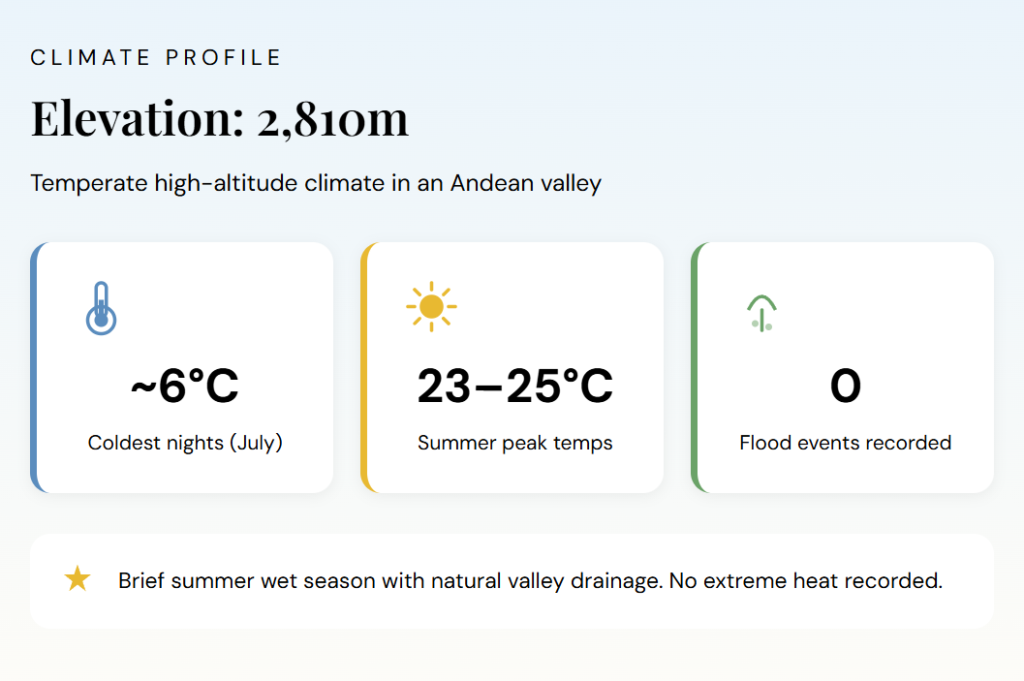
Sucre sits at 2,810 meters in an Andean valley, where July nights bottom out around 6 degrees Celsius, well above our 5-degree minimum, and summers peak at 23 to 25 degrees. You get brilliant sunshine without ever needing air conditioning or heating—a 10 out of 10 for weather. Safety there is exceptional.
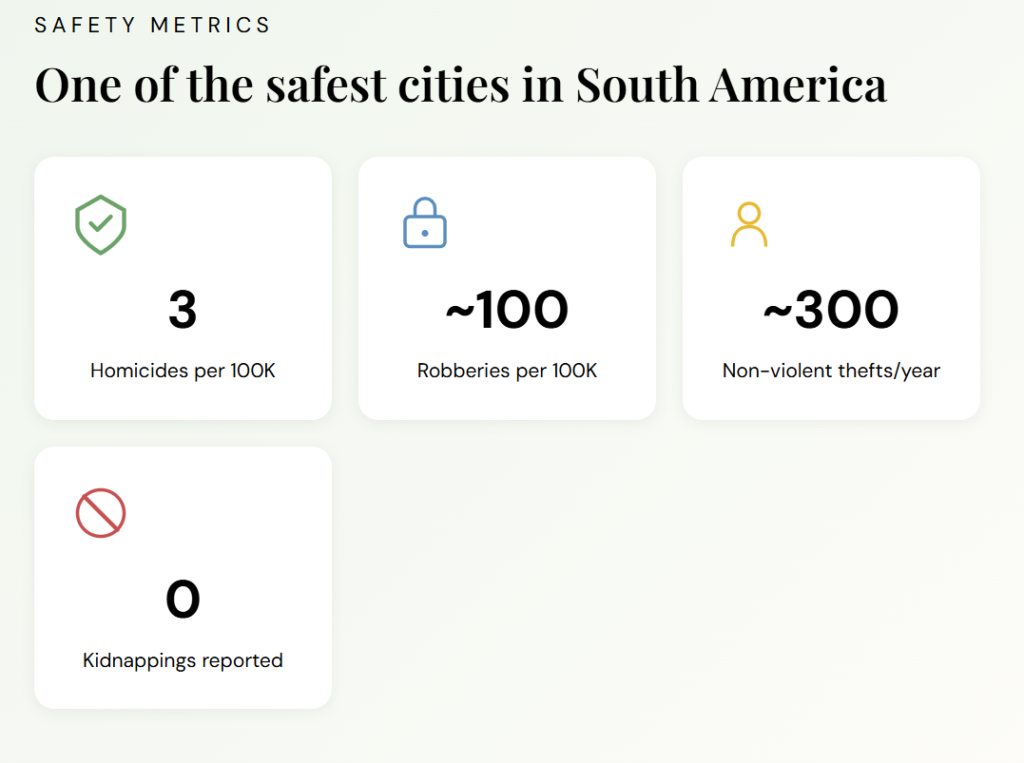
The homicide rate is about 3 per 100,000 people. Robbery rates are around 100 per 100,000. This is genuinely peaceful for South America.
But healthcare is the trade-off. Private institutions like Hospital Cristo de las Américas provide reliable private care for routine needs and minor procedures. Complex procedures often require travel to Santa Cruz or out of the country entirely.
Here’s the real question: are you healthy? If you have stable health and don’t need advanced medical care, Sucre is a financial dream. If you have chronic conditions and might need serious hospital intervention, you need a backup plan.
A 40-minute flight to Viru Viru International Airport connects you to Miami and Madrid, which helps if you need care outside Bolivia.
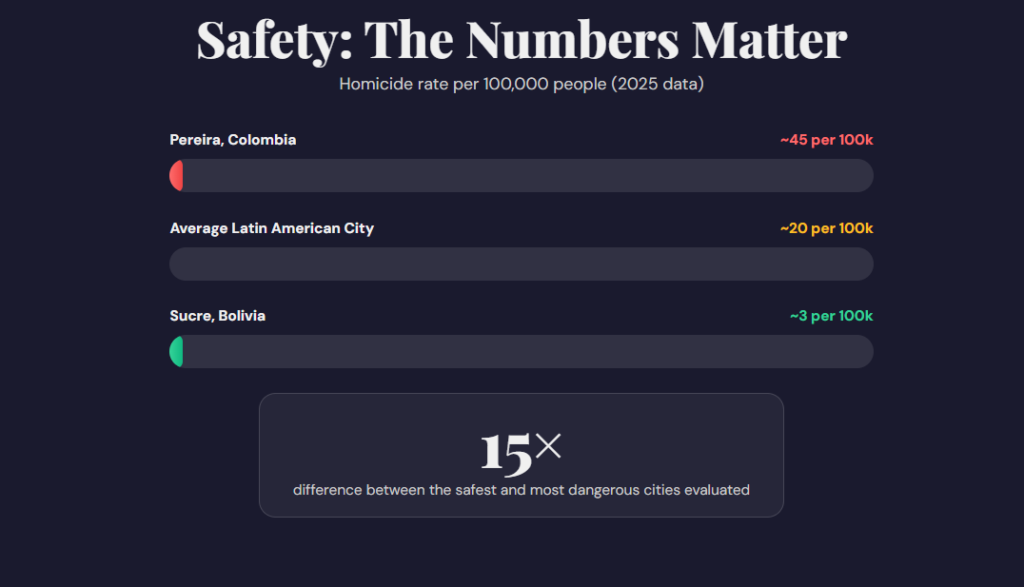
Sucre scored 34 out of 40, and it offers something almost no other city on this list can match: ultra-low cost of living paired with genuine safety. The savings are massive, but the medical depth isn’t as strong as the next cities on this ranking.
8th Place: Curitiba
This is the capital of Paraná state in southern Brazil, with a population of almost 1.9 million people.
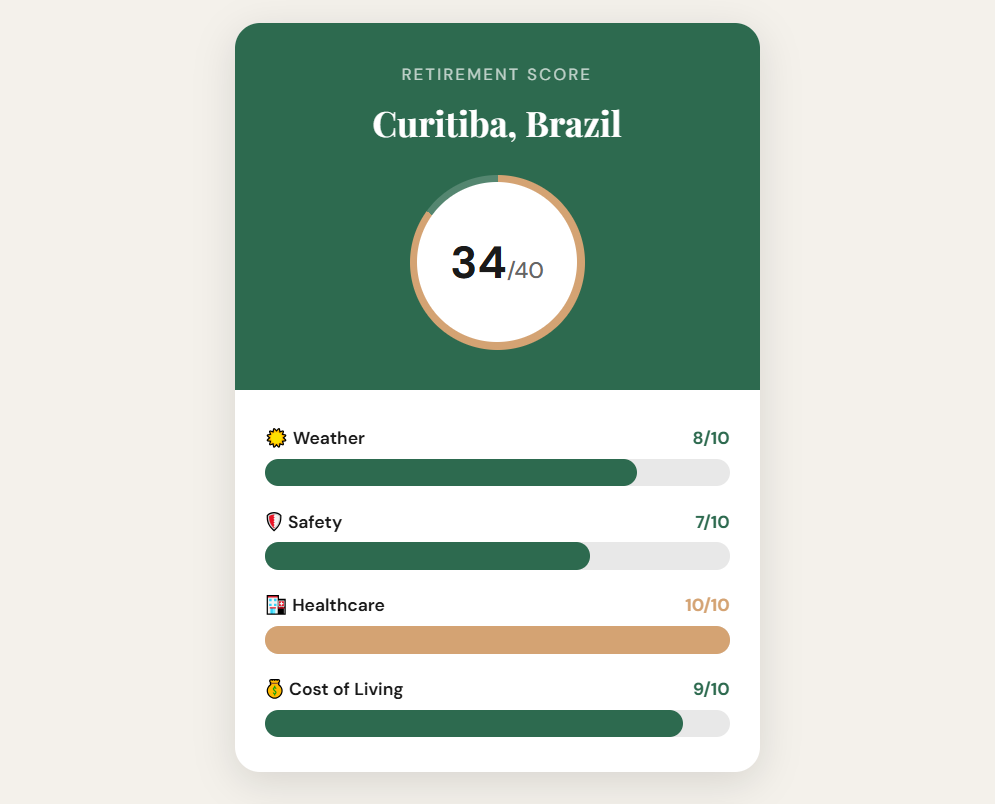
Healthcare there is very strong. The city has institutions like Hospital São Marcelino Champagnat, Hospital Universitário Cajuru, and Hospital Nossa Senhora das Graças.
The São Marcelino Champagnat Hospital has JCI accreditation—a world-class standard. When you need a specialist, you get direct access without traveling outside the city. You don’t need to fly to São Paulo or out of the country for serious care.
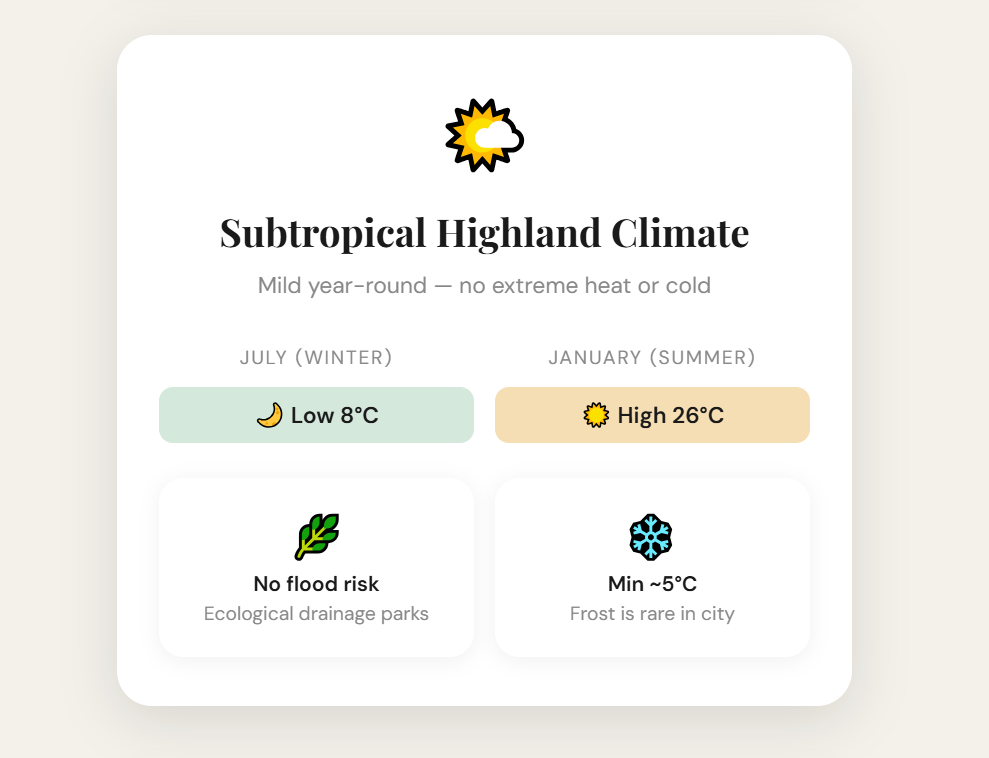
About the weather: the climate in Curitiba is cooler than most cities on this list. During the colder months, evening temperatures drop to about 8 degrees Celsius, while summer afternoons usually hit 26 degrees. The city gets abundant sunshine without extreme heat.
If you want perpetual spring, this is closer to mild autumn. The climate scores 8 out of 10, not perfect, but dependable.
Safety is good for Brazilian standards, but not among the best on this list.
Homicides are around 12 per 100,000, and robbery numbers are about 350 per 100,000. These numbers are acceptable if you stay in established expat zones like Batel and Ecoville, where security infrastructure already exists.
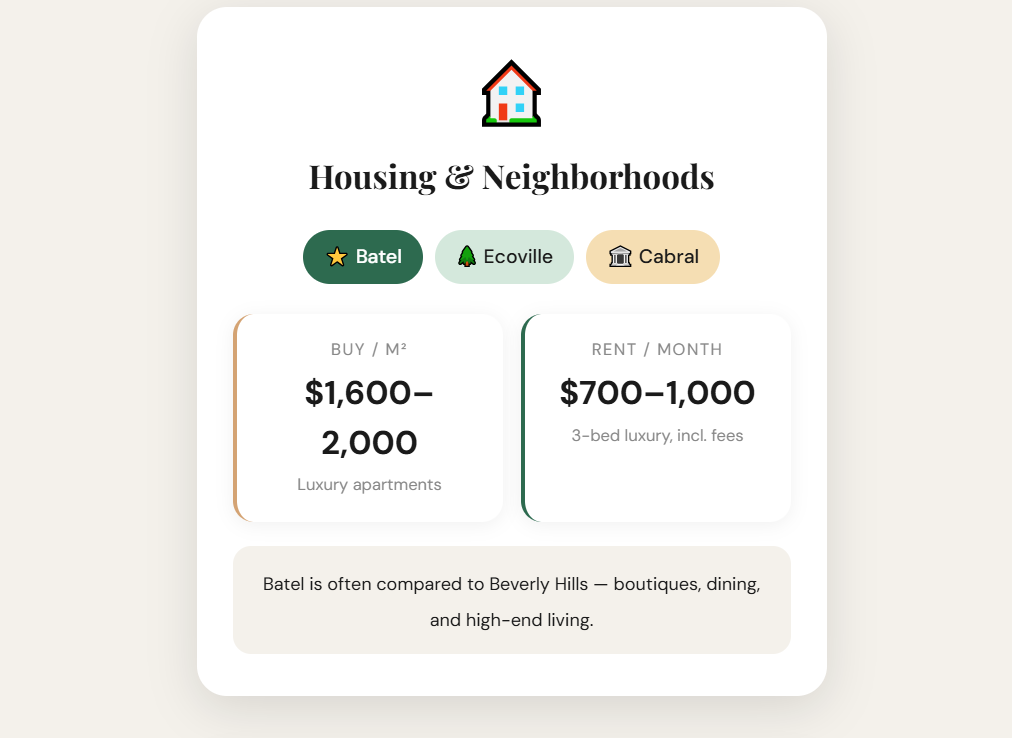
Housing in these premium neighborhoods costs about 1,600 to 2,000 USD per square meter, and rents run 700 to 1,000 USD per month.
This is higher than Ecuador or Bolivia, but the medical infrastructure justifies it. Curitiba scored 34 out of 40 and represents something different from the tropical and high-altitude cities. This is a subtropical highland option with some of South America’s best private hospitals.
It is a good place for retirees who prioritize healthcare access and have the budget to match a more developed Brazilian city. Now we shift to cities where the climate becomes nearly flawless.

7th Place: Viña del Mar
Situated on the central coast of Chile just northwest of Santiago, this city has a population of about 330,000. Winter evenings average 7 degrees Celsius, and daytime summer highs average a comfortable 24 degrees. You get mild winter rains and zero flood risk in the established neighborhoods where expats live.
The moderate climate is heavily influenced by the cooling Humboldt Current, which acts as a natural climate control system. That scores a 9 out of 10 for weather. Central Chile and California are the only places in the Americas where you can enjoy the Mediterranean weather.
Safety is still good, even though in the last 10 years it got remarkably worse. Homicide rates are roughly 6 per 100,000 people, so the same as in the US. Petty theft spikes during the summer tourist season, so standard caution applies in crowded areas.
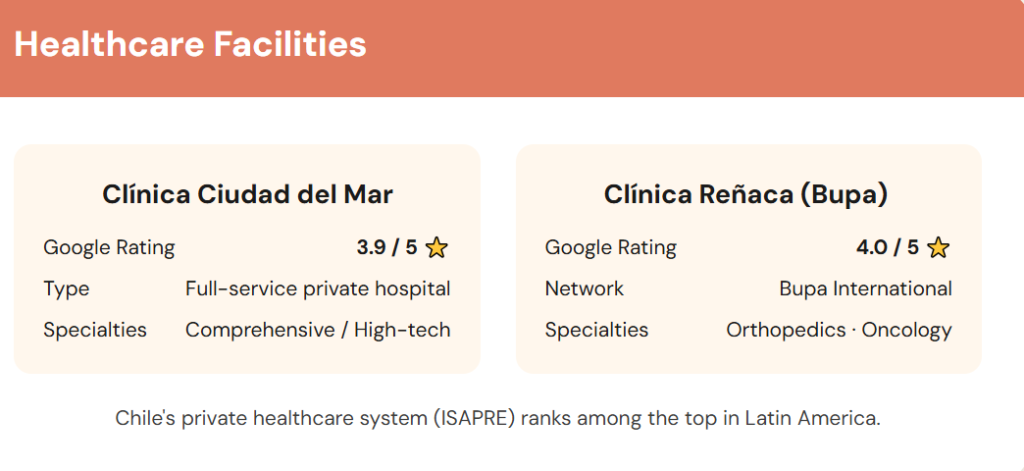
Healthcare is okay; there are some medical clinics, but the biggest advantage is that the city is just 90 minutes from Santiago, where all the best hospitals in Chile are.
However, Chile has the highest cost of living on this entire list. Beachfront properties in Reñaca cost 2,200 to 2,600 USD per square meter. Monthly rents for upscale apartments run 900 to 1,300 USD, meaning your money doesn’t stretch as far as it does in Ecuador, Colombia, or Bolivia.
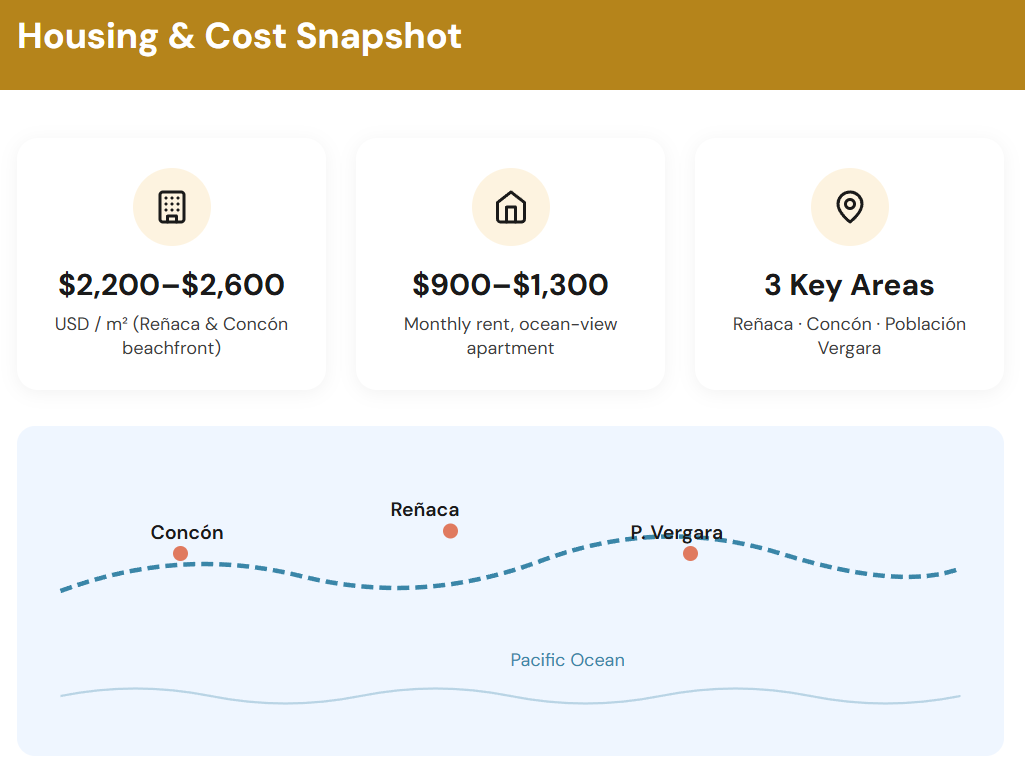
If you want something more affordable, Valparaíso, just at the side of Viña, offers lower prices, but it is very different from Viña. Getting to major international hubs requires a connection through Santiago’s airport, which is a 1.5-hour drive or bus ride away. That’s manageable if you travel occasionally, but it adds friction if you need to move frequently.
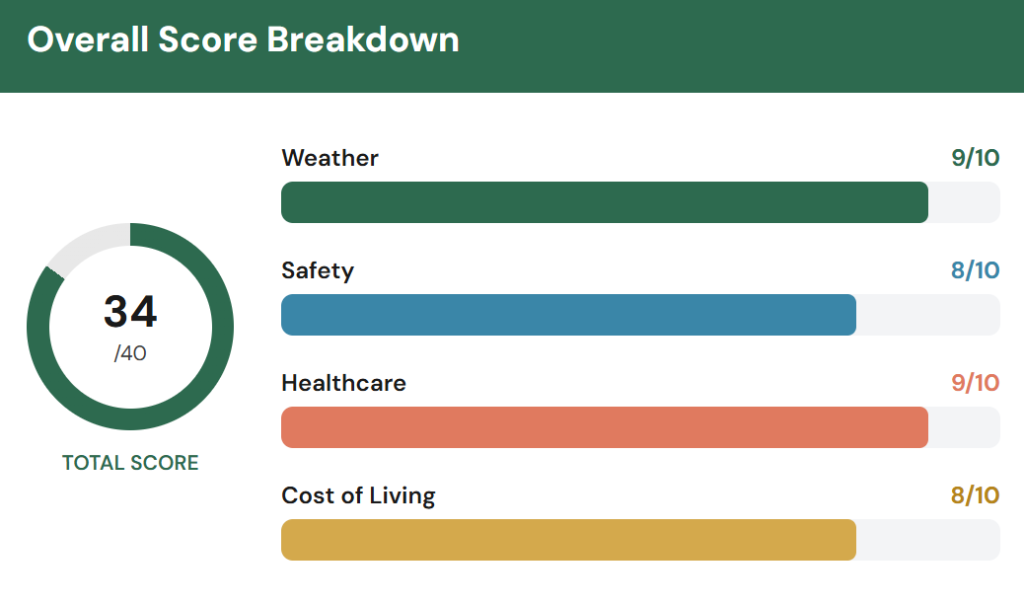
Viña del Mar works for retirees who want beach living and can afford Chile’s premium prices for stability and safety. Viña del Mar scored 34 out of 40 and is the only city on this list where you get a genuine beach lifestyle with a Mediterranean climate. Just be aware that Chile changed a lot in the last decade—something I covered in a previous article.
6th Place: Bucaramanga
Located in northeastern Colombia on a plateau in the Andes, Bucaramanga has a population of roughly 600,000 residents. You might be surprised that I added another Colombian city here despite promising to not include violent cities beyond Pereira. And yes, Colombia carries a reputation for violence, but it is not everywhere.
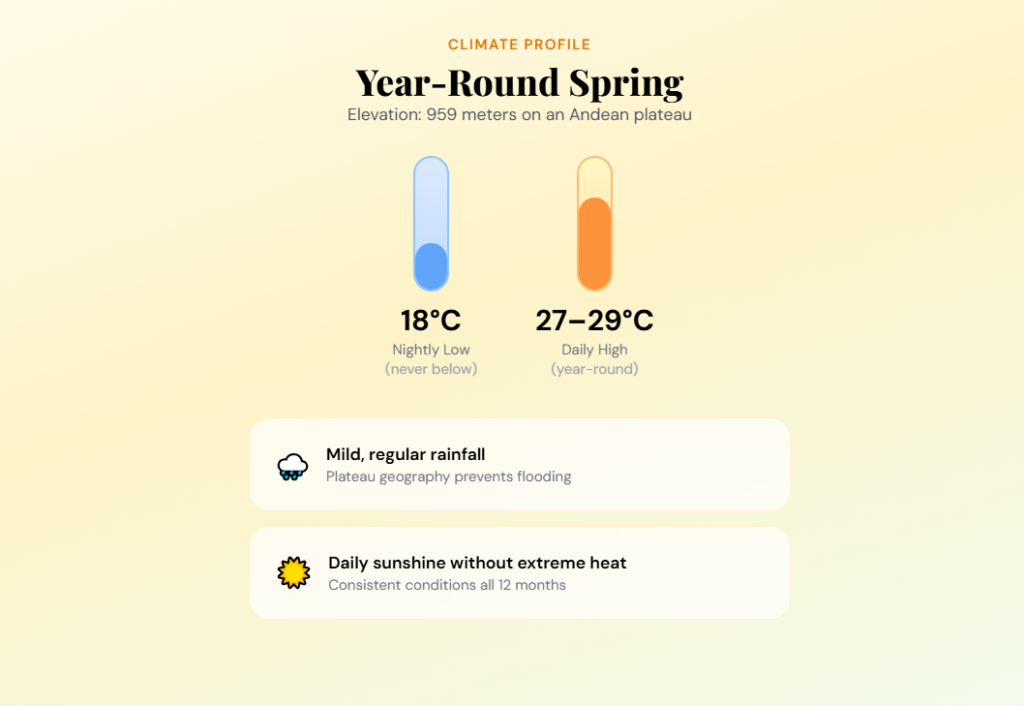
Bucaramanga proves that point. Homicides are at about 10 per 100,000 people, and robbery figures are around 220 per 100,000. These numbers are much better than in Houston or Philadelphia, for example.
Year-round weather stays consistently pleasant with no seasonal extremes. Overnight lows rarely fall below 16 degrees Celsius, and the warmest afternoons reach about 27 to 29 degrees. Abundant sunshine, mild rains, and the city’s plateau geography prevent flooding even in premium neighborhoods—a 10 out of 10 for weather.
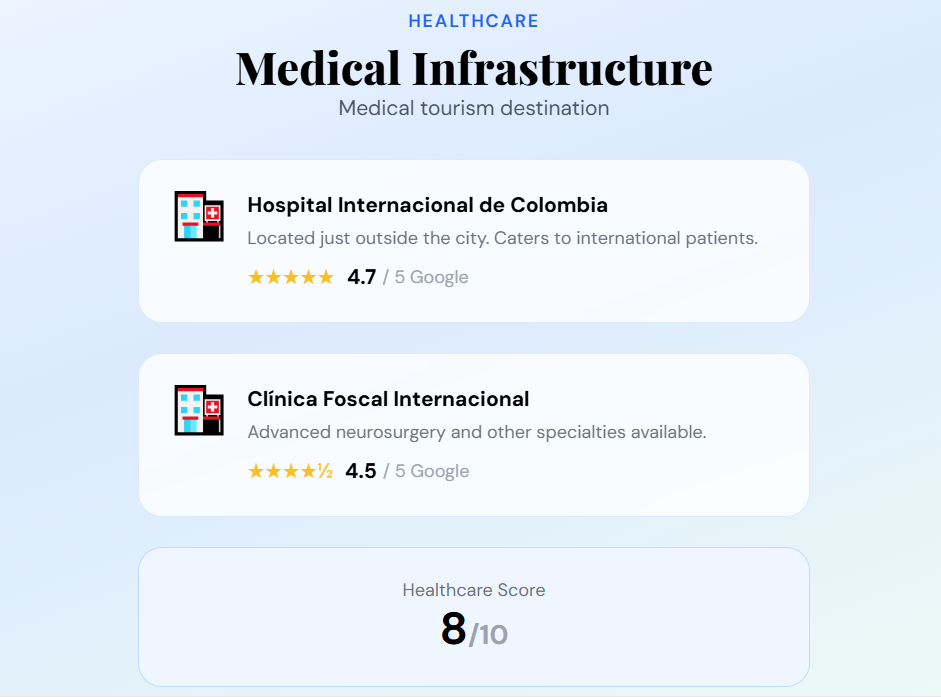
Healthcare is strong there. Hospital Internacional de Colombia is a JCI accredited institution, part of the Mayo Clinic Network, and is among the best in South America. There are also other major medical centers in the city with English-speaking staff and modern equipment.
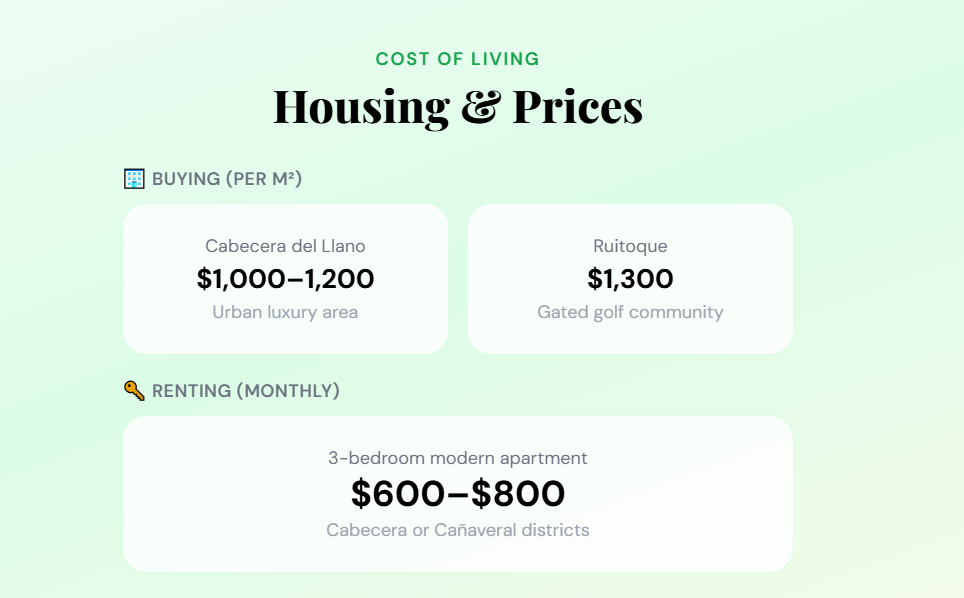
Real estate costs about 1,000 to 1,200 USD per square meter in desirable zones. Monthly rents in prime districts run 600 to 800 USD. Your money stretches further here than in Medellín or other major Colombian cities.
Geographic connectivity is surprisingly strong. A short 45-minute flight connects you to Bogotá for as low as US$27.
Bogotá serves as the hub for flights across North America and Europe.
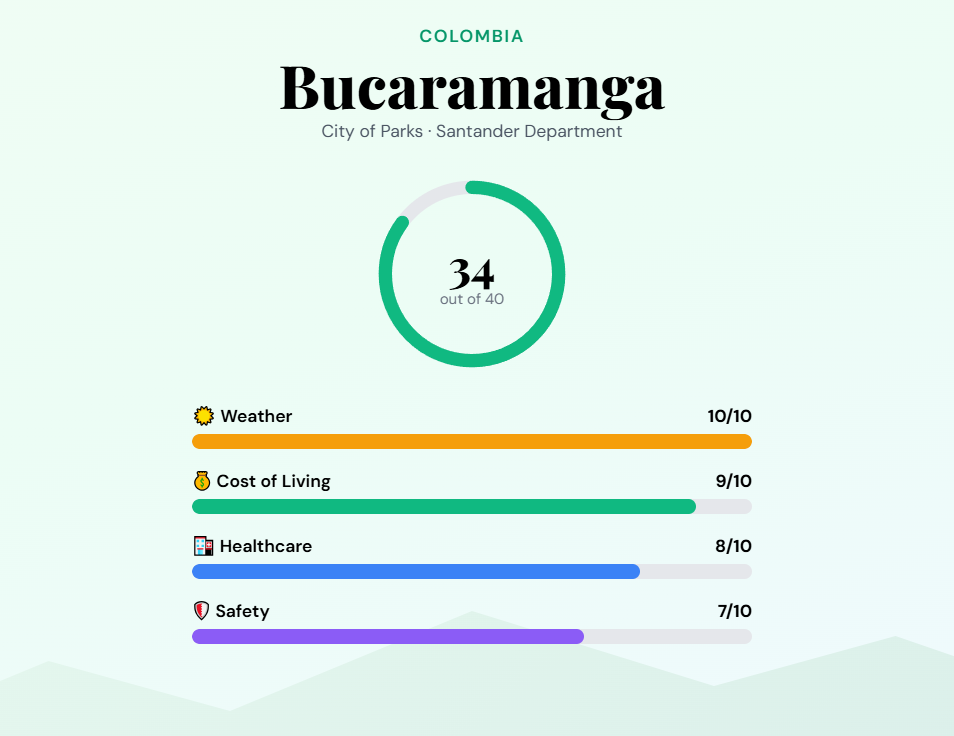
Bucaramanga scored 35 out of 40. It is one of these cities that are off the radar for most expats, but deliver good value.
5th Place: Loja
Loja is located at 2,060 meters in Ecuador’s southern Andes, and that elevation is the mechanism that creates its pleasant climate. Summer days reach around 35 degrees, but that peak rarely lasts. You get mild rains that keep the valley green and zero flood risk in residential zones.
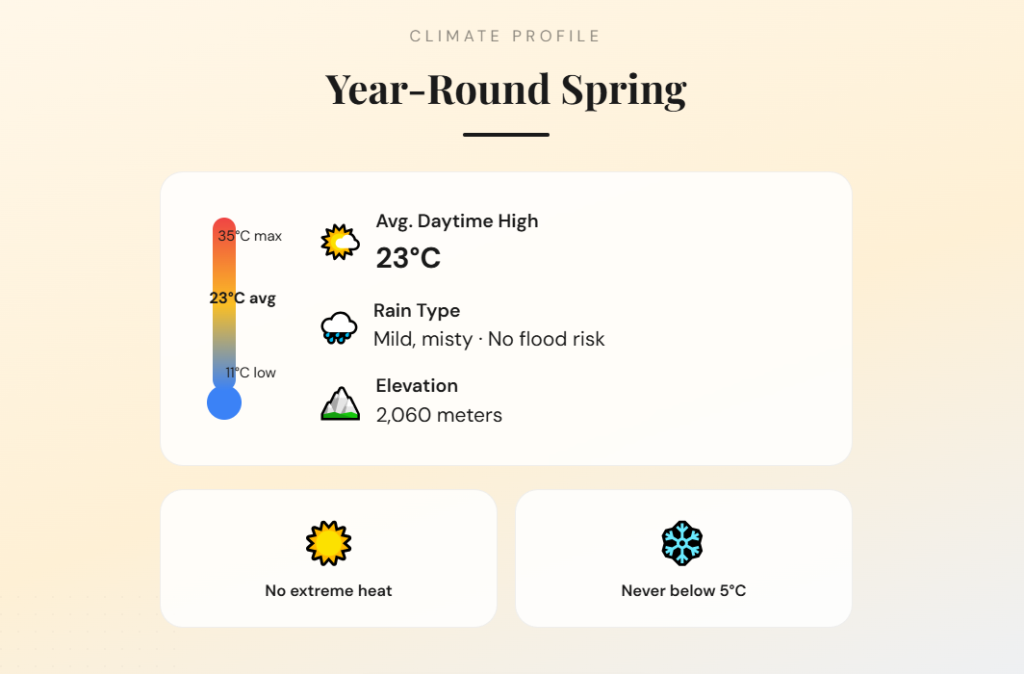
That’s a 10 out of 10 for weather.
Loja is also very safe for South American standards. The homicide rate is just 3.5 per 100,000 people—almost 50% lower than in the US. Robberies are near 80 per 100,000.
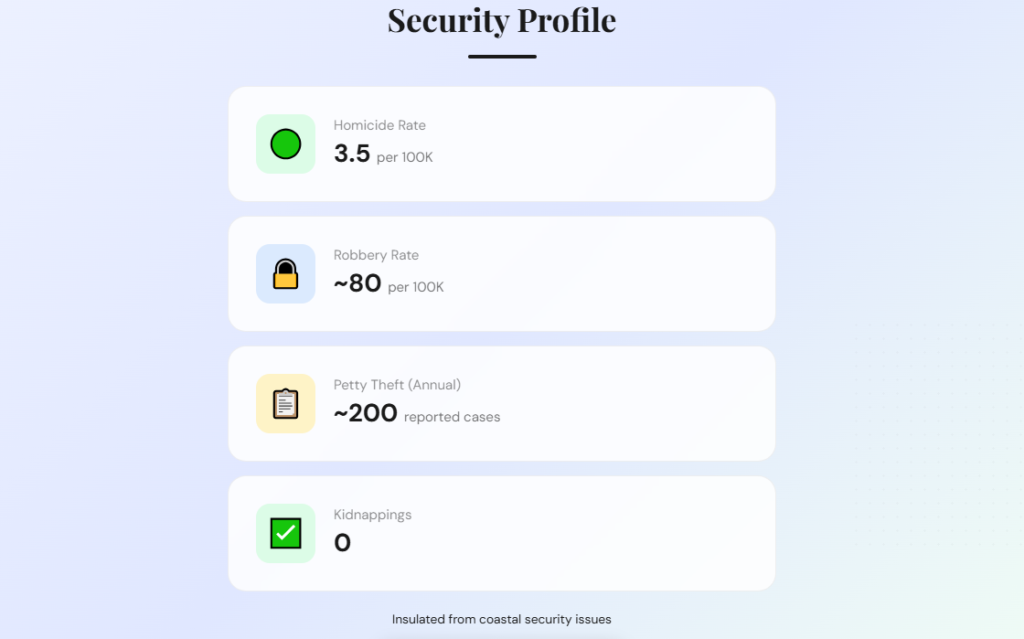
The same insulation that makes Loja safe also is responsible for its weak point: healthcare. There are well-evaluated institutions, like Clinica San Agustin, but they are relatively small. Advanced procedures require travel to Quito or Guayaquil, a short flight away if something serious happens.
Real estate costs about 800 to 950 USD per square meter in desirable neighborhoods like Zamora Huayco. Monthly rents run approximately 350 to 500 USD. This is the lowest absolute cost of any city in the top five.
So if you need complex medical care regularly, Loja is not the best option, but if you are healthy and want maximum purchasing power, then it is a good idea.
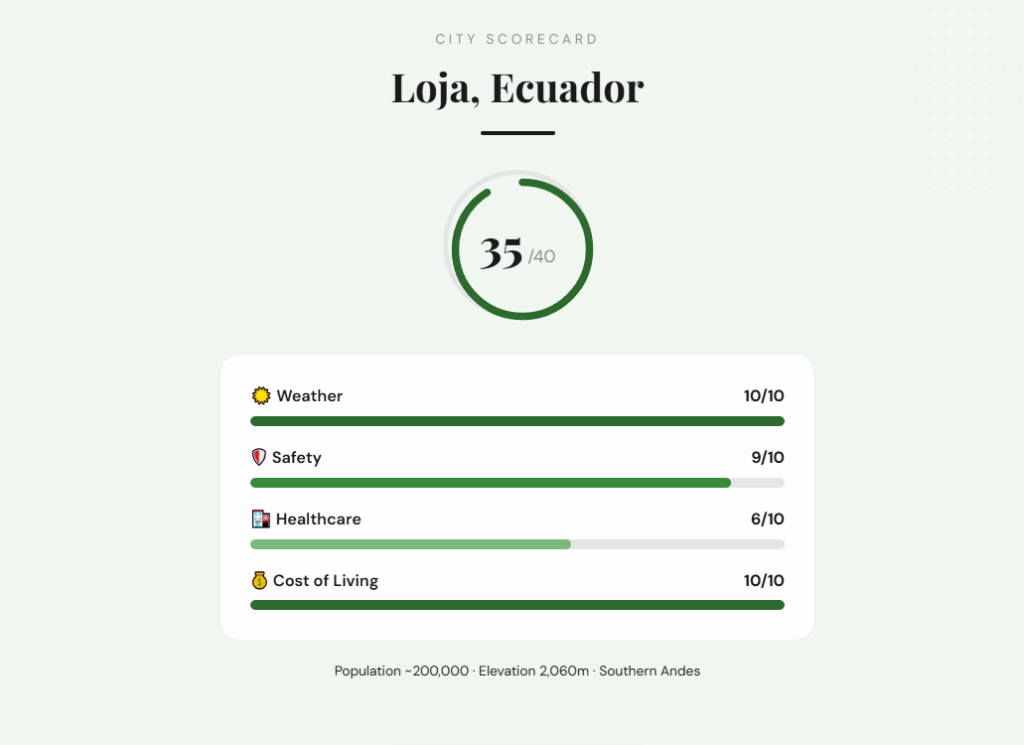
Loja scored 35 out of 40 and is the value king for those who want a good climate for lower prices.
4th Place: Arequipa
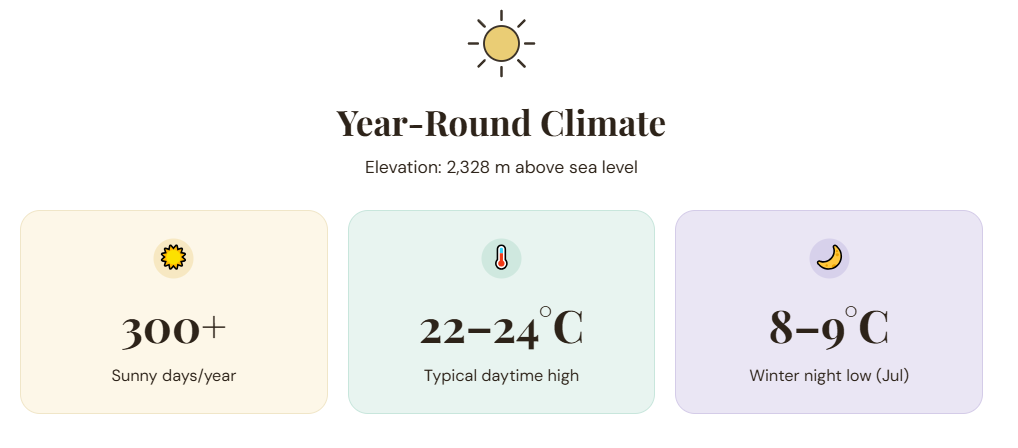
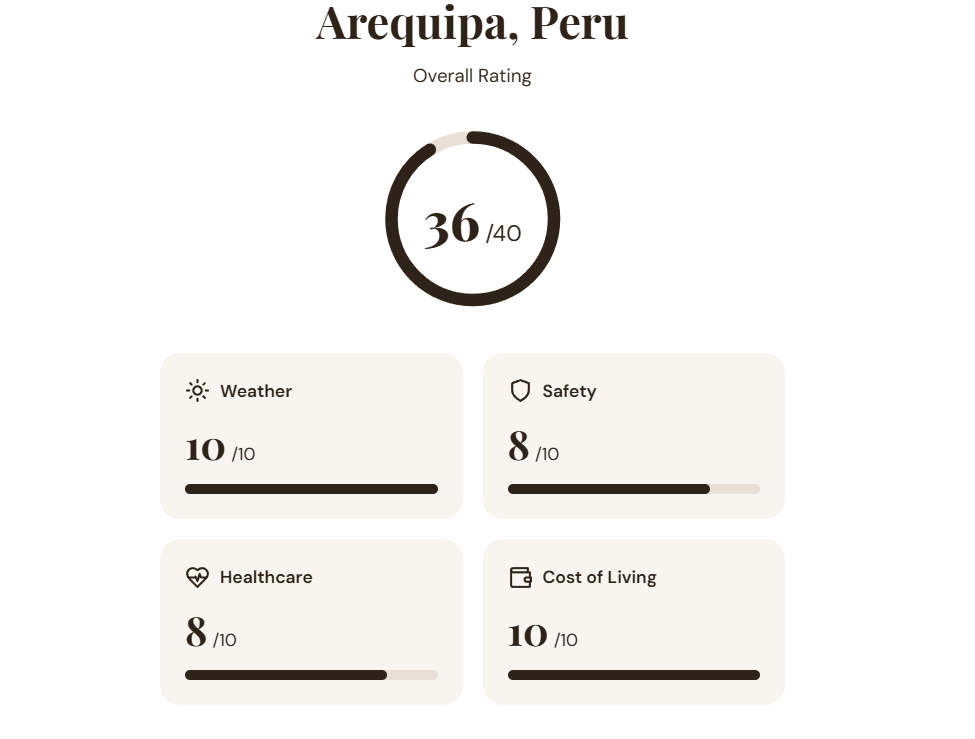
Arequipa is located at 2,335 meters in Peru’s southern highlands, and the altitude creates its ideal climate. Winter nights drop to around 8 or 9 degrees Celsius, and summer highs reach 22 to 24 degrees. You get abundant sunshine, a dry climate, and zero extreme weather swings.
That’s a 10 out of 10 for weather, matching the best cities on this list.
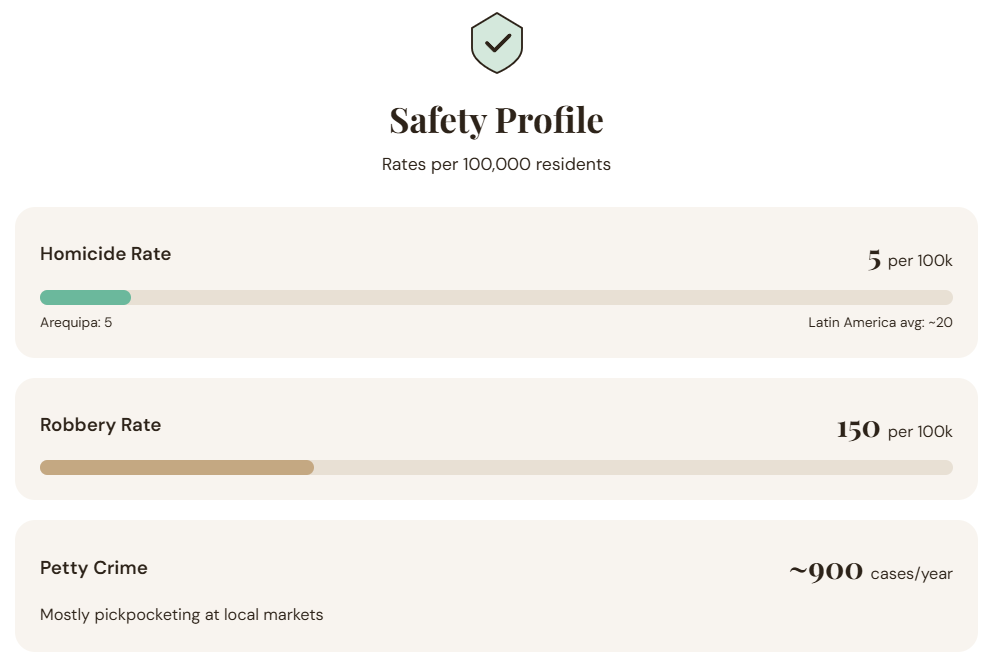
Safety there has improved dramatically compared to Lima, and the crime rates are lower than most major American cities. While locals say that Arequipa “feels” small, it has a metropolitan area with over 1 million residents, and that brings a good healthcare infrastructure. There is a massive hospital in the city, the Hospital Nacional Carlos Alberto Seguin Escobedo, that offers complex procedures, albeit there are criticisms regarding waiting times.
Real estate in high-end districts like Yanahuara and Cayma costs roughly 1,100 to 1,300 USD per square meter. Premium rentals run around 500 to 700 USD per month. Arequipa scored 36 out of 40.
The city has excellent weather and infrastructure that rival cities higher on this list, but at a cost that’s genuinely affordable. That combination is rare in South America. This is what a local told us about Arequipa:
“I live in Arequipa—it’s a city where you have everything you need, but it’s not overwhelming like Lima. The weather is really good—mild, sometimes a bit cold, but if you’re from somewhere with below-zero temperatures, you probably won’t even notice the cold. There’s not much nightlife like in Lima. It’s a place to live quietly, but it’s also a relatively touristy city and it’s normal to find foreigners in the center.”
3rd Place: Medellín
The location of Medellin is at an elevation between 1,400 and 2,500 meters, which acts as a natural shield against tropical heat.
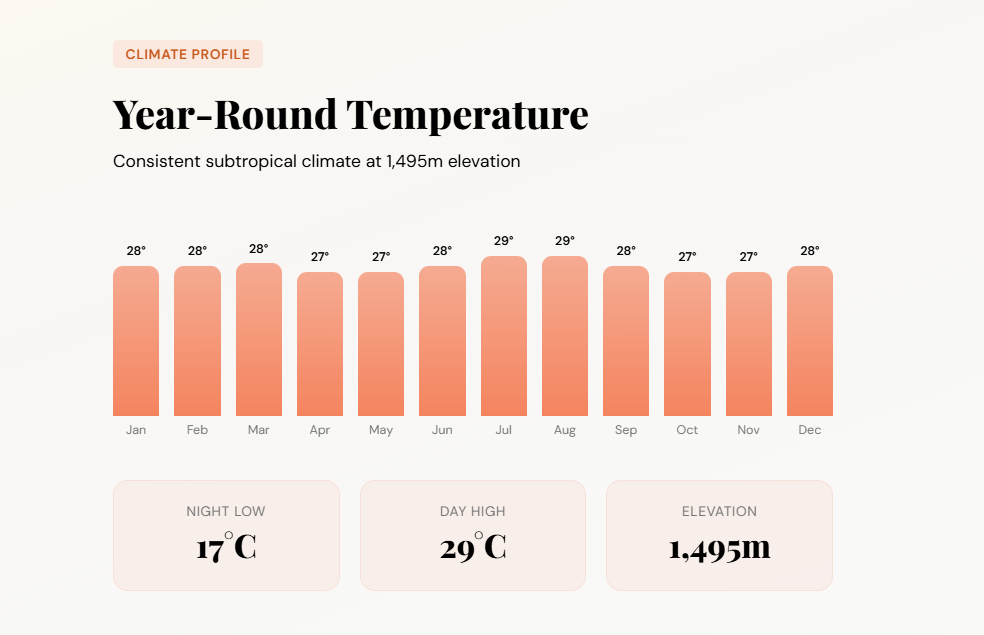
It is a climate in that sweet spot between tropical and mountain weather. Evening temperatures generally settle at 17 degrees Celsius, with daytime highs reaching 27 to 29 degrees. You get mild rains and low flood risk in the affluent neighborhoods where expats live.
The city has a traumatic past, but safety has improved dramatically over the past 20 years. The homicide rate is 12.9 per 100,000 people, comparable to Kansas City or Buffalo (NY). Petty crime is higher because the city has 2.4 million residents, so density brings street-level theft.
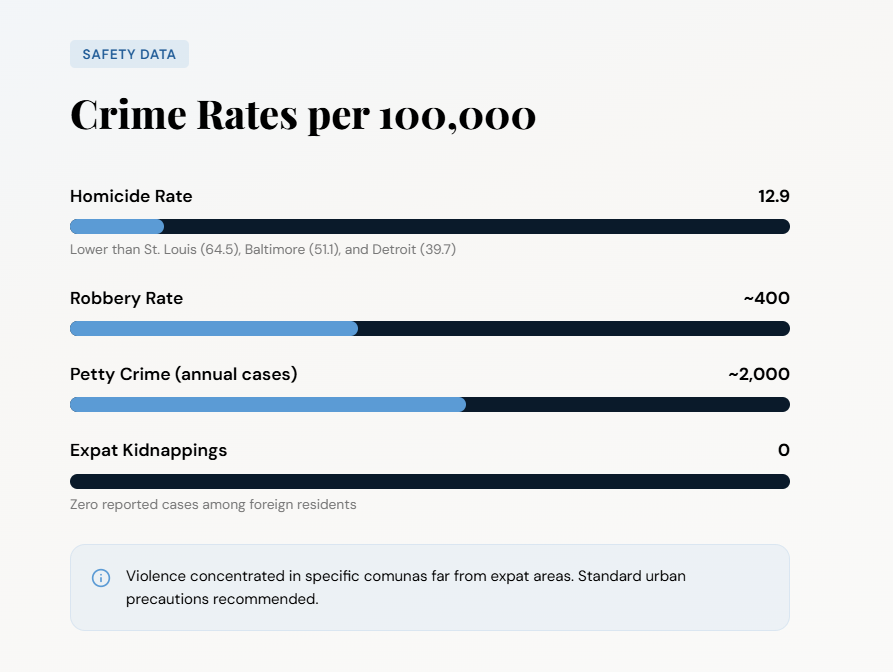
Violence is now restricted to cartel disputes in distant comunas, not in the neighborhoods where you’d actually live. Private security in upscale neighborhoods like El Poblado means you can live without constant vigilance. The city that was dangerous in the 1990s is now a thriving urban center with a young, educated population and a booming tech sector.

The healthcare infrastructure in Medellin is really good. The Hospital Pablo Tobón Uribe is one of the best-evaluated hospitals in the entire South American continent. Medellin also has other world-class hospitals, like Clínica Las Américas and the Hospital San Vicente.
So many institutions created a medical tourism ecosystem where foreigners go there for advanced treatment. Housing in El Poblado costs about 1,600 to 2,000 USD per square meter, and an upscale apartment rent will cost you something around 1,000 to 1,500 USD per month. José María Córdova International Airport serves the city with direct flights to New York and Madrid, so international mobility isn’t a problem.
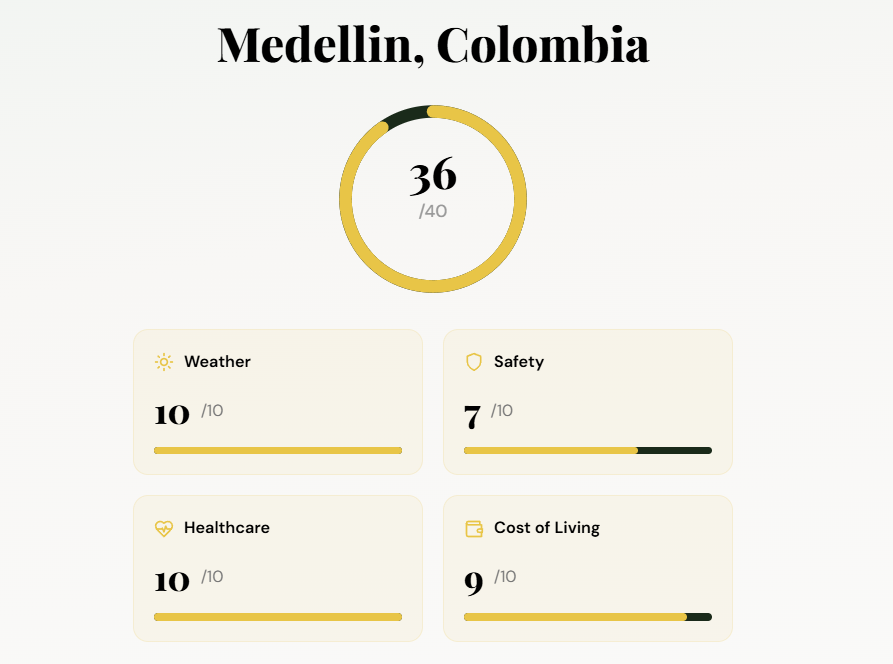
Medellín scored 36 out of 40. The city got safer (while not ideal yet), healthcare matches anything you’d find in developed countries, and the climate is good. But there are two more cities that edge ahead on almost every metric.
2nd Place: Florianópolis
Florianópolis is an island off Brazil’s southern coast which became one of the country’s biggest expat magnets. Winter temperatures stay above 5 degrees Celsius, and summer heat never gets extreme because constant sea breezes prevent it. The island’s topography keeps flooding out of premium neighborhoods even during heavy rains.
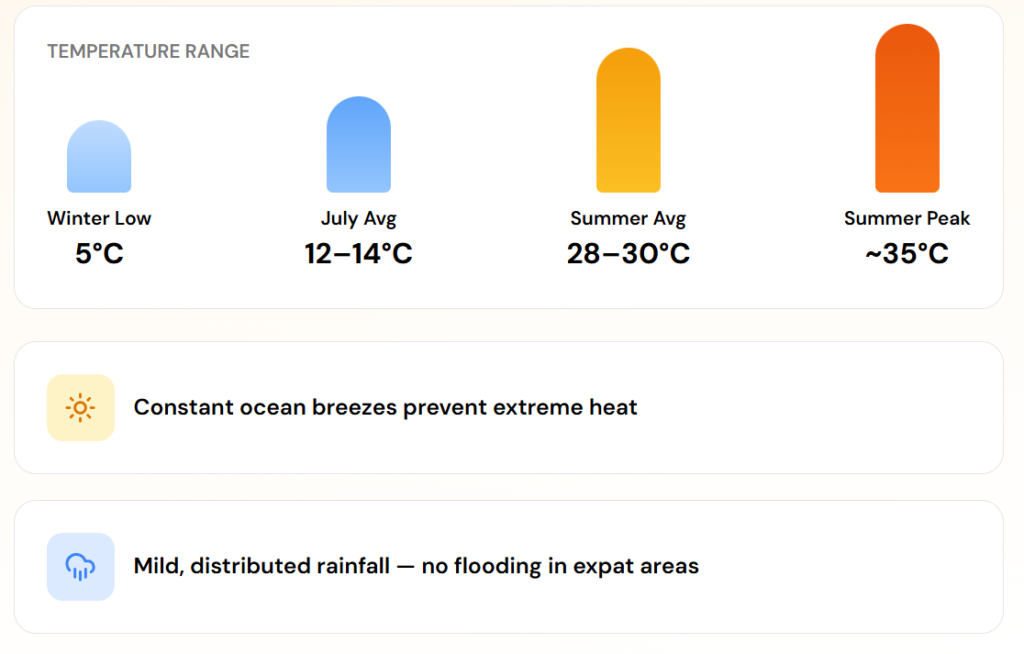
That’s a 9 out of 10 for weather.
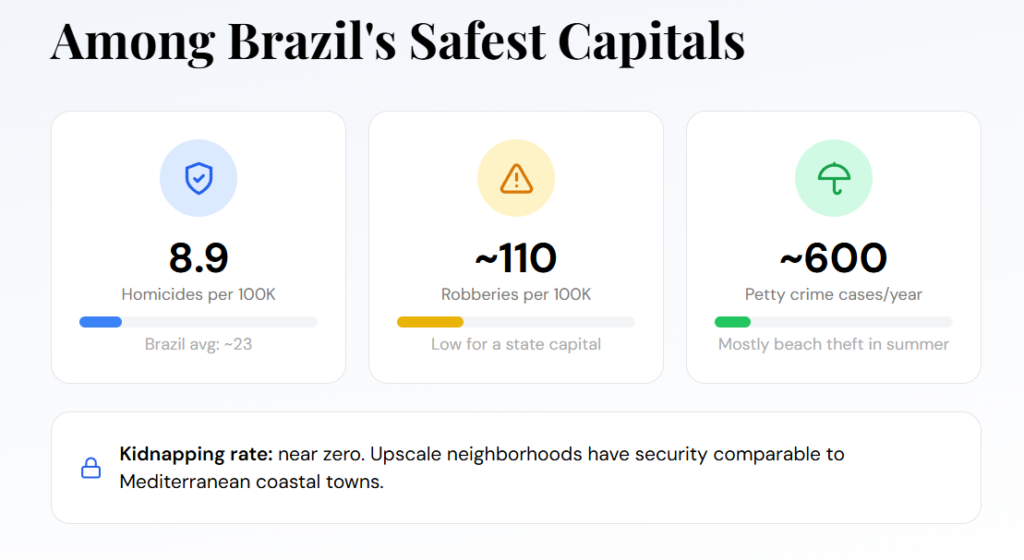
It is one of the two safest state capitals in Brazil, with homicide rates below 9 per 100,000 people. Robberies are at 110 per 100,000, which is remarkably low for this entire list. Petty crime occurrences are mostly opportunistic theft near beaches during the summer tourist season, not systemic urban danger.
The Baía Sul Medical Center scores 4.4 out of 5 in customer satisfaction, and SOS Cárdio scores 4.1. Both are among the leaders of healthcare quality in the region. They have English-speaking staff, modern equipment, and international accreditation.
In fact, in terms of sheer number of world-class healthcare institutions, Brazil and Colombia lead—we covered that in our ranking of healthcare quality in South America. Real estate prices are steep relative to other South American cities. Luxury purchases in Jurerê Internacional surpass 3,500 USD per square meter.
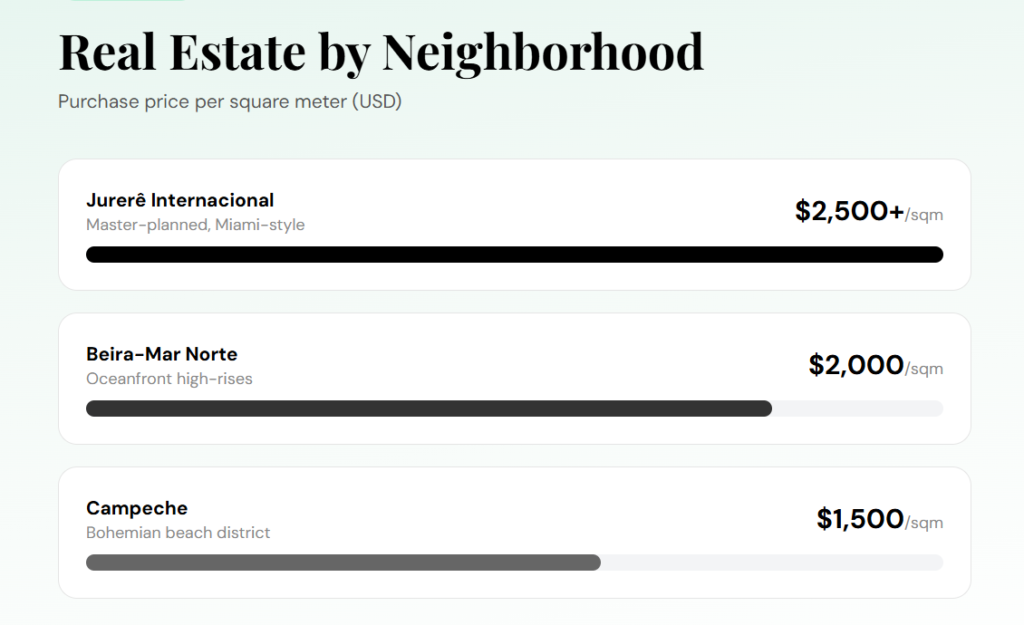
In other parts of the island, you can find a 2-room apartment for rent for something between 900 and 1,400 USD per month. Yes, your money doesn’t stretch as far as it does in Ecuador or Colombia. But Floripa is a cosmopolitan hotspot with a thriving tech sector, excellent restaurants, and a young, educated population.
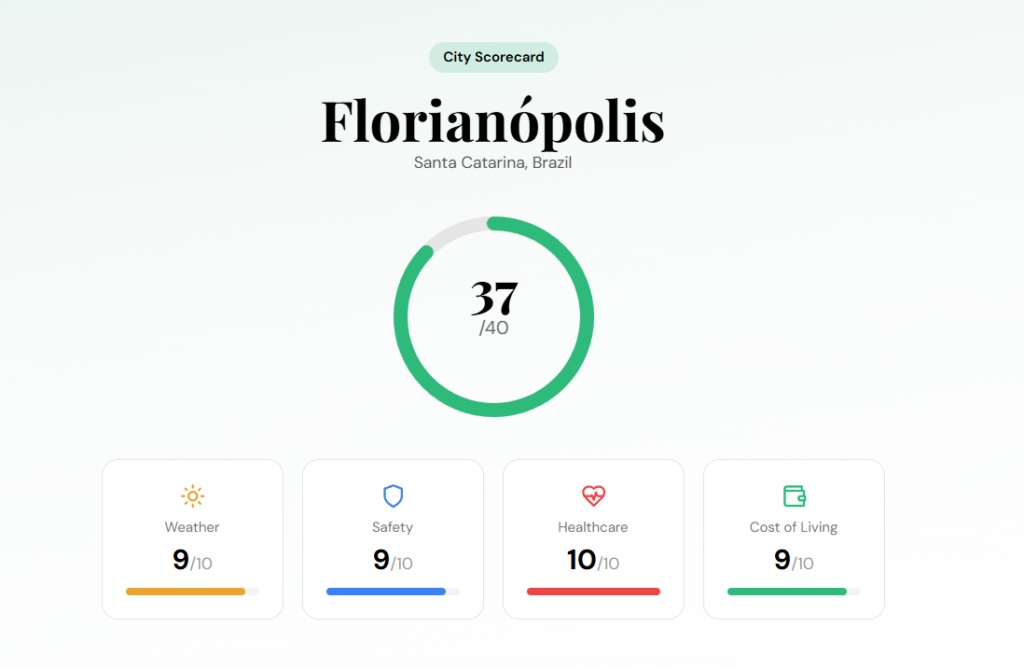
This isn’t a quiet retirement town where you watch the years pass. Florianópolis scored 37 out of 40, as it has higher real estate costs, but also has world-class healthcare and splendid beaches. If you have the budget, that trade is worth it.
1st Place: The Best Mild Climate City to Live in South America
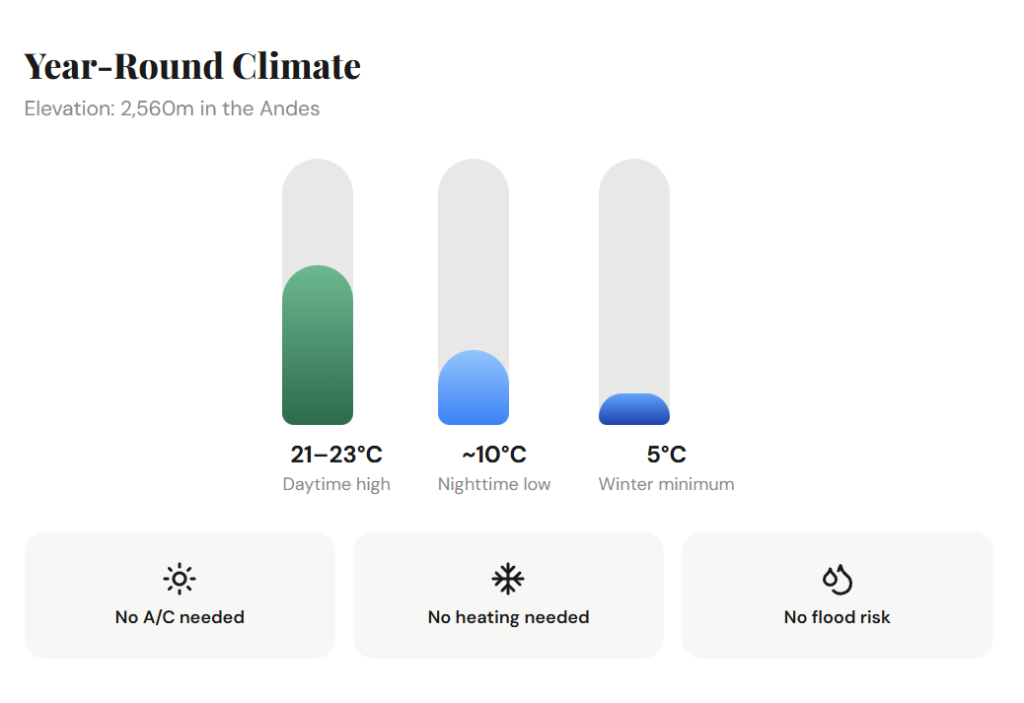
Cuenca is at 2,560 meters high, and that altitude creates a climate very favorable for human life, which explains why this place has been inhabited for almost 10,000 years! Summer days peak at 21 to 23 degrees. You get mild rains that keep everything green but still very little flood risk.
No heating bills, no air conditioning, just spring-like weather year-round.
Safety there is solid, with the homicide rate at 7.4 per 100,000 people and kidnapping risk being very low. Petty crime exists, and expats avoid carrying large cash in crowded areas, but violent crime isn’t a constant concern like it is in some other South American cities. Healthcare is excellent.
Hospital Santa Inés and Hospital del Río are large private facilities with English-speaking staff and international patient services. They offer modern equipment and specialist care without requiring travel to another city. Cost of living is also remarkably low for a city with such quality.
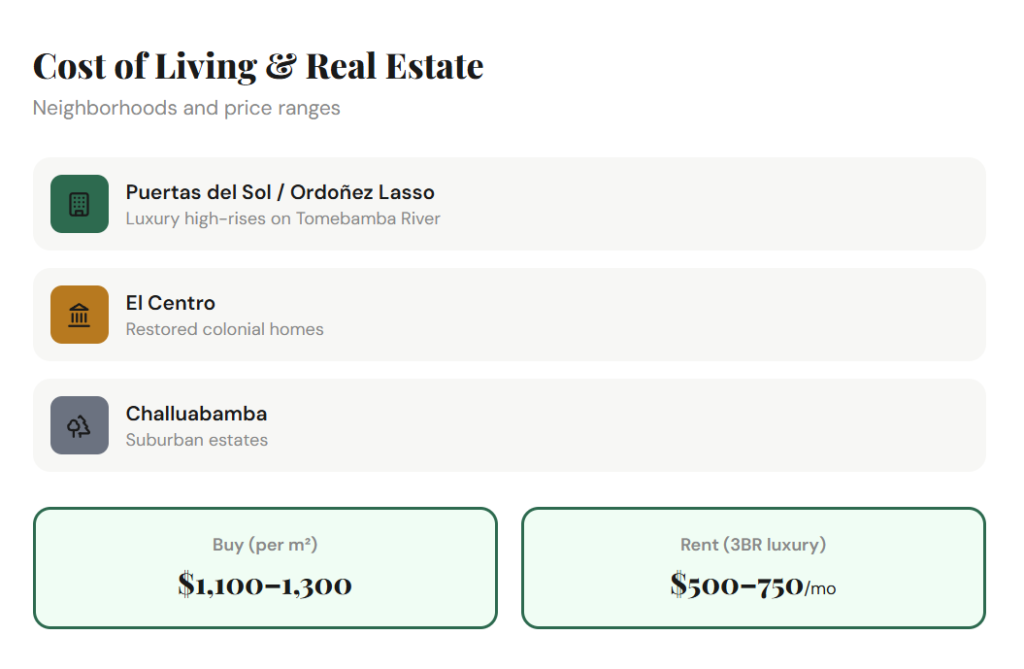
Monthly rents for an apartment are mostly somewhere between 500 to 750 USD. Cuenca, Ecuador scored 38 out of 40, the highest score on this entire list. The city earned perfect marks in weather and cost of living, which alone would make it stand out.
But here’s what makes it different: it doesn’t sacrifice safety or healthcare to get there. Cuenca is the only city that delivers across all four categories without significant trade-offs. It’s the winner.
But there are 5 things that anyone considering moving to South America should absolutely know—and this is a warning I make as a South American myself.
And join my Patreon for all the sources, charts, and maps from our articles, plus a chat, so I can answer your questions. Tier 2 includes my top three eBooks on living and retiring abroad—scan the QR code today!
Levi Borba is the founder of expatriateconsultancy.com, creator of the channel The Expat, and best-selling author. You can find him on X here. Some of the links above might be affiliated links, meaning the author earns a small commission if you make a purchase.