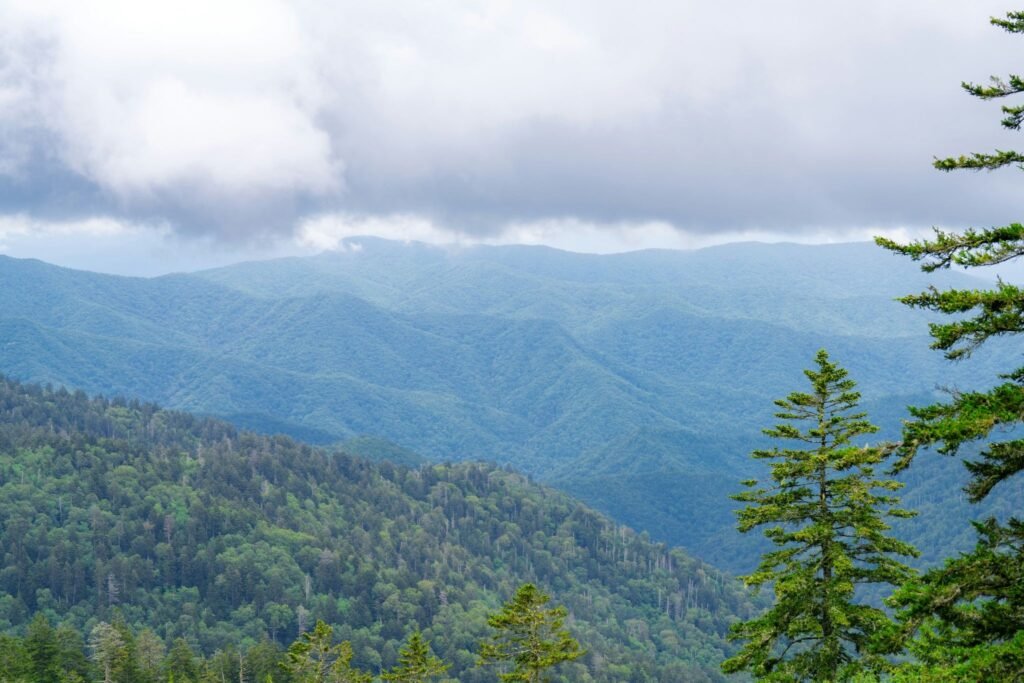
You’ve hiked in the Alps, rented villas in Tuscany, and explored the Himalayas. Yet expats returning to the US for family visits keep gravitating to one unexpected destination: the Great Smoky Mountains.
If you’re already reconsidering what the US has to offer, you’re not alone; it’s a pattern showing up beyond just mountain destinations. Here’s what keeps drawing internationally traveled people back to the Smokies specifically.
What the Smokies Actually Offer That Impresses People Who’ve Seen the World
Scale alone doesn’t explain it.
Biodiversity That Rivals Southeast Asia
Spruce-Fir Forest | Synchronous Fireflies | 100+ Native Wildflower Species
The Great Smoky Mountains National Park contains more tree species than all of northern Europe and over 19,000 documented species in total. It sits within the most biodiverse temperate forest on the planet outside of East Asia.
For someone who has spent time in the Carpathians or the Bavarian Alps, the sheer density of what lives here is genuinely surprising.
The low-hanging cloud cover the mountains are named for creates an atmosphere that many visitors from central Europe find unexpectedly familiar. It’s not dramatic in the way the Rockies are dramatic. It’s layered and textured, and it changes hour by hour.
800 Miles of Trails, No Entry Fee
Free Park Entry | 800+ Miles of Trail | Waterfall Loops to Multi-Day Traverses
The Great Smoky Mountains is one of the only major US national parks that charges nothing at the gate. That detail registers differently when you’re accustomed to admission structures at European nature reserves.
The trail system covers over 800 miles. You can do a 2.6-mile waterfall loop or a multi-day backcountry traverse. The park doesn’t require you to choose between accessibility and reward, which is a harder balance to find than most people expect.
The Atmosphere Is Earned, Not Manufactured
No Resort Infrastructure | Two Authentic Working Towns | Appalachian Culture Still Present
There’s no resort village at the base. No gondola queue. No curated pedestrian zone is designed to make the mountains feel approachable.
What’s there instead is the actual park, and two working towns on either side of it. Gatlinburg and Pigeon Forge are not Chamonix. They’re not trying to be. For travelers who’ve grown tired of destinations that perform their own charm, that’s a point in the Smokies’ favor rather than against it.
How a Smoky Mountain Cabin Compares to the European Mountain Lodge Experience
After enough time traveling, you develop a sense of what mountain accommodation actually delivers versus what it promises. Europe sets a high bar. The Smokies clear it in ways most people don’t expect.
What European Mountain Lodges Actually Look Like
Alpine rifugios are atmospheric. They’re also dormitory-style, often above 8,000 feet, and priced surprisingly high for what you get. Austrian mountain huts are similar. French gites range from charming to inconsistent. Swiss chalets, if you can afford them, are excellent, but that’s a significant qualifier.
The common thread across most European mountain accommodation is a trade-off: you get the setting, but you give up something else: privacy, space, kitchen access, or budget.
Where the Cabin Format Wins
A standard Smoky Mountains rental is a private structure with a full kitchen, separate bedrooms, a hot tub on the deck, and an unobstructed mountain view. That’s not a premium tier; that’s the baseline for most of the inventory.
Cabins for YOU covers the Gatlinburg and Pigeon Forge market with properties across the range, from smaller retreats to larger multi-bedroom options that suit extended-family visits.
The price-to-amenity ratio is difficult to match in comparable European settings. Add no language friction, no booking complexity, and the practical reality that a full kitchen and a private hot tub after a long trail day is exactly what most experienced travelers actually want, and the comparison becomes straightforward.
Where Europe Still Has the Edge
Walkable village culture. Proximity to other countries. The kind of embedded local life that takes years to find in a tourist region.
The Smokies don’t replicate that, and they shouldn’t try. If what you’re after is a centuries-old market town at the base of the trail, you’re looking at the wrong destination. But if the mountain experience itself is the point, the gap between the two is smaller than the geography suggests.
The Logistical Case: Why It Fits Naturally Into a US Visit
Expats returning to the US face a specific logistical reality that shapes how they travel. They’re already here. The currency is familiar, the phone works without a roaming plan, and there’s no visa window to manage. Once you’ve sorted out how to get to the US affordably, the domestic leg is straightforward.
The Smokies sit within driving distance of most major southeastern cities:
- Atlanta: approximately 2.5 hours
- Charlotte: approximately 3.5 hours
- Nashville: approximately 4 hours
- Washington DC: approximately 7 hours
For an expat visiting family in Atlanta or Charlotte, a long weekend in the mountains doesn’t require a separate trip. It requires a detour. That’s a meaningful difference when you’re already managing an international journey.
No car rental friction beyond what you’ve already arranged. English everywhere. No need to research foreign data plans or currency exchange. The cognitive overhead that comes with international travel simply isn’t there.
Why Cabin-Based Stays Suit Expats Specifically
Expats are not hotel people by default.
After years of living in apartments abroad, the preference shifts toward home-style accommodations: space to cook, a place to sit that isn’t a lobby, and the ability to have a conversation without a stranger three feet away.
Anyone who has worked through a serious expat relocation knows that apartments and home rentals become the default fast; a private mountain cabin fits that same instinct rather than fighting it.
There’s also a practical dimension. Expats visiting the US often travel with family: parents, siblings, children, sometimes multiple generations at once. A cabin accommodates that naturally. A block of hotel rooms doesn’t.
The Bottom Line
The Smokies won’t match the Himalayan scale or the cultural texture of the Dolomites. They’re not trying to.
What they offer is simpler: a landscape that holds up under scrutiny, logistics that don’t require planning, and accommodation that suits the way experienced travelers actually want to rest. For expats who’ve seen the world and still end up here, that combination explains most of it.