28 Euros. Instead of €28,000. That’s how much you can reduce an inheritance tax bill if you are retiring in the Canary Islands.
Sales tax? Just 7% instead of 21%. And a retired couple can live comfortably for 47% less than in Florida.
It’s part of a European country, but it’s not in Europe at all. It’s a chain of islands off the coast of Africa, where in “winter” you can sip a barraquito while tanning on the beach.
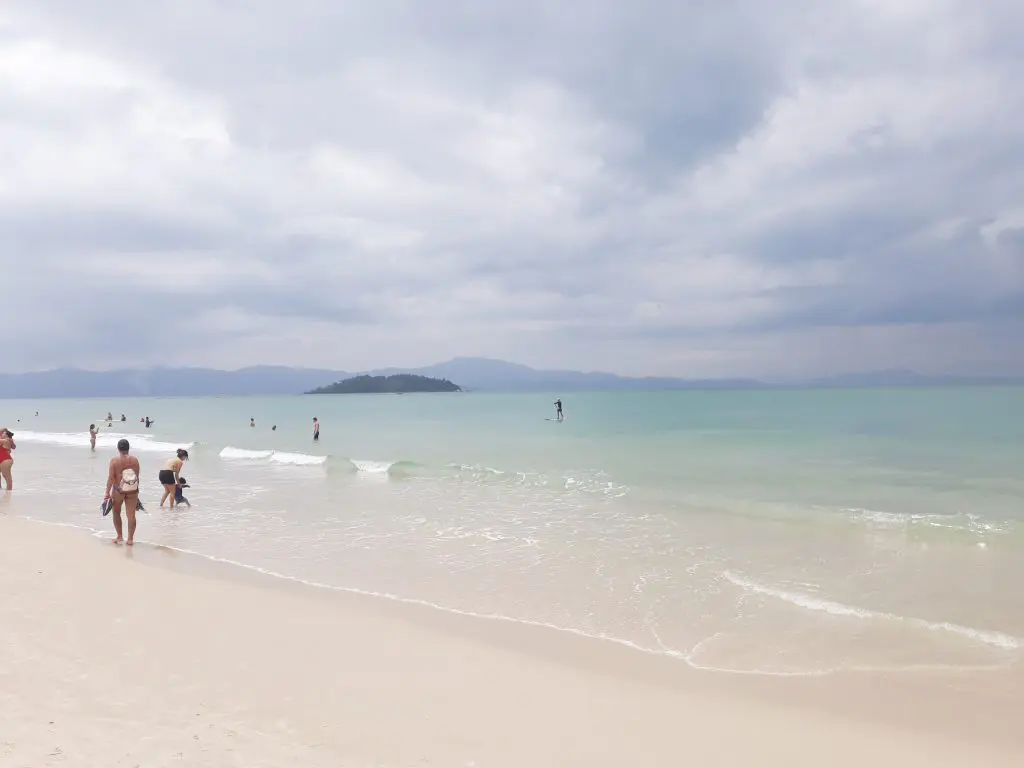
The Canary Islands. Most people know them as a one-week winter escape: beaches, sunshine. Cheap drinks.
But the people who stay for good discover something much better. There’s a catch, though… one downside sends a lot of expats packing, and I’ll show you how to avoid it.
Today, I’ll show you the real pros, the honest cons, the cost of living, and the three best places to retire in the Canary Islands in Spain, for expats like you. Let’s start with what makes these islands so different from the rest of Spain.
1. The Whole “Autonomous Community” Thing Can Be Confusing
Spain has 17 autonomous communities. Think of them as regions with their own parliament and their own president. The Canary Islands are one of them.
Is that the same as a US state? Not quite. If you’re British, think Scotland or Wales: power over health, and in Spain’s case, even more power over tax.

A Spanish region is responsible for public healthcare, and education, among others. A considerable part of the taxes are also on a regional level. But defense, immigration, the criminal code, and other areas are handled by Madrid.

What makes the Canaries different is the distance: about 100 kilometers off southern Morocco, and 1,000 kilometers from mainland Spain. At the latitude of the Sahara.
They are part of what is called “Macaronesia”, a collection of four volcanic archipelagos in the North Atlantic Ocean, which includes the country of Cape Verde, plus the Portuguese archipelagos of Madeira and Azores. Maybe I will write about Azores and Madeira (my ancestors came from there!).
There are seven main islands: Tenerife, Gran Canaria, Lanzarote, Fuerteventura, La Palma, La Gomera, and El Hierro. The total population is a bit over 2.2 million residents.

Because they’re so far out, the EU classifies them as an “outermost region,” the same label as Martinique or Réunion. Islands that depend on ships and planes get their own special rules, and in Spain, those rules are called the REF, the Economic and Fiscal Regime of the Canaries.
It’s the reason the islands have their own sales tax instead of VAT. It’s also behind a special business zone with a 4 percent corporate tax rate.

But what about the weather?
Pro Number 1: One Archipelago, Two Climates
Many people talk about “the Canary Islands climate” as if it’s one thing, but on the same island, you can choose sunshine or you can choose cloud.
The islands are in the trade-wind belt. On the northern slopes, a temperature inversion, basically a lid of warmer air, traps a flat sheet of low cloud. Locals call it the panza de burro, the donkey’s belly. Grey, soft, and very common in summer.
The south of the bigger islands is located behind the mountains, in what’s called a rain shadow: the clouds get stuck on the other side, so the south stays dry and bright.
On the coast, winter highs are between 20°C and 22°C — around 70 Fahrenheit — and summer highs go up to 29°C — 84 Fahrenheit. Frost only happens up in the mountains, and the sea is swimmable for much of the year, warmest in early autumn.

The big difference is rain. The south of Tenerife island, for example, records less than 20 millimeters in a winter month, well under an inch. Tenerife North, however, gets about 500 millimeters a year, about 20 inches.

And some places split the difference, like Las Palmas, on Gran Canaria: little rain, about 2,800 hours of sunshine, and a breeze off the city beach.
So if you want guaranteed beach weather, the south is for you. If you’d rather have a proper town with gardens and character, the north is better, but July there can look like a glass of milk.

Pro Number 2: Just 7%
Usually touristy regions are more expensive than the rest of the country, but that is not the case of the Canary Islands. In good part, this is due to low taxation.
On mainland Spain, most things you buy carry an IVA tax, the Spanish VAT, of 21%. In the Canaries, there is no VAT and instead there is the IGIC, the islands’ own sales tax, with a rate of just 7%.

And it goes lower: zero percent on bread, milk, fresh fruit and vegetables, meat and fish, medicines, and books. Since April 2026, even roasted coffee joined the list.

A €1,000 laptop pays €70 of tax instead of €210. That’s €140 back in your pocket.
A mid-range car taxed at 9.5% instead of 21 can save you a four-figure sum. The 15% band is for more powerful cars, and also spirits, perfume, and jewelry.
To be fair, basic food is lightly taxed on the mainland too, the biggest savings come from electronics, and, most of all, fuel, alcohol and tobacco.

But there is a caveat. Pump prices rose sharply into 2026, and around mid-year, regular unleaded was €1.45 a liter, so $6 a gallon. Still under many mainland prices, but not the dramatic gap of a decade ago.
There’s also a separate import levy called the AIEM, which can hit some goods shipped into the islands.

And income tax?
Pro Number 3: Income Tax and the Florida/UK Test
Spanish income tax, called IRPF, has two halves: a national scale and a regional one. The Canary half starts at 9% on the first €14,000 or so, and climbs in steps, up to 26% above €124,000.
A high earner can face a combined top rate around 50%. So no, this is not a tax haven. But tax is only half the math, so let’s run a test.
Take a retired couple. Both over 65. $60,000 a year of pension income, split evenly.
In the Canaries, after deductions and over-65 allowances, their combined income tax might be between €7,500 and €9,000, so an effective rate around 14 to 17%.
The cost for a comfortable life, meaning a two-bed apartment, a car, eating out sometimes, and healthcare, would be around €3,200 a month, or $3,600.

Now Florida. No state income tax on pensions, and the federal bill is often just a few thousand dollars. But you have property tax, rising rents, and HOA fees, all on top of a rent around $5,500 a month if you want to live in somewhere pleasant.
And the UK? The same income, split between two people, uses two personal allowances, so the tax bill is around £4,300, lower than in Spain. But then you have winter heating, which on the islands you don’t need.

Another advantage is that in the Canary Islands, resale homes have a purchase tax called ITP between 5% and 6.5%. On a €250,000 resale, that’s €16,250.
Meanwhile, in other parts of Spain this same tax is 10%, so you would pay €25,000! In the Canary Islands, you save €8,750!
If it is a new building, instead of all these taxes, you pay just the IGIC of 7%. Not bad.

Pro Number 4: The Almost Zero Inheritance Tax
In Spain, inheritance and gift tax is set region by region. Some regions are expensive, but the Canaries are very generous.
Spanish law sorts heirs into groups. The first two groups are your close heirs: your spouse, your children and grandchildren, and your parents and grandparents. For them, the Canaries apply a 99.9 percent reduction to the inheritance tax bill.

For example, an inheritance tax bill of €28,000, around $31,500, will pay around €28. Twenty-eight euros!
That is an important matter, since you spent decades building what you’ll leave your kids, and in the Canaries, the state steals almost nothing.

But there are three caveats. First, more distant relatives, like a sister or a nephew, get more limited treatment, and lifetime gifts have their own conditions.
Second, this is regional law, so it can change, although it has held steady across recent political cycles.
Third, and this one catches people, it only shrinks the Spanish bill. Your home country can still tax your estate. The US or the UK can still tax your assets.
The Timeline People Should NOT Ignore
Spain mostly decides you’re a tax resident with a simple test: more than 183 days a year in the country, or you have your main economic or family ties there. Once you’re resident, Spain taxes your worldwide income, and tax treaties decide who gets what.
If you’re British, the UK–Spain treaty says your private pensions and your state pension are taxed only in Spain once you live there. But Spain still counts them when deciding your bracket, so they can push your other income into a higher one.
If you’re American, it’s messier. Private pensions go to Spain, but the US may still tax your Social Security. And because the US taxes its citizens wherever they live, you keep filing your IRS return every year.

Healthcare access depends on paperwork too. If you are British and fill out the S1 form, the NHS pays Spain, and you get the same public cover as a Spaniard.
But if you retired early and are not a pensioner elsewhere, you’ll need private insurance first. Same for Americans, since Medicare does not cover Spain.
After a year, you can buy into public care through the Convenio Especial: around €60 a month under 65, and around €157 at 65 and over.
Americans have no S1, and Medicare doesn’t travel. So it’s private insurance, with no co-pays and pre-existing conditions covered.

Now one quick thing, because it matters for everything that follows. The hardest question about moving abroad isn’t when to go. It’s where.
That’s what our matching algorithm does: you answer a set of questions about budget, lifestyle and priorities, and you get a personalized shortlist across Europe and South America. It’s available on our Patreon, Tier 1, for US$5 a month.
Now, back to the list, and the downsides.
Con #1: The Trip Home
From London, you’re about four and a half hours from Tenerife or Gran Canaria. For a Brit, it is a relatively easy trip.
But for an American, it’s a different story. There’s only one direct route: United, Newark to Tenerife South. It’s seasonal, flying in winter about three times a week.
The rest of the time, you connect through Madrid or another European hub, and 20 hours door to door is not unusual.
Say your phone rings at 6 a.m. It’s your son in Ohio, and your grandson arrived three weeks early. You’ll be there. Just not today.

There is good news, though: inter-island flights are short, and residents get substantial discounts on those and on flights to mainland Spain.
There’s also a small daily annoyance: parcels are slower, some Spanish and European online shops won’t ship there, and customs can add IGIC.
Con #2: Calima
Calima is Saharan dust carried on the wind, and it’s quite common. The last season had 12 episodes and 42 dusty days, so six weeks of the year with dust in the air.
The eastern islands get it first and thickest. When it hits, the sky turns ochre, and people with asthma better stay indoors.
Airports usually stay open, but the February 2020 “supercalima,” which closed all eight, was the exception.

Con #3: Island Fatigue
This one has no official statistic, but long-term residents know it well. It usually shows up in the second or third winter.
The same promenade. The same three supermarkets. The friend who left in April.
South Tenerife can feel like a resort that never closes, and the smaller islands start to feel very far once the novelty fades.
The cure most long-stay residents describe is simple: a base in a proper town, a car, and a planned month away.
Another thing that helps is expanding your social circle: if you speak only English, your opportunities to socialize are limited to expat bubbles. The good news is that Spanish is quite easy to learn.
Con #4: The Housing Squeeze
If you move there, this is the issue locals will raise first. Housing prices in the islands rose about 4% a year above inflation over the last decade. That’s close to double the Spanish average.
Buying a first home can take more than 11 years of gross local pay in the province of Santa Cruz de Tenerife.
Meanwhile, the islands hosted more than 18 million tourists in 2025. Tenerife island alone gets more tourists than all of Brazil. With so many flats on short-let platforms, long-term rentals become scarce.

And some locals became angry. Through 2025 and into this autumn, marches against overtourism and expensive housing happened on most of the islands.
In early October 2026, thousands marched in both island capitals after Spain’s Congress rejected two national housing decrees.
To calm the people, the Regional President Fernando Clavijo has made limiting purchases by foreigners a priority.
There are some changes on track, the biggest one being a tax penalty for those who do not live in the property they own, plus higher local tax on empty homes. Activist groups want even more, like years of prior residence before anyone can buy.

As of October 2026, none of it is law, none of it is valid, but do not assume today’s access is guaranteed tomorrow either. The proposals aim at empty homes and holiday lets, so a home you actually live in is the least likely target.

Now that you know you can live there, comes the most important question, the one most people are waiting for.
What Are the Places to Retire to in the Canary Islands?
Los Cristianos, South Tenerife
We start with a once small port town on Tenerife’s south coast that became a resort city and had big improvements in terms of infrastructure.
Los Cristianos has a big, wide stretch of sand, a promenade of cafés, and ferries to La Gomera. And British voices everywhere, from the pharmacies to the chiringuitos, which are the beach bars.
Next-door Playa de las Américas is louder. Los Cristianos still has a resident core, a market, and people who’ve been there since the 1990s.

It has one of the sunniest climates in Tenerife Island. Winter days around 22°C — 72 Fahrenheit — and summer around 29°C — 84F. Close to 2,900 hours of sunshine a year. The calima still visits, though.
A 2-bedroom apartment rents for €1,300 a month. If you prefer to buy, the price tag will be around €290,000 before taxes and fees, still below the prices in Florida.
All in, a couple renting spends around €3,400 a month, or about €2,000 if they own the flat outright.
Los Cristianos makes the most sense for a couple who already enjoys a more resort lifestyle and wants the move to be as easy as possible. If you dreamed of a traditional Spanish town, you might be disappointed there.

Now, same island, but the other side.
Puerto de la Cruz, North Tenerife
And this side feels like a completely different place, very green, with much more lush vegetation.
Puerto de la Cruz is an old fishing port that became a much larger town, and now, a city. Famous for the black sand of its playas and a town center where, on a Tuesday, Canarian families still outnumber visitors.
The foreign community is long-established and older: British, German, and Nordic residents who came for the town itself.
Carnival is quite a big occasion there, while summers are relatively calm (since it is more like a winter escape). Big part of the city is walkable, and despite the increasing number of resorts, there is still a local feel to it.

The weather is VERY different from Los Cristianos that we mentioned previously. Winters are usually fine, green and mild, with highs around 21°C — 70 Fahrenheit.
But summer is often under that donkey’s-belly cloud, and differently from the south, quite humid. It also rains several times more than in the south.
Housing is cheaper than in the south, though prices have still gone up. The rent for a two-bedroom apartment costs around €950. If you prefer to buy, a two-bedroom apartment costs around €250,000.
All in, a couple renting spends around €3,000 a month, or €1,800 if they own. Eating out is a bit cheaper, and a lot more Spanish.
Hospiten Bellevue is right in town, and the main public hospital, the Hospital Universitario de Canarias in La Laguna, is about half an hour away.

From Puerto de la Cruz, we go for our last stop, which is on a different island.
Las Palmas de Gran Canaria
This is a city with 380,000 residents, the biggest in the islands. It has a beach right in the middle: Las Canteras, a long urban bay sheltered by a reef that calms the waves.
Since it is a large city, options to socialize are plenty, and many go beyond the expat bubble.

The climate is mild. Winter highs around 21°C — 70 Fahrenheit — and summer around 27°C. Sometimes there are clouds, but rarely for long periods.
Housing prices are the main reason we gave it the 1st place. The average price is €2,720 per square meter, the equivalent of $285 per square foot, so half the price of Miami, and that despite recent increases.
A long-term two-bed rents from around €1,000 in ordinary neighborhoods to €1,600 near the beach. All in, a couple spends around €3,100 a month renting, about $3,500, or €1,900 owning.

The healthcare there is arguably the best in the islands. Two large university hospitals, Doctor Negrín and the Insular, cover acute and specialist care.
Private clinics like Hospiten are used to foreign patients, and English-speaking doctors are easy to find without the resort markup.
On the downside, there’s traffic, some tired port-side districts, and the seasonal dispute for available apartments.

Now, there are other things people should know before moving to anywhere in Spain. That is why I wrote a special article compiling the 5 reasons people regret their decision to retire in Spain.
And join my Patreon for detailed reports of all the countries we covered, plus access to our algorithm that will help you discover what is the best country and city for you!
Levi Borba is the founder of expatriateconsultancy.com, creator of the YouTube channel The Expat, and a best-selling author. Some of the links in our articles may be affiliated links, meaning the author earns a small commission if you make a purchase.