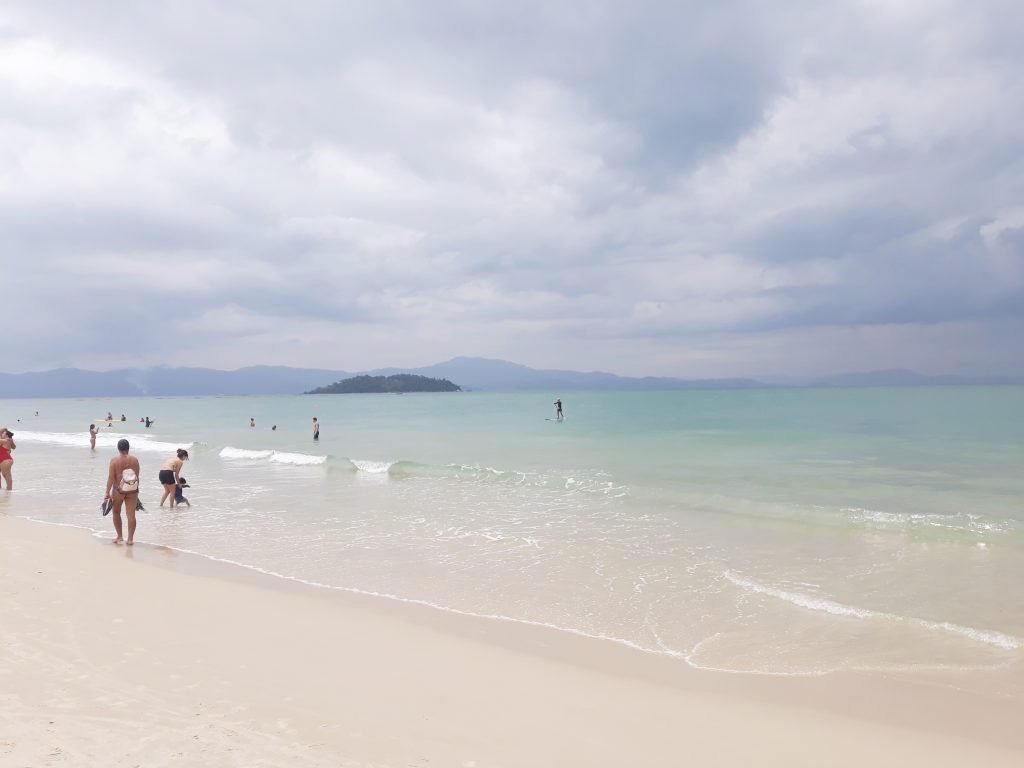
For millions of Americans, Brits, and Canadians aged 45 and older, living on $1,900 a month is not wealthy. But take that same $1,900 to some of the cheapest cities for retirement in Europe, and you can live in a large apartment by the beach, pay for private healthcare, and dine in fine restaurants. But only if you pick the right city.

I am Levi, and I’ve been living in Europe for ten years. I don’t rank places from a spreadsheet in another time zone — I go and look, and talk to people who actually made the move.
But there’s one thing almost every ranking gets wrong. The cheapest cities are often the hardest places to legally stay. That’s why legal residency is one of the factors in this ranking.
And the city at number one combines low costs with the easiest path to staying legally — something that’s almost impossible to find in Europe. If you are still unsure about the best region for you, our guide on where to move abroad can help you narrow down the options before diving into this ranking.

The Criteria
Five factors, each worth exactly twenty percent. Every city scored zero to ten, and the total is the average.
Factor one is cost of living, including housing. Factor two is weather, scored for a body that’s 45 or older. Factor three is the size of the expat community, because it is very good to have other expats who have solved the same issues you go through during your adaptation. Factor four is private healthcare quality. Factor five is residency paperwork for a non-EU citizen.

You might find it strange that “weather” has the same weight as healthcare or cost of living. But remember that damp, dark winters can put a toll on you — as well as desert-like weather. So a city of extremes that punishes you in August and again in January gets marked down twice.

So… time to start the top 10!
#10 — Toruń, Poland
We start with a city that is cheap, safe, beautifully connected, and… with a quite difficult language.

A Gothic old town by the Vistula river, the birthplace of Copernicus, with living costs that are low by any American standard. And it is VERY safe.
In the 2026 Global Peace Index, Poland recorded the single largest improvement of all 163 countries measured, climbing from 45th to 22nd. In nearly all criminal statistics, Poland is among the safest countries in Europe and in the world.
The awesome railway connectivity of Toruń is another plus! Toruń isn’t a national hub like Warsaw or Kraków, but it is at the junction of several main lines. Warsaw in two and a half hours, Bydgoszcz in 40 minutes, with frequent service all day.

In your daily life, that means you can skip the car — and a car you don’t own never hits you with a €900 repair.
However… Toruń has just around 1,600 hours of sunshine a year, and December daylight is gone by mid-afternoon. I tell from my own experience: if you come from a sunny place, that adjustment is brutal, and seasonal depression is a real risk.
The expat retiree community is close to zero, because Poland’s foreigners cluster in Warsaw, Kraków, and in the Tricity. You wouldn’t be joining a large expat community there — likely you would be starting one.
Healthcare is one of the bright spots of this city, which has one of the most famous medical schools in Poland. Private subscription plans from LUX MED or Medicover are affordable, and a major oncology center is in Bydgoszcz, a 40-minute train ride away.
But it is not that cheap: a non-EU pensioner, to join the public health system, needs to pay a fee of 9% of the minimum salary.
Then the paperwork. Poland has no retirement visa. Non-EU nationals apply for a temporary residence permit based on “other circumstances” — discretionary, and conducted entirely in Polish. While I speak Polish, most of you don’t, and that bill lands on a translator.

From Poland, we go south to the Balkans.
#9 — Podgorica, Montenegro
Many of you would expect Montenegro and specially Podgorica to rank higher. Montenegro was the darling of expat forums, and people said: “Buy any apartment, at any price, and get a residence permit.” But this is over.
On January 17th, 2026, Montenegro established a minimum threshold. Amendments to the Law on Foreigners now establish a minimum threshold of at least €150,000 in real estate for eligibility for a residence permit. And that is the value the Tax Authority assigns for transfer tax, not the listing price or what you paid.
The problem is that requires you to buy a home that sometimes is too big for a single person. A normal single-room apartment there rarely passes €135,000. And Montenegro offers no passive-income route and no pension route at all. For a broader look at cost of living in the Balkans, see our detailed breakdown.
These are the cons, but Podgorica has plenty of pros too. For a European capital, it is quite affordable: you can buy a 125 sqm (1,345 sqft) villa for €230,000 (US$265,000).

If you like warm weather, Podgorica is among the hottest capitals in Europe in summer, with a record of 44.8 Celsius (almost 113 Fahrenheit). Winters, though, are mild, with January averaging 5.7 Celsius, about 42 Fahrenheit.

Healthcare is ok. Codra is the country’s first private hospital and is well regarded regionally.
#8 — Brașov, Romania
Brașov has a Saxon medieval core ringed by the Carpathians, ski slopes twenty minutes away, and since January 1st, 2025, full Schengen membership, with no land border checks between Romania and the rest of the zone.

You might expect a mid-sized Romanian city to have weak healthcare — and you would be wrong. Romania’s public system is chronically underfunded, but the private institutions offer excellent value.
A GP visit costs around €30, a specialist around €60, and private insurance costs from €300 for the entire year. Plenty of Americans pay that in a single month. And Brașov has a Regina Maria private hospital carrying 13 international accreditations.

Another thing unusually developed for such a mid-sized city is the expat community there. Brașov has become Romania’s magnet for foreign arrivals outside Bucharest and Cluj, and that brought English-speaking landlords and letting agents, international grocery aisles, relocation consultants.
Of course, since the city gained so much attractivity, costs increased, but are still affordable. A one-bedroom in the center is around $738 a month, total monthly costs are near $1,500, and Brașov is the 3rd most expensive of 47 Romanian cities.
Property is reasonable: for €137,000 (less than US$160,000) you can buy a fully-furnished two-room apartment in the Tractorul district. If you’re exploring where to invest, our guide to the best places in Europe to buy property covers Romania and more.
At 600 meters — about 2,000 feet — in a mountain basin, the city has snowy winters and mild summers.

But… Romania has no retirement visa either. Most expats use a long-stay visa for “other purposes.” That D-type visa permits a maximum of 90 days within a 6-month period from first entry, with the right to stay then extended by a residence permit. Every renewal is a decision somebody else gets to make.
So overall, Brașov is a very good city, even with the lack of a retirement visa adding some extra bureaucracy.
Now, time for number seven, and we go all the way south to Greece.
#7 — Kalamata, Greece
This city has maybe the best weather in our entire ranking.
Kalamata is the capital of Messenia, on the southern Peloponnese, with about 73,000 residents. Mediterranean climate at its most flattering: mild winters, around 2,800 sunshine hours a year, hot dry summers cooled by the sea. It is a real Greek city rather than a resort built for foreigners.
It’s cheap by Western European standards too. A single person needs around €830 a month excluding rent, with a one-bedroom in the centre renting for around €440. Utilities for a two-bedroom apartment average €175 a month, which is high, and it reflects Greek energy costs and poorly insulated housing. For a wider comparison, here is how much it costs to retire in Europe across different countries.
Healthcare is decent. The General Hospital of Kalamata is among the best equipped on the Peloponnese, with 321 beds, intensive care and dialysis. There is also a private institution, the City Hospital, the only private clinic in the south-western Peloponnese.

Greece is quite friendly to expat retirees and offers many options for residence. The first option is the Financially Independent Person permit, and it requires steady income of at least €3,500 per month.
There is also the Greek Golden Visa, where you can obtain a residence visa by buying property of certain values (the minimum value depends on the area). And Greece has other pros that I didn’t mention here, like some very, very attractive tax incentives for expat retirees.


#6 — Viseu, Portugal
With around 100,000 residents in the Beira Alta highlands, Viseu is among the country’s most affordable places, and among the cheapest mid-sized cities to buy a house.
Central one-bedroom rents are around €500, about US$570 — 75% below New York. On $1,900, a single person lives comfortably with room to save, and a couple manages well.

Housing prices soared in Portugal, with the highest annual house price growth in the EU in the first half of 2025, up 16.3 percent. That price inflation happened mostly in the coast and in the capital. Interior cities like Viseu still have affordable prices — at least for now. For those interested in rural options, we also covered the best European countries to buy rural property.

Weather is not as sunny as in the Algarve, but not bad either. Just be aware that if your home has bad insulation, January indoors can feel worse than the thermometer suggests.

Healthcare is solid, especially for a city of this size. There is the Hospital de São Teotónio, the district’s main public hospital. For complex cases, the university hospital complex in Coimbra is 90 kilometers away.
The size of the expat community is the weak spot. Portugal has more than 19,000 American citizens, up from 14,000 the year before, but most of them settle in Lisbon, Porto and the southern Algarve. Viseu isn’t on that map. Which means living a Portuguese life, in Portuguese.
I speak Portuguese too, so I’ll admit my bias: I think that’s the best version of moving abroad — learning the local language is really, really a good thing.
#5 — Novi Sad, Serbia
Many people can’t place this city on a map, and that’s exactly why it’s underrated. Serbia’s second largest city is by the shores of the Danube River and is often overshadowed by the much more famous Belgrade.
One of the reasons for the inclusion of Novi Sad here is that Serbia is quite expat-retiree friendly. Residency conditions are among the simplest in Europe. You can get a permit by registering a company or by buying real estate, and there’s no minimum investment threshold for either.

Just remember that this is not a retirement visa, but a legal structure, meaning you will need to pay a local accountant for help.
About the cost of living, a person needs around €611 a month excluding rent. Rent will cost about €600, and the city is 20 to 30% cheaper than Belgrade. A comfortable single lifestyle including rent costs around €1,200. On $1,900, that’s surplus. For broader context, see our overview of the cheapest countries to live in Europe.
Healthcare beats expectations. The Clinical Centre of Vojvodina is a tertiary teaching hospital, and the city has a dense network of low-cost private polyclinics.

The local weather is… the not-so-shiny part. Vojvodina’s Pannonian climate has cold, foggy winters and hot humid summers, one of the least appealing seasonal profiles in our ranking.
And while Novi Sad has a large international population, it’s mostly Russian, Ukrainian and Balkan arrivals. Not Western retirees.

One more thing! In November 2024, the Novi Sad railway canopy collapsed and killed 16 people, and the city was the symbolic center of protests.
From Serbia, we jump to Spain.
#4 — Granada, Spain
Granada could be on the podium, but is not because of a single number: 2,400. Hold that, because on lifestyle alone Granada is close to perfect for the average expat retiree.

A city of about 233,000 residents at the foot of the Sierra Nevada, seventy kilometers from the Mediterranean. Total monthly costs for one person are around €1,410, and rent is why it works at all, because an apartment will cost you less than €600.
Granada is also cheaper than more famous expat hotspots in Andalusia, like Málaga. Andalusia hands you tax advantages too: the regional government has cut regional income tax rates and largely eliminated regional inheritance tax for close heirs. If you plan to leave something to your children, that is a big plus. For more on this topic, see our guide on European property taxes.
The expat community is the second strongest in our ranking. It is among the most popular cities among expats in inland Spain. The scene skews younger and more academic than the Costa del Sol’s retiree colonies, but there are plenty of events for everyone.

Healthcare is the best of all the cities so far. Granada has major public university hospitals plus high quality private facilities, including the Vithas group. Private insurance for a healthy person in their fifties costs a fraction of American premiums.

So Granada has sunshine, a solid expat community, good hospitals, affordable rent… Why only fourth?
Because since the Golden Visa was suspended in April 2025, the Non-Lucrative Visa became the primary route to residency. It requires income of €2,400 a month for the main applicant. If your income is $1,900 sharp, you are €650 a month short of being allowed to live there.
And consulates have tightened the process, increasingly demanding documented proof that you’ve actually stopped working.
If you’re reading this with a spouse, though, the math flips. The couple threshold is €3,000, so a married couple where each earns $1,900 clears it comfortably.
Our Top 3
If you enjoyed this article so far, consider joining our Patreon for detailed reports of all the countries we cover, plus access to our data-driven algorithm that will help you discover the best country and city for you.
#3 — Braga, Portugal
This is the only city in our ranking that scores well on every single factor, but not brilliantly on any — which actually might be very good.

Portugal’s third city, 50 kilometers from Porto, Braga turned into a tech hub while keeping its historic center intact, and it is praised as a model city for integration and quality of life.
Among the cities we mentioned today, Braga’s healthcare is second only to Granada. There is the large Hospital de Braga plus private operators, including CUF, and Porto’s hospitals are within an hour.
About the weather, people often joke saying that Braga has awful weather, super rainy and so on… But it is because they use the Algarve as comparison. If you are from Maine or the UK, Braga’s weather is actually very OK. Never very hot, never very cold. Winters are damp rather than freezing. It’s the most moderate climate in our ranking, and that’s the point.
The expat community is quite developed too. Portugal’s American population has grown almost 7X in eight years. Braga is among the places expats wanting a peaceful, traditional life choose, alongside Coimbra.

Now the cost, which keeps Braga off the top of the podium. Living there costs around €1,460 a month for a single person, including rent, and a central one-bedroom is about €780. A single person lives well on $1,900, but without lavish margin. A couple on two checks of $1,900 per month can live more comfortably.
In terms of residency bureaucracy, Portugal has a low income threshold, EU and Schengen access, permanent residency after five years — but the process is quite slow.

If you prefer Western Europe, Braga is the safe pick.
#2 — Plovdiv, Bulgaria
Plovdiv ties with Braga on total score but ends above because of a VERY low cost of living. Bulgaria’s second biggest city is ancient and hill-built, with a Roman theatre still hosting concerts. It’s the strongest financial and legal case in our entire ranking.
Start with what changed, because it happened fast. Bulgaria became a full Schengen member on January 1st, 2025, and joined the eurozone on January 1st, 2026.
After adopting the Euro, many people realized that prices increased, and this perception is more evident in coastal areas. Which brings us to cost: Plovdiv is not at a coastal area, but inland, and the cost of living there remains low.

A person needs €619 a month without rent; a one-bedroom flat costs around €460, and utilities for such an apartment cost about €90 — 15 to 20% cheaper than Sofia.
And on $2,000 a month you can afford a spacious two-bedroom in a central district for around €500, about US$570. Property stays cheap but moves quickly, with new-builds appreciating around 15% annually. Treat 2026 and 2027 as a closing window.
Residency scores high because Bulgaria has what almost no one in our ranking does: an actual visa program for retirees. It’s one of the few EU routes where a verified pension is the main basis for a residence permit — Visa D, then entry, then a one-year residence card.

The income bar is near the national minimum wage, around €620 in 2026. Add the 10% flat income tax and the arithmetic is hard to beat anywhere in the EU.
Healthcare is good too. Plovdiv has St. George University Hospital, the largest in Bulgaria, plus private hospitals. Many expats prefer to get private insurance at around €50 a month for better facilities and English-speaking doctors.
On the not-so-pleasant side… The weather. Plovdiv is in the Upper Thracian Plain, with the Rhodope Mountains to the south and the Sredna Gora range to the north, and that basin traps whatever the season delivers.
Summers are hot, with July and August highs frequently between 35 and 40 Celsius, and heat waves that might make midday walks unwise for anyone over 60. Winters invert it. Cold air pools in the basin, and the same topography that traps August heat traps January fog, damp and particulate pollution.

And now… our number one.
#1 — Vlorë, Albania
First place goes to a city on the bay where the Adriatic meets the Ionian. A city where $1,100 a month is enough to live in an apartment with a sea-view, close to a lively three-mile, café-studded promenade.
Forbes named this city among the best places to retire abroad in 2026. That’s Vlorë.
Vlorë gets the first place because, among our 5 factors, it went excellent in 4, and very bad at 1.
Vlorë is Albania’s third largest city and has about 78,000 residents. The average cost of living is $900 a month, putting Vlorë in the top third of the least expensive cities in the world. On this coast, a couple’s comfortable lifestyle costs around $1,200.

One warning: summer seasonal pricing on the coast is real, and long leases negotiated directly with owners save a lot over listing platforms.
The weather is the decisive advantage over Plovdiv — it is the classic Mediterranean weather we love! Vlorë is by the sea, which does the opposite of what the mountains surrounding Plovdiv do: the sea moderates temperatures. Frost is rare, winters are mild, and summers are ventilated by sea breezes. The city has close to 300 days of sunshine a year.

Albania also scores very well in the “easiness to obtain residence” factor. Under the 2022 US-Albania agreement, US citizens can stay up to one year with no visa and no residence permit at all. You get a year-long test drive with zero paperwork risk.
To stay longer, the pensioner permit requires an annual pension of 1,200,000 lek, about €967 a month, or US$1,100, and it can combine multiple sources. Maybe the lowest bar in Europe.

But remember when I said that there was ONE factor that Vlorë went bad? The city had the lowest healthcare score of all.
Regional hospitals are weak, private clinics in Vlorë are thin, and serious care means Tirana, about two hours away, or a flight to Greece or Italy. Routine care is cheap — clinics in Tirana charge less than $40 for a doctor’s visit — but for complex procedures, expats might prefer to leave the country.
This is a great place for someone in good health between 45 and 60; that’s an acceptable risk, and the visa-free year lets you test it before committing a single euro. For someone managing a cardiac history at 72, Braga at number three is the better fit.
But for nearly all other cases, Vlorë is the best city in Europe to live on $1,900 per month. Especially if you, like me, love the Mediterranean weather.
And Albania is just one of the Balkan countries — one of the most underestimated regions in Europe! That is why we ranked all Balkan countries from worst to best.
Choosing the wrong place to move to during your retirement is one of the most expensive mistakes you can make. Join our Patreon for detailed reports of all the countries we cover, plus access to our data-driven algorithm that will help you discover the best country and city for you.
Levi Borba is the founder of expatriateconsultancy.com, creator of the YouTube channel The Expat, and a best-selling author. Some of the links in our articles may be affiliated links, meaning the author earns a small commission if you make a purchase.